
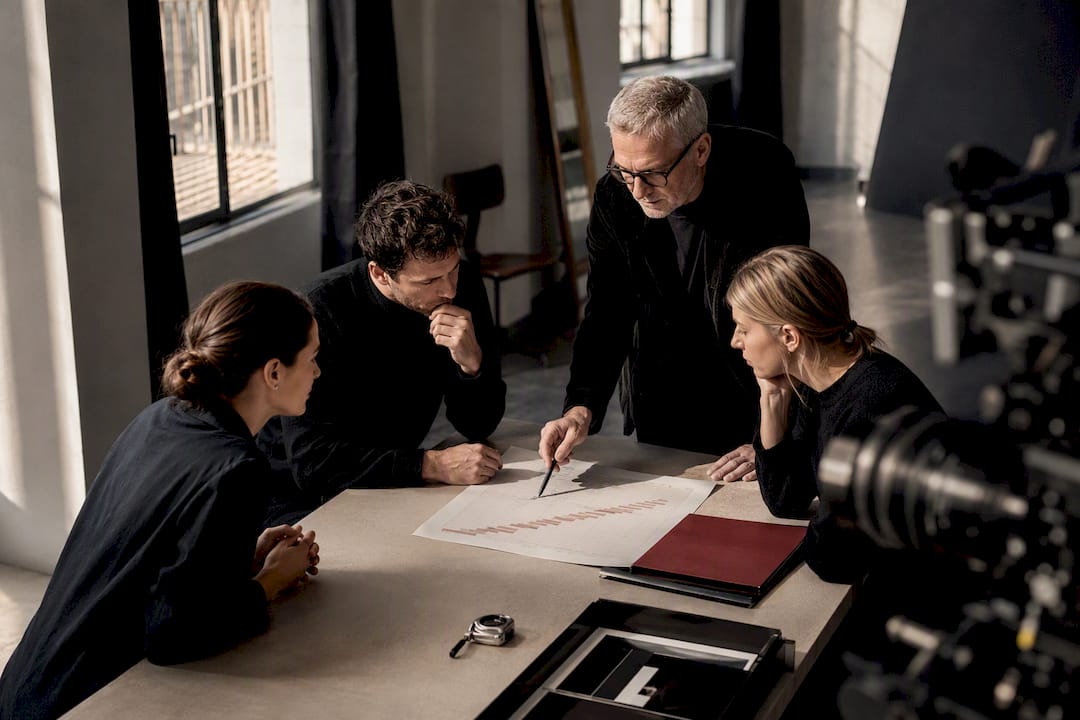
Book simple headshots two to four weeks out, product or e-commerce work three to six weeks, corporate lifestyle and editorial four to eight weeks, fashion and commercial campaigns six to twelve weeks or more, and weddings twelve to eighteen months ahead for peak dates. These are typical ranges quoted in the industry, though crew size, permits, and season can stretch any of them, and industry guidance from groups like ASMP backs up why the padding matters.
TL;DR:
- Headshots require only two to four weeks of lead time, but team booking may need an additional week for scheduling conflicts.
- Product shoots generally need three to six weeks, especially when specialized vendors or retouching are involved for timely launches.
- Fashion, editorial, and commercial campaigns often require six to twelve weeks or more, due to casting, multiple locations, and post-production complexity.
- Peak seasons, weekend dates, and holidays significantly extend lead times, requiring buffers and early planning to avoid delays.
- Securing a confirmed date relies on a signed contract and deposit, with lead times influenced by crew size, permits, talent availability, and post-production schedules.
Table of Contents
- Recommended lead times by shoot type
- Factors that change the lead time
- Booking process: deposits, contracts, and cancellation norms
- Preproduction timeline and checklist
- How to shorten lead time without cutting corners
- A booking mistake we don’t repeat anymore
- Post-production timing and delivery scheduling
- Three rules of thumb from a veteran NYC producer
- Working with Ken Jones Photography on a tight schedule
- Sources
- FAQ
Recommended lead times by shoot type
Every shoot category carries its own rhythm, and the lead time reflects how many moving parts have to line up before a camera comes out of the case. A headshot session for one executive is a different animal than a twelve-look editorial with a stylist, hair and makeup team, and two locations.
Headshots need the least runway, typically two to four weeks. Studio availability and the subject’s calendar are usually the only real constraints, since crew stays small and there’s rarely a location or permit to coordinate. Corporate clients booking a batch of headshots for a whole team should add a week or two to account for staff scheduling conflicts.
Product and e-commerce photography generally needs three to six weeks, and sometimes requires specialized vendors who understand the nuances of food photography and videography for products in the food industry. This window covers getting samples in hand, building or sourcing a set, and leaving time for retouching before a launch date. Brands with recurring catalog needs often shorten this by keeping a standing relationship with a studio, which removes the back-and-forth of vetting a new vendor each time.
Corporate lifestyle and environmental portrait shoots land in the four to eight week range. These often involve a real workplace location, which means building access approvals, coordinating with facilities or security, and scheduling around employees who have day jobs to do. A shoot inside a single office is faster to book than one spanning multiple company locations.
Fashion and editorial work typically requires six to twelve weeks or more. Casting takes time, fittings have to be scheduled around a stylist’s availability, and creative direction usually goes through a few rounds before the shoot day is locked. A designer lookbook with five looks and one model books faster than an editorial story with a full cast and two locations.
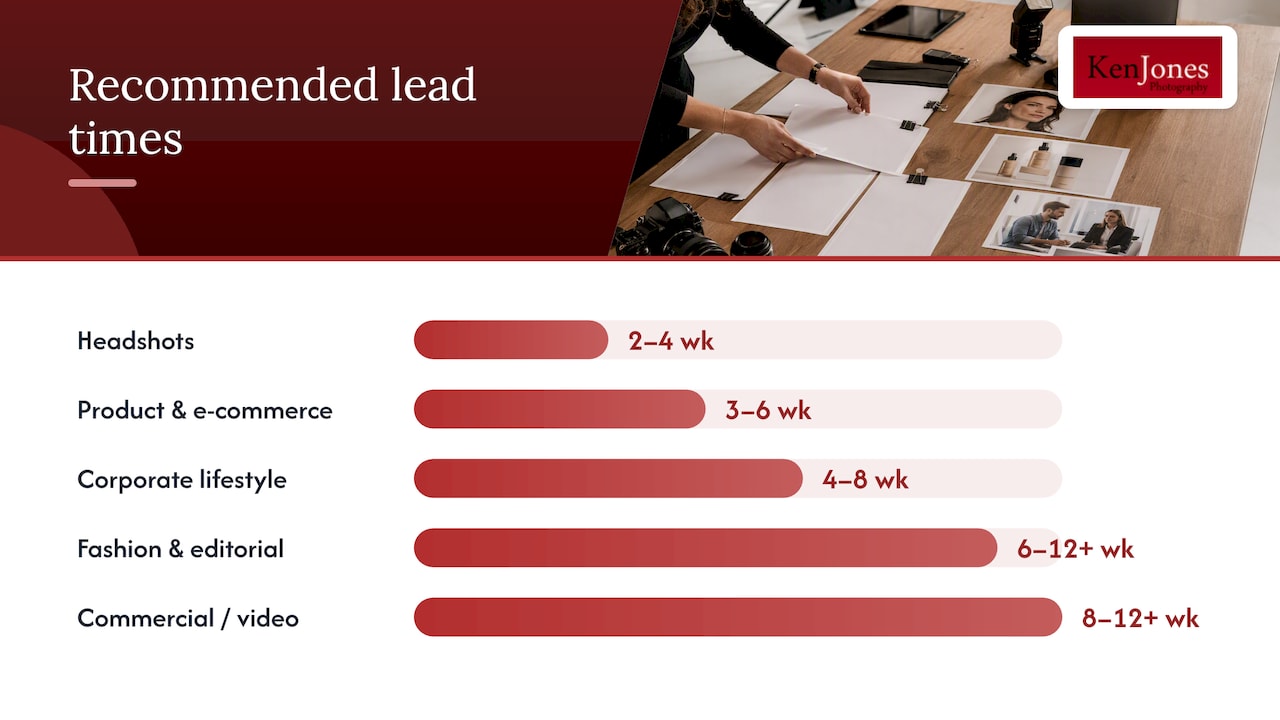
Commercial and video campaigns often need eight to twelve weeks or longer. Larger crews, multi-day production, and a post-production timeline that includes editing and color all extend the runway. Add distribution deadlines like a broadcast date or ad launch, and the lead time can push further out.
Weddings sit apart from everything else on this list. Wedding-industry guidance commonly recommends booking 12 to 18 months ahead for popular Saturday dates in peak season, since photographers who specialize in weddings only have so many weekends on the calendar each year.
A few patterns push every one of these windows longer:
- Peak season (spring and fall for weddings, September through November for fashion) fills calendars fastest.
- Weekend dates are scarcer than weekday availability across nearly every shoot type.
- Holiday weeks shrink vendor and crew availability even for simple bookings.
- Multiple stakeholders (agency, brand, in-house marketing) add approval rounds that eat into your lead time before the shoot is even locked.
If your date falls near a holiday or a major industry event, add a buffer rather than assuming the standard range applies.
Factors that change the lead time
The ranges above are starting points, not guarantees. The real answer to “how far ahead do I need to book” depends on a handful of variables that either simplify or complicate the production.
Crew size is the first lever. A one-person headshot session with a photographer and maybe an assistant can often be arranged in days. Add a producer, a stylist, a hair and makeup artist, and a retoucher, and you’re now coordinating five or six calendars instead of one. Each additional role is another person whose availability has to match the shoot date, which is why larger productions need to lock talent early.
Locations and permits add real friction. Shooting in a rented studio removes most of this, but a public location in a city like New York usually means a permit application, and some buildings require certificates of insurance or a location fee before they’ll grant access. Union requirements on certain commercial jobs can also dictate crew makeup and timing.
Talent and casting move on their own clock. Modeling agencies typically need advance notice to check a talent’s availability and rate, and if the project calls for a casting call or test shoot, that adds days or weeks before you even get to a confirmed booking. Fitting days for fashion work have to be scheduled around the stylist pulling the wardrobe, which itself depends on when samples arrive from designers or showrooms.
Equipment and rentals matter more than most clients expect. Specialty lighting, a particular lens, or a large-format printer for a set piece might need to come from a rental house, and popular gear during busy seasons can be booked out days in advance.
Props, wardrobe, and set builds need sourcing time that scales with complexity. A simple product shot against seamless paper needs almost none of this. A styled lifestyle set with furniture, wardrobe changes, and art direction can take a full week just to source and build before the shoot day arrives.
Post-production workload is the factor clients forget to plan around. A retoucher with a full queue can’t turn around images overnight, and if your delivery deadline is fixed, that pushes your shoot date earlier, not later.
- Crew and personnel: more roles mean more calendars to align.
- Location and permits: public sites and union rules add lead time.
- Casting and talent: agency booking and fitting schedules run on their own timeline.
- Rentals and specialty gear: popular equipment can be scarce during busy seasons.
- Props, wardrobe, and set build: sourcing time scales with production complexity.
- Retouching queues: a backed-up post house can delay delivery even when the shoot itself runs on time.
Our internal breakdown of photoshoot crew roles walks through when each position needs to be hired and how far ahead, which is worth a look before you estimate your own timeline.
Pro Tip: Ask your photographer or producer for a “what could go wrong” list before you set a shoot date. The variables that seem minor, a permit delay or a backordered prop, are usually the ones that blow up a tight schedule.
Booking process: deposits, contracts, and cancellation norms
A verbal agreement on a date doesn’t hold a calendar slot. Most professional studios and production teams require a signed estimate or contract and a deposit before a date is considered confirmed, and understanding this process protects both sides from a double-booked date or a last-minute scramble.
- Get a written estimate or contract. This should spell out the shoot date, deliverables, usage rights, and payment terms before anyone shows up with gear.
- Expect a deposit at signing. AMA national guidelines recommend a significant advance payment, with the first payment typically due at signing and no later than five business days before the first shoot-related day.
- Know your cancellation window. The same AMA guidelines describe cancellation fees that apply when notice is given within one to ten business days of the production date, so read that section of any contract closely before you sign.
- Confirm the reschedule policy in writing. A good contract states what happens if weather, illness, or a client-side delay pushes the date, including whether the deposit carries over or a new one is required.
- Clarify the turnaround trigger. Specify whether the delivery clock starts on the shoot date or on final client approval of selects, since those can be weeks apart on a complex job.
Deposits exist for a practical reason: once a photographer or studio blocks a date, they’re turning away other work for that slot, and a deposit compensates for that lost opportunity if a client backs out late. ASMP’s assignment guide makes a similar point, noting that lead time and preproduction commitments directly affect how fees and scheduling are structured on a job. Treat the deposit and signed agreement as the actual moment your date is locked, not the initial conversation about availability.
Preproduction timeline and checklist
The lead-time ranges only work if you use the time well. The most reliable way to plan a shoot is to start at the delivery date and work backward, setting hard deadlines for each task rather than letting them slide until the week before the shoot.
- Set the delivery date first. Everything else on the calendar gets built backward from when the client actually needs finished images or video in hand.
- Lock the creative brief six to eight weeks out for complex jobs, or one to two weeks out for simpler ones like headshots. This defines the look, the shot list, and the deliverables everyone is working toward.
- Confirm casting and talent four to six weeks before the shoot for fashion or lifestyle work involving models, since agencies need lead time to check availability and negotiate rates.
- Scout and confirm locations four to six weeks out for anything beyond a studio booking, especially if permits or building approvals are involved.
- Schedule fittings and prop sourcing two to three weeks before the shoot, once wardrobe samples or purchased pieces have actually arrived.
- Finalize permits and insurance certificates at least two weeks ahead, since city permit offices and building management rarely turn these around overnight.
- Build the call sheet three to five days before the shoot, confirming crew arrival times, location access, contact numbers, and a shot list everyone can reference on set.
- Set checkpoint approvals at each milestone, meaning the client signs off on the brief, the casting selects, and the location before moving to the next step, rather than approving everything at once the week before.
This kind of backward planning is standard on commercial sets. PPA’s PhotoVision training on commercial preproduction emphasizes that organized scheduling, producer coordination, and early call sheets are what let a tight timeline actually hold together on shoot day. ASMP’s own production checklist covers similar ground, listing access, cleaning, model releases, and catering as items that need to be settled before the crew arrives, not during setup. Our studio rental equipment checklist is a useful companion for anyone mapping out gear needs against this same timeline.
How to shorten lead time without cutting corners
Deadlines don’t always cooperate with ideal timelines, and there are legitimate ways to compress a schedule without compromising the final product. The key is knowing which corners are safe to cut and which ones aren’t.
Working with a studio you’ve used before removes a layer of friction entirely, since there’s no vetting process and often a standing package that covers the basics. Choosing a mid-week date instead of a weekend usually opens up faster studio and crew availability, since most people default to Fridays and weekends without realizing weekday slots move faster. Studios also tend to have more flexible windows mid-week for last-minute holds.
Keeping the crew lean is another lever. Hiring a photographer who can also direct, or a stylist who handles both wardrobe and props, cuts down on the number of calendars you’re trying to align. Pre-clearing wardrobe and props before the date is locked, rather than after, removes one of the more common bottlenecks on a compressed schedule.
It also helps to decide upfront what has to be flawless and what can be simplified. A hero shot for a campaign deserves the full treatment, but supporting images might not need the same level of retouching or the same number of setups.
- Use a standing studio or vendor relationship to skip the vetting and negotiation phase entirely.
- Book mid-week or off-peak dates when studio and crew calendars are less crowded.
- Keep the crew lean by hiring multi-role talent where the job allows it.
- Pre-clear wardrobe and props before the shoot date is finalized, not after.
- Prioritize deliverables so the retoucher’s time goes to the images that matter most.
Pro Tip: If your timeline is genuinely tight, tell your photographer up front rather than after the contract is signed. A producer who knows about a hard deadline on day one can build the schedule around it; one who finds out during the shoot can only react to it.
The biggest risk in compressing a timeline isn’t the shoot itself, it’s what happens after. Retouching queues, sample shipping delays, and permit processing don’t move faster just because your shoot date did, so build extra room into post-production even when the shoot day gets squeezed.
A booking mistake we don’t repeat anymore
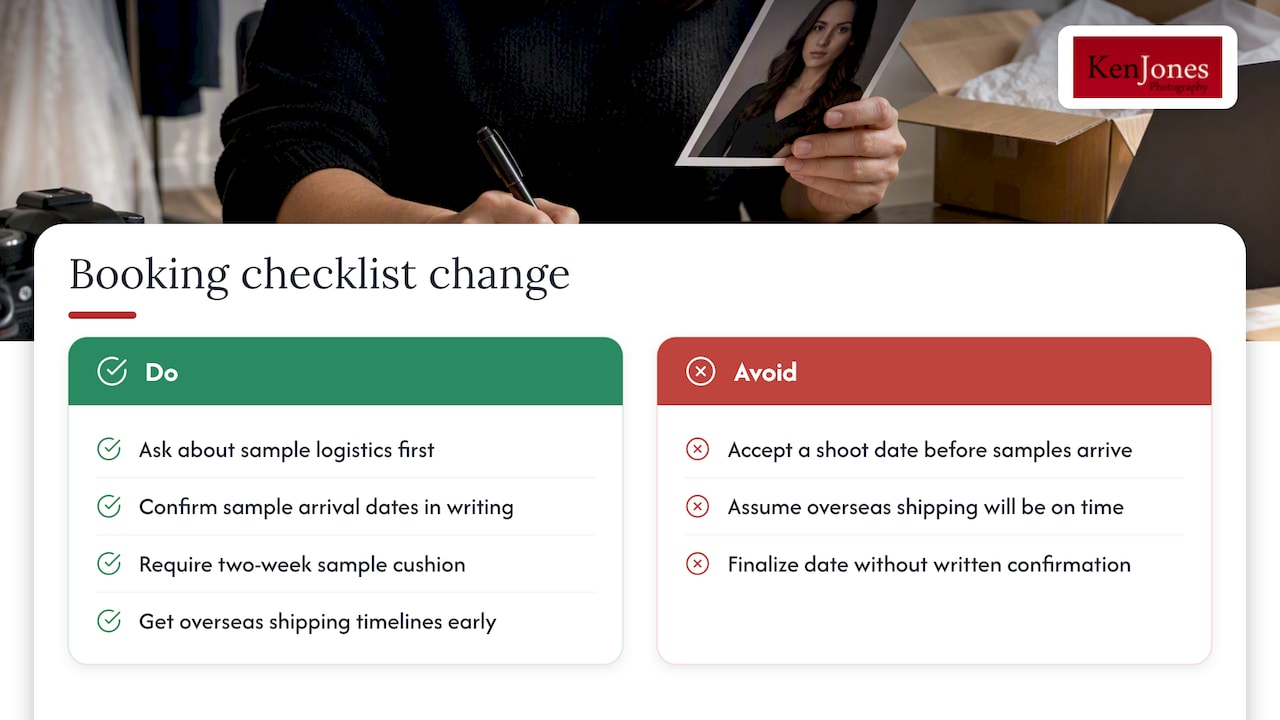
Years ago, a commercial client came to us with a launch date that was, frankly, already too close by the time we got the call. We agreed to the date because the shoot itself was straightforward, a tabletop product setup, one location, no permits. What we underestimated was the sample shipping timeline. The product samples were coming from overseas, and customs delays pushed their arrival to two days before the shoot instead of two weeks. That left almost no cushion for a reshoot if anything came back damaged, and it compressed our set-build time to almost nothing.
We made the date, but it was closer than it should have been, and it taught us to ask about sample and prop logistics as a first question, not an afterthought, on every product booking since.
That one job changed how we structure our production checklist. Now, sample and prop arrival dates get confirmed in writing before we finalize a shoot date, not after.
Post-production timing and delivery scheduling
The shoot day is only half the calendar. Retouching, approvals, and delivery all take real time, and skipping this step when you plan your booking date is one of the more common scheduling mistakes clients make.
Standard retouching turnaround varies by volume and complexity, but a simple headshot batch typically moves faster than a full fashion editorial with heavy skin work, color grading, and composite images. Rush turnaround is usually possible for an added fee, but it still requires the retoucher’s queue to have room, which isn’t guaranteed during busy seasons.
Retouching and sample transit are frequently the quiet bottleneck on a production. Even when the shoot itself runs perfectly on schedule, a lack of reserved retouching time or a delay in sample shipping is what typically pushes the final delivery date, not the photography.
Approval cycles also eat into the calendar. Most productions budget at least one or two rounds of client feedback on select images before final retouching begins, and each round adds days depending on how quickly the client side responds. Building this into your delivery expectations upfront avoids the awkward conversation where a client assumes “delivery” means the day of the shoot rather than weeks later.
- Standard retouching takes longer than rush work, and rush availability depends on the retoucher’s current queue.
- Approval rounds typically add several days each, depending on how quickly stakeholders respond.
- Licensing paperwork and usage rights should be finalized before final files are delivered, not after.
- Final delivery formats (web resolution, print resolution, video codecs) should be specified early so files don’t need to be reprocessed later.
Building a realistic post-production window into your booking date, not just the shoot date, is the difference between a smooth delivery and a scramble the week before launch.
Three rules of thumb from a veteran NYC producer
After three decades of booking shoots in this city, I’ve boiled it down to three habits worth adopting. First, book the producer or photographer before you book anything else, since everything downstream, casting, location, permits, depends on having a confirmed date to plan around. Second, buy your buffer, meaning build in a few extra days between your shoot date and your actual delivery deadline, because something on every production takes longer than expected. Third, confirm with a deposit, not a verbal agreement, since a date isn’t held until money and a signature change hands.
If your production involves more than a photographer and a subject, hiring a producer or working with a full-service studio is worth the cost, because someone needs to own the schedule so you don’t have to. Planning ahead doesn’t guarantee a perfect shoot, but it removes most of the reasons a good shoot goes sideways.
— Ken
Working with Ken Jones Photography on a tight schedule
The full range described here, from single-subject headshots to multi-day commercial campaigns, can be handled out of a studio in Manhattan’s Financial District. With compressed timelines, an experienced studio often leans on a full production team, creative direction, casting, styling, hair and makeup, and retouching, so scheduling decisions get made in one place instead of across multiple vendors.

The typical process for locking a date includes a signed estimate, a deposit to confirm the shoot day, and a clear delivery timeline agreed on before anyone shows up with gear. For studio needs, we also offer studio rental for teams who want space without booking a full production package.
- Full-service production can cover casting, styling, lighting, and image delivery for fashion, corporate, and commercial work.
- Studio rental may be available in Lower Manhattan for teams managing their own crew and creative.
- Rush and compressed timeline support relies on disciplined preproduction planning.
If you have a date approaching and want to know what’s realistic, reserve a shoot or check our services page to see current availability.
Sources
- Working with an Assignment Photographer (ASMP)
- Commercial photography pre-production workflow | Professional Photographers of America
FAQ
What is the 20-60-20 rule in photography?
Definitions of this rule vary across the industry and it isn’t tied to a single standardized source, so treat any specific breakdown with caution. In general use, it refers to dividing shoot time or budget into planning, execution, and post-production phases, but there’s no single authoritative definition worth citing as fact.
Is $4,500 a lot for a wedding photographer?
Wedding photography pricing varies widely by market, package, and photographer experience, and no single figure applies universally. Rather than judging a price in isolation, compare what’s included, hours of coverage, second shooter, album, and usage rights, since those details matter more than the number alone.
How far in advance should I book my photographer?
It depends on the shoot type: simple headshots typically need two to four weeks, while fashion and commercial work often need six to twelve weeks or more. Weddings are the outlier, with 12 to 18 months recommended for popular peak-season dates.
What is a reasonable turnaround time for a photographer?
Turnaround depends heavily on shoot complexity and retouching volume, with simple batches moving faster than heavily retouched editorial or composite work. Building in extra time for at least one round of client approval before final delivery keeps expectations realistic on any booking.
When should I confirm a shoot with a deposit?
A shoot date should be considered tentative until a signed estimate and deposit are in place, since that’s the point at which a studio or photographer turns away other work for that slot. AMA guidelines recommend the first payment be made at signing and no later than five business days before the first shoot-related day.