
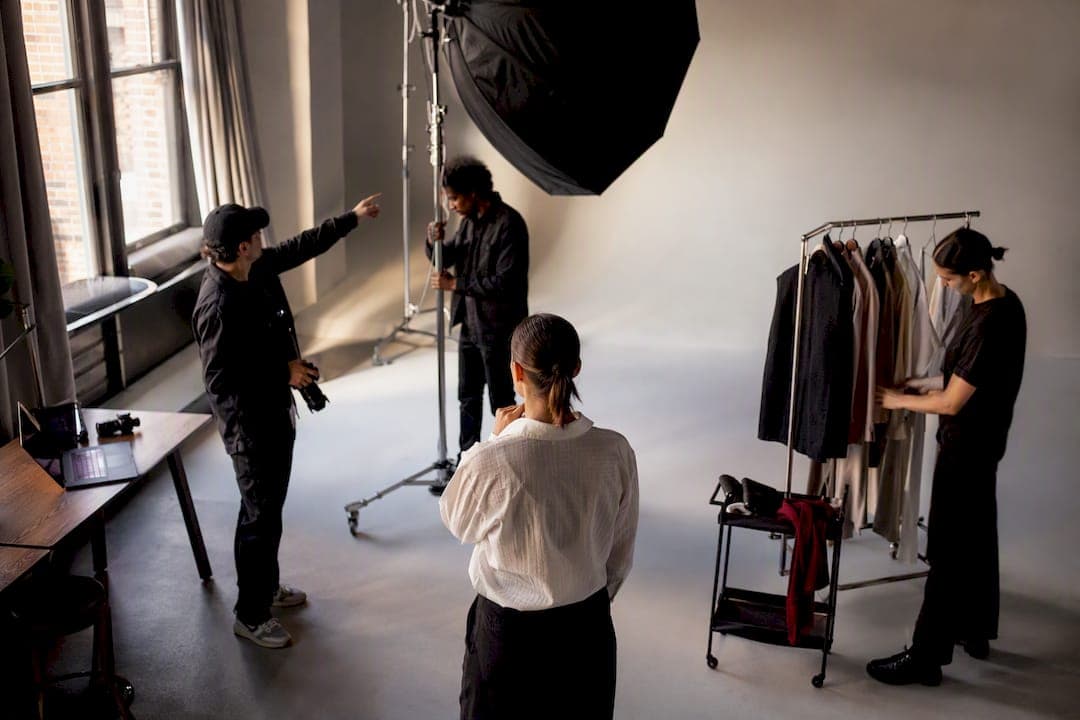
A basic shoot needs a photographer and an assistant, plus a digital tech once files and client approvals matter. Commercial productions layer on a producer, creative director, art director, stylists, a gaffer, and sometimes a set builder or location manager. The right crew depends entirely on the complexity of what you’re shooting, not on habit or what worked last time.
TL;DR:
- Crew size and roles should match the complexity of the shoot, with larger productions including producers, creative directors, stylists, and grip/electric staff.
- Digital techs are essential for tethered capture, color management, and file backups on commercial shoots, while assistants handle core camera and workflow tasks.
- Styling roles such as wardrobe, hair, makeup, and prop stylists are crucial for maintaining schedule efficiency and quality, especially during multiple looks or product setups.
- Proper coordination and early communication among art directors, set designers, and prop masters reduce last-minute changes and optimize shooting time.
- Keeping logistics like permits, location access, transportation, and catering tightly managed prevents delays that can cancel or extend the shoot.
Table of Contents
- What Are the Core Photoshoot Crew Roles by Department?
- How Does the Digital Tech Fit Into the Camera Team?
- Who Handles Wardrobe, Hair, Makeup, and Props?
- Who Leads Creative Direction and Builds the Set?
- What Logistics Roles Keep a Shoot Running Safely?
- How Do You Size a Crew for Your Shoot and Budget?
- What Have Real Shoots Taught Us About Crew Planning?
- Where Should You Actually Spend Your Crew Budget?
- Need Full Production Support for Your Next Shoot?
- Sources
- FAQ
What Are the Core Photoshoot Crew Roles by Department?
Grouping crew by department instead of listing names alphabetically is how I actually build a call sheet. It forces you to ask the right question for each area: who’s running the day, who’s making the picture, who’s making people and products camera ready, who’s building the world in front of the lens, who’s lighting it, and who’s getting everyone there and fed. Miss a department entirely and you’ll feel it by 11 a.m.
Production:
- Producer — runs logistics, budgets, permits, and vendor coordination so creative staff can focus on the image, not the paperwork (Commercial Productions).
- Production assistant — handles errands, call sheets, and general set support; often absorbs producer tasks on smaller jobs.
Camera & tech:
- Photographer — owns the final image and directs the entire visual outcome.
- 1st/2nd assistant — manages gear, pre-lights, and acts as a buffer between photographer and client.
- Digital tech — tethers cameras, previews color, and protects files with redundant backups.
Styling:
- Wardrobe stylist — sources and manages garments; a seamstress joins when fit adjustments are likely.
- Hair and makeup artists — prep talent and handle touch ups between looks.
Art & set:
- Art director — translates the creative brief into physical set details.
- Set designer / set builder — construct and dress the environment.
- Prop stylist — sources and places objects; a food stylist joins for culinary work.
Grip & electric:
- Gaffer — leads lighting rigging on complex or motion-based sets.
Logistics:
- Location manager — permits and access.
- Transport and catering — keep people and equipment moving and fed.
Many roles overlap on smaller jobs. A skilled 1st assistant frequently doubles as a digital tech; a producer often covers location scouting. Commercial sets tend to list all of these separately (Fstoppers).
How Does the Digital Tech Fit Into the Camera Team?
The photographer’s job is composition, light, and directing talent, not troubleshooting a corrupted memory card mid-shoot. That’s what assistants are for. A good 1st assistant pre-lights the set before the photographer walks in, anticipates lens changes, and handles reflector duty without being asked twice (Head of Production & Content (maternity cover) at National Theatre | S). A well-trained assistant reduces downtime dramatically compared to a crew assembled last minute out of favors (Fstoppers).
The digital tech is the role clients never see and rarely thank, but it’s the one that keeps the whole day from unraveling. Before the shoot, they calibrate monitors and load session presets. During the shoot, they run tethered capture, manage real-time color previews, and make selects so the photographer and client can see what’s actually landing. After the shoot, they hand off organized files with redundant backups intact (PhotoShelter). That invisible, preventive work is exactly what makes a professional shoot day look effortless (Tether Tools).
Digital tech readiness checklist:
- Calibrate the monitor before the first frame.
- Test the tether connection with a sample capture on primary and backup drives.
- Set folder and file-naming conventions before talent arrives.
- Confirm parallel backups are actually writing, not just configured.
Pro Tip: Never assume a rental drive is formatted correctly. I’ve watched a digital tech lose ten minutes of a $40,000 shoot day chasing a drive that “should have worked.” Test it before anyone touches wardrobe.
Who Handles Wardrobe, Hair, Makeup, and Props?
Styling roles decide whether your day runs on schedule or bleeds into overtime. A wardrobe stylist sources garments, builds looks, and manages the rack; a wardrobe assistant handles steaming, tagging, and quick changes. When fit is unpredictable, especially with sample sizes or borrowed pieces, bring in a seamstress on call rather than hoping pins hold through six looks.
Hair and makeup timing matters more than most first-time producers realize. Budget real touchup windows between looks, not just the initial application. A multi-look beauty or fashion day without scheduled touchup breaks turns into a photographer waiting on set while makeup scrambles.
For product and food work, prop and food stylists change the pacing of the entire day:
- Prop stylists source, place, and adjust objects on set, often reworking a composition several times per shot.
- Food stylists manage perishable materials against time, which can compress or extend a schedule depending on how fast a dish degrades under hot lights.
- Both roles add retouch complexity later, since styled props and food often need cleanup work that a photographer alone won’t anticipate.
Underestimating these roles is one of the most common ways a one-day shoot becomes a two-day bill.
Who Leads Creative Direction and Builds the Set?
A creative director owns the overall vision, brand tone, and how the images will function across a campaign. An art director takes that vision and translates it into specific, physical set decisions: color palettes, materials, layout. On smaller jobs these two roles collapse into one person; on larger campaigns, keeping them separate lets the creative director stay focused on the big picture while the art director solves problems on set.
Set designers and set builders are the ones who actually construct what the art director specifies, whether that’s a full prebuilt environment or on-site tweaks to an existing location. Prop masters coordinate closely with both the photographer and stylist to hand off items at the right moment, avoiding continuity issues or blocking someone’s shot mid-setup.
- Share mood boards and set references early. Late-stage surprises are the number one cause of day-of rework.
- Confirm who has final approval on set changes before the shoot day, not during it.
- Assign one point of contact between prop master and photographer to prevent duplicate or conflicting instructions.
Early coordination between these roles reduces last-minute changes that eat into shooting time (Fstoppers).
What Logistics Roles Keep a Shoot Running Safely?
None of the creative work matters if the location falls through or nobody budgeted travel time. A location manager secures permits, confirms access windows, and handles neighbor notifications, especially important for street or building shoots in dense areas like Lower Manhattan, where a missed notice can shut down a session fast. Before booking any location, confirm liability insurance coverage and who’s responsible if equipment damages the space.
- Transport coordination matters most on multi-location days; travel time between spots must be built into the call sheet, not treated as a buffer.
- Catering should scale to crew size, not guesswork. A ten-person crew needs a real meal plan, not coffee and hope.
- Dedicated safety or rigging specialists become necessary once you’re suspending lights over talent, working at height, or using anything with moving mechanical parts.
Skipping the location manager on a permit-required shoot is one of the fastest ways to lose a shoot day entirely.
How Do You Size a Crew for Your Shoot and Budget?
Crew size should follow deliverables and complexity, not tradition. Here’s a rough decision tree I use: does the shoot involve motion? Add grip and electric. Are there more than four looks or major wardrobe changes? Add a dedicated styling team. Are there permits or complex location logistics? Add a producer or location manager (Commercial Productions).
Three tiered templates:
- Solo/minimal — photographer plus one assistant. Works for simple headshots or single-product e-commerce.
- Small commercial — photographer, digital tech or assistant, one stylist. Handles most brand and lookbook work.
- Full commercial — producer, creative director, full camera team, styling department, tech, and grip/electric. Reserved for multi-deliverable campaigns.
Rates spike fastest around specialized retouchers, hazardous rigging, and overtime once a day runs long. Digital techs generally command higher day rates than assistants because they bring specialist software skills and often their own workstation gear (PhotoShelter).
Pro Tip: If you’re unsure whether you need a specialist or a multi-skilled assistant will do, ask one question: what happens if this specific task fails? If the answer is “we lose the shoot day,” hire the specialist.
What Have Real Shoots Taught Us About Crew Planning?
On a lookbook shoot years back, a client’s wardrobe delivery got stuck at a warehouse two hours out. We’d built in zero buffer. The fix wasn’t complicated: we reshuffled the shot list to start with looks already on set and pushed the delayed pieces to the afternoon. That single scheduling adjustment saved the day, but only because someone was tracking wardrobe status in real time instead of finding out when the rack didn’t show up.
Studio-day checklist that’s saved us more than once:
- Confirm call times against actual talent arrival order, not just a generic start time.
- Run the digital tech’s full setup and test backups before the first look goes in front of the camera.
- Build a real pre-lighting window into the schedule, not an assumed fifteen minutes.
- Verify backups mid-day, not just at wrap.
The lesson on hiring: a multi-skilled assistant covers most small jobs fine. Once wardrobe complexity, lighting rigs, or file volume climb, paying for a specialist stops being a luxury and starts being the reason your day doesn’t fall apart.
Where Should You Actually Spend Your Crew Budget?
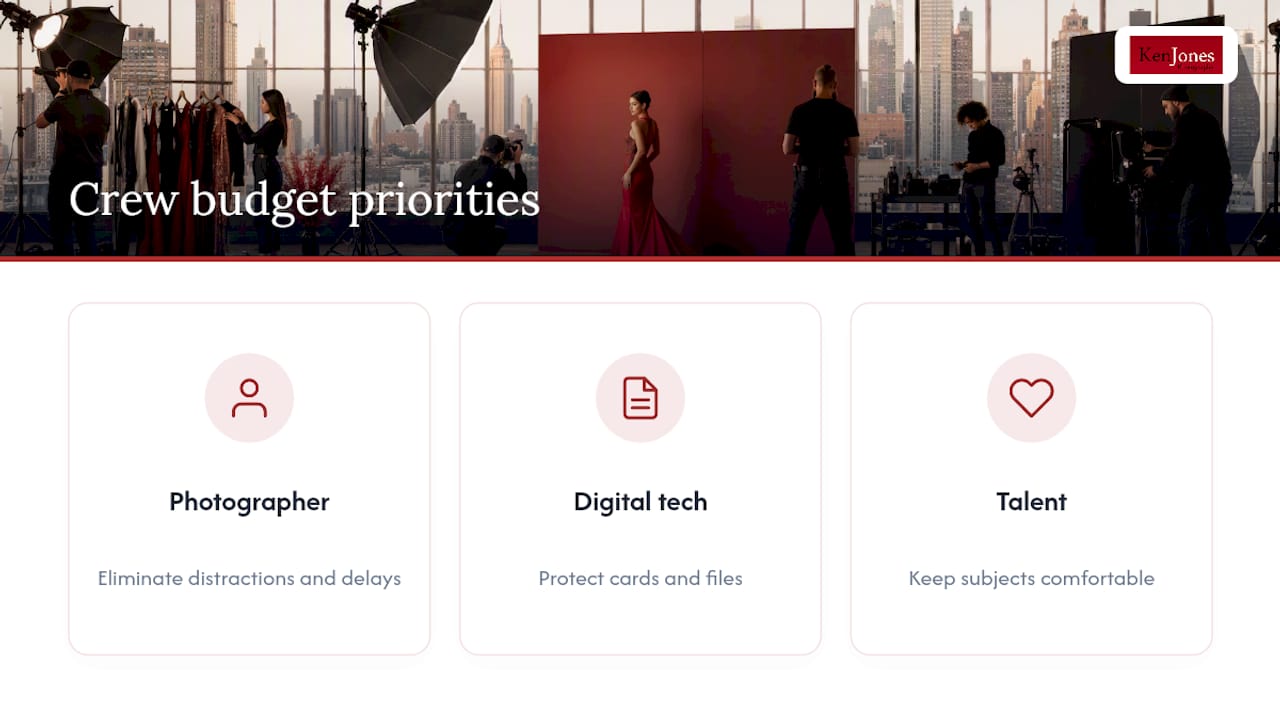
Protect the photographer’s attention first. Every dollar spent removing distractions, file panic, wardrobe delays, disorganized props, comes back in usable images. Digital tech and file safety are the second priority; a lost card ruins a day no amount of creative direction can fix. Keep talent comfortable, and the images show it.
The most common client mistake I see is overstuffing one day with too many locations or looks. The fix is almost always simpler than adding crew: cut the scope, not the staffing.
If you’re choosing between hiring more people or shooting less, shoot less.
— Ken
Need Full Production Support for Your Next Shoot?
Building the right crew is half the battle. The other half is having a studio and production team that’s already run this exact playbook hundreds of times. The studio can provide creative teams and brands a single point of contact for the full crew, digital tech setup, styling coordination, and studio rental in one package, instead of piecing together freelancers and hoping the day holds together.

Whether you’re staffing a lookbook shoot, a fashion editorial, or a full commercial production, a studio space in the Financial District and production experience can mean fewer unknowns on set. If you need a working studio with a crew that already knows how to run the day, check studio rental availability and get a quote for your specific production.
Sources
For a closer look at how these roles play out in practice, the breakdown of who works on a commercial set covers the full roster in detail. On the digital tech workflow specifically, Tether Tools and PhotoShelter both go deep on backup and tethering practices. For understanding how a full shoot day comes together, see how a fashion photography shoot works and how to brief a commercial photographer.
- Who’s Who on a Commercial Photography Set | Fstoppers
- The Digital Tech Is the Most Important Person on Set (And No One Talks About It) | Tether Tools
- The Digital Tech’s Job: Before, During and After the Shoot | PhotoShelter
- Commercial Productions | Large Productions vs. Small Productions
FAQ
What Are Some Good Positions to Fill for a Photoshoot?
At minimum, a photographer and an assistant. Commercial work commonly adds a digital tech, wardrobe stylist, hair and makeup artist, and a producer once logistics get complex.
What Are Different Types of Jobs in Photography?
Photography careers span shooting roles like photographer and assistant, technical roles like digital tech and retoucher, creative roles like art director and creative director, and support roles like producer and location manager.
What Is the 20-60-20 Rule in Photography?
That rule generally refers to exposure or histogram balance in image editing, not crew staffing, so it isn’t directly relevant to building a photoshoot crew.
How Many Crew Members Does a Typical Commercial Shoot Need?
It ranges from two people on a minimal product shoot to a dozen or more on a full commercial production with styling, grip and electric, and location logistics involved.
Do I Need a Digital Tech for Every Shoot?
Not for a simple headshot session, but for any commercial shoot with client approvals on set or a high shot volume, a digital tech protects both image quality and your files.