
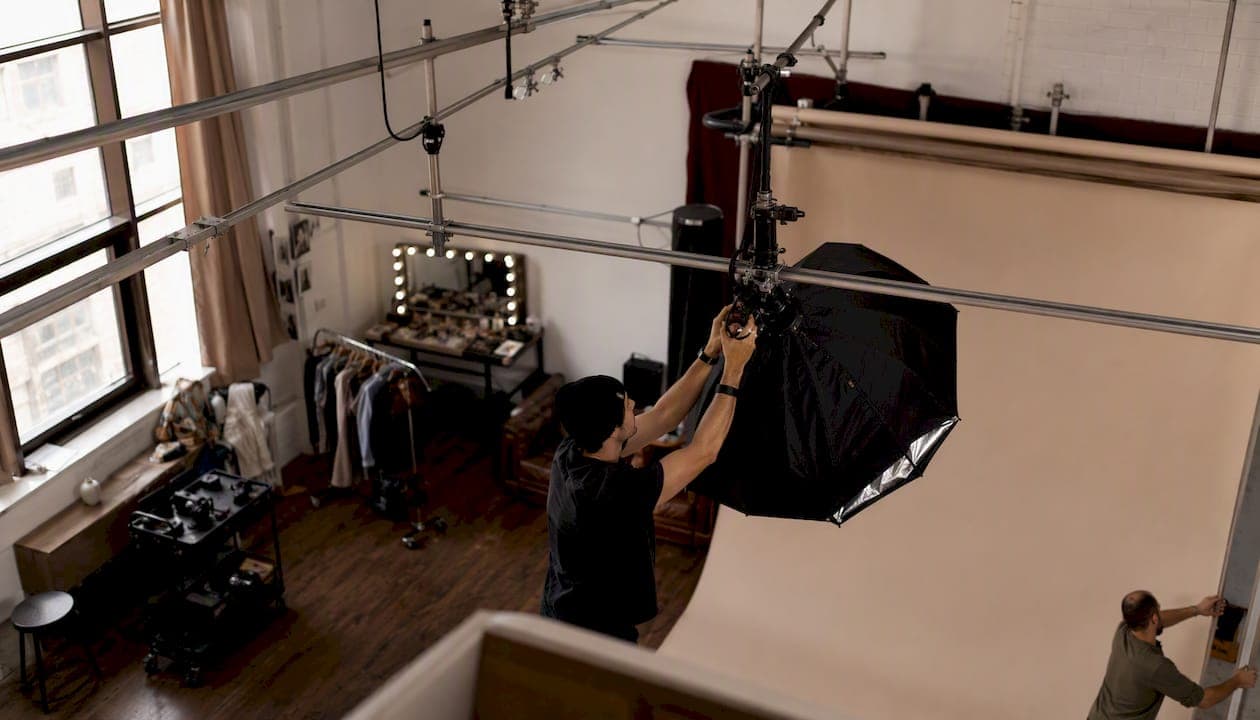
For any production team booking a shoot in Manhattan, the single best decision you can make is hiring a full-service studio and production partner, not just a room. One provider handling the space, casting coordination, styling, hair and makeup, and a day-of production manager saves you time, eliminates the finger-pointing when something goes wrong, and gives you a single contract to sign. Ken Jones Photography and FultonStudio in Downtown Manhattan offer exactly that setup for fashion, beauty, commercial, and corporate productions.
The short version: book a full-service partner, confirm your specs before you send the deposit, and treat casting and styling as production line items from day one, not afterthoughts.
Table of Contents
- What does full-service NYC studio production actually include?
- How does pricing and booking work for NYC studio production?
- How do you choose the right NYC studio and production partner?
- What does the casting and styling workflow look like in NYC?
- What studio specs should you confirm before booking?
- Ken Jones Photography and FultonStudio: what’s included and how to book
- Key Takeaways
- What most production teams get wrong about NYC studio bookings
- Ready to book your next NYC production?
- Useful sources and further reading
- FAQ
What does full-service NYC studio production actually include?
Production teams often discover mid-RFP that “studio rental” means very different things depending on who you ask. A space-only booking gives you four walls, a loading dock, and maybe a lighting grid. A full-service production partner covers creative direction, a producer or production manager on-site, casting coordination, styling and wardrobe management, hair and makeup, grip and lighting crew, equipment, and post-production retouching and delivery. The gap between those two options is where most budget surprises live.
The table below maps the three common service tiers so you can compare scope rather than vendor names.
| Service Tier | What’s Included | Best For |
|---|---|---|
| Space-only | Studio square footage, basic power, Wi-Fi | Teams with their own full crew and gear |
| Add-on crew | Space + selected crew (PA, grip, MUA) hired à la carte | Mid-size shoots with partial in-house production |
| Full-service production | Space + creative direction, producer, casting, styling, H&M, lighting, equipment, post | Agencies and brands needing one accountable partner |
Common add-ons that fall outside even full-service packages include location scouting and permits, certificate of insurance (COI) handling for third-party vendors, catering, and drive-in or drop-off logistics for large prop or wardrobe deliveries. Confirm each of these line items in writing before you sign. Production-ready spaces with dedicated glam areas and on-site managers reduce downtime significantly for fashion shoots and support higher-end editorial workflows. For teams comparing Manhattan options, the studio rental comparison guide at KenJonesNYC breaks down features and service scope in practical terms.
How does pricing and booking work for NYC studio production?
NYC studio and production pricing follows a few predictable shapes, and knowing them before you issue an RFP keeps the negotiation honest.
Rate structures you will encounter:
- Hourly: Common for space-only bookings; Peerspace marketplace data shows casting and short-term rehearsal rooms listed at hourly rates, which is useful for rough budgeting on audition space
- Half-day / full-day: Standard for most commercial and fashion shoots; full-day rates typically cover 8–10 hours with overtime billed per hour beyond that
- Production packages: Full-service providers bundle studio, crew, and equipment into a day rate; these require a direct quote because the line items vary by project scope
Typical line items to budget for:
- Studio rental (space fee, separate from crew)
- Equipment: lighting, grip, camera rental if not owned
- Crew day rates: producer/production manager, PA, grips, digital tech
- Casting fees: casting director day rate plus talent fees and model releases
- Stylist and wardrobe: stylist day rate, wardrobe pulls, steamer rental, returns handling
- Hair and makeup artist day rate
- Overtime (usually calculated per person per hour beyond the contracted day)
- COI and permit handling fees if the studio manages those on your behalf
Booking mechanics in NYC generally follow this sequence: inquiry and brief submission, quote and availability confirmation, signed contract with a deposit (commonly 25–50% of the total), COI submission from your production company, and final balance due before or on shoot day. Cancellation windows vary, but most studios require 5–10 business days’ notice to avoid forfeiting the deposit. Overtime is almost always billed at a premium rate per person per hour, so building buffer into your day schedule is cheaper than paying it out.
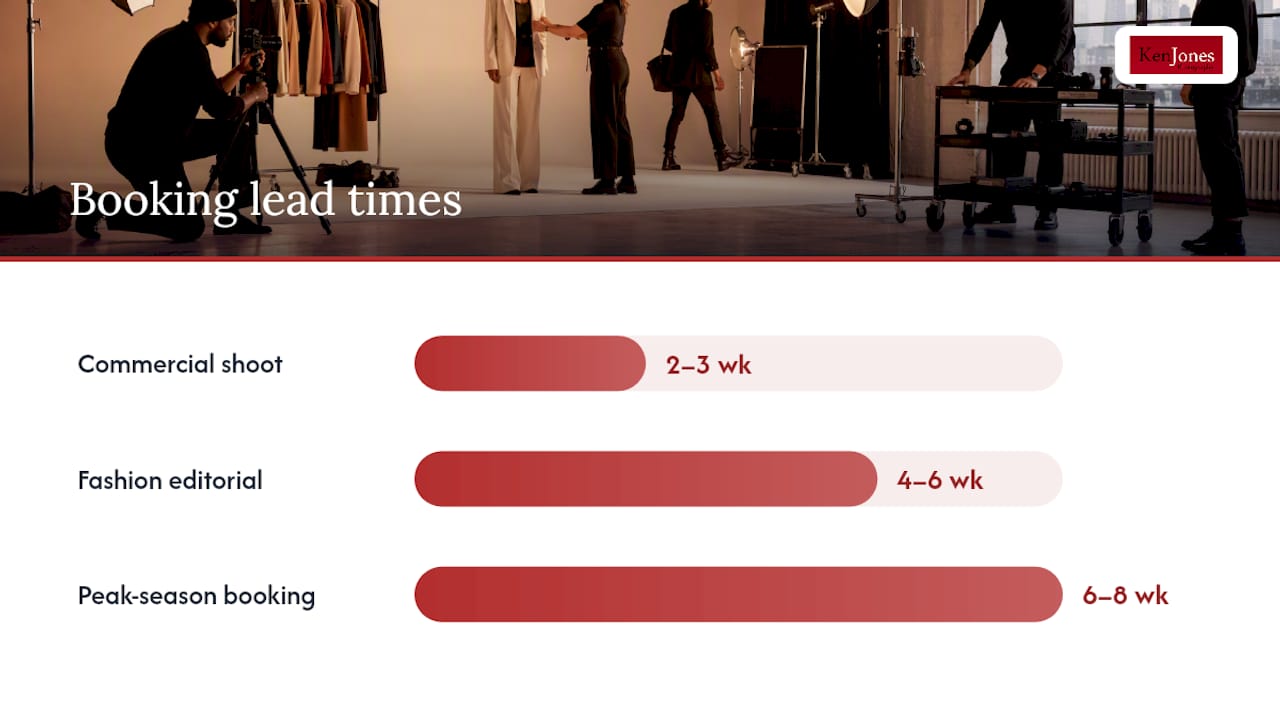
Timeline from inquiry to shoot day: For a straightforward commercial shoot, allow 2–3 weeks from first inquiry to shoot day. Fashion editorials with casting, fittings, and wardrobe pulls need 4–6 weeks minimum. Peak seasons in NYC (September and February around fashion weeks, and the pre-holiday commercial rush in October and November) compress availability fast, so booking 6–8 weeks out is not excessive for those windows. Check local event calendars before locking a date; major city events can affect crew travel times and parking access significantly.
How do you choose the right NYC studio and production partner?
The criteria that matter on shoot day are not the ones most prominently featured in studio marketing. Here is what actually separates a smooth production from a costly one.
Selection criteria worth weighting heavily:
- Proven portfolio: Ask for examples in your specific discipline. Fashion editorial, beauty close-up, and corporate lifestyle each require different lighting setups and crew sensibilities. Ken Jones Photography’s commercial photography portfolio and fashion gallery show the range of disciplines and production scales the studio handles.
Questions to ask during vetting:
Ask for sample crew day rates in writing, not just a ballpark. Confirm overtime terms per person. Ask how the studio handles COI requirements for outside vendors. Find out exactly what equipment is included versus what triggers a rental surcharge. Confirm whether there is a dedicated hair and makeup room, a client lounge with monitor access, and production office space. The studio rental questions checklist at KenJonesNYC covers the full list worth running through before you commit.
Red flags that should stop a booking: vague or incomplete equipment lists, no stated COI policy, no dedicated day-of manager, unclear overtime rules, and inconsistent answers about load-in access and timing. Studio blogs and small operators consistently emphasize the value of a clear client area, adequate power, and an on-site manager as the baseline trust signals for any serious production booking.
What does the casting and styling workflow look like in NYC?
Casting and styling are not soft creative tasks you figure out the week before the shoot. Treat them as production line items with their own deadlines, and the rest of the day runs cleanly.
- Casting call and listings: Submit casting notices through the NYC Mayor’s Office of Media and Entertainment, which provides casting and talent resources for local productions, as well as through agency contacts and digital casting platforms.
Lead times by project size: A single-talent commercial shoot can be cast and styled in 10–14 days. A multi-look fashion editorial with multiple models and wardrobe pulls needs 3–5 weeks. Complex productions with casting directors, agency approvals, and multiple talent bookings should plan for 5–6 weeks minimum.
Experienced NYC photographers treat casting the crew as carefully as casting talent. A stylist, MUA, and producer who have worked together before reduce friction and keep the day collaborative. Mismatched teams, even talented ones, cost you time.
Pro Tip: Brief every department head from the same single-page creative document. When the stylist, MUA, and photographer are all working from the same reference images and tone words, you eliminate the small misalignments that compound into a slow shoot day.
What studio specs should you confirm before booking?
Confirming technical requirements before booking prevents the kind of surprises that derail a shoot day: a ceiling too low for a 12-foot seamless, a single 20-amp circuit that can’t power a 2,400-watt strobe pack, or a load-in door that fits a hand truck but not a lighting cart.
| Spec Category | What to Confirm |
|---|---|
| Square footage and layout | Usable shooting area, separate from prep and client areas |
| Ceiling height | Minimum 12 ft for most fashion setups; 14 ft for overhead rigs |
| Natural light | Window size, direction, blackout capability |
| Electrical capacity | Total amperage, outlet locations, dedicated circuits for strobes |
| Load-in access | Freight elevator dimensions, loading dock or street-level access, parking |
| Hair and makeup room | Dedicated space with mirrors, outlets, and good light |
| Client lounge | Seating, monitor hookup, Wi-Fi for client review |
| Sound isolation | Relevant for video shoots; confirm ambient noise levels and HVAC sound |
For video productions, sound isolation is not optional. HVAC noise, street traffic, and neighboring tenant activity are the three most common audio problems in Manhattan studios. Ask specifically whether the studio has been used for interview or dialogue video before, and request a reference from a production team that shot video there. Manhattan studio location also affects crew travel, client access, and parking logistics in ways that add up across a full production day.
Ken Jones Photography and FultonStudio: what’s included and how to book
Ken Jones Photography operates FultonStudio in Downtown Manhattan’s Financial District, offering full-service studio rental and production support for fashion, beauty, commercial, corporate, and product shoots. The studio is designed for production teams that need more than a room.
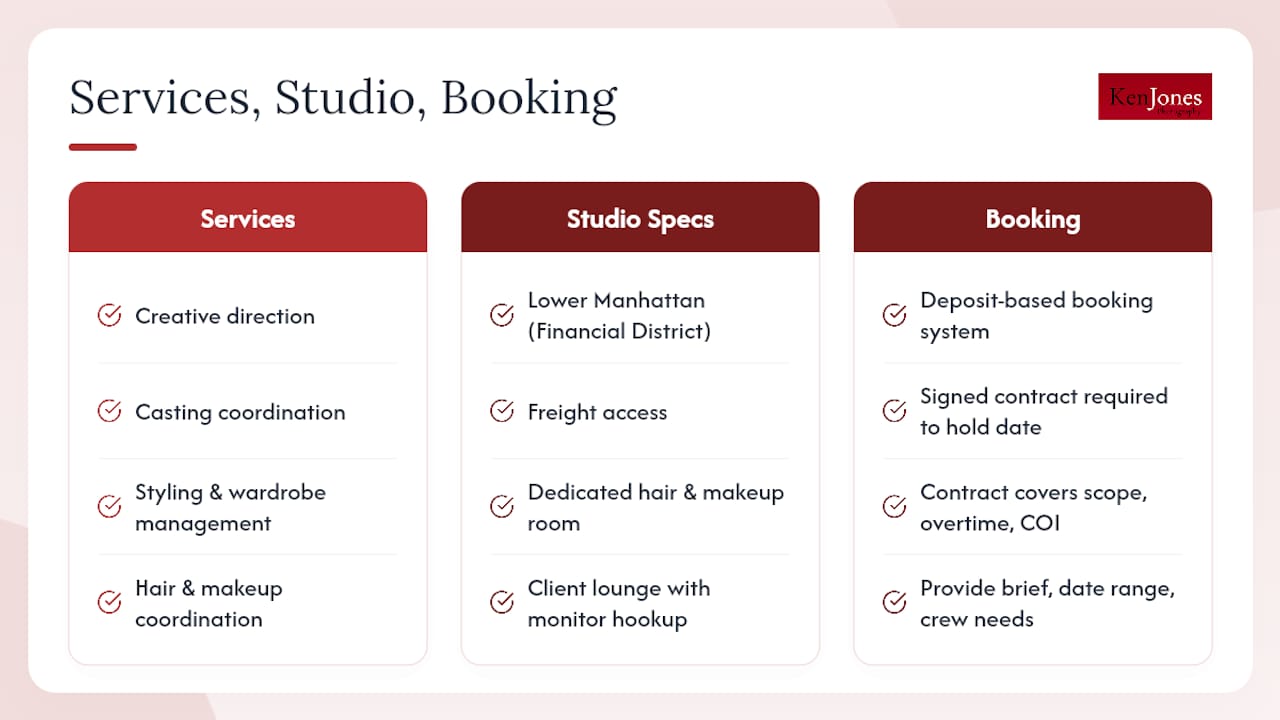
Service scope: Ken Jones Photography provides creative direction, casting coordination, styling and wardrobe management, hair and makeup coordination, lighting and grip, production assistants, equipment, retouching, and image delivery. Teams can book the space alone or engage the full production package depending on what they bring in-house.
FultonStudio specs: The studio is located in Lower Manhattan with freight access, a dedicated hair and makeup room, a client lounge with monitor hookup, and production office space. Natural light is available and controllable for shoots that need it. The location is accessible from multiple subway lines, which matters for talent call times and client attendance.
Booking structure: Ken Jones Photography works on a deposit-based booking system with a signed contract confirming scope, overtime terms, and COI requirements before the shoot date is held. Teams should have their brief, date range, and crew needs ready before the first inquiry to get an accurate quote quickly. The studio rental page has current availability and booking details.
For teams planning brand photoshoots, the brand photoshoot planning guide from Brands & Co offers a useful framework for organizing pre-production steps that translate well to NYC commercial shoots.
Key Takeaways
A full-service Manhattan studio and production partner, not a space-only rental, is the most reliable way to control cost, timeline, and output quality for NYC fashion, beauty, and commercial shoots.
| Point | Details |
|---|---|
| Book full-service, not space-only | One partner covering space, crew, casting, and styling eliminates the gaps where budget surprises live. |
| Allow several weeks for fashion shoots | Casting, fittings, and wardrobe pulls for editorial or multi-look productions need that lead time minimum. |
| Confirm specs before the deposit | Ceiling height, electrical capacity, load-in access, and sound isolation must be verified in writing, not assumed. |
| Lock the shot list the night before | Unannounced changes on shoot day are the most common cause of overtime costs and missed setups. |
| Ken Jones Photography and FultonStudio | Offers full-service production support, casting coordination, styling management, and studio rental in Downtown Manhattan. |
What most production teams get wrong about NYC studio bookings
The mistake I see most often is treating the studio as the last decision instead of the first. Teams spend weeks on casting, styling, and creative development, then book a space two weeks out and discover it doesn’t have the ceiling height for their lighting concept, or the load-in is street-level on a one-way block with no parking. At that point, you either adapt the concept or pay to move everything.
The other pattern that costs people money is underestimating how much the crew dynamic affects the shoot. A stylist and MUA who have never worked together will spend the first hour of the day figuring out each other’s rhythm. That’s an hour you’re paying for. When the whole team, photographer, producer, stylist, MUA, and PA, has a shared understanding of the creative direction before they walk in the door, the day moves at a completely different pace.
Three habits that keep shoots on time and on budget: send a single-page creative brief to every department head 48 hours before the shoot; confirm load-in logistics with the studio the day before, not the morning of; and build overtime into the budget as a line item rather than a surprise. If you don’t use it, you’re ahead. If you do, you’re covered.
Ready to book your next NYC production?
Ken Jones Photography gives production teams a direct line to a full-service commercial studio in Downtown Manhattan, without the overhead of coordinating five separate vendors. Whether you need the space alone or the complete package, including casting coordination, styling, hair and makeup, lighting crew, and post-production, the studio is built to handle it from brief to delivery.
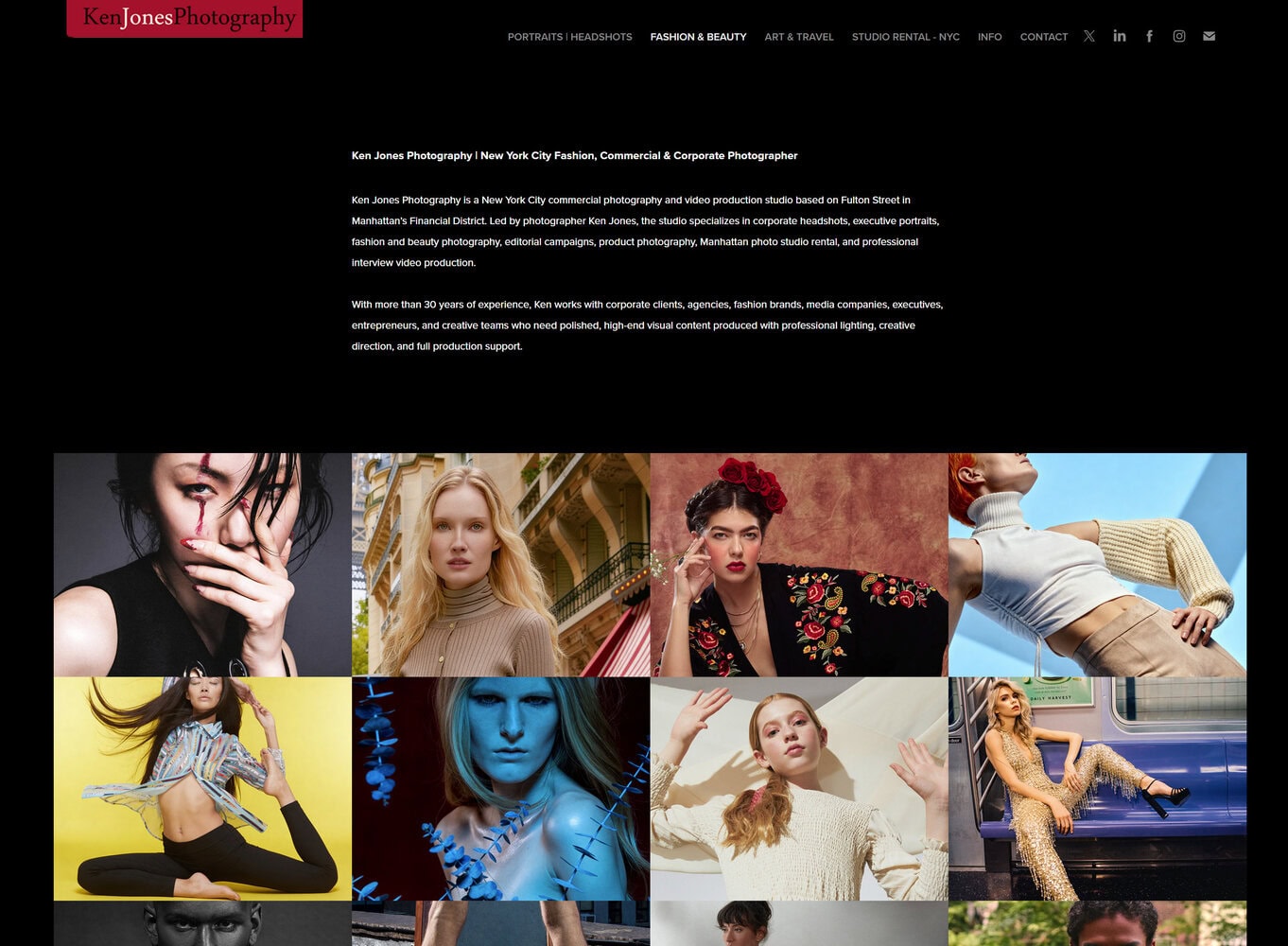
To get a fast quote for a full-day or production package, have your brief, date range, and crew needs ready. Visit the FultonStudio rental and booking page to check availability and start the conversation. For teams that want to see the work first, the fashion editorial portfolio shows the range of productions the studio has supported.
Useful sources and further reading
- Choose the Right Commercial Shoot Location in NYC | Cocoon Flex Spaces
- Organizing a Fashion Photoshoot in Unique NYC Venues | Cocoon Flex Spaces
- Shooting a Fashion Editorial in NYC | How I Shot It
- 12 Best Casting Spaces for Rent in New York, NY
- How to Plan a Fashion Editorial Shoot in New York City – Frame The World
- Elevate Your Brand: Corporate Photography Guide for NYC Small Businesses | Signal Studio NYC Blog
- Casting & Talent – MOME
- Photo Studio Rental NYC | Downtown Manhattan
FAQ
How far in advance should you book an NYC studio for a fashion shoot?
For fashion shoots with casting, fittings, and wardrobe pulls, book several weeks out. Peak periods around New York Fashion Week require significant advance booking.
What is typically included in a full-service NYC production package?
A full-service package covers studio space, a production manager, casting coordination, styling and wardrobe management, hair and makeup, lighting and grip crew, equipment, and post-production retouching and delivery. Space-only bookings include none of those crew or production services.
Does Ken Jones Photography handle casting and styling, or just the studio?
Ken Jones Photography offers full production support including casting coordination, styling and wardrobe management, hair and makeup coordination, and creative direction, in addition to the FultonStudio space itself.
What should you have ready before contacting an NYC studio for a quote?
Have your brief, shoot date range, number of talent, number of setups or looks, and any specific equipment or crew needs ready. That information lets a full-service studio give you an accurate quote rather than a placeholder range.
How does overtime work for NYC studio bookings?
Overtime is typically billed per person per hour beyond the contracted day length, which is usually 8–10 hours. Confirm the overtime rate for each crew member in the contract before the shoot day, and build a buffer into your schedule to avoid it.