
TL;DR:
- Structured advertising photo shoots rely on thorough pre-production, organized on-set workflow, and proactive post-production planning. Having detailed shot lists and mood boards aligns the team, minimizes delays, and ensures asset requirements are met from the start. Proper scheduling, clear roles, and early post-production decisions create efficient campaigns that deliver quality images on time.
Advertising photo shoot structure is defined as the disciplined sequence of pre-production planning, on-set execution, and post-production coordination that transforms a creative concept into usable campaign imagery. Understanding how advertising photo shoots are structured separates campaigns that deliver on time and on budget from those that fall apart in the editing room. The process involves specific documents, defined crew roles, and scheduling logic that most marketing teams never see. This guide breaks down each stage with the clarity that comes from 30+ years of producing commercial shoots in New York City, from fashion editorials in Lower Manhattan to product campaigns in controlled studio environments.
How advertising photo shoots are structured: the core framework
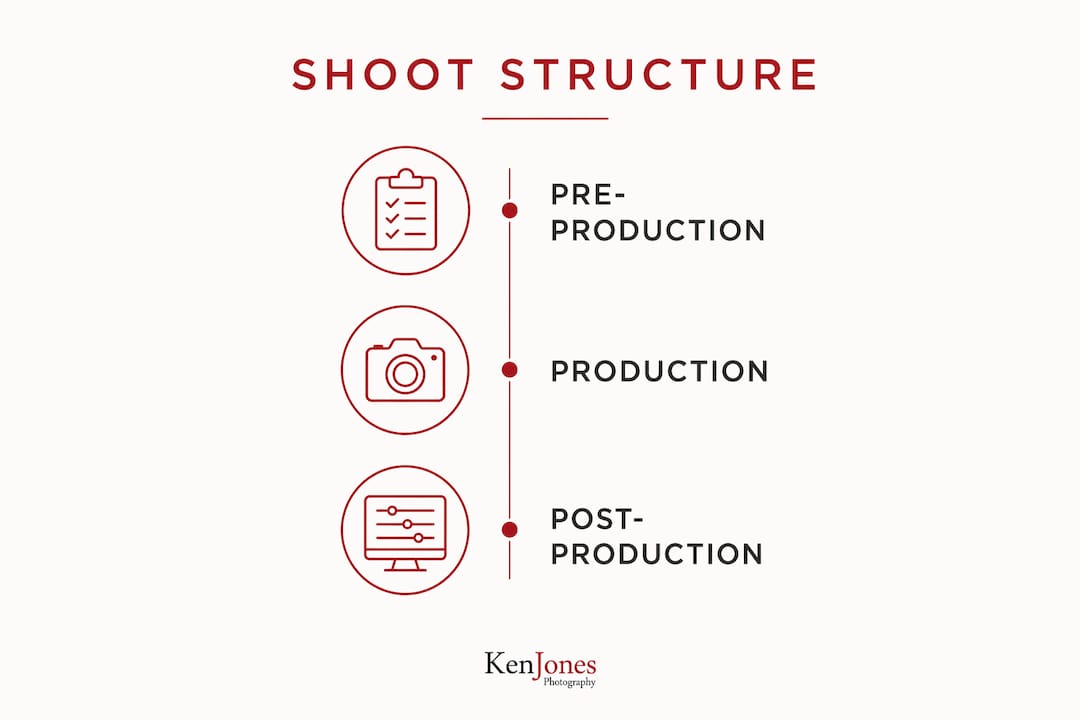
Every professional advertising shoot runs on three interconnected phases: pre-production, production, and post-production. Pre-production is where the shoot is won or lost. Production is where preparation meets execution. Post-production is where the investment either pays off or gets wasted.
The pre-production phase produces the documents that govern everything else. A shot list and mood board are the two most critical outputs of this phase. The shot list defines what gets captured. The mood board defines how it should look and feel. Together, they give every crew member a shared reference point before anyone steps on set.
Production runs on a call sheet and a shoot schedule. The call sheet lists every person on set, their role, their call time, and the location. The schedule breaks the day into time blocks tied to specific shot categories. Post-production planning, which most teams treat as an afterthought, actually begins during pre-production when you define asset types, usage rights, and delivery formats.
The creative brief sits above all of this. It is the document that translates the client’s marketing objectives into photographic direction. Without a strong creative brief, every downstream document becomes a guess.
What is a shot list and mood board, and how do they define the shoot’s structure?
A shot list is a master checklist of every required image, including technical and logistical details for each frame. It is not a loose collection of ideas. It is a production document that tells the photographer, assistants, and digital tech exactly what needs to happen and in what order.
A complete shot list includes the following for each image:
- Shot identifier: a unique number or code for tracking and cross-referencing
- Camera angle and framing: wide, medium, close-up, overhead, or eye-level
- Lens choice: focal length affects compression and perspective, which matters for product and fashion work
- Camera movement: static, handheld, or on a slider
- Wardrobe and props: specific items required for that frame
- Narrative context: a brief note explaining the intended use or emotional tone of the shot
Detailed shot list entries communicate all requirements clearly to the crew and reduce on-set confusion. That specificity is what keeps a 10-hour shoot from running 14 hours.
The mood board serves a different but equally important function. A mood board aligns the creative team on the specific visual tone and emotional register the brand needs. It is not decoration. It is a decision-making tool that prevents the photographer, art director, and client from arriving on set with three different ideas of what “clean and modern” actually means.
| Document | Primary Function | Who Uses It |
|---|---|---|
| Shot list | Tracks every required frame with technical specs | Photographer, digital tech, assistants |
| Mood board | Aligns creative direction and visual tone | Art director, photographer, client |
| Call sheet | Organizes crew, talent, and location logistics | All crew and talent |
| Creative brief | Translates marketing goals into photographic direction | Creative director, photographer |
Pro Tip: Treat the shot list as a living document. Update it after your pre-production walkthrough and after any collaborator feedback. Real-world conditions always surface details that the first draft missed.
A common mistake is building a shot list in creative sequence, meaning in the order the images will appear in the campaign. The better approach is to group shots by setup and location, which cuts down on the time lost moving crew and resetting lights. A fashion campaign that requires three wardrobe looks across two locations should group all shots from Location A together, regardless of where those images fall in the final layout.
How is on-set workflow organized, and what roles are essential for smooth execution?
The on-set workflow in a professional advertising shoot is built around one principle: the photographer’s attention stays on the image. Every other role on set exists to protect that focus.
Digital techs manage tethered capture, file organization, on-set color calibration, and client review during the shoot. This frees the photographer to concentrate entirely on directing talent and capturing frames. On commercial and advertising shoots, the digital tech is not optional. They are the person who catches a focus issue on frame 12 before you shoot 200 more frames with the same problem.
The on-set workflow for a structured advertising shoot typically runs in this sequence:
- Setup and lighting check: the photographer and lighting team establish the first setup while the digital tech confirms tethered connection and file naming conventions
- Test frames: the photographer shoots a small series of test frames that the digital tech reviews on a calibrated monitor
- Client review: the art director or client rep reviews selects on the tethered monitor and approves the lighting and composition before the full sequence begins
- Capture sequence: the photographer works through the shot list while the digital tech manages live backups and flags any technical issues
- Setup transition: the digital tech organizes completed files while the crew resets for the next setup
Photo assistants handle physical tasks: moving lights, managing cables, adjusting reflectors, and supporting the photographer’s equipment. The digital tech handles data. These are distinct roles, and conflating them is a production mistake that shows up on larger shoots as bottlenecks.
Pro Tip: Before the shoot day, confirm that your digital tech and photographer have worked together before, or schedule a brief pre-production call. Workflow compatibility between those two roles directly affects how fast the day moves.
The full process of a professional shoot also depends on clear communication between the photographer and the art director during capture. The best shoots have a defined review rhythm: the art director checks selects every 20–30 minutes rather than hovering over the monitor after every frame. That rhythm keeps the creative conversation productive without interrupting the photographer’s momentum.
What are practical strategies to maximize efficiency in scheduling and shoot logistics?
Setup efficiency is the single most underused concept in advertising shoot planning. It means organizing the shoot schedule around logistical reality rather than creative preference. The result is fewer wasted hours and a crew that stays sharp through the full day.
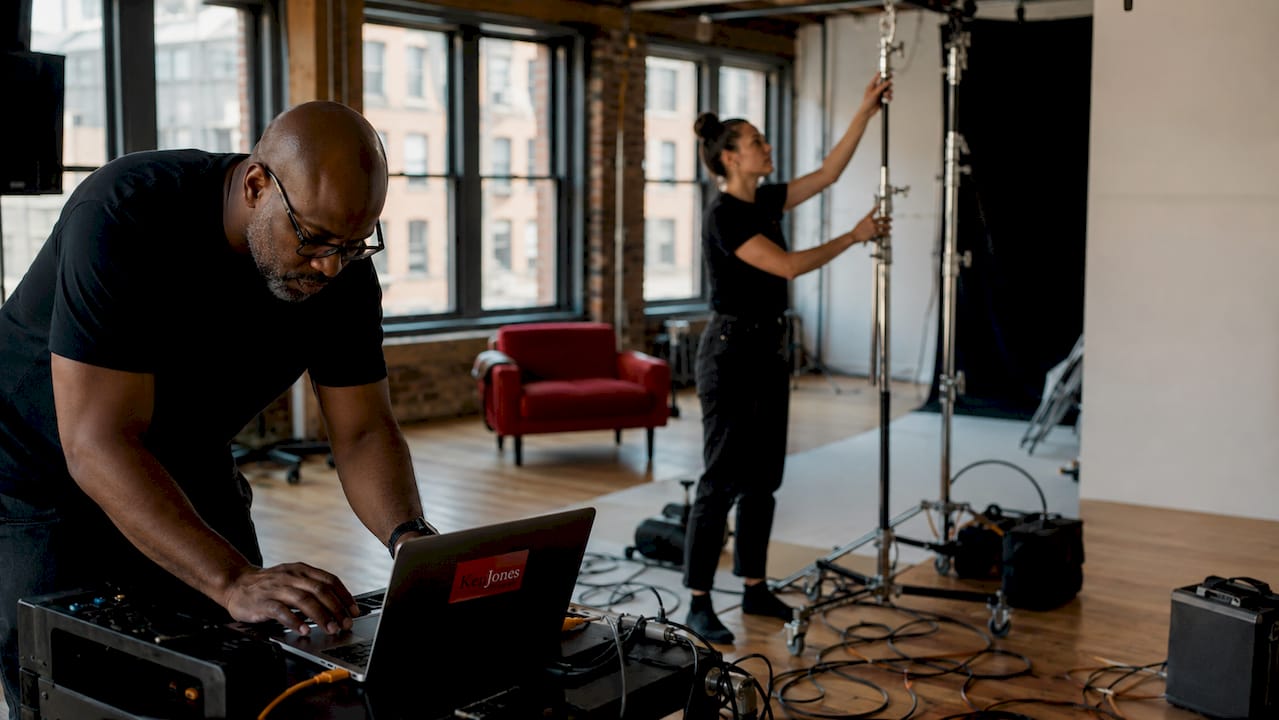
Grouping shots by location first, lighting second, and wardrobe third is the most effective way to sequence a professional shoot. This approach saves hours on multi-location shoots and keeps talent from sitting in holding while the crew rebuilds a lighting setup they already struck.
A practical scheduling approach for a structured advertising shoot follows this logic:
- Map all shots to their physical location. Every frame that happens in Location A gets scheduled together, regardless of its place in the campaign narrative.
- Within each location, group by lighting setup. If three shots share the same key light position, shoot them consecutively. Resetting a three-point lighting rig takes 20–40 minutes. Avoiding one unnecessary reset saves real money.
- Within each lighting setup, group by wardrobe. Wardrobe changes for talent take time. Grouping all frames that require a specific look minimizes the number of changes per day.
- Build time buffers between major transitions. A 15-minute buffer between location moves is not padding. It is insurance against the inevitable delay.
- Assign a time block to each shot category and hold to it. Strict time blocks for different shot categories are what separate shoots that finish on schedule from those that run into overtime.
Talent management is directly tied to scheduling discipline. Models, executives, and brand spokespeople have limited availability and energy. A shoot that runs long because of poor scheduling does not just cost overtime fees. It produces images of tired talent in the final hour, and those images rarely make the cut.
Contingency planning matters just as much as the primary schedule. Every shoot day should have a defined “cut list”: the shots that get dropped first if the schedule slips. Knowing in advance which frames are lowest priority prevents the end-of-day scramble where the team tries to squeeze six shots into 45 minutes.
Pro Tip: Walk the location or studio the day before the shoot. Confirm where the light falls at the time of day you plan to shoot, where the crew will stage equipment, and where talent will wait between setups. That 30-minute walkthrough eliminates at least an hour of on-set problem-solving.
How does post-production planning connect to shoot structure?
Post-production planning is not a phase that begins after the shoot. It is a pre-production decision that shapes how you shoot. Good shoot structure extends beyond capture into asset delivery and organization, and the teams that understand this produce campaigns that are easier to deploy across channels.
The key decisions to make before the shoot day include:
- Final asset types: define whether the campaign needs horizontal crops for web banners, vertical crops for social, and square formats for e-commerce. These requirements affect how the photographer frames each shot.
- Usage rights: confirm the scope of usage before the shoot. Usage rights for a national print campaign differ significantly from those for a regional social media run. This affects talent contracts, location permits, and licensing fees.
- Image categorization: decide in advance how images will be organized for the marketing team. Categories might include hero images, lifestyle images, product detail shots, and team portraits. Organizing by category at the time of delivery makes deployment faster.
- Retouching scope: define what retouching is included and what requires additional approval. Skin retouching standards, color grading preferences, and composite work should all be agreed upon before the shoot.
- Delivery timeline: set a realistic delivery date that accounts for culling, retouching, and client review rounds. Rushing post-production is where image quality gets compromised.
Creative directors who brief a commercial photographer with clear asset requirements get better results than those who leave delivery details open. The photographer can then frame shots with the final crop in mind, which eliminates the frustration of discovering that the hero image cannot be cropped for a vertical format because the composition was built for horizontal use only.
A real pattern that shows up repeatedly: a marketing team approves a shoot, the photographer delivers 50 selects, and then the team realizes they need a version of the hero image with space for a text overlay. That space was never built into the composition. The fix requires either a reshoot or a compromise on the final image. Pre-production planning eliminates that scenario entirely.
Key takeaways
Advertising photo shoots succeed when pre-production planning, on-set workflow, and post-production coordination are treated as a single connected system rather than three separate tasks.
| Point | Details |
|---|---|
| Shot list defines the shoot | Build a detailed shot list with camera specs, wardrobe, and narrative context for every frame. |
| Mood board aligns the team | Use a mood board to establish visual tone before the shoot, not during it. |
| Digital tech protects quality | A digital tech manages tethered capture and file integrity so the photographer stays focused on the image. |
| Setup efficiency saves hours | Group shots by location, then lighting, then wardrobe to cut unnecessary resets and transitions. |
| Post-production starts in pre-production | Define asset types, usage rights, and delivery formats before the shoot day to avoid costly surprises. |
What 30 years of NYC shoots taught me about structure
The biggest production lesson I have learned is that structure is not the enemy of creativity. It is what makes creativity possible. When the logistics are locked down, the photographer and art director have mental space to make better images. When the logistics are chaotic, everyone is managing problems instead of making pictures.
The most common mistake I see from marketing teams is treating the shot list as a formality. They hand over a rough list of “things we want” and expect the photographer to figure out the rest. That approach works on small shoots with simple setups. On a full advertising production with multiple talent, two locations, and a client rep on set, it creates confusion that costs real money.
I have also seen the opposite mistake: a shot list so rigid that there is no room to respond to what is actually happening on set. The best shoots have a clear plan and a photographer who knows when to follow it and when to trust what the camera is showing. That judgment comes from experience, not from the document.
The role of photography in ad campaigns has only grown more demanding as brands need content across more channels simultaneously. The teams that adapt fastest are the ones who build their shoot structure around final asset requirements from the start. They shoot for the campaign, not just for the day.
One more thing: the conversation between the creative director and the photographer before the shoot is as important as any document. If those two people are not aligned on the emotional tone of the campaign, no shot list will fix it on set. Get that conversation right in pre-production, and everything else runs cleaner.
— Ken
Production support for your next advertising shoot
Ken Jones Photography brings 30+ years of commercial production experience to advertising shoots across New York City, from studio work at FultonStudio in the Financial District to location productions throughout Manhattan.
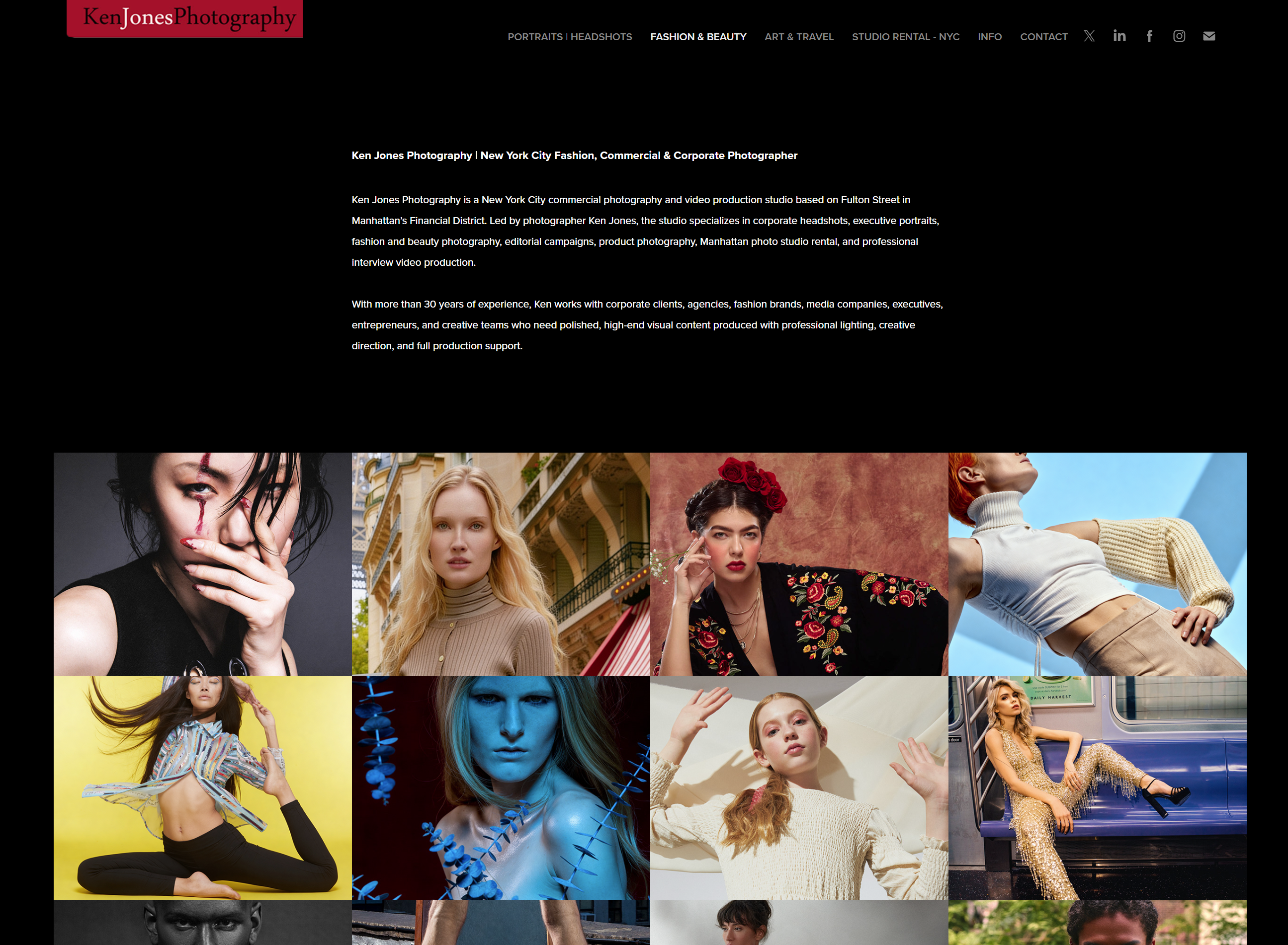
The studio provides full pre-production support, including shot list development, mood board review, crew coordination, and scheduling. On-set, the team manages tethered workflow, lighting, and client review so your creative director can focus on the work. The commercial photography portfolio shows the range of advertising, fashion, and beauty work produced under this structure. For teams planning a campaign, the fashion photography gallery and beauty photography portfolio offer a direct look at the quality of finished work. Contact Ken Jones NYC at kenjonesnyc.com to discuss your next production.
FAQ
What is a shot list in advertising photography?
A shot list is a master checklist of every required image, including camera angle, lens choice, wardrobe, props, and narrative context for each frame. It is the primary document that keeps an advertising shoot organized and on schedule.
How does a mood board differ from a shot list?
A mood board establishes the visual tone and emotional direction of the shoot, while a shot list tracks the specific technical and logistical requirements for each frame. Both documents are used together in pre-production to align the creative team before shooting begins.
What does a digital tech do on a photo shoot?
A digital tech manages tethered capture, file organization, on-set color calibration, and client review during the shoot. This role is standard on professional advertising productions and allows the photographer to focus entirely on directing and capturing images.
How should shots be grouped on a shoot schedule?
Shots should be grouped by location first, lighting setup second, and wardrobe third. This sequence minimizes the time lost resetting lights and managing talent wardrobe changes, which is where most shoot schedules lose hours.
When should post-production planning begin?
Post-production planning begins during pre-production, before the shoot day. Defining final asset types, usage rights, retouching scope, and delivery formats in advance ensures the photographer frames shots correctly and the marketing team receives images ready to deploy.