
TL;DR:
- A commercial photography brief is a focused document that clearly defines project goals, shot priorities, technical requirements, and logistics. Properly detailed briefs help avoid costly reshoots, miscommunication, and delays by providing a clear target for photographers. Including specific audience insights and annotated visual references ensures the images align with brand objectives and audience feelings.
A commercial photography brief is a focused document that outlines your project objectives, usage rights, shot list, schedule, technical requirements, and key contacts so your photographer can deliver exactly what your campaign needs. Knowing how to brief a commercial photographer correctly is the single most effective way to avoid costly reshoots, miscommunication, and wasted shoot days. The brief functions as a shared contract of expectations before a single light is set. Marketing professionals and brand managers who invest 30 minutes in a well-structured brief consistently get stronger images, faster turnaround, and fewer surprises on set. This guide covers every element your brief must contain, with real-world examples from NYC commercial shoots.
What does a commercial photography brief need to include?
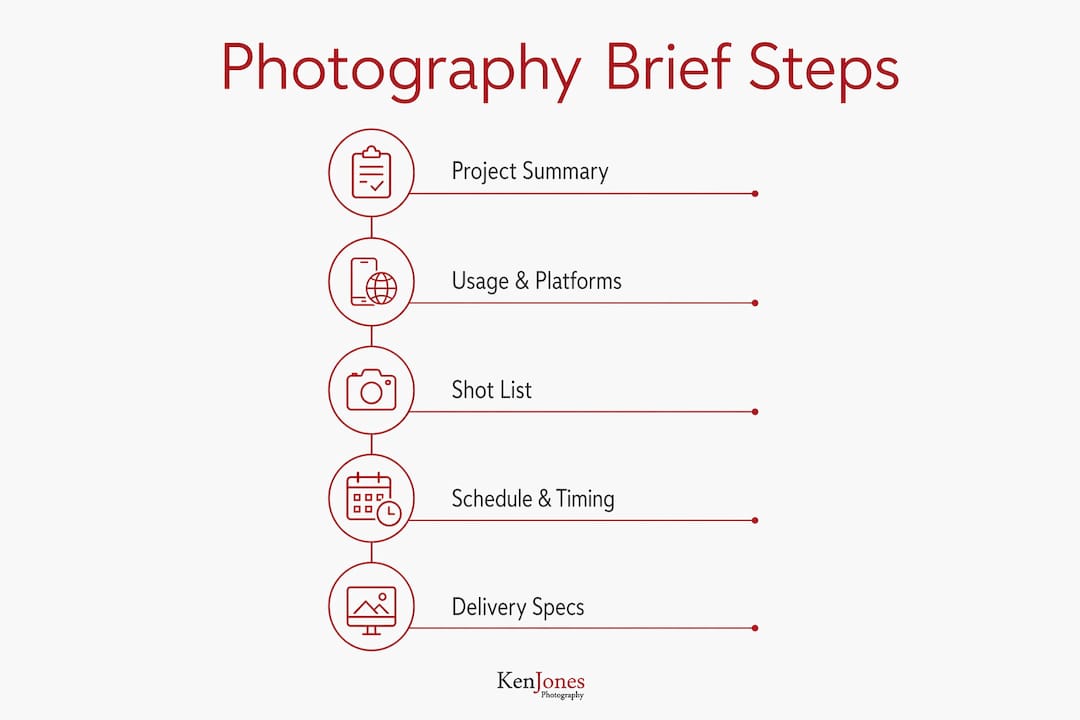
A well-built brief covers five core elements: project summary, usage and platforms, a prioritized shot list, a timed schedule, and delivery specifications. Each element answers a specific question the photographer will ask before or during the shoot. Leave any one out, and you create a gap that gets filled with assumptions.
Project summary
The project summary is a single paragraph that states your objective clearly. “We are shooting a fall product line for e-commerce and social media” is a summary. “We need great photos” is not. The summary sets the tone for every decision the photographer makes, from lighting setup to lens choice. Keep it under 100 words and write it as if the photographer has never heard of your brand before.
Shot list
The shot list is the most practical tool in your brief. Effective shot lists contain 8–15 items and separate must-have shots from good-to-have shots. Prioritizing this way protects your core deliverables if the shoot runs short on time. Number each shot, note the orientation (landscape, portrait, or square), and flag any shots that require specific props or talent. A shot list without priority order puts every image on equal footing, which means the photographer has no way to triage if the afternoon light shifts or a model runs late.
Schedule and timed breakdown
The schedule tells the photographer when to be where and what happens next. Include call time, hair and makeup start, first shot time, breaks, and wrap time. A timed breakdown also helps you calculate whether your shot list is realistic for the day. If you have 12 shots and four hours of shooting time, you need to know that before the shoot, not during it.
Delivery specs and contacts
Delivery specifications define the file formats, resolution, and turnaround time you expect. Standard turnaround runs 24–48 hours for selects and up to 5 business days for a full edited gallery. List your day-of contact by name and phone number. If the photographer has a question on set, they need one person to call, not a chain of emails.
Pro Tip: Never send a mood board without annotations. A collection of images labeled “vibe” tells a photographer almost nothing. Write one sentence next to each reference image explaining what specifically appeals to you: the lighting direction, the color palette, the model’s expression, or the background texture. That annotation is the actual brief.
How do you translate brand goals into clear photography instructions?
The most common mistake in commercial briefs is writing from the brand’s perspective instead of the audience’s. Effective briefs shift focus from “what we want to say” to “what we want the audience to feel.” That shift changes everything about how you describe the visual style you need.
A skincare brand that writes “we want to look premium” gives the photographer a vague target. A brand that writes “we want a 35-year-old woman to feel like this product belongs in her morning routine, not on a pharmacy shelf” gives the photographer a specific emotional outcome to work toward. The second version informs lighting choices, model casting, prop selection, and background treatment all at once.
Avoid broad audience labels like “millennials” or “professionals.” Instead, specify what your audience buys, what they find overdone, and what surprises them. A brief that says “our buyer is a 28-year-old woman who shops at Aritzia, follows interior design accounts, and is tired of overly posed lifestyle photography” gives the photographer a real person to shoot for. That specificity produces images that cut through a saturated market.
The table below shows the difference between vague and precise brief language across four common brand and audience descriptions.
| Brief element | Vague version | Precise version |
|---|---|---|
| Brand tone | “Modern and clean” | “White space dominant, no props except the product, natural light only” |
| Audience feeling | “Aspirational” | “She should feel like she already owns this lifestyle, not that she’s reaching for it” |
| Lighting direction | “Bright and airy” | “Soft window light from camera left, no hard shadows, slight warmth in highlights” |
| Model direction | “Natural and relaxed” | “Candid movement, no direct eye contact with camera, loose hair, no visible jewelry” |
Vague mood boards and generic style descriptions lead directly to reshoots. Annotated references with explicit dos and don’ts communicate your brand’s tolerance for creative risk and prevent conflicting styles from showing up in the final gallery. The goal is not to remove the photographer’s creative judgment. The goal is to give that judgment a clear target.
Understanding how commercial photography builds brand perception helps you write more purposeful visual instructions from the start.
How do you manage logistics for a smooth shoot day?
Logistics are where well-planned shoots fall apart. The brief must address location details, access instructions, parking, and any restricted areas before the photographer arrives on set. A photographer who spends 20 minutes finding the freight elevator or waiting for a security badge is a photographer who is not shooting.
Appoint a single day-of contact and include their name and direct cell number in the brief. Multiple people giving the photographer instructions on set creates contradictory direction and breaks visual consistency across the gallery. One contact, one voice. That person has the authority to make decisions and the knowledge to answer questions without escalating.
A pre-shoot planning call is one of the most underused tools in commercial photography production. Schedule a 20-minute call one week before the shoot to surface details that never make it into the written brief. Executives who hate being photographed, NDAs that restrict certain products from appearing in images, last-minute schedule changes, and access restrictions all come out in a planning call. They rarely come out in an email chain.
Key logistics to document in your brief:
- Location address and access instructions: Include building entry codes, elevator numbers, and any check-in procedures.
- Parking and load-in details: Note where the photographer and crew can park and how equipment gets into the space.
- No-go zones: List any areas, products, or people that cannot appear in images due to legal or confidentiality constraints.
- Participant releases: Confirm whether model releases are signed before the shoot day, not on the morning of.
- Catering and break schedule: A fed crew is a focused crew. Note break times so the photographer can plan shooting windows accurately.
Pro Tip: A brief that a photographer can read in two minutes and fully understand is a brief that works. If your document requires a follow-up call just to decode it, it is too long and too vague. Aim for one page of clear, numbered information. Clarity on paper means efficiency on set.
For a deeper look at how agencies structure their photographer selection and briefing process, the guide on how agencies select photographers covers the full production workflow from brief to final delivery.
If you are planning a corporate event shoot, this resource on corporate event briefs covers the specific logistics and contact structures that keep event photography on track.
What technical delivery requirements should your brief specify?
Technical delivery requirements define what you actually receive at the end of the shoot. Without them, you may get files that work for Instagram but cannot be printed at billboard scale, or images delivered in a color profile your web team cannot use. Specify these details before the contract is signed, not after.
File format requirements depend on where the images will appear. JPEG and PNG files work for web and social media. TIFF files are required for print production, including catalogs, billboards, and magazine placements. If you need both, say so in the brief. Asking for a format conversion after delivery adds time and sometimes cost.
The table below maps common usage channels to their standard technical requirements.
| Usage channel | File format | Orientation | Turnaround |
|---|---|---|---|
| Social media (Instagram, LinkedIn) | JPEG | Square or portrait | 24–48 hours for selects |
| Website and e-commerce | JPEG or PNG | Landscape or square | 24–48 hours for selects |
| Print catalog | TIFF | Landscape or portrait | Up to 5 business days |
| Billboard or large-format print | TIFF | Landscape | Up to 5 business days |
| Press and editorial | JPEG | Varies by publication | 24–48 hours for selects |
Usage rights directly affect the photographer’s quote and licensing fees. A set of images licensed for organic social media costs significantly less than the same images licensed for a paid national advertising campaign. Clarify your usage parameters before signing the contract. Discovering after the shoot that you need national billboard rights when you only licensed social media use creates a legal and financial problem that a clear brief prevents entirely.
Aspect ratio requirements also vary by platform. Instagram Stories require a 9:16 vertical frame. LinkedIn banner images require a wide horizontal crop. If your campaign runs across multiple platforms, list every required crop in the brief so the photographer frames shots with those crops in mind. Asking for a crop that was never planned for in the original composition almost always means losing part of the image.
Kenjonesnyc works with clients on advertising campaign photography that requires precise technical delivery across multiple channels, and the briefing process always starts with a clear usage and format discussion.
Key Takeaways
A strong commercial photography brief covers project goals, shot priorities, logistics, and technical delivery specs before the shoot day begins.
| Point | Details |
|---|---|
| Brief structure matters | Include project summary, shot list, schedule, delivery specs, and a single day-of contact. |
| Audience focus beats brand focus | Write briefs around what you want the audience to feel, not what the brand wants to say. |
| Annotate visual references | Label every mood board image with specific notes on what appeals to you and why. |
| Logistics prevent delays | Document location access, parking, no-go zones, and participant releases before shoot day. |
| Usage rights drive pricing | Define whether images are for social media or paid campaigns before signing any contract. |
What 30 years on NYC sets taught me about bad briefs
The most expensive mistake I see clients make is not the vague mood board or the missing shot list. It is the brief that tries to direct the photographer’s creative decisions instead of communicating the project’s needs. I have been handed briefs that specified exact f-stops, prescribed lighting ratios, and dictated poses down to hand placement. Those shoots almost always produce stiff, lifeless images. The client spent so much energy controlling the process that they forgot to communicate the outcome they actually needed.
Trust the photographer’s professional judgment once the logistics and goals are clear. Your job in the brief is to define the target. The photographer’s job is to hit it. When those roles blur, the images suffer.
I remember a beauty campaign shoot in Midtown where the client sent a 14-page brief with lighting diagrams and specific Kelvin temperature requirements. The location had north-facing windows that made their prescribed setup impossible. We spent the first 45 minutes of a four-hour shoot renegotiating the entire lighting plan because the brief had no room for real-world conditions. A one-page brief focused on the emotional outcome they needed would have let us solve that problem in five minutes and start shooting.
The briefs that produce the best work are the ones that give me a clear picture of the audience, a prioritized shot list, and the freedom to make creative decisions within those boundaries. Specificity about goals. Trust about execution. That combination is what gets campaigns the images they actually need.
Working with Kenjonesnyc on your next commercial shoot
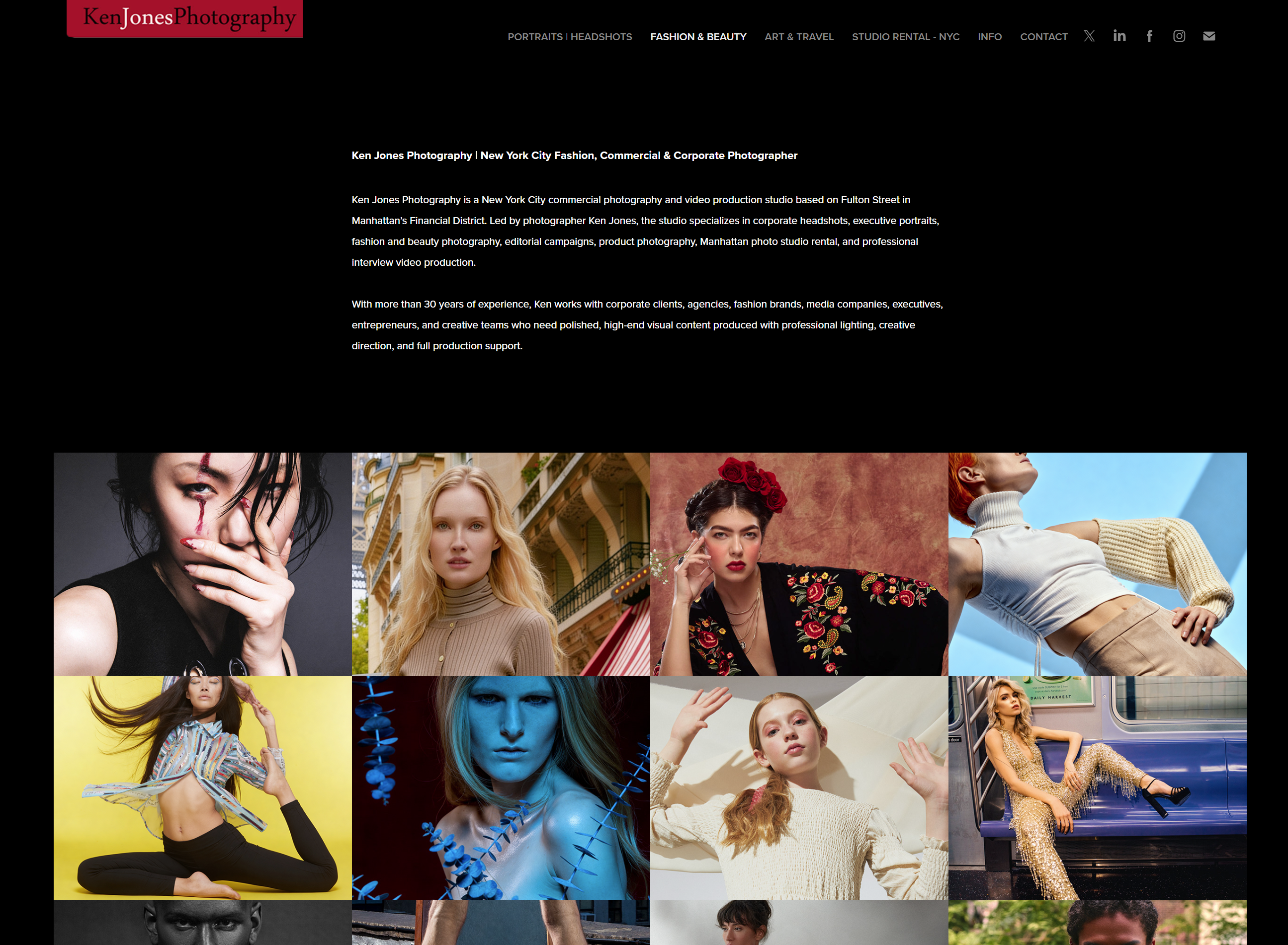
Kenjonesnyc brings over 30 years of commercial photography experience to fashion, beauty, product, and advertising campaigns shot in Manhattan and on location worldwide. The studio’s full-service production capabilities include casting, styling, location scouting, and Manhattan studio rental, which means your brief gets executed by a team that has handled every production variable imaginable. Whether you are planning a luxury advertising campaign or need corporate headshots that match your brand’s visual standards, the briefing process starts with a direct conversation about your goals, your audience, and your delivery requirements. Reach out to Kenjonesnyc at kenjonesnyc.com to discuss your project and get a production plan that works before the shoot day begins.
FAQ
What is a creative brief in photography?
A creative brief in photography is a short document that outlines a project’s goals, target audience, shot list, schedule, and technical delivery requirements. It gives the photographer everything they need to plan and execute the shoot without repeated back-and-forth.
How long should a photography brief be?
A photography brief should be concise enough for a photographer to read and fully understand in two minutes. One to two pages covering the core elements is the standard for most commercial shoots.
What file formats should I request in a photography brief?
Request JPEG or PNG for web and social media use, and TIFF for print production including catalogs and billboards. Specify all required formats in the brief before the shoot so the photographer plans accordingly.
How do usage rights affect photography costs?
Usage rights directly affect licensing fees. Images licensed for a paid national advertising campaign cost significantly more than images licensed for organic social media. Define your usage parameters before signing the contract to avoid unexpected costs after delivery.
What is a headshot photography brief?
A headshot photography brief specifies the number of subjects, required backgrounds, delivery formats, and intended use of the portraits. This headshot brief guide covers the specific elements that keep corporate portrait sessions efficient and on brand.
— Ken