
Budget typical day rates for a key makeup artist on a corporate or branded shoot in NYC are generally in a moderate to upper range, with regional commercial and national or AICP‑level jobs commanding higher rates. Additional artists usually cost significantly less than the key artist. Be sure to add separate kit fees, factor in any Local 798 benefit contributions for union jobs, and include some budget for possible overtime before finalizing your client estimate.
TL;DR:
- Union minimum wages and benefit contributions significantly increase the total makeup artist budget, especially for longer or overtime work in union-covered productions.
- Budgeting for multiple artists and contingency hours upfront prevents schedule delays and unexpected costs from overtime or insufficient coverage.
- Kit fees for beauty, hair, or special effects can add hundreds of dollars daily and are often overlooked in initial estimates, risking budget shortfalls.
- Rates vary by shoot type, from $350 for corporate content to over $1,200 for senior or celebrity-level artists, depending on complexity and talent requirements.
- Booking a dedicated, experienced artist early or using a studio with integrated HMU services helps ensure continuity, efficiency, and budget control during multi‑look or multi‑day projects.
Table of Contents
- How Much Do Makeup Artists Charge in NYC?
- What Union Rules Mean for Your NYC Makeup Budget
- How to Budget HMU Costs Into a Production Bid
- Booking Checklist and Contract Essentials
- On-Set Lessons From Ken Jones
- Why Getting HMU Budgeting Right Protects Your Shoot
- Book Your NYC Studio and Crew in One Call
- Sources
- FAQ
How Much Do Makeup Artists Charge in NYC?
Rates in this city move by production type more than by anything else. A creative director booking talent for a website lifestyle gallery pays a different number than an agency casting a national spot, even if the artist is the same person.
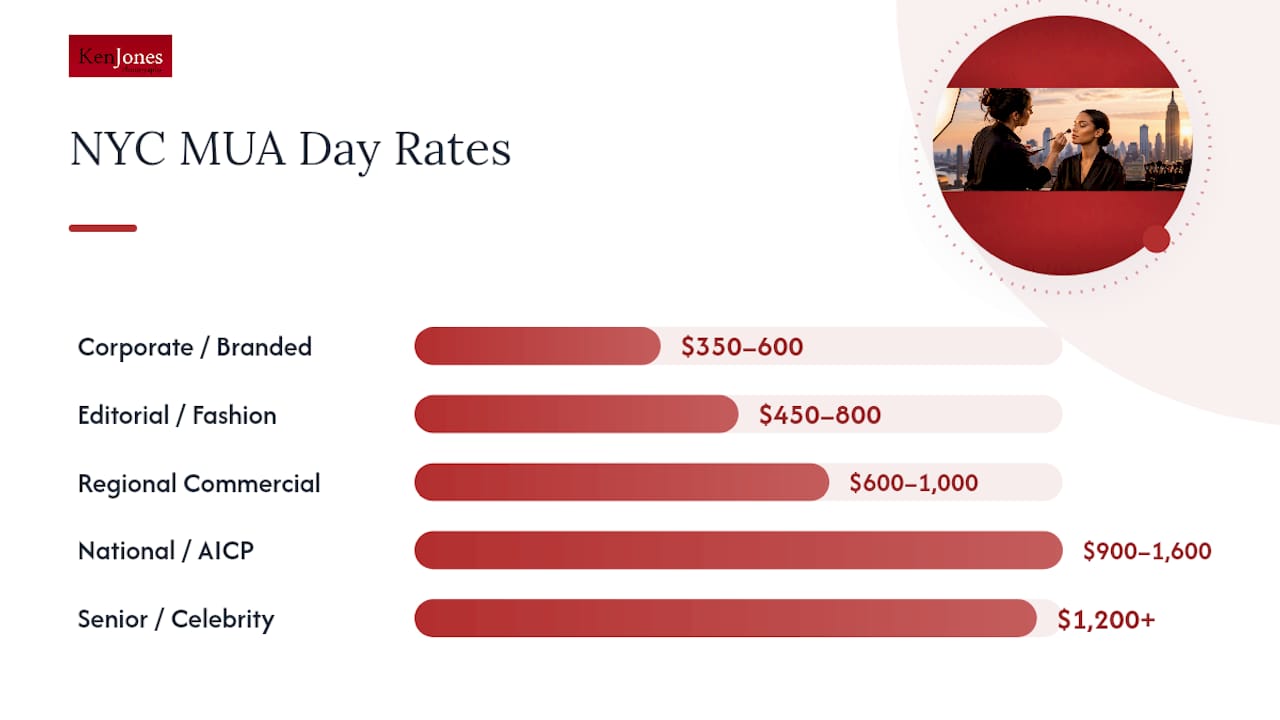
Here’s how the bands typically shake out, based on current industry day-rate data from The Rate Guide:
- Corporate or branded content: $350–$600/day for a key artist
- Editorial or fashion: $450–$800/day
- Regional commercial: $600–$1,000/day
- National or AICP‑bid commercial: $900–$1,600/day
- Senior or celebrity‑level key artists: can run $1,200/day or higher on top‑tier jobs
Kit fees ride separately from the day rate in most cases, and producers forget this constantly. A standard beauty kit runs $75 to $150 a day. A hair kit lands closer to $75 to $200. If the concept calls for special effects work or prosthetics, expect $500 to $1,200 a day just for that supply cost, billed on top of the artist’s labor.
Crew ratios matter more than most bid sheets account for. One key artist covers one principal talent comfortably. Beyond that, you’re adding artists based on how complex the look is and how many people need to be camera ready at the same time. A simple beauty close‑up with one model needs one artist. A six‑person lookbook with quick changes and continuity needs across the day usually needs two, sometimes three, plus a dedicated hair specialist if the styling is elaborate. I’ve watched producers try to run a five‑look editorial with a single artist to save $400, and the shoot ran ninety minutes over because of it. That ninety minutes cost more than the second artist would have.
What Union Rules Mean for Your NYC Makeup Budget
If your production is covered under the AMPTP agreement, IATSE Local 798 sets minimum daily wages for department heads and additional makeup and hair artists in New York, and those minimums climb through the current agreement cycle running into 2027 and 2028. On top of the day rate, the union agreement requires a per‑day benefit contribution paid by the production, not deducted from the artist’s check. That contribution is a real line item, and skipping it in your first draft budget is one of the most common ways a bid comes in short.
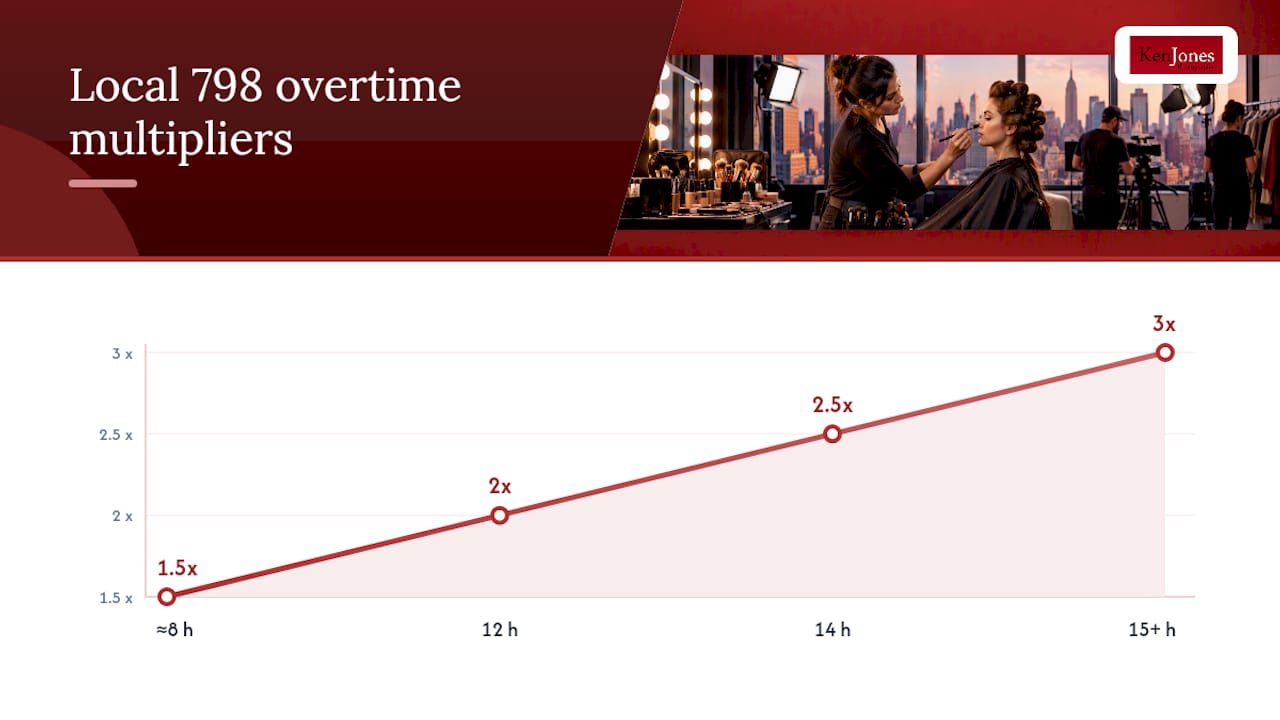
The overtime math is where budgets actually break. The current agreement between AMPTP and Local 798 sets overtime multipliers at 1½x, 2x, 2½x, and 3x depending on how far past the standard call the day runs, with thresholds typically kicking in around the 8, 12, 14, and 15+ hour marks. A 12-hour shoot day that quietly slides to 14 hours can add 30 to 40 percent to that single artist’s cost, and most producers don’t feel it until the invoice lands.
If a non‑union quote comes in well below scale, don’t assume you found a bargain. Either the artist isn’t experienced enough for the job, or you’re about to get a call mid‑shoot asking for more money. Book at market parity or expect to renegotiate.
How to Budget HMU Costs Into a Production Bid
Building the HMU line into an AICP‑style bid isn’t complicated once you know what belongs there. Here’s the order I use when I’m pulling a production budget together:
- Key artist day rate based on the shoot type and complexity.
- Additional artist rates, multiplied by however many you need for the talent count and look changes.
- Kit fees, itemized separately from labor.
- Prep or test days, if the client wants a look approved before the shoot.
- Travel, parking, or continuity days for multi‑day productions.
- Union benefit contribution, if the job is covered under Local 798.
- Overtime allowance, built in as a contingency line rather than assumed away.
Decide early whether HMU sits inside your production fee or gets passed through at cost. On a cost‑plus‑fixed‑fee structure, HMU is a direct cost with your fee layered on top; on a fixed bid, you’re absorbing the risk if the day runs long, so pad accordingly. Hair, makeup, and wardrobe vendors generally expect payment based on your usual production terms and not accelerated schedules.
Pro Tip: Run a quick sample before you finalize the bid: a $500 key rate, plus a $400 additional artist, plus a $125 kit fee, plus a Local 798 benefit contribution, adds up fast. Do that math before you quote the client, not after.
Booking Checklist and Contract Essentials
Before an HMU artist is confirmed, get the following locked in writing, not just discussed on a call:
- Exact call time and expected wrap, with overtime policy spelled out
- Number and complexity of looks, and whether continuity touch‑ups run through wrap
- Certificate of insurance on file with your studio or venue
- Who owns and replaces kit items if something is damaged on set
- Cancellation and reschedule fees, including how much notice protects both sides
- Invoicing terms and payment timing, matched to your production schedule
On studio shoots specifically, confirm van or vehicle access for load‑in, adequate power for hot tools, a private hair and makeup prep area, and labeled storage so kits don’t get mixed up between artists on a multi‑person crew. Assign one person, usually the producer or first AD, as the sole approver for any on‑set overage. Document that approval in writing, even if it’s just a text message. That single habit prevents more billing disputes than any contract clause.
On-Set Lessons From Ken Jones
I watched a beauty shoot nearly double its HMU line because nobody scheduled continuity touch‑ups into the day. The client added a fourth setup mid‑afternoon, the single artist on set couldn’t keep pace, and the production ran four hours into overtime. The fix wasn’t complicated: book a second artist from the start for any shoot with more than three setups, and build a contingency hour into the schedule instead of hoping the day runs on time.
The best HMU coordination happens before the call sheet goes out, not during the shoot. We stage kits by setup order, schedule hair prep in blocks so nobody’s waiting on a chair, and sequence looks from simplest to most complex to protect the light and the clock.
For multi‑day campaigns, I push clients toward booking a preferred key artist on a retainer early. It preserves continuity across days and avoids re‑quoting mid‑project when your first choice gets booked elsewhere.
Why Getting HMU Budgeting Right Protects Your Shoot
An experienced department head doesn’t just apply makeup faster. They read the light, anticipate retouching needs, and keep continuity tight across setups, which shows up directly in your post‑production bill. Spending more upfront on a senior artist usually pays for itself when a shoot has multiple looks, tight timelines, or talent that needs to look identical across several images shot hours apart.
A lean crew works fine for a single‑subject headshot session. It doesn’t work for a six‑look editorial with a hard wrap time. The decision isn’t about spending more across the board. It’s about matching the HMU investment to how much continuity and speed the job actually demands.
— Ken
Book Your NYC Studio and Crew in One Call
You can avoid chasing down separate vendors for every shoot by booking a team that knows how to sequence a day efficiently, rather than searching independently for a studio, an artist, and a production assistant. Our studio rental in Downtown Manhattan comes with HMU coordination, styling, lighting, and assistants built into the production, and we handle vendor certificates of insurance, scheduling, and invoicing so you’re not chasing paperwork mid‑shoot.

If your next job involves beauty photography or a multi‑look commercial day, send us your call sheet and we’ll put together a tailored estimate based on your actual talent count, looks, and schedule, not a generic rate card. Reach out through Kenjonesnyc to get that estimate started before your next booking deadline.
Sources
- Makeup Artist Day Rate: What to Charge on Set in 2026 — The Rate Guide
- 2025 Major Agreement and SDPA MOA — AMPTP / IATSE (Local 798)
- AICP National Live Action Guidelines
FAQ
What’s the difference between a key and an additional makeup artist?
The key artist is the department head who sets the look, manages continuity, and typically earns the higher day rate. Additional artists work under that direction on shoots with multiple talent or fast‑changing looks, usually at $350 to $600 per day.
When do Local 798 union minimums apply to my shoot?
Union minimums apply when your production is signatory to the AMPTP agreement covering Local 798 makeup and hair artists in New York. Non‑union productions can hire freelance artists at market rates, but photo and editorial shoots generally don’t count toward an artist’s union proof‑of‑days requirement.
How much should I budget for kit fees?
Standard beauty kits run $75 to $150 a day and hair kits run $75 to $200 a day, billed separately from the artist’s labor. Special effects or prosthetics kits cost more, typically $500 to $1,200 a day depending on complexity.
How do I get an accurate HMU quote for my production?
Send the artist or agency your call sheet with talent count, number of looks, shoot length, and location details before asking for a number. Ken Jones Photography, KenJonesNYC builds estimates this way, factoring kit fees, overtime risk, and continuity needs into one line rather than guessing at a flat day rate.
What happens if my shoot runs into overtime?
Overtime multipliers under the current Local 798 agreement scale up at roughly the 8, 12, 14, and 15+ hour marks, reaching as high as 3x the base rate on the latest hours. Building an overtime allowance into your original bid protects you from a surprise on the final invoice.