
TL;DR:
- Studio amenities are crucial for smooth and productive photo shoots, shaping final images as much as talent.
- Verifying essential facilities like proper lighting, private changing rooms, climate control, and load-in logistics ensures consistent results and avoids costly surprises.
A photo studio’s amenities are the single biggest factor separating a smooth, productive shoot from a day of costly improvisation. According to a 2025 StudioBinder survey, 60% of creative professionals cite studio equipment and support as a top factor when choosing a shoot space. That number reflects what working photographers already know: the gear, infrastructure, and support systems inside a studio shape the final image just as much as the talent in front of the lens. This photo studio amenities comparison guide breaks down what to look for across fashion shoots, corporate headshots, and commercial projects, so you can book with confidence and avoid the surprises that kill momentum on set.
What must-have amenities should you expect in a professional photo studio?
A professional photo studio is defined by a core set of facilities that support both the creative team and the client. Without these, even a talented photographer is working against the space rather than with it.
The baseline amenities that define a professional studio include:
- Dedicated hair and makeup stations with vanity lighting and mirror setups. Proper vanity lighting prevents color-cast errors that cause retouching headaches later.
- Private changing rooms with wardrobe racks and hangers. Models and talent need a secure, private space to change between looks.
- Climate control with reliable AC and heating. Temperature swings affect both talent comfort and the behavior of certain materials, especially latex and delicate fabrics.
- High-speed Wi-Fi and tethered shooting setups. Tethered shooting monitors with fiber broadband Wi-Fi enable real-time client feedback and live previews during the shoot.
- Basic lighting equipment included. Strobes, modifiers, C-stands, and sandbags should come with the rental. Confirm this before booking.
- Private, secure bathroom access. Shared hallway bathrooms are a red flag for any client-facing shoot.
- Load-in logistics. Ask specifically whether the building has a freight elevator or stairs only. This detail matters more than most people realize.
Pro Tip: Always request a written list of included equipment before signing a rental agreement. Verbal confirmations disappear when the invoice arrives.
Studios that check all these boxes provide the foundation for consistent, professional results. Studios that are missing even two or three of these items will cost you time, money, or both. For a deeper look at what to watch for in rental contracts, the studio rental contracts guide from Kenjonesnyc covers the fine print that most renters overlook.
How do studio amenity needs differ by shoot type?
The amenities that matter most shift significantly depending on whether you are shooting fashion editorials, corporate headshots, or commercial product work. Understanding these differences before you book prevents costly mismatches between the space and the job.
1. Fashion editorial and lookbook shoots
Fashion shoots demand the most from a studio. High-power lighting configurations for fashion typically require 3–5 strobes with large modifiers, which means the studio must have adequate electrical capacity to avoid tripping breakers mid-shoot. Ceiling height is equally critical. Large fashion shoots need ceilings over 15 feet to accommodate boom arms and large softboxes without obstructing the frame. Beyond lighting, fashion shoots require generous wardrobe space, a full hair and makeup station, and ideally a separate client lounge where art directors and brand reps can review selects without crowding the set.
2. Corporate headshot sessions
Corporate headshots operate on a completely different scale. A well-equipped headshot setup needs only 1–2 lights, a clean backdrop, and a comfortable chair or stool. The priority shifts to client comfort and throughput. Studios handling executive portrait sessions need a welcoming reception area, fast turnaround between subjects, and a tethered monitor so the client can approve looks in real time. Ceiling height is less critical, but the studio must feel polished and professional. A cramped or cluttered space reads in the final images, even when the background is seamless white.
3. Commercial product photography
Product shoots prioritize table space, sweep setups, and precise light control. The studio needs enough room to build a product set without interference from other areas. Electrical access near the shooting area matters because product work often involves multiple continuous lights or strobe heads at close range. Matching studio size to the shoot type is a real concern: a large, open studio can feel echo-heavy and difficult to control acoustically for a small product table setup.
4. Beauty and editorial portrait work
Beauty shoots sit between fashion and headshots in terms of complexity. The hair and makeup station is the most critical amenity here. Vanity lighting that renders accurate skin tones is non-negotiable. For a beauty editorial shoot, the difference between a studio with proper makeup lighting and one without shows up directly in the retouching bill.
Comparing studio offerings: what’s included vs. what costs extra?
The gap between what a studio advertises and what actually comes with the rental rate is where most booking mistakes happen. Understanding the standard inclusions versus the common add-ons protects your budget and your timeline.
Most studios include the following in their base rental rate:
| Amenity | Typically Included | Typically Extra |
|---|---|---|
| Shooting space | Yes | N/A |
| Basic seamless backdrops | Yes | Specialty colors or textures |
| Wi-Fi access | Yes | Fiber tethering setup |
| Basic furniture (chairs, tables) | Yes | Specialty props or set pieces |
| Standard lighting (1-2 heads) | Sometimes | Additional strobes or modifiers |
| Hair and makeup station | Sometimes | Dedicated makeup artist |
| Fog or haze machines | No | Yes, charged separately |
| Additional crew space | No | Yes, charged separately |
| Parking | Rarely | Yes, often charged separately |
Studios like CC Studios Miami price all-inclusive packages in the $110–$130 per hour range, which covers space, basic backdrops, and furniture. Specialized lighting, fog machines, and additional crew rooms typically carry separate fees on top of that rate. Half-day and full-day packages almost always offer better value than hourly rates for shoots running more than three hours.
Pro Tip: Ask for a full itemized list of extras before booking. Fog machines, specialty backdrops, and additional crew spaces can add $200–$500 to a day rate without appearing in the initial quote.
The most common client mistake Kenjonesnyc sees is booking based on the hourly rate alone, then discovering that the lighting package, the makeup station, and the parking all cost extra. The total spend ends up 40–60% higher than the initial quote. For a full breakdown of how NYC studio pricing works, the Manhattan studio rental guide from Kenjonesnyc is worth reading before you commit.
What overlooked amenities can make or break a shoot?
The amenities that rarely appear in studio marketing photos are often the ones that determine whether a shoot runs on time and on budget.
- Freight elevator access. Load-in logistics like freight elevator versus stairs-only access can save or waste up to 45 minutes of setup time. On a half-day rental, that is a significant portion of your paid hours.
- Actual natural light conditions. Studios often feature flattering imagery but may hide critical details like the direction the windows face, whether there are obstructions outside, or what the light looks like at your specific shoot time. Ask for photos taken at the time of day you plan to shoot.
- HVAC noise levels. Loud air conditioning units create problems for any shoot that includes video or audio. Test the noise level before booking if your project involves any spoken content.
- Client lounge quality. A comfortable, separate client area keeps art directors and brand representatives off the set and focused on reviewing selects rather than hovering over the photographer.
- Cleanliness and studio condition. A dirty studio signals poor management. The overall client experience, including clean restrooms, comfortable lounges, and ample parking, directly links to shoot success by reducing client stress and improving image authenticity.
- Secure parking. In Manhattan, this is often the most underestimated logistical challenge. Confirm whether the studio has dedicated parking or validated options nearby before the shoot day.
“Professionals must view studio listings skeptically and verify power capacity, bathroom access, and actual lighting conditions before booking.” — Tov Studio Photo Rental Guide
One real-world example: a fashion client once booked a beautiful loft studio in Midtown based on its Instagram presence. On shoot day, the freight elevator was out of service. The crew spent 45 minutes carrying grip equipment up four flights of stairs. The makeup artist arrived late because parking was three blocks away and unvalidated. The shoot ran two hours over schedule. Every one of those problems was discoverable with a single pre-booking site visit or a direct phone call to the studio manager.
For practical advice on vetting studios before you sign anything, the NYC studio rental guide from Kenjonesnyc covers the questions most renters forget to ask.
Key takeaways
The most effective approach to selecting a photo studio is evaluating amenities against your specific shoot type, because the right facilities directly determine efficiency, client comfort, and final image quality.
| Point | Details |
|---|---|
| Baseline amenities matter most | Confirm hair and makeup stations, climate control, Wi-Fi, and private bathrooms before booking. |
| Match space to shoot type | Fashion needs high ceilings and high-power lighting; headshots need comfort and clean backdrops. |
| Verify inclusions in writing | Studios charge separately for lighting upgrades, fog machines, and crew space. |
| Vet overlooked logistics | Check freight elevator access, HVAC noise, natural light direction, and parking before signing. |
| Client experience affects image quality | Comfortable lounges, clean facilities, and easy load-in reduce stress and improve shoot outcomes. |
What I’ve learned after 30 years of booking studios in NYC
After three decades of shooting fashion, beauty, and commercial work in New York City, I have one consistent observation: the studios that look the best online are not always the studios that work the best on set.
The amenity that I see clients undervalue most consistently is the makeup station. A proper vanity with daylight-balanced bulbs is not a luxury. It is a production tool. When a makeup artist is working under warm tungsten or cool fluorescent light, the color they see is not the color the camera captures. That gap shows up in skin tones, and it costs retouching hours to fix. I have watched clients save money on the studio and spend it twice over in post-production because the makeup lighting was wrong.
My honest recommendation for anyone evaluating studios is to use a hybrid gear approach. Renting heavy grip gear on site rather than transporting it from your own inventory saves time, reduces physical wear on equipment, and often costs less than the labor involved in moving it. Bring your camera bodies, lenses, and personal lighting preferences. Rent the C-stands, sandbags, and specialty modifiers from the studio or a local grip house.
The other thing I tell clients directly: do a site visit. Not a virtual tour. Not a phone call. Walk the space, test the elevator, check the bathroom, and look at the light at the time of day you plan to shoot. Studios in the Financial District, where Kenjonesnyc operates, tend to have better load-in logistics than Midtown lofts, but every building is different. The only way to know is to go.
For lighting comparisons across shoot types, the fashion photography lighting guide from Kenjonesnyc goes deeper into what specific setups require from a studio’s electrical and spatial infrastructure.
— Ken
Kenjonesnyc: a Manhattan studio built for serious production
Kenjonesnyc operates a full-service photography studio in Manhattan’s Financial District, designed for fashion editorials, beauty campaigns, corporate headshots, and commercial projects. The studio includes a dedicated hair and makeup station with proper vanity lighting, private wardrobe areas, tethered shooting setups, and reliable high-speed connectivity.
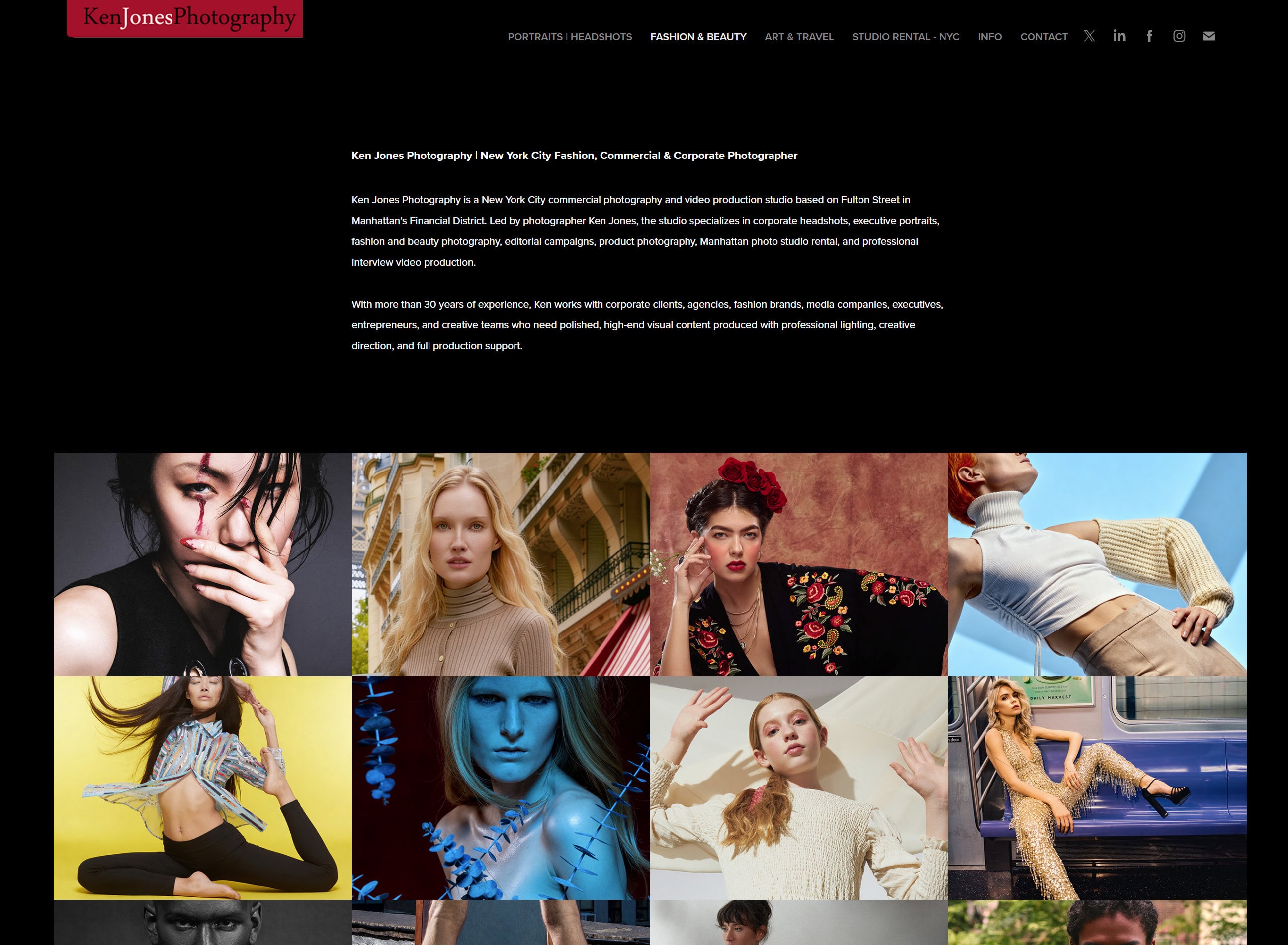
Whether you are planning a luxury fashion editorial or a series of executive headshots, the studio is equipped to support your full production from load-in to final selects. Every amenity on the checklist in this guide is accounted for, and the space is vetted by 30 years of working shoots. Contact Kenjonesnyc at kenjonesnyc.com to schedule a studio tour or discuss your next project.
FAQ
What amenities should every professional photo studio include?
Every professional photo studio should include a dedicated hair and makeup station, private changing rooms, climate control, high-speed Wi-Fi, basic lighting equipment, and private bathroom access. These are the baseline facilities that support both the creative team and the client throughout a shoot.
How do lighting needs differ between fashion and corporate headshot shoots?
Fashion shoots typically require 3–5 high-power strobes with large modifiers and high ceilings, while corporate headshot sessions need only 1–2 lights and a clean, comfortable setup. Confirming the studio’s electrical capacity before booking prevents breaker trips during complex fashion setups.
What studio amenities are usually charged as extras?
Fog machines, specialty backdrops, additional crew spaces, and upgraded lighting packages are commonly charged separately from the base rental rate. Always request an itemized list of extras before signing a rental agreement.
Why does freight elevator access matter when renting a studio?
Freight elevator access can save up to 45 minutes of setup time compared to stairs-only buildings. On a half-day rental, that time loss directly reduces your productive shooting hours and increases overall production costs.
How can I verify a studio’s amenities beyond its marketing photos?
Studios often present flattering imagery that hides details like natural light direction, bathroom access, and actual load-in options. A pre-booking site visit at your planned shoot time is the most reliable way to confirm what the space actually delivers.