
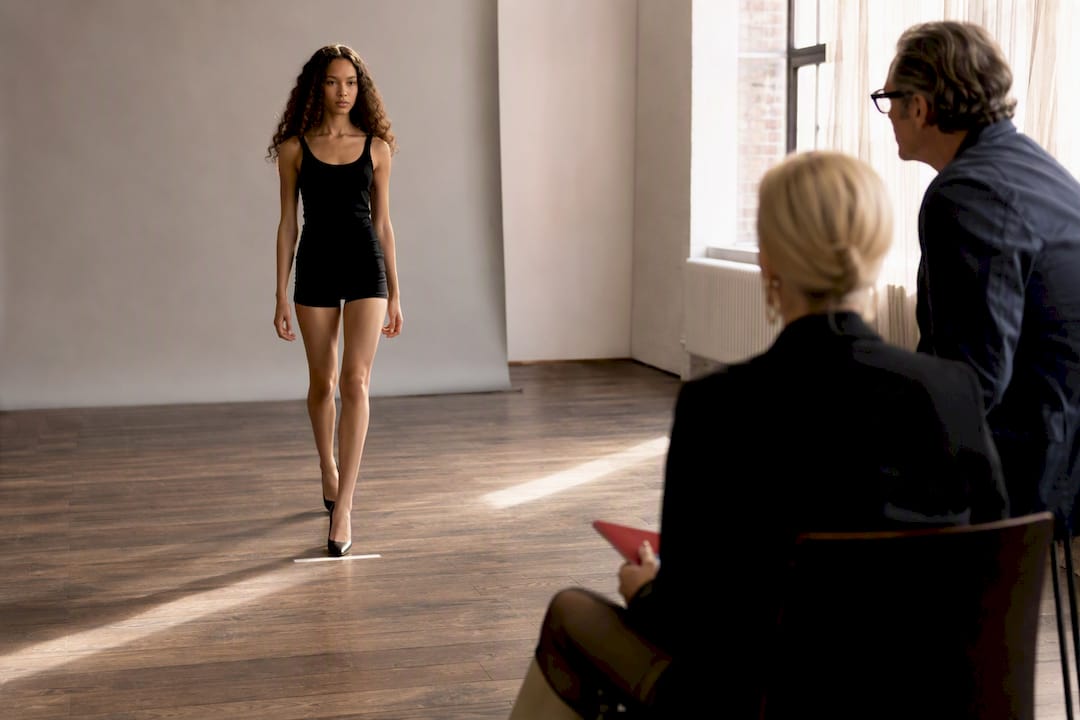
A model casting is a short professional audition, usually three to five minutes in the room, where a client decides whether you fit a specific brief. Nobody’s judging your personality at a dinner party. They’re checking measurements, look, and how fast you take direction against a job that already has a budget and a deadline attached to it. The three things that book work: fit to the brief, professionalism, and the ability to adjust the second someone asks you to.
TL;DR:
- Success depends on precise measurements, good grooming, and bringing current, well-organized comp cards and digitals to every casting.
- The typical casting lasts three to five minutes and involves check-in, a quick walk or poses, and brief questions, with long waiting times outside.
- Professionalism, adaptability, and punctuality are valued more than looks or charisma, increasing chances of callbacks and bookings.
- Industry response times range from 24 hours to three weeks, and silence usually signifies no rejection; follow up through your agent.
- Preparing for castings by updating your portfolio, practicing a consistent walk, and logging your experiences improves long-term success.
Table of Contents
- Understanding the Model Casting Process: Formats You’ll Encounter
- Preparation Checklist: What to Bring and How to Get Ready
- Inside the Casting Room: A Minute-by-Minute Walkthrough
- How Casting Directors Actually Evaluate You
- After the Casting: What to Expect Next
- Common Mistakes and High-Leverage Pro Tips
- Ken Jones’s Production-Side Rules for Casting Success
- A Photographer’s Honest Take on Persistence
- Ready Your Portfolio Before Your Next Casting
- Sources
- FAQ
Understanding the Model Casting Process: Formats You’ll Encounter
I’ve shot alongside enough casting directors over the years to know the format changes everything about how you should walk in. An open call means a line down the block and a room seeing 200 people in an afternoon. An appointment casting is tighter and more targeted, usually booked because someone already liked your comp card. A self-tape skips the room entirely, but it still demands the same polish a live casting would. Runway castings test your walk under pressure. Commercial and showroom fit castings often care more about sample-size accuracy than charisma.
Each format asks for something different:
- Open call: patience, visibility, a clean look that reads fast in a crowd
- Appointment: precision, since you already cleared the first filter
- Self-tape: good lighting and one confident take, not ten nervous ones
- Runway: a repeatable walk and posture under time pressure
- Showroom/commercial fit: accurate measurements above almost everything else
Read the casting call closely before you show up. It usually tells you which format you’re walking into, and that single detail should shape your prep.
Preparation Checklist: What to Bring and How to Get Ready
Most models don’t lose bookings in the room. They lose them the night before, when nobody printed comp cards or charged a phone. Here’s the order I’d tackle it in if I were coaching someone through their first week of castings.
- Comp cards. Bring 5 to 15, printed and current, not last year’s headshot with different hair.
- Portfolio or digitals. Keep an offline copy on your portfolio in case the venue has bad signal, which happens constantly in older Manhattan buildings.
- ID and measurements card. Casting teams need exact numbers, not estimates.
- Agency or agent contact info. Saved in your phone, not just in an email you’d have to dig for.
- Wardrobe. Neutral, fitted basics. Women should carry heels in a bag. Bring a backup outfit if the brief hints at more than one look.
- Grooming kit. Blotting papers, a small powder compact, hair ties, and anything that keeps you camera-ready between waiting-room hours.
- Charged phone. You’ll need it for directions, for your digitals, and for the inevitable last-minute text from your agent.
The night before, do four things: sleep, don’t experiment with a new haircut or self-tan, plan your route with extra time built in, and lay out the outfit so morning-you isn’t guessing.
Pro Tip: Pack your bag the same way every single time, in the same order, so grabbing it on short notice becomes automatic instead of a scramble.
Inside the Casting Room: A Minute-by-Minute Walkthrough
The in-room portion is short. Industry data puts it at three to five minutes, which surprises a lot of first-timers who expect a longer conversation. Waiting outside can stretch to an hour or more. That waiting time is part of the evaluation too, so don’t slouch against the wall on your phone the whole time.
Here’s roughly how the room usually moves:
- Check-in: you hand over your comp card, confirm your name, maybe get a number.
- Quick hello: the casting director glances up, says a few words, sizes up your energy in real time.
- Polaroids or digitals: front, profile, three-quarter turn. These are working shots, not art. Don’t over-pose them.
- Walk or poses: a short walk if it’s runway or commercial, sometimes just a few still poses.
- Quick questions: availability, measurements confirmation, sometimes a fast fitting if garments are involved.
The whole exchange moves fast on purpose. If someone asks for a different walk or a specific pose, give it immediately without narrating your process. Over-explaining reads as nervous, not thoughtful.
How Casting Directors Actually Evaluate You
Fit to the brief comes first. Measurements, age range, and look either match what the client needs or they don’t, and no amount of charm changes that math. What surprises new models is how much weight goes to soft signals after that. Casting directors consistently say they prioritize professionalism and ease of direction over raw looks, because a production team is really hiring reliability as much as a face.
Technical checks still matter. Current digitals, a clean walk, comfort on camera. But the model who’s punctual, polite to the assistant checking people in, and quick to adjust when directed tends to get called back more than the model who’s simply the most striking person in the lineup.
After the Casting: What to Expect Next
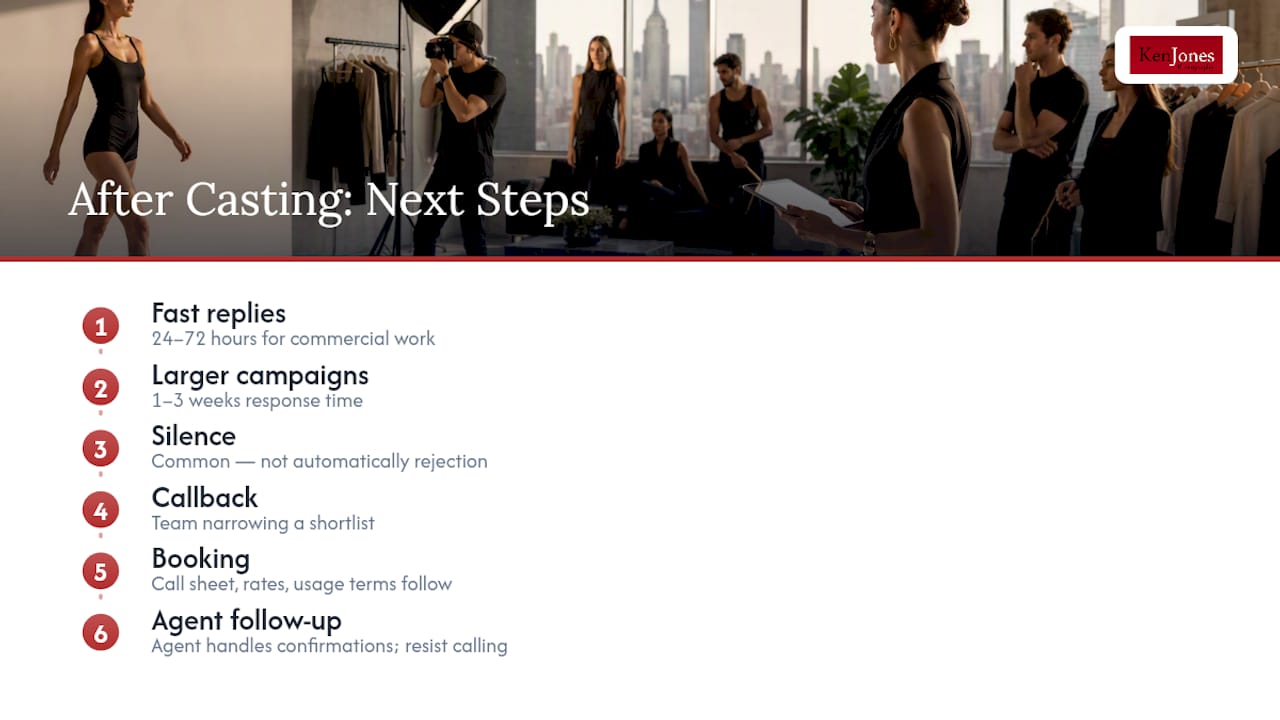
Response times vary by job. Fast commercial work often replies within 24 to 72 hours; larger campaigns can take one to three weeks, and silence for stretches in between is normal, not a rejection notice. A callback usually means the team is narrowing a shortlist. A booking means a call sheet, confirmed rates, and usage terms follow soon after. Your agent typically handles that follow-up, not you directly, so resist the urge to call the casting office yourself. Log what worked and what didn’t after each casting. That habit compounds faster than talent alone.
Common Mistakes and High-Leverage Pro Tips
Late arrivals, overdone makeup, inflated measurements, and showing up with a friend in tow all cost bookings faster than a mediocre look ever would. Watch for red flags too: legitimate castings never ask you for money upfront, and unusual demands during a “casting” deserve a call to your agency before you go further.
- Memorize your measurements cold, no hesitating
- Keep a portfolio saved offline on your phone
- Practice one clean, repeatable walk instead of five inconsistent ones
- Keep a short debrief log after every casting
Pro Tip: One rookie I photographed years ago showed up to a commercial fit casting with measurements from an old comp card. The sample didn’t fit, the fitting stalled, and the client moved on to the next candidate. Update that card every time your body changes, not just when you remember.
Ken Jones’s Production-Side Rules for Casting Success
Producers use castings the same way we use a lighting test before a shoot: to remove risk before the expensive part starts. We’re confirming a model’s measurements, checking that a walk or pose is repeatable, and reading how someone handles direction under a little pressure.
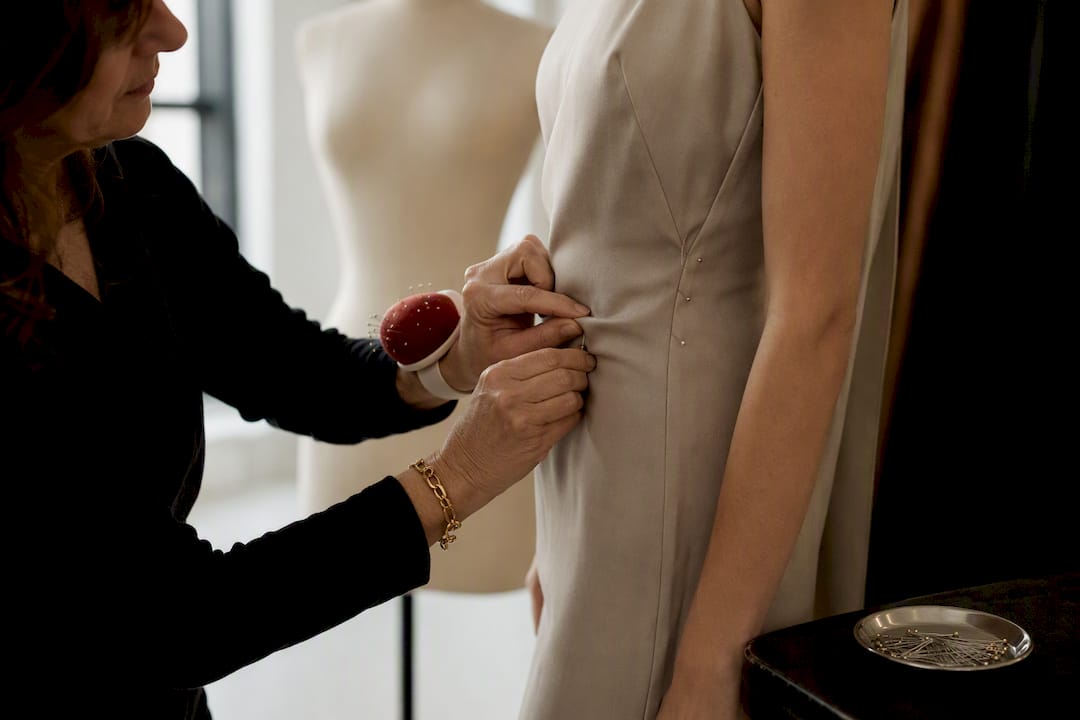
I remember a shoot downtown where a client insisted on skipping a proper casting to save a half day of budget. The model who showed up didn’t match the sample sizing, and we lost two hours re-pinning garments that should have fit. Casting isn’t a formality. It’s the insurance policy that protects the shoot day.
Show a casting director your range and reliability. Show a photographer your specific look for that story and how you take light. Models who listen to hair and makeup, change quickly, and don’t over-direct themselves on set get invited back for the next job.
A Photographer’s Honest Take on Persistence
Early in my career I watched dozens of talented models quit after a string of quiet castings, not realizing that a low hit rate is just how the math works. Reputation gets built through repetition, not one lucky booking. Keep a simple log of every casting: date, brief, outcome. Read it back every few months. You’ll see the pattern before anyone tells you about it.
— Ken
Ready Your Portfolio Before Your Next Casting
Most casting losses happen before you ever reach the room. Outdated digitals, a comp card that doesn’t match your current look, or a portfolio missing the specific genre a brief calls for will cost you the callback before anyone judges your walk. Some photographers work with models on portfolio and test shoots, comp card production, updated digitals with retouching, and studio run-throughs that mimic what a real casting room feels like.

A tighter set of digitals and a current comp card mean less guessing and fewer wasted trips across Manhattan for castings you weren’t ready for. Browse the fashion photography portfolio for a sense of the work, then visit Kenjonesnyc to check studio availability and request a session before your next round of castings.
Sources
For more depth, see the StarNow explainer, the Backstage casting director interview, and the Modnet overview.
- How Does the Model Casting Process Work? — StarNow
- How the Model Casting Process Really Works — Backstage (Jym Benzing interview)
- How to Prepare for a Model Casting: Checklist — GetModel
FAQ
What Are the Basic Steps in a Model Casting?
The core sequence is check-in, a brief hello, polaroids or digitals, a walk or a few poses, and quick questions about availability or measurements. The whole in-room portion typically runs three to five minutes, though waiting beforehand can take much longer.
How Should I Prepare for a Model Casting?
Bring comp cards, an updated portfolio with an offline backup, ID, your measurements card, and a basic grooming kit. Pack your bag the night before and plan your route with extra time for NYC transit delays.
How Do I Get Cast as a Model?
Booking comes down to matching the brief, showing up on time, and adjusting instantly to direction rather than being the most striking face in the room. Casting directors consistently rank professionalism and adaptability above raw looks when narrowing a shortlist.
Why Do Models Attend So Many Castings Without Booking?
Booking ratios are naturally low for early-career models, and industry guidance points to roughly one booking for every 10 to 15 castings attended. Treat each casting as practice and volume rather than a single make-or-break moment.
What Should I Do if I Don’t Hear Back After a Casting?
Silence is normal and doesn’t always mean rejection. Response windows run from 24 to 72 hours for fast commercial work up to a few weeks for larger campaigns, and your agent, not you, typically handles the follow-up call.