
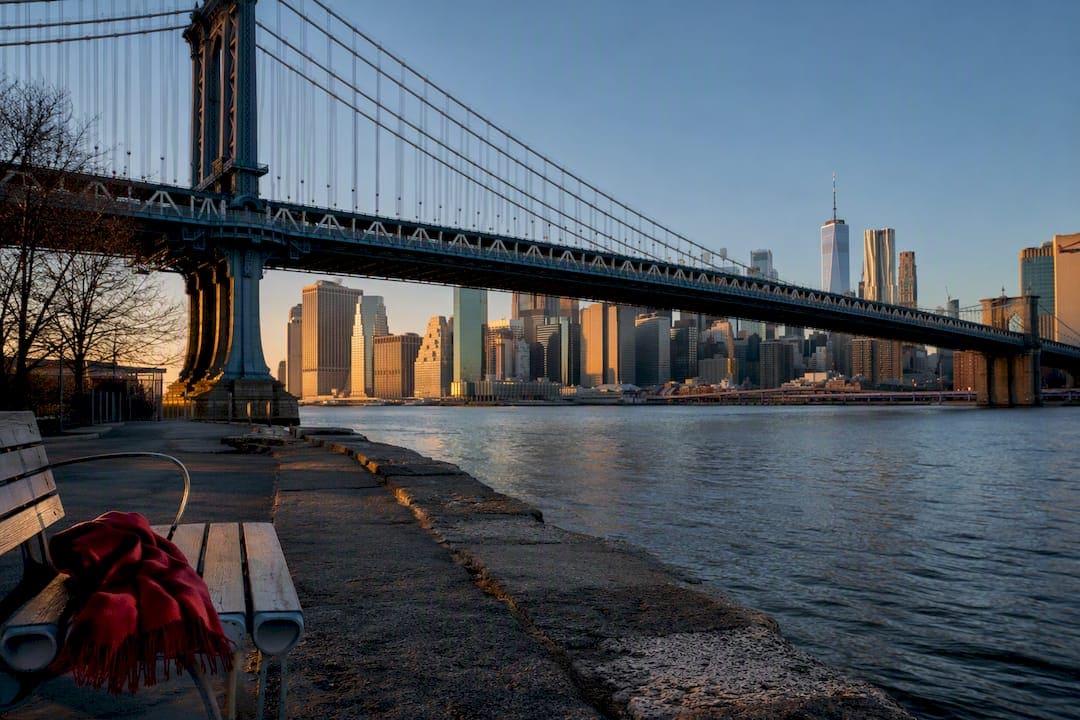
If you need the best waterfront photo locations NYC offers for a real production, not a tourist snapshot, you have eight spots worth your calendar: Brooklyn Bridge Park, DUMBO’s Washington Street, Pebble Beach, Empire Fulton Ferry with Jane’s Carousel, Gantry Plaza State Park, South Street Seaport, Battery Park, and Roosevelt Island. Each one serves a different job, from skyline editorials to quiet portrait work, and the ranked breakdown below tells you exactly which one fits your shot list.
TL;DR:
- Shooting during sunrise before 8:00 am at DUMBO or Brooklyn Bridge Park ensures unobstructed, crowd-free frames for commercial and editorial shoots.
- Permits are required for tripod use, lighting stands, or exclusive access at most NYC waterfront parks, with application timelines of at least five to seven days.
- A range of lenses from 24 to 200mm is recommended to capture different angles, with longer lenses ideal for compressing bridge cables or isolating subjects.
- Weather conditions like overcast skies and light fog can enhance architecture and skin tones better than harsh midday sun.
- Planning gear, permits, and crew logistics in advance saves time and mitigates issues caused by crowds and unpredictable waterfront weather.
Table of Contents
- Where To Take Waterfront Photos in NYC: The Ranked Shortlist
- Location-By-Location Production Notes
- Best Time of Day for Waterfront Light
- Permits: What Actually Triggers One
- Gear and Composition That Actually Work
- Running a Smooth Waterfront Shoot Day
- What Thirty Years of Waterfront Shoots Taught Me
- Let Ken Jones Photography Handle the Location Scouting
- Sources
- FAQ
Where To Take Waterfront Photos in NYC: The Ranked Shortlist
I’ve shot all eight of these more times than I can count, and they earn their spot on this list for different reasons. Some deliver a postcard skyline in one frame. Others buy you the kind of quiet a crew actually needs to work fast.
- Brooklyn Bridge Park (Pier 1 / Main Street) — The classic Manhattan skyline with the bridge arcing into frame. This is your money shot for brand campaigns and engagement sessions, and it reads best at blue hour when the skyline lights come up against a still-blue sky.
- DUMBO (Washington Street) — The famous bridge-framed street shot everyone wants. It photographs beautifully, but only if you get there before the neighborhood wakes up, since Washington Street is one of the most overcrowded spots in the borough by mid-morning.
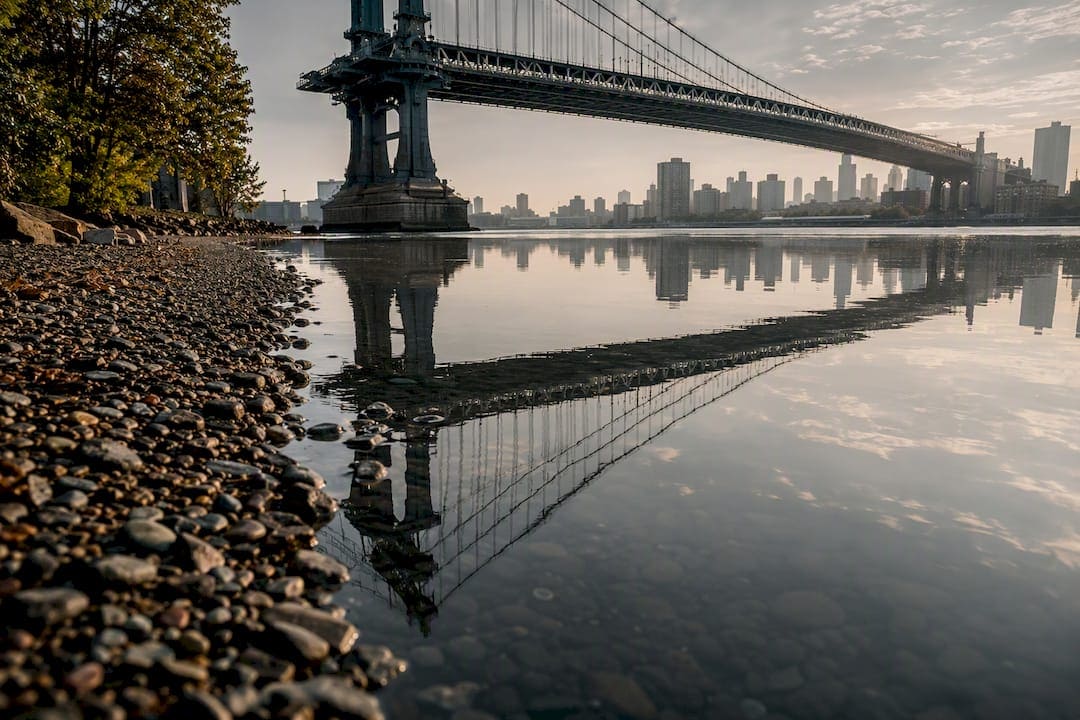
- Pebble Beach (inside Brooklyn Bridge Park) — A rocky little shoreline that gives you low-angle water reflections you can’t get anywhere else nearby. Calm mornings turn the East River into a mirror here.
- Empire Fulton Ferry / Jane’s Carousel — The glass pavilion around the carousel throws gorgeous reflected light, and the open lawn gives you room for playful, movement-based portraits.
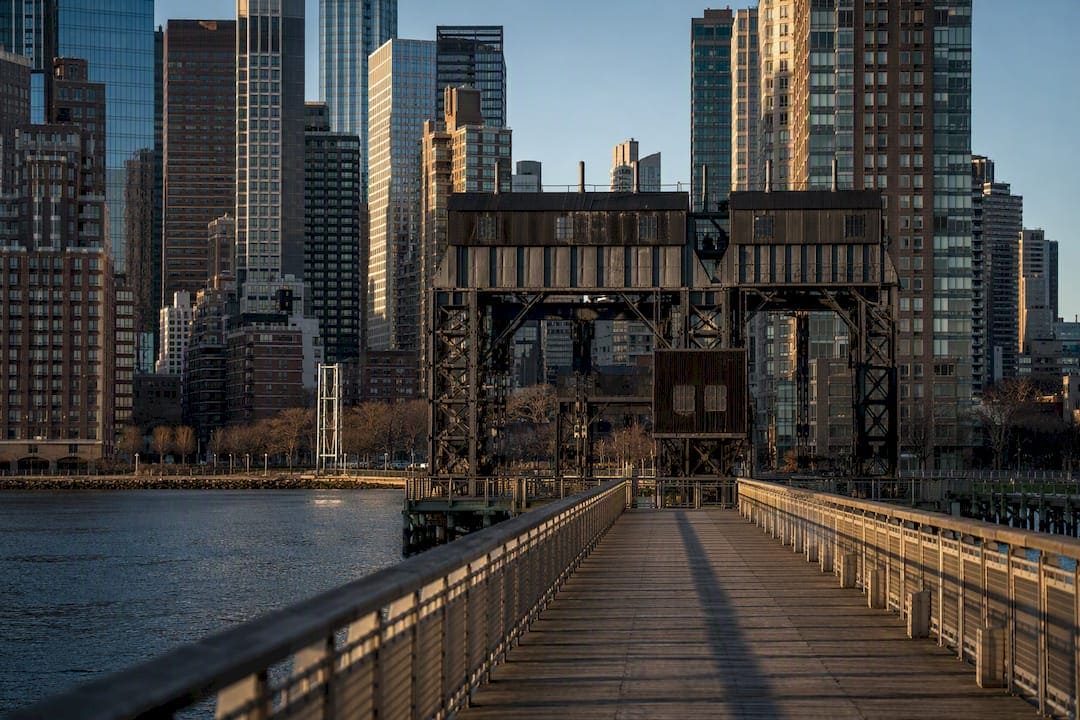
- Gantry Plaza State Park (Long Island City) — Long, uninterrupted riverfront sightlines and rusted industrial fixtures that read as art direction, not accident. Editorial clients love this one because it doesn’t look like every other NYC shoot.
- South Street Seaport / Pier 17 — Manhattan-side views of the bridge and harbor, plus a rooftop at Pier 17 that opens up flexible composition options you won’t find at ground level.
- Battery Park — Harbor views with the Statue of Liberty in the distance, ferry traffic moving through frame, and enough green space to stage a full editorial team without feeling boxed in.
- Roosevelt Island — The quiet alternative. Promenades on the island give you a Manhattan skyline angle almost nobody else is shooting, and you’ll usually have the frame to yourself.
That’s the order I’d work through it if a client handed me a brief and said “give me the NYC waterfront.” Now let’s get into what each one actually demands from your gear bag and your call sheet.
Location-By-Location Production Notes
1. Brooklyn Bridge Park
A 24 to 70mm handles the wide skyline compositions, but pack a longer lens (70 to 200mm) if you want to compress the bridge cables against the buildings behind them. Access is easiest from the High Street or York Street subway stops. Tripods here typically require a permit since Brooklyn Bridge Park is conservancy managed, and non-handheld gear crosses the line NYC Parks draws for permit requirements. Do this: scout your exact pier the day before. Don’t: assume you can set lights without checking with the park office first.
2. DUMBO (Washington Street)
A 35 to 85mm range nails the classic framed shot without distortion at the edges. The F train’s York Street stop drops you two blocks away. This street is genuinely rough between 9am and 6pm with tourists and other photographers competing for the same six feet of sidewalk, which is why sunrise between roughly 6:00 and 8:00am is the only reliable window for a clean, empty frame. Nearest restrooms and a coffee stop are both a short walk into DUMBO proper, worth flagging for client comfort on early calls.
3. Pebble Beach
Bring a wide lens and get low, almost ground level, for the reflection shots that make this location worth the walk. It’s tucked south of the Manhattan Bridge inside Brooklyn Bridge Park, reachable from the same York Street stop. Handheld shooting here rarely triggers permit conversations. Do this: check tide and wind before committing, since choppy water kills the reflection effect entirely.
4. Empire Fulton Ferry / Jane’s Carousel
An 85mm portrait lens works beautifully against the carousel’s glass walls, especially in early light. Same access point as Pebble Beach. The carousel building itself is privately operated, so any shoot involving the interior needs separate coordination, but the surrounding lawn and waterfront are open. This is a solid changing-area location since there’s shade and benches nearby.
5. Gantry Plaza State Park
A 24 to 70mm covers the long pier shots, but a longer lens isolates the industrial gantry cranes against the skyline nicely. The 7 train’s Vernon Boulevard/Jackson Avenue stop puts you a five-minute walk from the park. Crowds here are lighter than Brooklyn, so tripods are more workable, though exclusive use still needs a permit.
6. South Street Seaport / Pier 17
A mid-range zoom handles most of the pier work, but the rooftop deck rewards a wider lens for full skyline sweeps. The Fulton Street subway hub puts you right on top of it. Rooftop access sometimes requires venue coordination separate from any city permit, so build that lead time in.
7. Battery Park
Wide lenses dominate here given the open harbor views. The Bowling Green 4/5 stop is the fastest way in. This park sees heavy tourist volume near the ferry terminals, so working the north end of the park usually buys more room.
8. Roosevelt Island
A telephoto in the 70 to 200mm range compresses the skyline nicely from the island’s western promenade. The Roosevelt Island F train stop or the tram from Manhattan both work. Crowds are minimal most days, making this the easiest spot on the list for tripod work without drawing attention.
Best Time of Day for Waterfront Light
Golden hour in NYC generally runs the hour after sunrise and the hour before sunset, shifting with the season, while blue hour is the tighter 20 to 30 minute window right after sunset when the sky still holds color and building lights are on. For empty frames at DUMBO or the Brooklyn Bridge walkway, sunrise between 6:00 and 8:00am is the recommended window before foot traffic builds. Don’t write off gray days. Overcast skies and light fog often flatter architecture and skin tones better than harsh midday sun does.
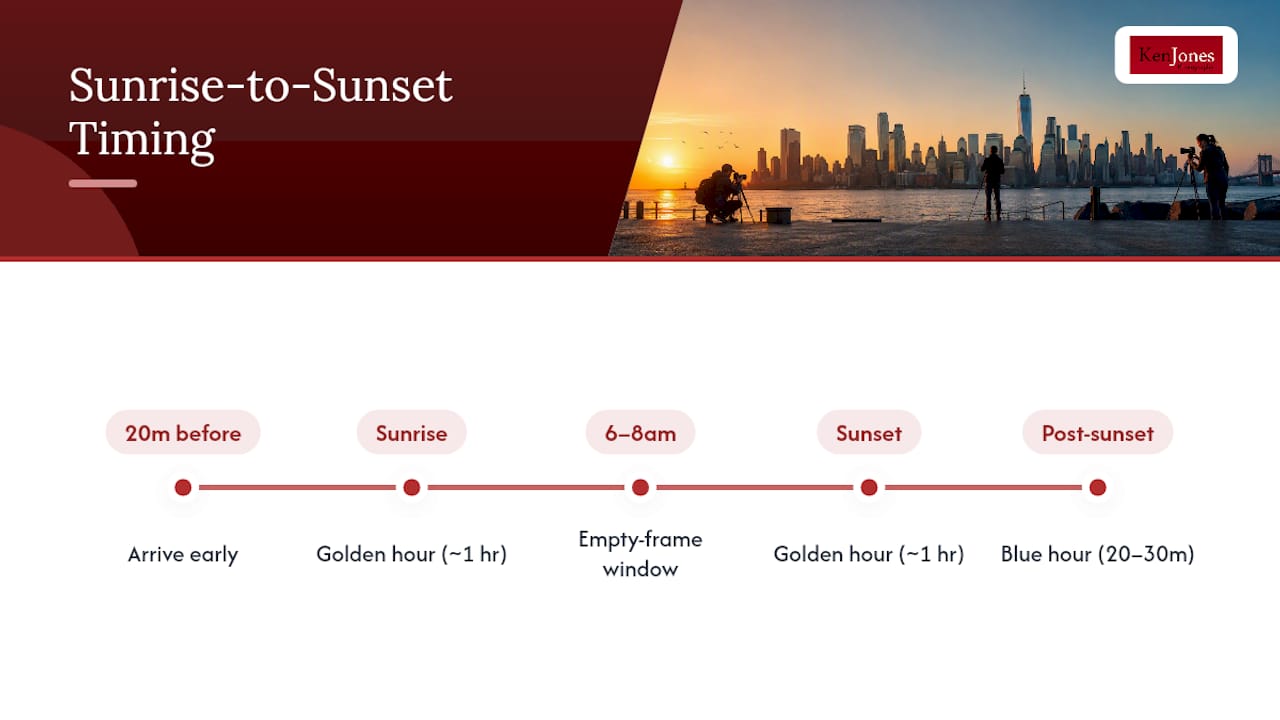
Pro Tip: Check the sunrise time the night before and plan to be on location 20 minutes early. Light changes fast on the waterfront, and you lose the best five minutes packing gear instead of shooting.
Permits: What Actually Triggers One
Here’s where I see producers lose money. NYC Parks requires a formal permit once you bring in non-handheld equipment like tripods, lighting stands, or generators, or if you need exclusive use of a space. Handheld cameras with no props generally don’t need one.
- Submit through the NYC Parks portal at least seven calendar days ahead for standard permits.
- For park-specific coordination, MOME guidance calls for a Parks Film Shoot Request Form routed to the park manager, with at least five business days for a response before the Film Office permit itself gets filed.
- Conservancy-managed parks like Brooklyn Bridge Park sometimes run their own separate approval process on top of the city forms.
The most common mistake I see: producers assume a small reflector stand counts as “handheld” and get shut down mid-shoot. If it doesn’t fit in your hand while you shoot, budget the paperwork time.
Gear and Composition That Actually Work
A 24 to 70mm covers most wide skyline and environmental shots, a 35 to 85mm handles the DUMBO-style framed compositions, and an 85 to 200mm range compresses bridge cables or isolates a subject against a busy background. Tripods typically change your permit status, so check requirements carefully before use in most parks, so decide upfront whether the shot is worth the paperwork.
- Use the water itself as a natural reflector on overcast days to soften shadows on faces.
- Bring a portable strobe for backlit sunrise shots where the skyline would otherwise blow out.
- Bracket exposures on dramatic sky days. Waterfront weather shifts fast and you don’t want to reshoot.
Running a Smooth Waterfront Shoot Day
Stage your crew and gear where a car can pull up without blocking foot traffic. York Street and Vernon Boulevard both work for quick load-ins near their respective parks.
- Scout a nearby coffee shop or covered doorway for wardrobe changes and warm layers between setups.
- Keep water and shelter options mapped before the shoot starts, not during it.
- Have a rain-date and an indoor backup ready. Waterfront weather doesn’t negotiate.
Pro Tip: Always plan your exit before you plan your shot. I’ve seen crews nail the frame and then lose 40 minutes finding a legal spot to load out.
What Thirty Years of Waterfront Shoots Taught Me
Years back, I had a crew booked at DUMBO for a 9am call, standard client request, no urgency flagged. We got there and Washington Street looked like Times Square. Every frame had a stranger’s shoulder in it. We lost an hour renegotiating angles that should have taken ten minutes.
The lesson stuck: sunrise isn’t a nice-to-have at that location, it’s the only way to guarantee a clean frame without expensive crowd control. Since then, every waterfront call sheet I write starts before dawn when the shot calls for it. Professional production isn’t about having the best gear. It’s about not wasting a client’s day standing around waiting for a stranger to walk out of frame. That kind of planning is part of what separates a fashion editorial that moves smoothly from subway to shoreline from one that runs into overtime.
— Ken
Let Ken Jones Photography Handle the Location Scouting
Booking a waterfront shoot yourself means juggling permit timelines, sunrise schedules, and backup plans for eight different parks, on top of actually directing the shoot. Professional NYC photographers often run that logistics work as part of every location production, so you show up to a plan already scouted instead of guessing which pier is crowd-free that morning.

Our team handles permit coordination, crew staging, and styling so a commercial photography or fashion editorial shoot at Brooklyn Bridge Park or Gantry Plaza runs on schedule instead of over budget. If your production needs prep space before or after a waterfront call, our Financial District studio rental is minutes from the Fulton Street subway hub. Reach out through photography service websites to get your waterfront shoot scoped and scheduled.
Sources
Before you finalize a call sheet, check the NYC Parks film and photo permit guidelines and the MOME park permit process directly, since requirements shift by park and season. For vantage-point confirmation at the bridge itself, the Brooklyn Bridge Photo Spot guide is worth a scroll. Every producer should also review our own notes on avoiding costly permit mistakes before booking a location crew.
- Film and photography permits : NYC Parks
- Filming in a Park – MOME
- Brooklyn Bridge Photo Spot – Brooklyn Bridge Photo Spot
- Brooklyn Bridge Photography Guide — 12 Best Spots + $47 PDF
FAQ
Where are some good locations for a photo shoot in NYC?
Brooklyn Bridge Park, DUMBO, Gantry Plaza State Park, and Battery Park consistently deliver strong waterfront frames, while Ken Jones Photography, KenJonesNYC, Ken Jones NYC, also works with clients on studio-based alternatives when weather or permits make an outdoor date risky.
What are the best streets in NYC for taking pictures?
Washington Street in DUMBO is the most photographed street in the city for its framed bridge view, but it’s only usable for clean commercial frames at sunrise before crowds arrive.
What are some good places to take pictures of the New York skyline?
Brooklyn Bridge Park, Gantry Plaza State Park, and Roosevelt Island each offer a different Manhattan skyline angle, with Roosevelt Island giving you the least crowded vantage of the three.
What colors do not photograph well?
Bright white and neon shades tend to blow out against bright waterfront reflections and overcast sky, so muted or saturated wardrobe colors generally hold detail better in outdoor water light.
Do I need a permit to shoot at Brooklyn Bridge Park?
You need a permit if you’re using a tripod, lighting equipment, or requesting exclusive use of the space, since NYC Parks classifies non-handheld gear as permit-triggering even for still photography.