

TL;DR:
- Post-production in commercial photography involves a structured workflow transforming raw images into polished marketing assets. It includes file management, culling, color correction, retouching, compositing, and delivery, crucial for brand consistency and engagement. Proper planning and strict processes ensure efficient delivery and superior campaign results.
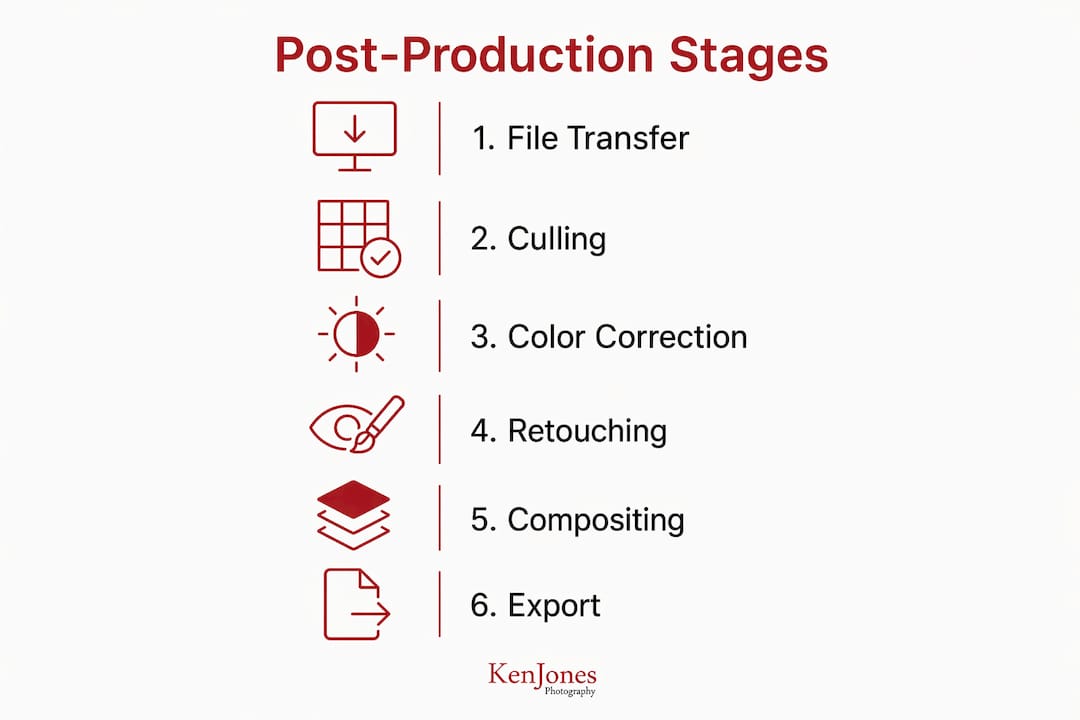
Post-production in commercial photography is defined as the complete workflow that transforms raw image files into polished, brand-ready assets after the camera stops shooting. The process covers file transfer, culling, color correction, retouching, compositing, and final formatting before delivery. Professional photo editing can increase social media engagement by up to 650% compared to unedited images. That number alone explains why serious brands treat post-production as a production phase, not an afterthought. At Ken Jones Photography, based in Manhattan’s Financial District, this workflow runs on every commercial project from fashion editorials to luxury product shoots.
What is post-production in commercial photography?
Post-production is the industry term for every step that happens after the shutter closes. The informal phrase “photo editing” captures only a fraction of it. The full scope includes file management, image selection, color work, retouching, compositing, output formatting, and asset delivery. Each stage has a defined purpose, and skipping any one of them shows up in the final image.
The process begins the moment the shoot wraps. A photographer or digital tech transfers RAW files from camera cards to a primary drive and at least one backup. RAW files hold far more tonal and color data than JPEGs, which is why commercial photography editing always starts from RAW. That data headroom is what makes precise color correction possible later.
Culling follows file transfer. A photographer reviews every frame and selects the strongest candidates for editing. On a typical fashion shoot, a photographer might capture 800 to 1,200 frames and deliver 30 to 60 final images. Culling is where editorial judgment kicks in. The best technical exposure is worthless if the model’s expression is flat or the product label is turned at the wrong angle.
Color correction comes next, followed by retouching, compositing where needed, and final export. Post-production work is a creative and technical process, not just cleanup. It aligns raw captures with a brand’s visual identity, campaign tone, and platform requirements. That alignment is what separates a professional deliverable from a snapshot with good lighting.
What are the main stages of post-production in commercial photography?
The post-production workflow follows a logical sequence. Each stage builds on the one before it, and rushing any phase creates problems that compound downstream.
-
File transfer and backup. RAW files move from camera cards to a primary editing drive and a redundant backup immediately after the shoot. No editing begins until two copies exist.
-
Culling and selection. The photographer reviews all frames and flags selects using star ratings or color labels. This stage determines which images enter the editing pipeline.
-
Color correction. Each selected image receives exposure adjustment, white balance correction, and tonal balancing to create a neutral, accurate starting point. This is technical work, not creative interpretation.
-
Color grading. Once images are corrected, a colorist or photographer applies a consistent creative look. Color grading builds mood, reinforces brand identity, and creates visual cohesion across an entire campaign.
-
Retouching. Skin retouching for fashion and beauty work, product surface cleanup for e-commerce, and background removal or replacement all happen at this stage. The depth of retouching depends on the project. A corporate headshot requires lighter work than a beauty campaign.
-
Compositing. Advertising images often combine multiple exposures, replace backgrounds, or layer in graphic elements. Compositing is the most time-intensive stage and requires strong masking and blending skills.
-
Final formatting and delivery. Images are exported at the correct resolution, color profile, and file format for each platform. A web asset and a print asset from the same shoot require different output specifications.
Pro Tip: Always confirm output specs with the client before the shoot wraps. Discovering that a campaign needs 300 DPI CMYK files after you have already delivered 72 DPI sRGB web assets costs time and goodwill.
Why does post-production matter for commercial photography outcomes?
Post-production is the phase where a photograph becomes a marketing asset. The difference between a technically correct image and a brand-ready image lives entirely in this workflow.
93% of marketers report positive returns from marketing that uses professional editing and consistent brand colors. Some brands have reported conversion improvements of over 10% attributable directly to post-production quality. Those figures reflect a simple truth: buyers respond to images that feel intentional, consistent, and polished.
“Post-production transforms technical raw imagery into a cohesive narrative experience fitting a brand’s identity rather than simply improving image cleanliness.” The distinction matters because clients often think they are buying better-looking photos. They are actually buying brand coherence at scale.
Brand consistency is one of the most undervalued outcomes of disciplined post-production. When every image in a campaign shares the same color temperature, contrast range, and retouching style, the brand feels unified across every platform. That consistency builds consumer recognition and trust over time.
The cost of skipping thorough post-processing shows up fast. A common client mistake is approving images straight from a preview gallery without reviewing them at full resolution. Skin tones that look acceptable at thumbnail size can appear uneven on a billboard or a full-screen website header. Catching those issues in post-production is far cheaper than a reshoot.
Key outcomes that professional post-production delivers:
- Engagement lift. Professionally edited images consistently outperform unedited versions across social media platforms.
- Brand consistency. Unified color grading and retouching style create a recognizable visual identity across all campaign assets.
- Conversion improvement. Clean, accurate product images reduce purchase hesitation. Well-edited images on product photography pages directly support sales performance.
- Platform readiness. Correct file formats, color profiles, and resolutions mean assets go live without delays or technical rejections.
- Reduced revision cycles. Thorough post-production catches problems before client review, which shortens the approval process.
How do commercial photographers manage the post-production workflow?
Efficient post-production runs on structure, not speed. Leading brands divide editing into specialized phases and automate routine tasks to maintain quality at scale. The same principle applies at the project level for any commercial shoot.

The most effective workflows separate technical tasks from creative ones. Color correction is technical. Color grading is creative. Retouching is technical at the base level and creative at the finishing level. Keeping those phases distinct prevents a retoucher from making creative decisions they were not briefed on, and it prevents a colorist from spending time on tasks a junior editor could handle.
Asset management is where many studios lose time. Strict naming conventions and centralized file organization prevent the chaos of searching for a specific crop or a revised version of an image three weeks after delivery. A folder structure that separates RAW selects, working files, client proofs, and final deliverables takes 20 minutes to set up and saves hours on every project.
Revision management is the other major pressure point. Two revision rounds are standard practice on commercial projects. Clients who give vague feedback, such as “make it pop” or “it feels a little off,” burn through those rounds without resolving the actual issue. Clear, specific notes about color temperature, shadow depth, or a distracting background element move the project forward efficiently.
| Workflow element | Best practice | Common mistake |
|---|---|---|
| File naming | Use shoot date, client code, and sequence number | Generic file names like “IMG_0042” |
| Revision rounds | Two rounds with written, specific feedback | Open-ended revisions with verbal notes |
| Color management | Work in a calibrated color space; deliver in the correct profile | Delivering sRGB files for print production |
| Delivery timeline | Standard e-commerce: 7–10 business days | Promising faster turnaround without buffer for revisions |
Pro Tip: Build a pre-delivery checklist that covers resolution, color profile, file format, and naming convention for every project. Running through it takes five minutes and prevents the kind of delivery errors that damage client relationships.
What post-production techniques are used in commercial photography editing?
Commercial photography editing draws on a defined set of techniques. Understanding the difference between them helps creative teams give better feedback and set realistic expectations.
Color correction vs. color grading
Color correction establishes accuracy. It adjusts white balance, exposure, and tonal range so the image reflects what the camera actually captured under controlled conditions. Color grading applies a creative interpretation on top of that corrected base. A fashion editorial might receive a cool, desaturated grade to feel editorial. A luxury product shoot might receive warm, high-contrast grading to feel premium. Both start from the same corrected foundation.
Retouching by subject type
Retouching techniques vary significantly by subject. Fashion and beauty retouching focuses on skin texture, hair detail, and clothing. The goal is to enhance without erasing the natural qualities that make a subject compelling. Product retouching focuses on surface accuracy, label alignment, and background cleanliness. E-commerce images often require background removal and shadow replacement to meet platform specifications. Retouching workflow decisions should be made before the shoot, not after, because lighting choices during capture directly affect how much retouching work is needed in post.
Compositing in advertising imagery
Compositing combines multiple image elements into a single frame. An advertising image might layer a product shot, a lifestyle background, a model, and graphic text into one cohesive visual. Effective compositing requires precise masking, matched lighting direction, and consistent color grading across all layers. A composite that looks assembled rather than unified signals amateur production to any experienced creative director.
Key techniques used across commercial post-production projects:
- Frequency separation for skin retouching that preserves natural texture
- Luminosity masking for precise tonal adjustments in complex scenes
- Clipping paths for clean product cutouts on e-commerce platforms
- Dodge and burn for shaping light and shadow in beauty and fashion work
- Perspective correction for architectural and product images
The role of imagery in website design reinforces why these techniques matter beyond the image itself. A well-retouched product image placed in a poorly designed layout loses much of its impact. Post-production and digital design work together to deliver the final result the audience sees.
Automation now handles a meaningful portion of routine tasks. Background removal, basic exposure normalization, and batch color correction can all run through AI-assisted tools, freeing retouchers to focus on the work that requires human judgment. The most effective studios in 2026 use automation for speed and human expertise for quality control.
Post-production as a system, not a finishing step
Most photographers I talk to treat post-production as the thing they do after the real work is done. That framing costs them time, money, and client confidence. After 30 years of commercial shoots in New York City, I can tell you that the photographers and studios who consistently deliver strong work treat post-production as a production system with the same discipline they bring to lighting setup or casting.
The workflow decisions you make before the shoot determine how smoothly post-production runs. If you do not brief your retoucher on the brand’s skin tone preferences before the shoot, you will spend revision rounds correcting work that should have been right the first time. If you do not confirm output specs with the client before delivery, you will rebuild files under deadline pressure. These are not editing problems. They are production planning problems that show up in post.
NYC clients move fast. A fashion brand running a campaign for a seasonal drop does not have three weeks to wait for revisions because the photographer and client were not aligned on the look. The studios that hold long-term client relationships in this market are the ones with disciplined commercial workflows and clear communication at every stage. Speed matters, but it has to be built on structure, not shortcuts.
The other thing I have learned is that clients often do not know what they want until they see what they do not want. That is fine. Two revision rounds exist for exactly that reason. But you protect those rounds by delivering a first pass that is technically correct and creatively on brief. If the first delivery is sloppy, you burn both rounds fixing basic problems instead of refining the creative direction.
— Ken
Ken Jones NYC’s commercial photography and post-production services
Ken Jones Photography brings the same structured post-production approach to every project, from single-product e-commerce shoots to full fashion editorial campaigns. The studio’s workflow covers creative direction, retouching, color grading, and final asset delivery, all coordinated from the FultonStudio in Lower Manhattan.
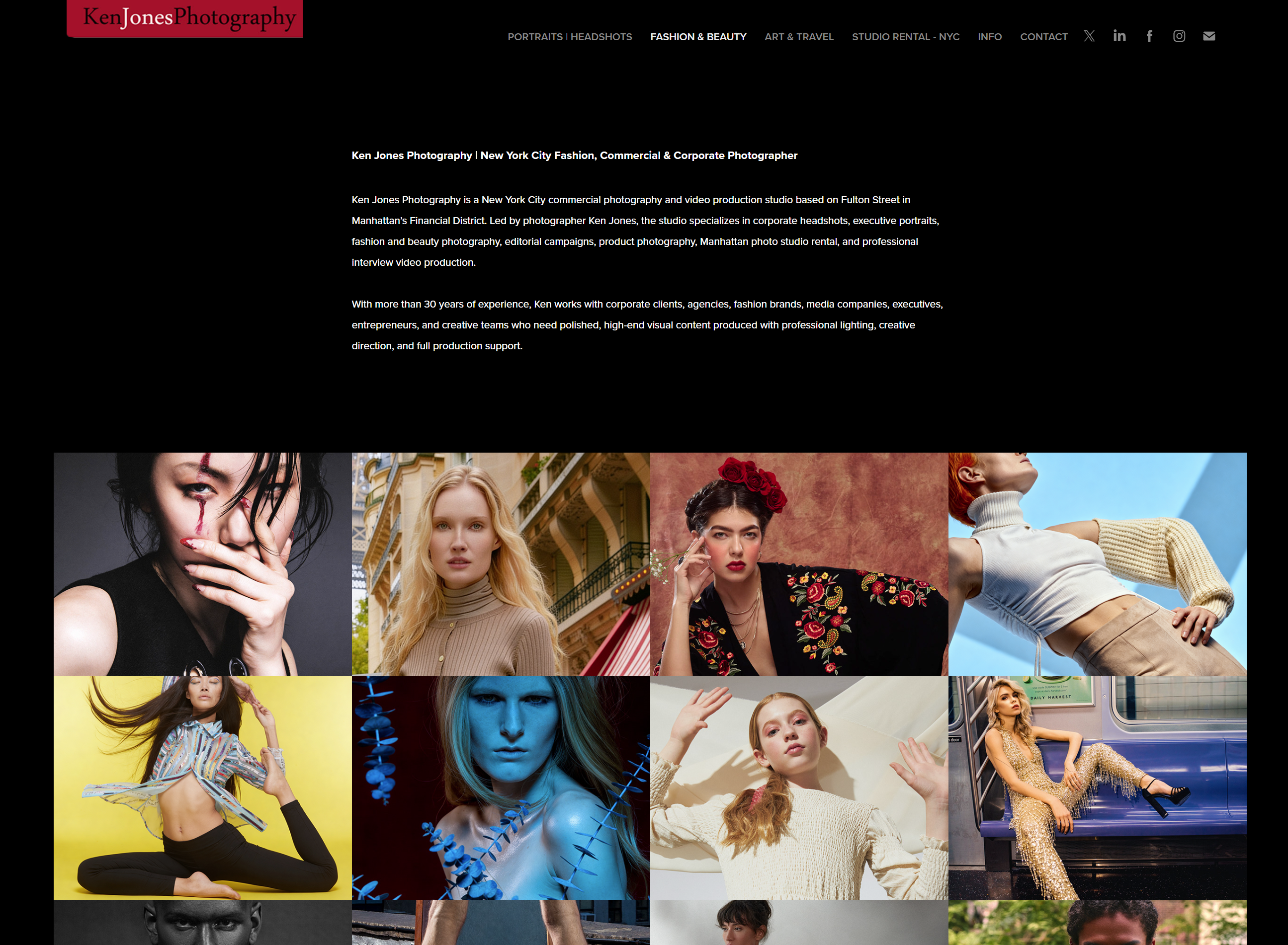
Whether you need luxury product photography for an e-commerce launch, beauty portraits with precise retouching, or fashion editorial images built for press and campaign use, the post-production process is built into the project from day one. You can review portfolio examples across fashion, beauty, and commercial disciplines at kenjonesnyc.com and reach out to discuss your next project directly.
Key takeaways
Post-production in commercial photography is a structured, multi-stage workflow that determines whether raw images become effective marketing assets or missed opportunities.
| Point | Details |
|---|---|
| Full workflow scope | Post-production covers file transfer, culling, color correction, retouching, compositing, and final delivery. |
| Engagement impact | Professionally edited images can increase social media engagement by up to 650% over unedited files. |
| Brand consistency | Unified color grading and retouching style across a campaign builds consumer recognition and trust. |
| Revision management | Two revision rounds are standard; specific written feedback protects both rounds from being wasted. |
| Workflow structure | Strict naming conventions, centralized asset management, and phase-divided editing prevent project delays. |
FAQ
What is post-production in commercial photography?
Post-production in commercial photography is the complete workflow after the shoot, covering file management, culling, color correction, retouching, compositing, and final delivery. It transforms raw captures into polished, brand-ready images.
How long does commercial photo post-production take?
A standard e-commerce project with 20 hero shots typically requires 7–10 business days from shoot wrap to final delivery. Complex lifestyle scenes with compositing can take 2–3 weeks.
What is the difference between color correction and color grading?
Color correction establishes technical accuracy by fixing white balance, exposure, and tonal range. Color grading applies a creative look on top of that corrected base to build mood and brand identity.
How many revision rounds are standard in commercial post-production?
Two revision rounds are the industry standard for commercial photography projects. Clients who provide specific, written feedback on color, shadows, or distracting elements use those rounds most effectively.
Why does post-production matter for marketing results?
93% of marketers report positive returns from marketing that uses professional editing and consistent brand colors. Refined post-production directly supports engagement, brand recognition, and conversion rates.