

TL;DR:
- Professional product photography uses expert lighting and controlled environments to produce images that increase conversions and build brand trust. It ensures marketplace compliance, reduces returns, and creates consistent visuals that elevate the perceived value of products. Investing in professional imagery delivers measurable ROI through higher sales, lower costs, and stronger brand recognition.
Professional product photography is defined as the practice of using expert lighting, controlled environments, high-resolution equipment, and deliberate composition to create images that drive purchase decisions. The benefits of professional product photography extend well beyond aesthetics. 77% of consumers say high-quality images and videos directly influence their purchase decisions, which means your product images are doing active selling work before a single word of copy is read. For marketing professionals and business owners, understanding what separates professional imagery from amateur alternatives is the difference between a listing that converts and one that quietly loses revenue every day.
1. How professional product photography increases conversion rates
The most direct benefit of professional imagery is measurable: compelling product images can increase conversion rates by up to 30%. That figure represents real revenue, not a marginal improvement. When a shopper lands on your product page, they are making a rapid trust assessment, and the image is the first thing they evaluate.
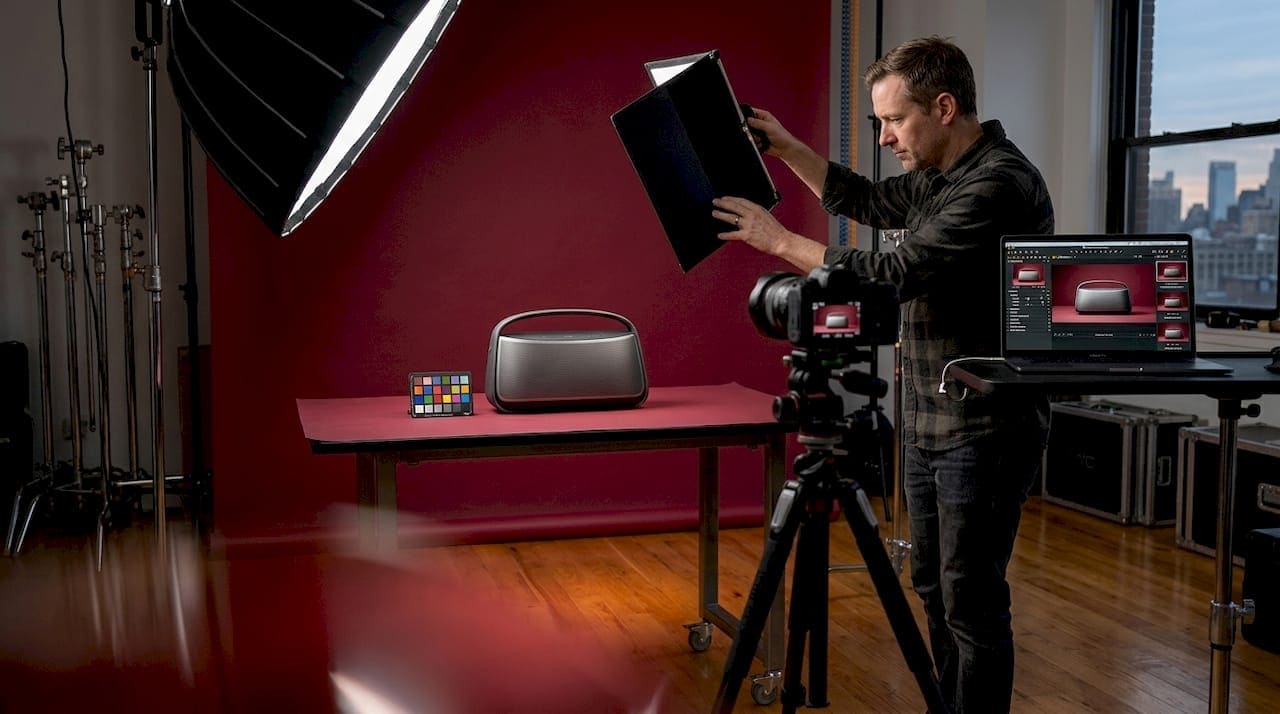
56% of shoppers explore product images before reading titles or reviews. This makes your photography the primary trust signal on any product page, ahead of price, description, or star ratings. A blurry, poorly lit, or inconsistently styled image communicates carelessness before the customer has read a single word.
Professional photographers address this by building images that answer the questions a customer would ask in a physical store. What does the texture look like up close? How large is this product relative to a familiar object? What does it look like from the side, the back, and at an angle? Each of those questions, left unanswered, is a reason to leave the page.
Key photographic elements that directly support higher conversion include:
- Resolution and zoom capability: Images must hold up at 100% zoom without pixelation, allowing customers to inspect detail.
- Multiple angles: Front, back, side, and three-quarter views replicate the in-store examination experience.
- Scale references: Showing a product next to a recognizable object or on a model eliminates size uncertainty.
- Clean, distraction-free backgrounds: Simple backgrounds convert better because they keep the customer’s attention on the product itself.
Pro Tip: If you are launching a new product, prioritize a minimum of five angles before any lifestyle shots. Customers need to understand the product physically before they respond to aspirational imagery.
2. What professional photography does for Amazon and marketplace compliance
Amazon’s 2026 image standards are specific and non-negotiable. The platform requires pure white backgrounds with product fill between 85% and 100%, and a minimum resolution of 1000 pixels on the longest side to enable the zoom function. Listings that do not meet these standards face suppression, which means reduced visibility in search results and a direct loss of sales.
Most sellers who attempt DIY photography discover the compliance problem after the listing is already live. Correcting it in post-production is rarely effective. Cropping to achieve the correct product fill often degrades resolution, and artificially whitening a gray or off-white background rarely passes Amazon’s quality filters cleanly. Professional photography workflows plan for these specifications during the shoot itself, not afterward.
The table below shows where professional photography and DIY approaches diverge on the factors that matter most for marketplace performance.
| Factor | Professional photography | DIY photography |
|---|---|---|
| Background compliance | Pure white achieved in-studio with controlled lighting | Often gray or uneven; requires post-production correction |
| Resolution for zoom | Shot at high resolution with marketplace specs in mind | Frequently below 1000 px or cropped to compliance |
| Product fill (85–100%) | Framed correctly during the shoot | Often requires resizing that reduces image quality |
| Listing suppression risk | Low, due to proactive compliance planning | Higher, due to reactive corrections |
| Consistency across catalog | Maintained through repeatable studio setups | Variable across sessions and devices |
Beyond Amazon, platforms like eBay show a similar pattern. Listings with better photo quality are 4.5% more likely to sell, a figure that compounds significantly across a large catalog. The advantage of professional photography for e-commerce is not just visual appeal. It is operational compliance that protects your listing visibility.
Pro Tip: Before booking a product shoot, provide your photographer with the exact marketplace specs for every platform where you sell. A professional studio will build those requirements into the shot list from day one.
3. Why brand consistency across your catalog matters more than you think
Brand consistency in product photography means every image in your catalog shares the same lighting style, background treatment, color temperature, and compositional approach. This is not a stylistic preference. It is a credibility signal. When a customer browses your catalog and sees images that vary in quality, tone, or background color, the implicit message is that the brand lacks standards.
A client who came to Kenjonesnyc several years ago had a catalog of 60 products photographed across three different sessions with three different photographers. Some images had warm, natural light. Others were shot on gray backgrounds. A few were clearly taken on a smartphone. The products themselves were well-made and competitively priced, but the inconsistent imagery made the brand look unreliable. After a full catalog reshoot with a consistent lighting and styling system, the client reported a measurable improvement in average order value and a reduction in the number of customers who browsed without purchasing.
Professional photographers create this consistency through repeatable systems: standardized lighting rigs, calibrated color profiles, defined shot lists, and consistent post-production retouching. These systems allow you to add new products to your catalog months later and have them match the existing imagery without reshooting everything.
The specific elements that build catalog-level brand consistency include:
- Lighting setup documentation: Diagrams and settings saved from each shoot so future sessions match exactly.
- Background and surface standards: The same material, color, and texture used across all product categories.
- Styling guidelines: Consistent prop use, product orientation, and negative space ratios.
- Retouching standards: Defined color correction, shadow treatment, and sharpening applied uniformly.
This level of production planning is what separates a professional studio from a freelancer with a camera. It is also what separates brands that look premium from those that look assembled.
4. How professional photographers optimize for technical quality and storytelling
A professional product photographer does not simply point a camera at a product and press the shutter. The work begins with understanding how the product will be used, who will buy it, and what questions the images need to answer. That context shapes every technical decision, from the lighting setup to the image sequence.
Expert lighting setups use a combination of softboxes, reflectors, and controlled fill light to reveal texture, shape, and material without creating distracting reflections or harsh shadows. For a leather bag, that means raking light that shows the grain. For a glass bottle, it means backlighting that captures translucency without blowing out the highlights. These are not adjustments you can make in Lightroom after the fact. They require deliberate setup before the shutter opens.
The image sequence approach treats photography as a system rather than a single shot. A complete product image set typically includes a hero image, lifestyle context shot, scale reference, close-up detail, and multiple angles. This sequence replaces the in-store examination experience that online shoppers cannot have. Skipping any element in that sequence leaves a gap in the customer’s understanding, and gaps produce hesitation.
Post-production is where technical quality is refined, not created. Professional retouching corrects minor color shifts, removes dust or surface imperfections, and prepares files for multiple output formats. AI-assisted tools like background removal software have improved significantly, but they work best when the original image is shot with clean separation between the product and background. A well-lit studio shot requires far less post-production time than a poorly lit one, which directly affects your cost per image.
Pro Tip: Batch shooting, where you photograph an entire product line in a single session with a consistent setup, is the most cost-effective way to build a catalog. Plan your shot list in advance and group products by size and background requirement to minimize setup changes.
You can see how effective lighting setups translate directly into sharper, more credible product images when you look at the difference between a diffused softbox setup and a single overhead light on the same product.
5. The ROI case for investing in professional product photography
The return on investment for professional product photography is built on three measurable outcomes: higher conversion rates, fewer product returns, and stronger brand equity that drives repeat purchases. Each of these has a direct dollar value that can be calculated against the cost of a professional shoot.
Conversion rate improvements of up to 30% from quality imagery represent significant revenue at scale. If your product page currently converts at 2% and professional photography moves that to 2.6%, the additional revenue on 10,000 monthly visitors at a $50 average order value is $3,000 per month. The cost of a professional product shoot is typically recovered within the first billing cycle for most mid-volume sellers.
Multiple image angles and scale references significantly reduce product returns by giving customers a complete and accurate understanding of what they are buying. Returns are expensive. They consume logistics costs, customer service time, and inventory. An image set that eliminates size or color misunderstandings pays for itself in reduced return processing alone.
Stores that test image variants see measurable conversion improvements, and scale shots specifically can reduce returns by 11%. That is a concrete, trackable outcome that justifies the investment in professional photography as a business decision rather than a marketing expense.
The long-term brand benefits compound over time. Customers who trust your imagery are more likely to purchase again without needing additional reassurance. They are also more likely to refer others, because the product they received matched what they saw online. This alignment between expectation and reality is one of the most undervalued outcomes of professional product photography.
Measurable business benefits of professional imagery include:
- Higher average order value: Customers who feel confident in their purchase are more likely to add complementary items.
- Lower bounce rate: Clear, detailed images keep shoppers on the page longer and reduce early exits.
- Improved SEO performance: Properly named, optimized image files contribute to organic search visibility.
- Reduced return rates: Accurate representation of color, scale, and texture sets correct expectations.
- Stronger brand recall: Consistent, high-quality imagery builds visual recognition across channels.
“The brands that invest in professional imagery early are the ones that don’t have to rebuild their reputation later. Poor product photos are not just a missed opportunity. They are an active liability.”
Key takeaways
Professional product photography directly increases conversion rates, reduces returns, and builds the brand trust that drives long-term revenue growth.
| Point | Details |
|---|---|
| Conversion impact | Quality images can increase conversion rates by up to 30%, with direct revenue implications. |
| Marketplace compliance | Amazon’s 2026 standards require white backgrounds and 1000 px minimum; professional shoots plan for this from the start. |
| Brand consistency | Repeatable studio systems across a catalog build credibility and elevate perceived product value. |
| Image sequencing | A complete set of hero, lifestyle, detail, and angle shots replaces the in-store examination experience. |
| ROI measurement | Scale shots reduce returns by 11%; conversion gains typically recover shoot costs within the first month. |
What 30 years of product shoots taught me about what actually works
I have photographed products ranging from luxury watches to industrial equipment, and the single most common mistake I see from new clients is treating photography as the last step in the launch process. They finalize the product, write the copy, build the page, and then call me two days before launch asking for a quick shoot. That approach produces images that are technically acceptable and commercially mediocre.
The brands that get the most from a professional shoot are the ones that bring me in during the planning phase. We talk about the customer, the platform, the competitive set, and the story the product needs to tell. That conversation shapes the shot list, the lighting approach, the styling, and the image sequence before anyone touches a camera.
I have also seen the DIY approach fail in ways that cost real money. One client spent six months selling a premium skincare line with smartphone photos taken in natural window light. The products were genuinely excellent. The images made them look like drugstore generics. After a professional reshoot at the studio, the brand’s conversion rate improved noticeably within the first two weeks, and the client told me the images finally matched what the product actually felt like to use.
The other thing I would tell any marketing professional reading this: test before you commit to a full catalog rollout. Shoot two or three hero images with different approaches, run them against each other, and let the data tell you which direction to scale. Lifestyle images as hero shots outperform white-background images on mobile for certain categories. That is not a universal rule. It is a reason to test. Professional photography gives you images worth testing. Amateur photography gives you images you hope will work.
— Ken
Work with a studio that understands what your product images need to do
If you are ready to move from images that look acceptable to images that actively sell, Kenjonesnyc brings over 30 years of commercial production experience to every product shoot. The studio handles everything from creative direction and styling to lighting, image sequencing, and post-production retouching, all built around the compliance and quality standards your marketplace and brand require.
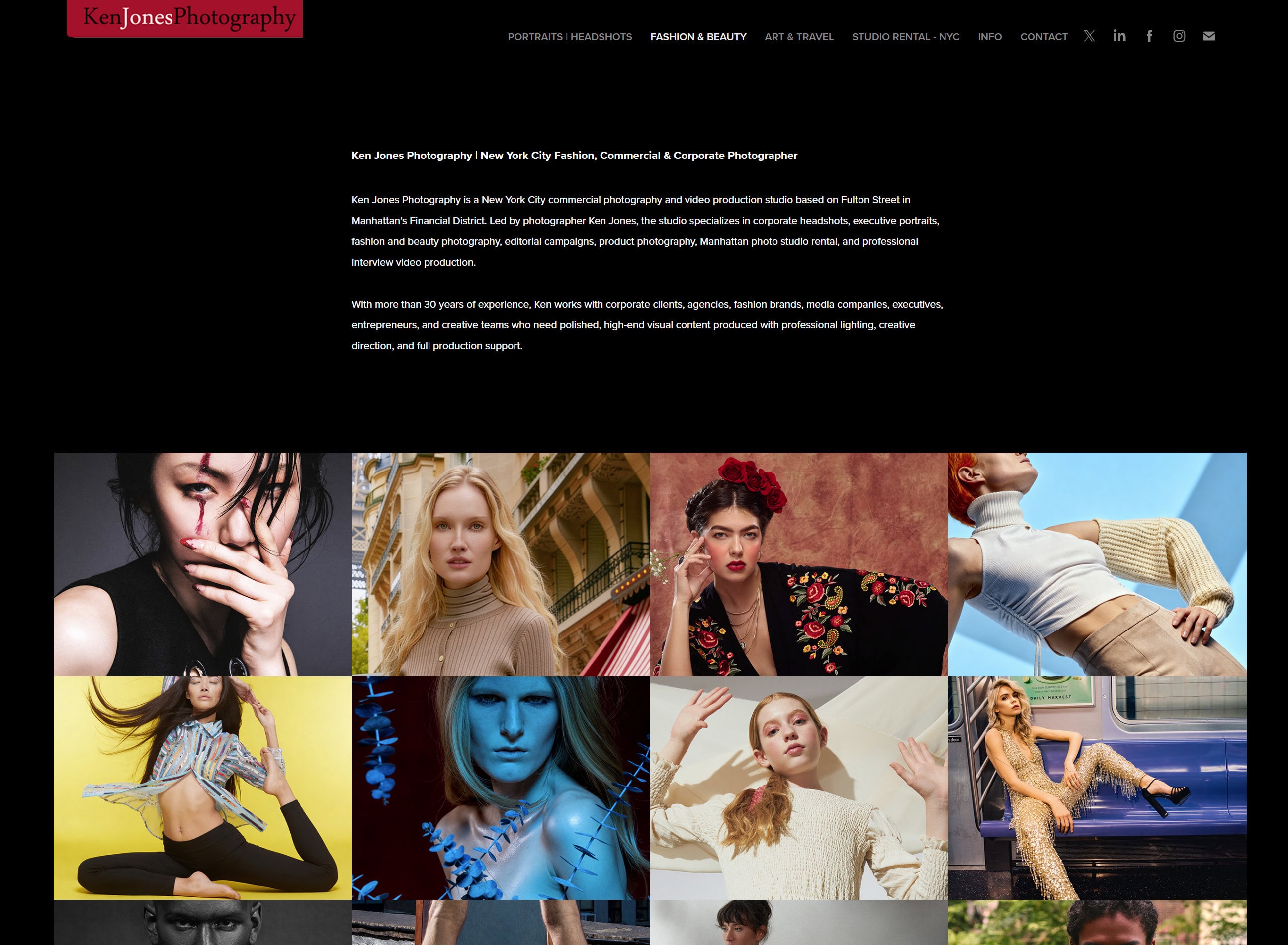
Whether you are building a new catalog from scratch or refreshing an existing one, the team at Kenjonesnyc works with fashion brands, luxury product lines, and e-commerce sellers who need imagery that performs. The studio’s Manhattan Financial District location supports full-service production with controlled studio environments and flexible scheduling. Explore the product photography services at Kenjonesnyc to see how professional imagery can support your brand’s growth and sales goals.
FAQ
What are the main benefits of professional product photography?
Professional product photography increases conversion rates, reduces product returns, and builds brand credibility by delivering clear, accurate, and visually consistent images. Research shows quality images can lift conversions by up to 30%.
How does professional photography compare to DIY for Amazon listings?
Amazon’s 2026 standards require pure white backgrounds and a minimum of 1000 pixels for zoom functionality. Professional photographers plan for these specifications during the shoot, while DIY corrections in post-production frequently degrade image quality and risk listing suppression.
Does product photography actually reduce return rates?
Multiple image angles and scale references significantly reduce returns by giving customers an accurate understanding of size, texture, and color before purchase. Stores using scale shots specifically have seen return reductions of around 11%.
How many images does a product listing need?
A complete product image set should include a hero image, at least two to three angle shots, a scale reference, and a close-up detail image. Lifestyle context shots are valuable additions, particularly for mobile shoppers in categories like apparel and home goods.
Is professional product photography worth the cost for small businesses?
The cost of a professional shoot is typically recovered quickly when conversion rate improvements and reduced return processing are factored in. For small businesses, starting with a focused batch shoot of core products and testing image performance before scaling is the most cost-effective approach.
Recommended
- Ken Jones Photography | NYC Fashion, Beauty & Commercial Photographer | Manhattan Studio Rental – Luxury Product & E-Commerce Photography
- Product Photography Lighting Setups Examples That Work
- How Commercial Photography Makes Your Brand Look More Expensive
- Ken Jones Photography | NYC Fashion, Beauty & Commercial Photographer | Manhattan Studio Rental – Advertising Campaign Photography