
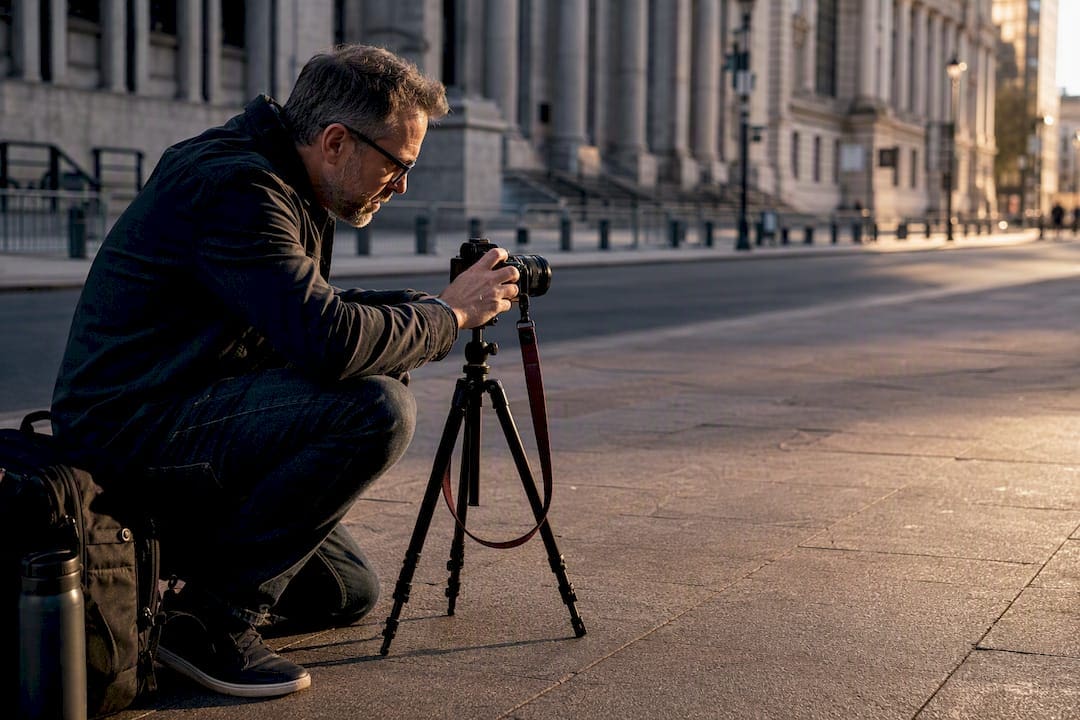
Most NYC photo shoots using only handheld cameras or a tripod do not require a permit from the Mayor’s Office of Media and Entertainment. If your setup stays simple and you’re not blocking sidewalks, running vehicles, or hogging a public bench for an hour, carry a Letter in Lieu of Permit and confirm who owns the ground you’re standing on. Parks, MTA property, and a handful of other jurisdictions play by different rules entirely.
TL;DR:
- Most NYC photo shoots using only handheld cameras or tripods do not require a permit unless blocking sidewalks, asserting exclusive use, or involving props, vehicles, or uniforms.
- Applying for a permit involves confirming jurisdiction, submitting online, providing insurance, paying fees, and possibly notifying neighbors, with standard reviews often completed in a few business days.
- A Letter in Lieu of Permit can be used for qualifying shoots on city property, but it offers limited coverage, and changing plans on set may breach compliance.
- Parks require a separate approval process and should be applied for at least seven days in advance; conservancies have additional approval workflows for key locations.
- Locations outside MOME authority, such as MTA, Port Authority, or federal sites, require direct permits from those agencies, as MOME permits do not apply there.
Table of Contents
- Do You Need NYC Photo Permits? MOME’s Rules and the LiLOP Explained
- How to Apply for a Filming Permit: Steps, Timeline, Fees, and Insurance
- Shooting in NYC Parks: MPA Rules and Conservancy Approvals
- Other Jurisdictions: MTA, Port Authority, and Federal Property
- On-Set Rules That Keep a Permit-Free Shoot Legal
- Real-World Production Lessons: What Actually Shuts Down a Shoot
- Quick Reference: Common Permit Mistakes and Fast Fixes
- Why I Always Check Permits First
- How Ken Jones Photography Handles the Permit Side So You Don’t Have To
- Official Resources for NYC Photography Permits
- Sources
- FAQ
Do You Need NYC Photo Permits? MOME’s Rules and the LiLOP Explained
I’ve had assistants ask me, mid setup on a Tribeca corner, “wait, do we need paper for this?” The honest answer is usually no, but the criteria matter enough that guessing wrong can end a shoot fast.
The Mayor’s Office of Media and Entertainment spells out exactly when a photo shoot crosses from “no permit needed” into “you must apply.” A permit becomes mandatory when your production does any of the following:
- Uses equipment beyond a handheld camera or a single tripod (light stands, C stands, reflectors on stands, generators)
- Asserts exclusive use of a public sidewalk, plaza, or roadway, meaning you’re keeping the public out of that space
- Requests parking privileges for production vehicles
- Involves prop weapons, vehicles staged as part of the scene, or stunts
- Puts actors in police, fire, or other official uniforms
Stay clear of all five and you’re exempt. That covers a huge share of the fashion and beauty work I shoot around Lower Manhattan: a model against a graffiti wall in Dumbo, a lookbook walk down Water Street, a beauty portrait session using window light on a fire escape. No lighting rig, no blocked traffic, no permit.
Where MOME gives you a practical middle ground is the Letter in Lieu of Permit, known on set as the LiLOP. It’s a self-certification you print at home, valid for 30 days, and it works on City sidewalks, park pathways, and DOT bridge walkways when your shoot fits the exemption criteria above. It is not a permit. It grants no parking, no exclusive use, and no authority over spaces it doesn’t cover. What it does is give a curious cop, a building super, or a security guard something official-looking to glance at instead of arguing with you about whether you’re “allowed” to be there.
The Optional Permit FAQ draws a clean line between the LiLOP, an optional permit, and a required permit. A required permit comes with insurance obligations and becomes a public record subject to Freedom of Information Law requests. An optional permit gives you the same paperwork trail voluntarily, which some producers choose when working near sensitive locations even though the shoot technically qualifies for exemption. The LiLOP skips all of that. The trade off is coverage: if your plan changes on set and suddenly needs a light stand or a parked grip truck, the LiLOP stops applying and you’re now out of compliance.
How to Apply for a Filming Permit: Steps, Timeline, Fees, and Insurance
Here’s the workflow I walk junior producers through before their first NYC location day.
- Confirm jurisdiction first. Figure out who actually owns the ground. City sidewalk and street, that’s MOME territory. Park land, that’s NYC Parks. Anything else, and you’re calling a different office entirely (more on that below).
- Apply online. MOME runs its film permit application through an online portal. If your shoot touches parkland, you’ll also file for a Media Production Authorization through NYC Parks.
- Submit insurance documentation. A required permit needs a certificate of insurance naming the City of New York as an additional insured, plus an indemnification agreement. Expect coverage minimums in the range most production insurance policies already carry, generally $1 million per occurrence, but confirm current requirements when you apply since the City updates language periodically.
- Pay the applicable fee. MOME charges a fee for each consecutive two-week period for a standard film permit.
- Notify your neighborhood, if required. MOME’s own guidance frames this as part of a three step process: confirm the need for a permit, apply, then notify the surrounding community when your shoot warrants it.
Fee math trips people up more than anything else in this process. That $500 MOME fee covers a full two week window, not a single day, so a one day shoot and a twelve day shoot cost the same. Where budgets get surprised is City interior locations managed by the Department of Citywide Administrative Services. DCAS has cited a separate administrative fee example for certain City interior properties, on top of MOME’s fee, plus potential staffing costs for a building monitor. That’s a different animal from a sidewalk shoot, and it needs its own line item in your budget from day one.
On timing: a straightforward permit application for a standard sidewalk or street shoot with no lane closures often clears within a few business days. Add lane closures, a large crew, extended equipment, or a City interior location and you’re looking at multi week review. I never book a location with elaborate blocking less than two weeks out if I know a permit is coming into play. Rushing that step is how you end up shooting a backup location on the day of, which is its own kind of expensive.
Shooting in NYC Parks: MPA Rules and Conservancy Approvals
Parks operate under a separate approval layer, and treating Central Park like a sidewalk with grass is the fastest way to get a shoot shut down mid setup.
NYC Parks requires a Media Production Authorization, on top of any MOME permit, whenever your production involves equipment beyond handheld or tripod, restricts public access to any part of the park, brings in generators or lighting rigs, or needs vehicle access onto park property. That last one catches people off guard constantly. A grip van idling near a park entrance while gear gets unloaded already counts as vehicle access in Parks’ eyes.
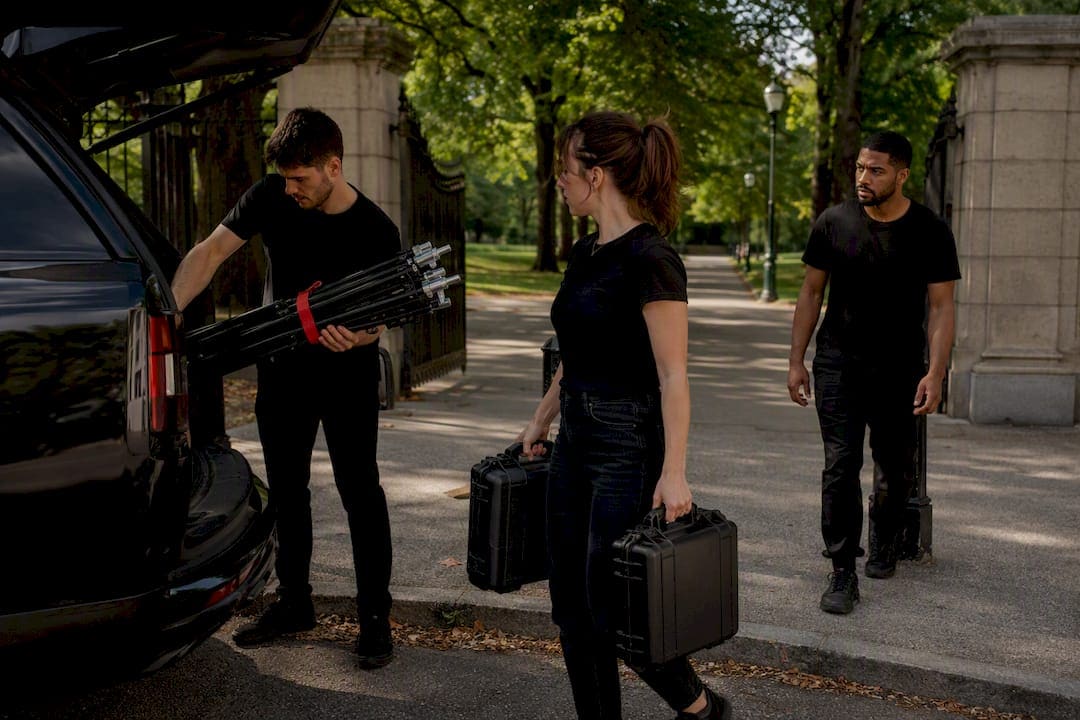
Timing matters here more than almost anywhere else in this process. Parks applications should go in at least seven calendar days ahead, and that’s the floor, not the target. Complex shoots involving multiple crew zones, closed paths, or heavy equipment routinely take fourteen days or longer for review, sometimes with a site visit required before approval.
A handful of parks are managed by conservancies that run their own approval workflows on top of, or alongside, the city process:
- Central Park, managed with the Central Park Conservancy
- The High Line, which runs a tightly controlled application process given its narrow footprint
- Prospect Park, through the Prospect Park Alliance
- Additional partner organizations manage locations including Randall’s Island, Riverside Park through its Conservancy, and Battery Park through The Battery Conservancy
Parks decisions come down to resource protection and public access, plain and simple. A lawn that’s recovering from reseeding gets a no. A heavily trafficked plaza during a weekday lunch rush gets a no for anything involving lighting stands or crowd control. Off peak timing and a light footprint get you a yes far more often than a persuasive email does.
Other Jurisdictions: MTA, Port Authority, and Federal Property
A MOME permit only covers property MOME actually has authority over, and that trips up more productions than any other rule in this article.
Locations that fall outside MOME’s reach entirely include:
- MTA property, meaning subway platforms, subway cars, and certain bridges under MTA control
- Port Authority locations, including airports, the PATH system, and specific bridges and tunnels
- DCAS managed City interior buildings, which need their own separate authorization and fee structure
- Federal property, including federal courthouses, post offices, and certain waterfront parcels
The Optional Permit FAQ is explicit that the LiLOP cannot be used on MTA or Port Authority bridges, private property, or state and federal land. A MOME permit in your bag means nothing to an MTA police officer on a subway platform. I’ve watched a producer try to wave a printed LiLOP at transit police during a subway platform shoot, assuming City paperwork covered it everywhere. It didn’t, and the shoot ended before the first frame.
If your location touches any of these, skip MOME entirely and go straight to the agency that owns the property. The MTA has its own filming and photography permit process, Port Authority handles its own locations independently, and federal property requires coordination with whichever agency manages that specific site. When you’re not sure who owns a plaza, a quick call to NYC311 is the fastest way to get pointed in the right direction before you waste a location scout.
On-Set Rules That Keep a Permit-Free Shoot Legal
Getting the paperwork question right is only half the job. What you do on set determines whether that exemption actually holds up.
- Never assert exclusive use, even informally. Asking pedestrians to wait “just a second” while you get the shot can read as exclusive use to anyone watching, including a patrol officer. Keep foot traffic moving and shoot around it instead of stopping it.
- Watch your footprint on sidewalks. A reflector held by an assistant is fine. A reflector on a stand plus a second stand for a scrim starts to look like a lighting setup that needs a permit.
- Treat parking as a trigger, not a convenience. The moment you need a spot held for a production vehicle, you’ve crossed into permit territory. Street parking for a personal car doesn’t count; a blocked loading zone for a grip truck does.
- Know before you fly. Drone photography in NYC requires separate FAA registration and, in most cases, coordination with the relevant property owner and airspace authority. Park property adds another layer of restriction on top of that. Don’t assume a photo permit covers a drone.
- Carry a printed copy of whatever you’re relying on. A phone screenshot of a LiLOP has talked its way out of exactly zero disputes I’ve witnessed. Print it.
Pro Tip: Keep a laminated one-page cheat sheet in your gear bag listing which locations need a permit, which need an MPA, and which fall under MTA or Port Authority. It sounds excessive until a PA is standing on a corner arguing with building security and needs an answer in ten seconds, not ten minutes of scrolling through email.
Real-World Production Lessons: What Actually Shuts Down a Shoot
A few years back, a small crew I was consulting for scheduled a fashion editorial along the Hudson River waterfront, confident their handheld setup meant no permit was needed. What they missed was that the specific stretch of esplanade fell under a park conservancy’s jurisdiction, not standard City sidewalk. A groundskeeper flagged them within twenty minutes, not because the gear was a problem, but because nobody had confirmed which agency actually managed that piece of pavement.
The fix took one phone call and cost the shoot forty-five minutes. If they’d checked jurisdiction during location scouting instead of assuming, that call would have happened three days earlier with zero downtime on the actual shoot day.
The most common mistakes I see aren’t dramatic. They’re late applications submitted the week of the shoot, insurance certificates missing the exact indemnification language a location requires, and producers assuming a plaza is public when it’s privately owned but open to pedestrians, which is a completely different permission structure. Building a permit-first scouting workflow into your pre-production, before you fall in love with a location, saves real money on shoot day.
Quick Reference: Common Permit Mistakes and Fast Fixes
Run through this before you lock a location:
- Check who owns the property before you check anything else
- Carry a printed LiLOP if your setup qualifies for the exemption
- Never block a full pedestrian lane, even briefly, without a permit
- Confirm your certificate of insurance names the correct entity as additional insured
- Call the park manager or conservancy at least a week out, longer for complex setups
- Escalate to MOME directly, or bring in a production coordinator, once vehicles, generators, or multiple locations enter the plan
- Loop in legal counsel when a location’s ownership is genuinely unclear or a rights dispute is possible
Why I Always Check Permits First
Permits aren’t red tape for its own sake. They protect the shoot, the talent, and the public sharing that space with you. I’ve seen productions save a location day by confirming jurisdiction a week early instead of finding out on set. Speed matters in this business, but a shoot that gets shut down mid morning costs far more time than the phone call that would have prevented it.
— Ken
How Ken Jones Photography Handles the Permit Side So You Don’t Have To
Chasing down MOME, NYC Parks, and jurisdiction questions eats into time you’d rather spend on casting, styling, and getting the shot right. The studio handles that groundwork as part of full production support, location scouting with permit exposure checked upfront, certificate of insurance coordination, and production coordination that keeps a location day from stalling over paperwork nobody flagged early.

For fashion and editorial clients, that means location days built around what’s actually approvable, not just what looks good in a scout photo. Browse the fashion photography portfolio to see how location and studio work come together, and when a permit-heavy location isn’t worth the risk, studio rental in Lower Manhattan gives you full lighting control with zero jurisdiction questions. Reach out through Kenjonesnyc to talk through your next shoot before you lock a location.
Official Resources for NYC Photography Permits
Bookmark these before your next location scout:
- MOME Filming Permits, the application portal and permit overview
- Letter in Lieu of Permit download, the printable LiLOP form
- Optional Permit FAQ (PDF), full eligibility and limitation details
- NYC Parks Media Production Authorization portal, for any shoot touching parkland
- NYC311 film and photo permit page, a fast reference when jurisdiction is unclear
If you’re building out a marketing plan around your photography business alongside your production workflow, a resource like SEO services built for photographers can help more of the right clients find your work in the first place.
Sources
- When a Permit is Required and Fee Info – MOME
- Letter in Lieu of Permit – MOME
- Film and photography permits : NYC Parks
- FAQ For Letter in Lieu of Optional Permit – MOME (PDF)
FAQ
Do you need a permit to photograph in Central Park?
Only if your shoot goes beyond handheld or tripod equipment, restricts public access, or brings in generators, lighting rigs, or vehicles. In those cases you need a Media Production Authorization from NYC Parks in addition to any MOME permit.
What are the laws regarding photography in New York City?
Photography in public spaces is broadly permitted, but a MOME film permit becomes mandatory once you assert exclusive use, request parking, use prop weapons or stunts, or bring equipment beyond handheld or tripod setups. Qualifying shoots can use a Letter in Lieu of Permit instead.
Do you need a permit to film in Times Square?
Yes, in most cases. Times Square’s foot traffic and business district status mean almost any organized shoot with more than a handheld camera will need a standard MOME permit, and coordination with local business improvement districts is common practice.
Where are some good locations for a photo shoot in NYC?
Cobblestone streets in Dumbo, the Lower Manhattan waterfront near the Financial District, and quiet side streets in SoHo all work well for handheld editorial and fashion shoots without triggering permit requirements. Studio rental near Fulton Street is available for shoots where weather or permit exposure make a location day too unpredictable.
Does the NYC subway require a special filming permit?
Yes. Subway platforms and cars fall under MTA jurisdiction, not MOME, so a City film permit or LiLOP has no authority there. Productions need to apply directly through the MTA’s own filming and photography permit process.