
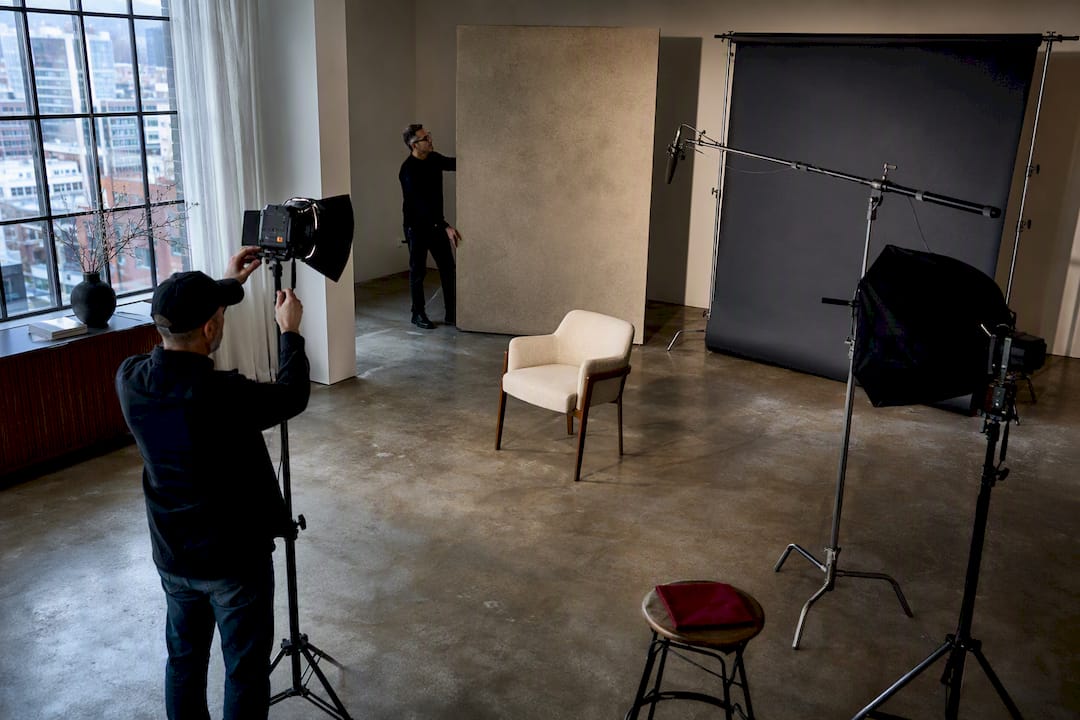
The right interview background comes down to one choice: control or authenticity. A studio gives you a neutral sweep, a textured wall, a branded set, or a proper green screen cyc, all with lighting you dial in and lock down. A location gives you real context but less control over light, sound, and time. Whichever you pick, keep 1.5 to 2 meters between subject and background so the shot holds depth instead of flattening into a passport photo.
TL;DR:
- Studio backgrounds offer multiple looks like neutral sweeps, textured walls, branded environments, and green screens, all with quick setup.
- Choose location backgrounds when the setting adds credibility, but favor studios for tight schedules and consistent messaging.
- Green screens are ideal for versatile post-production but require a true cyclorama, separate lighting, and wardrobe checks to avoid costly mistakes.
- Keep 1.5 to 2 meters between subject and background to create depth, and ensure background and subject lighting are on separate circuits with high CRI fixtures.
- Always verify studio crew expertise, pre-rigged features, and recent sample keys before booking to prevent production delays.
Table of Contents
- What Interview Background Options Does a Studio Offer?
- How Do You Choose the Right Interview Backdrop?
- Studio vs. On-Location: Which Actually Serves the Interview?
- When Should You Use a Green Screen or Cyclorama?
- Why Lighting, Spacing, and Acoustics Matter More Than the Backdrop Itself
- What Should You Ask a Studio Before You Book?
- A Studio Pro’s Behind-the-Scenes Note on Background Mistakes
- How Ken Jones Photography Can Help With Your Next Interview Shoot
- Sources
- FAQ
What Interview Background Options Does a Studio Offer?
Every studio worth booking should be able to give you at least four or five distinct looks without moving trucks or crew. Here’s what actually shows up on set:
- Neutral seamless or Colorama sweeps: clean, corporate, low-distraction. This is the default for executive comms, quarterly updates, and anything getting cut down for social, where the background needs to disappear so the message doesn’t.
- Textured or architectural walls: exposed brick, wood paneling, textured paint. These add personality without becoming the story, which is why so many corporate lifestyle sessions lean on them.
- Branded environments and product displays: a logo wall or product shelf works only when it’s shot shallow. Push it too sharp and it competes with the subject’s face for attention.
- Practical set pieces: a lamp, a plant, a bookshelf. Small props read as “real office” without the headaches of an actual office.
- Cyclorama or green screen: total post-production flexibility, but only as good as the crew running it.
- Blackout and drapes: pure negative space for a moody, isolated look when the message is the only thing that should register.
Most studios, including ours, build a session around two or three of these rather than forcing a client to commit to one look before seeing it under real light.
How Do You Choose the Right Interview Backdrop?
Start with the narrative question before the technical one. If the story depends on place, a warehouse floor, a trading desk, a design studio, shoot on location. If the story depends on the message and the person delivering it, shoot in a studio where nothing competes with the words.
From there, run the decision through a short checklist:
- Narrative fit: does the background need to prove something (industry, scale, culture), or would it just be decoration?
- Schedule reality: executives with 30 minutes between board calls need a controlled, fast setup, not a location scout with lighting contingencies.
- Technical fit: how much separation can the space give you, and does the lens and depth of field you want actually work in that room?
- Operational fit: what’s the crew depth, and does the post team have the compositing bandwidth if you’re shooting against a cyc?
- Risk factors: HVAC hum, street noise, changing daylight, permits, building security. Any one of these can eat your shoot day.
Pro Tip: Ask any location contact for a 10-minute phone walk-through before you commit. Half the “great location” pitches I get fall apart the moment someone mentions the freight elevator runs right behind the wall we wanted to shoot against.
Studio vs. On-Location: Which Actually Serves the Interview?
Studios win on repeatability. Lighting gets locked once and reused across every subject that day, acoustics are controlled, and a background lighting rig plus cyc option is usually already rigged and ready. That matters enormously when you’re running six executives through in one afternoon and can’t afford to relight for each one.
Locations win on authenticity. A CEO talking about a new factory line means more standing in the factory. A statement about quarterly earnings means more shot clean, fast, and free of visual noise. That’s the practical split:
- Choose location when the setting itself is part of the message and context adds credibility.
- Choose studio when the message needs to travel fast, the schedule is tight, or the subject needs to look consistent across a series.
- A CEO interview tied to a product launch usually calls for the factory floor or retail environment.
- A CEO statement that needs to be shot, approved, and delivered inside 45 minutes calls for a studio, full stop.
Budget the travel time, permits, and weather contingency into any location day. A studio day has almost none of that variability, which is exactly why so many comms teams default to it for anything time-sensitive.
When Should You Use a Green Screen or Cyclorama?
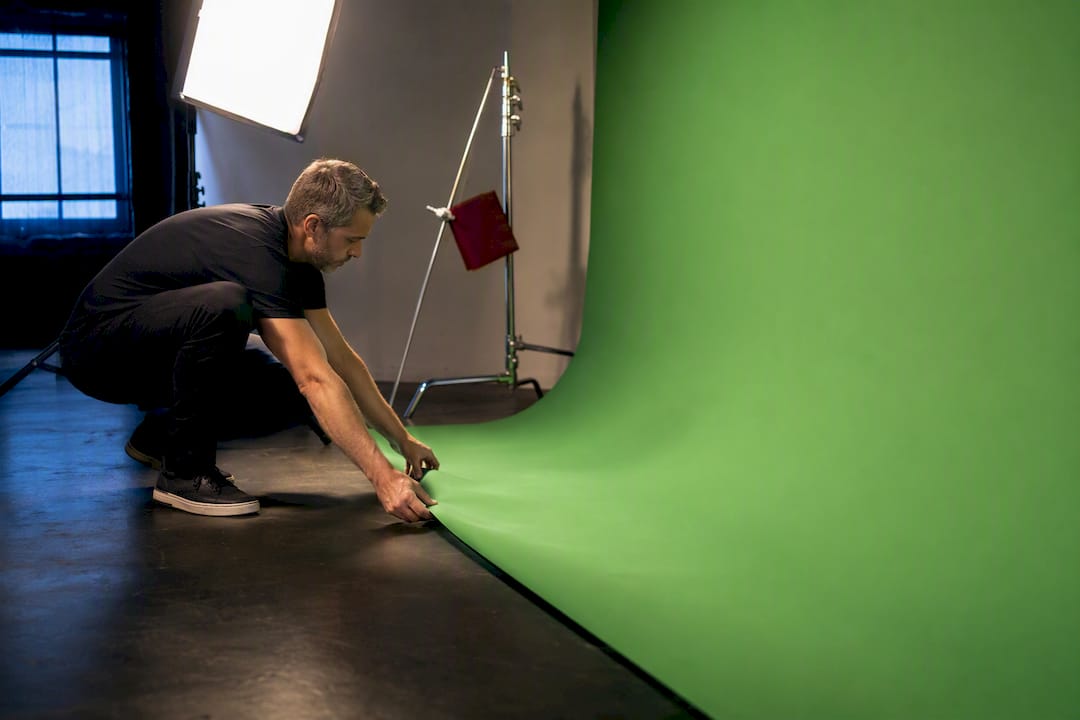
Green screen earns its reputation when you need the same interview repurposed into five different visual contexts, a keynote background, a trade show loop, a social cutdown, without reshooting. Studios that run this well treat it like a small content factory, producing multiple asset versions from one sitting.
But a green wall is not a cyc, and the difference shows up the moment you’re in post. Before booking, confirm:
- The space has a true cyclorama, curved corners, not a flat green wall taped into a corner.
- Background lighting is separate from subject lighting, with enough distance to avoid green spill on skin and clothing.
- Wardrobe has been checked for chroma conflicts (no green, no busy patterns that break the key).
- The studio can show you a sample key from a past shoot, not just tell you they can do it.
Skip these checks and you’ll spend more hours in post than you saved on set.
Why Lighting, Spacing, and Acoustics Matter More Than the Backdrop Itself
The background matters less than what you do to it with light and distance. Keep the subject 1.5 to 2 meters from the background and you get real depth, a soft falloff, and a background that reads as a background instead of a flat wall glued to someone’s shoulder.
Background lighting should run on its own circuit, separate from the key and fill on your subject. Ask for CRI 95+ fixtures, since anything lower starts shifting skin tones in ways clients notice on playback even if they can’t name why. Studios running DMX or PoE controlled lighting can save and recall scene presets, which matters when you’re running multiple subjects through the same setup in one day.
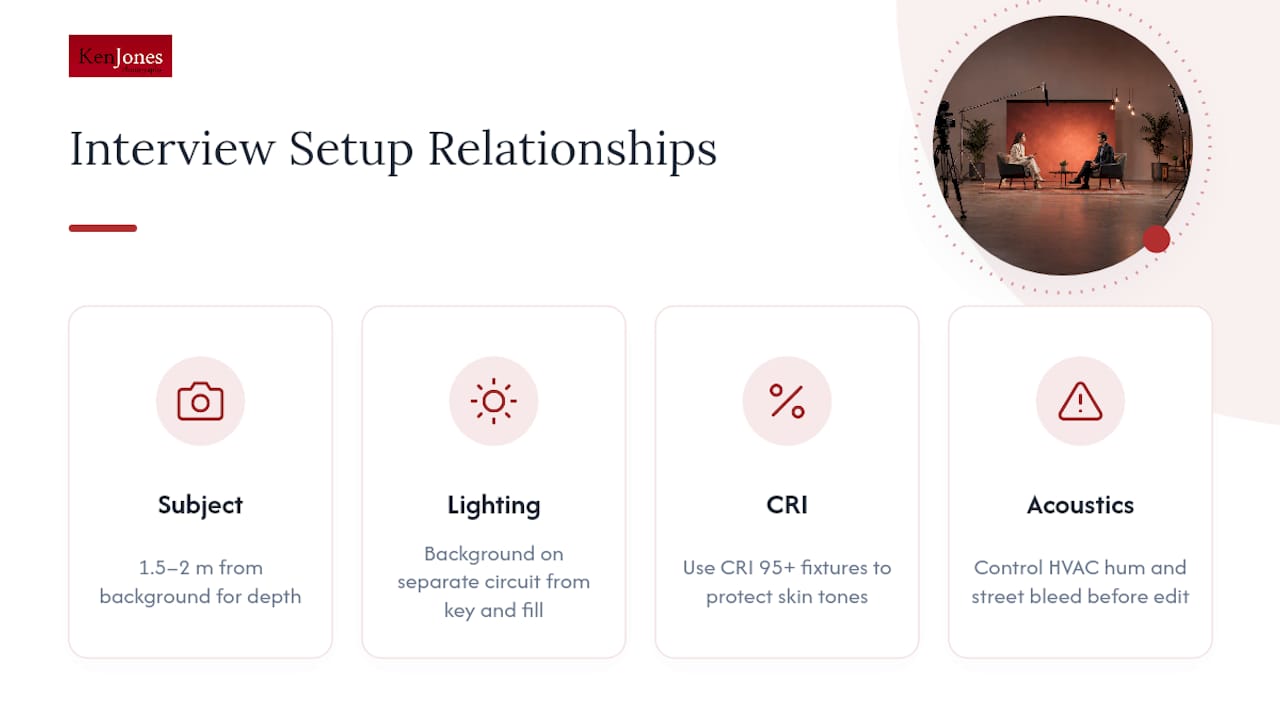
Acoustics get ignored until the edit, when HVAC hum or street bleed shows up under every answer. And no camera fixes a bad recording. A larger sensor with a longer focal length compresses the background and isolates the subject beautifully, but that only helps once the light and sound are already right. For more on rig specifics, our own interview lighting setup guide breaks down the gear side.
Pro Tip: If a studio can’t tell you their CRI rating off the top of their head, that’s your answer. It’s not a trick question, it’s a spec sheet they should already know.
What Should You Ask a Studio Before You Book?
Most production disasters trace back to questions nobody asked. Run through this before signing off on a date:
- Who is on crew that day? A gaffer and a DP are not interchangeable with a two-person run-and-gun team.
- What’s pre-rigged? Ask specifically about background lighting grids, not just key and fill.
- Do they have blackout capability if the plan calls for negative space or a darker mood?
- If shooting a cyc, can they show a recent key? Not a description, an actual composite.
- Who edits, and what’s the turnaround window for a rush cut?
- Do they offer permit or insurance assistance for anything beyond a standard studio day?
Schedule a short camera pull if the studio allows it. Ten minutes on set with your actual lens choice will tell you more about how a background behaves than any portfolio photo. For a full companion checklist, see our studio rental questions guide.
A Studio Pro’s Behind-the-Scenes Note on Background Mistakes
I’ve watched a wardrobe stylist show up with a navy blazer for a shoot against a navy textured wall, and nobody caught it until the monitor lit up with a subject who looked like a floating head. That’s an easy mistake and an entirely avoidable one if wardrobe and background get checked together before the subject ever sits down.
The other repeat offender is the branded logo wall that looked crisp on a laptop screen and turned muddy under interview lighting because nobody tested it with the actual key light first. We recommend walking through every background under the planned lighting setup before a subject arrives, specifically to catch these clashes early.
— Ken
How Ken Jones Photography Can Help With Your Next Interview Shoot
A professional New York City studio runs interview and testimonial video shoots with the same production discipline as a fashion or commercial set: dedicated background lighting, wardrobe checks against the backdrop, and a team that handles compositing when a green screen setup is on the call sheet. For teams weighing a studio day against a location shoot, we can walk you through both and tell you honestly which one fits your timeline and message.

Our services cover interview video production, lighting and grip, wardrobe guidance, and full studio rental at FultonStudio for teams who want to run their own crew in a space built for this kind of work. A typical next step starts with a 15 to 20 minute consult, a look at a sample reel, and either a studio tour or a remote location scout, followed by a scoped estimate for your shoot day. If narrative context matters more than control, our breakdown of studio versus location corporate portraits is worth a read before you decide. Reach out through Kenjonesnyc to check studio availability for your next interview or testimonial session.
Sources
These technical references back the checklists and rules of thumb used throughout this guide:
- 5 professional lighting setups for interviews — Videomaker
- Green screen studios for corporate video: when to use one and what to look for — The Source
- Professional corporate video studio setup: The 2026 comprehensive guide — United Broadcast
FAQ
What Is the Best Interview Background for Corporate Executives?
A neutral seamless sweep or a subtly textured wall works best for most executive interviews because it keeps attention on the message. Branded environments can work too, but only when shot with a shallow depth of field so the logo supports rather than competes with the subject.
How Far Should a Subject Stand From the Background?
Keep 1.5 to 2 meters between the subject and the background for natural depth and a soft, cinematic falloff. Closer than that and the background starts looking flat and pasted-on.
Is Green Screen Better Than a Real Backdrop for Interviews?
Green screen is better when you need the same interview repurposed into multiple visual contexts without reshooting. A real backdrop is usually simpler and faster when you only need one consistent look, since chroma key work requires a proper cyc and an experienced compositing team to look clean.
Does Ken Jones Photography Offer Studio Rental for Interview Shoots?
Yes, Full studio rental along with interview video production, lighting, and wardrobe guidance are available for teams that need a controlled environment. Current pricing and availability are listed on the studio rental page.
Why Does Background Lighting Need to Be Separate From Subject Lighting?
Background lighting on its own circuit lets you control exposure and color on the backdrop without changing how the subject’s face reads. Studios running DMX or PoE controlled presets can recall consistent looks across multiple subjects without relighting from scratch each time.