

TL;DR:
- A successful photo ad campaign begins with a detailed creative brief that clearly defines goals, deliverables, and constraints. Proper planning, technical discipline during shoot execution, and a structured post-production workflow, including AI tools, ensure the campaign’s effectiveness and efficiency. Collaboration from the start prevents costly format issues and maximizes campaign impact across platforms.
A photo ad campaign is defined as a coordinated series of images produced to advance a specific commercial objective, whether that is driving sales, building brand recognition, or supporting a product launch. The industry term for this work is commercial photography production, and it covers everything from the initial creative brief through final asset delivery. Knowing how to produce a photo ad campaign means understanding that the creative decisions and the business decisions must happen simultaneously. Ken Jones Photography has produced campaigns for fashion brands, corporate clients, and advertising agencies across New York City, and the single most consistent finding is this: campaigns fail at the brief stage, not on set.
What components are essential in a professional creative brief for photo ad campaigns?
The creative brief is the document that removes ambiguity before a single light is placed. A brief submitted without explicit commercial goals, deliverables, and production constraints forces photographers to guess, and guessing costs money. Industry standard practice calls for briefs to be submitted at least two weeks before the shoot, accounting for launch dates and any embargo requirements.
A production-ready brief contains these core components:
- Campaign objective: State the specific business goal. “Increase fall collection awareness on Instagram and paid search” is a goal. “Make it look editorial” is not.
- Deliverables with format specs: List every output with its exact aspect ratio, file format, and intended platform. A 9:16 Instagram Story and a 16:9 website hero image require completely different compositions. Failing to specify these upfront is the leading cause of unusable images.
- Usage rights and licensing terms: Define where images will appear, for how long, and in which territories. This affects both photographer fees and model release requirements.
- Brand reference points: Include annotated example images, not just a mood board. 15–20 reference images with specific notes on lighting direction, color temperature, and composition style produce measurably better shoot outcomes than abstract descriptors.
- Model casting and styling parameters: Specify age range, look, wardrobe palette, and any brand-specific styling rules. Tie these directly to the campaign audience.
- Production constraints: State the budget, location, and deadline as fixed facts. These are not negotiable items to revisit on shoot day.
- Success criteria: Define what a successful image looks like in business terms. Click-through rate targets, platform performance benchmarks, and conversion goals all belong here.
- Off-brand “do-not-do” list: Specific forbidden elements such as harsh overhead lighting, busy backgrounds, or particular poses must be written out explicitly. This single addition reduces unusable images more than any other brief element.
The distinction between a mood board and a technical brief matters enormously. A mood board communicates feeling. A technical brief communicates execution. Both are necessary, but they serve different purposes. Photographers work best with specific technical notes rather than abstract mood descriptors. Annotated images with written direction are the professional standard.
Pro Tip: Add a one-page “brand guardrails” sheet to every brief. List three images that represent the brand perfectly and three that represent exactly what the brand is not. This single addition cuts revision rounds in half.
How to plan and prepare effectively before the photo shoot day?
Pre-production is where campaigns are won or lost before the shoot day begins. The planning phase determines whether the team arrives on set ready to execute or spends the first two hours solving problems that should have been resolved weeks earlier.
-
Build a detailed shot list. The shot list for a fashion campaign maps every required image to its platform destination, composition type, and priority level. Group shots by setup to minimize lighting changes and maximize shooting time. A campaign requiring 30 final images typically needs 60–80 frames on the shot list to account for selects and variations.
-
Scout and secure locations. Locations must match brand identity and satisfy practical production requirements. Assess natural light direction at the planned shoot time, background cleanliness, permit requirements, and noise levels. A location that looks perfect in a reference photo may have afternoon shadows that destroy the lighting plan.
-
Prepare wardrobe, props, and styling. Every wardrobe piece and prop should connect directly to the campaign story and brand color palette. Schedule a styling review session before shoot day so there are no surprises on set. Loose threads, wrong sizes, and missing accessories are fixable in advance and catastrophic on the day.
-
Schedule by subject priority and lighting stability. Complex hero shots should be scheduled first, when talent and crew are freshest and lighting conditions are most predictable. Secondary and simpler shots follow. This approach reduces post-production complexity and the risk of costly reshoots.
-
Coordinate all logistics in advance. Confirm signed model releases before shoot day, not during. Verify crew composition, equipment lists, and load-in times. A missing signed release discovered after delivery can make an entire campaign legally unusable.
-
Communicate the brief to every participant. The photographer, stylist, hair and makeup artist, and talent should all receive the brief, mood board, and shot list at least 48 hours before the shoot. Surprises on set are production failures, not creative opportunities.
Pro Tip: Send a one-page shoot day summary the evening before. Include call times, parking or access instructions, the first three shots on the list, and a single sentence describing the campaign’s core visual goal. Teams that arrive aligned execute faster and with more confidence.
Defining the story and audience before booking any crew is the foundation of effective brand photography. Skipping this step is the most common reason campaigns produce technically competent images that fail to perform.

What are the best practices for executing the shoot and managing production workflows?
Shoot day execution separates campaigns that deliver on brief from those that require expensive reshoots. The most effective photo advertising strategies on set combine technical discipline with creative flexibility.
Format-aware composition is the single most important technical discipline on set. Every frame should be composed with its final crop in mind. A Deliverables Matrix built before the shoot maps each required format to its composition requirements, so the photographer knows exactly how much headroom and negative space each shot needs. Trying to fix crop problems in post-production is expensive and often impossible.
Consistent white balance and lighting style across the entire shoot is non-negotiable for brand coherence. When images from the same campaign show different color temperatures or lighting ratios, the brand looks inconsistent across platforms. Set a white balance standard at the start of the day and hold it.
Tethered shooting connects the camera directly to a monitor or laptop, giving the creative director and art director real-time image review. This is standard practice on commercial shoots because it catches problems immediately rather than during post-production review. A missed focus or an unflattering expression is correctable on set. It is not correctable three days later.
Talent direction shapes the entire emotional register of the campaign. Direct talent toward authentic expressions that match the brand’s tone rather than generic “look happy” or “look serious” instructions. Give specific scenarios and emotional prompts. A corporate client’s executive should project confidence and approachability, not a forced smile.
| Shoot element | Common mistake | Best practice |
|---|---|---|
| Composition | Shooting tight without crop room | Compose for the widest required format first |
| Lighting | Adjusting color temperature mid-shoot | Lock white balance at the start of the day |
| Image review | Reviewing selects at end of day | Use tethered shooting for real-time review |
| Talent direction | Generic emotional prompts | Specific scenario-based direction |
| Shot list tracking | Checking off shots mentally | Physical or digital tracking against the list |
Track every shot against the list throughout the day. The most common end-of-shoot discovery is that one priority asset was skipped because the team assumed it had been captured. A physical or digital checklist prevents this.
How to leverage post-production and AI tools to maximize campaign impact?
Post-production is not a cleanup phase. It is a production phase with its own workflow, timeline, and deliverables. Professional retouching workflows preserve brand consistency across all images while maintaining image quality. Agree on retouching scope, turnaround time, and revision rounds before the shoot, not after delivery.
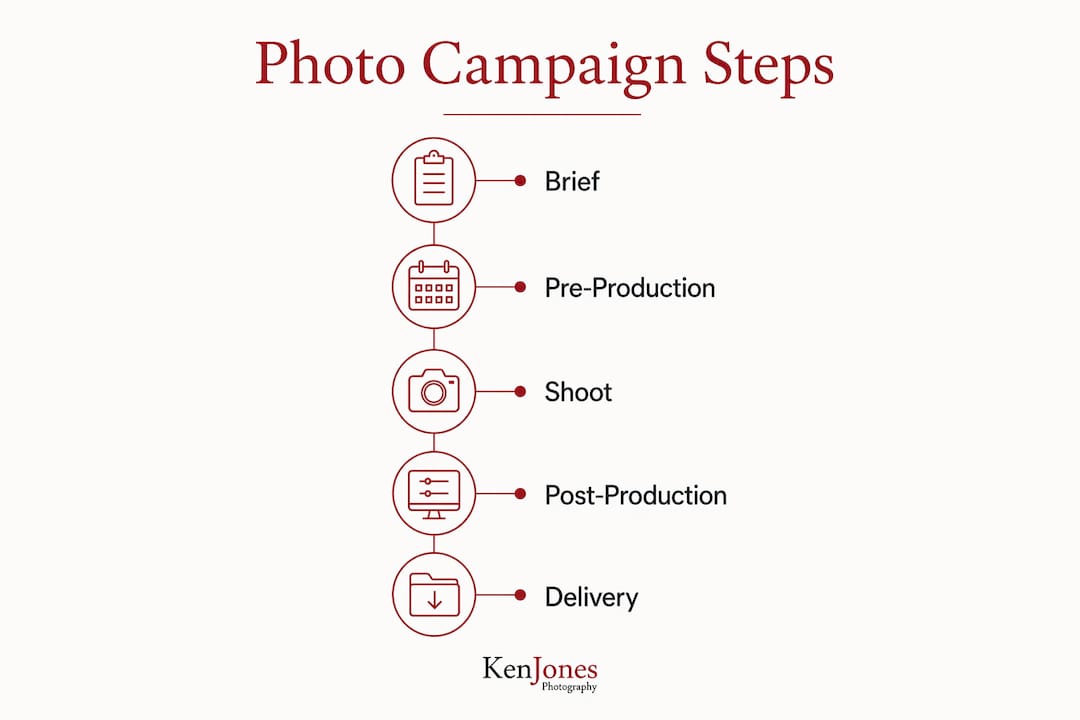
The Deliverables Matrix built in pre-production becomes the post-production roadmap. Every image is processed and exported to the exact specifications of each platform destination. A single hero image may generate six or more exports: a full-resolution print file, a web-optimized JPEG, a square social crop, a vertical story crop, a banner ad version, and a thumbnail. Managing this without a matrix leads to missed formats and last-minute scrambles.
AI tools have changed the economics of campaign variant production. Brands using AI tools now generate 24–48 ad variants from a single photoshoot and allocate budgets for multi-variant testing across platforms. That scale was previously achievable only with significantly larger production budgets. The practical implication is that one well-executed shoot can now fuel an entire quarter of paid media.
The critical constraint is this: AI depends on strong original creative inputs. Weak initial images produce generic AI outputs regardless of tool sophistication. AI is a scaling accelerator, not a creative originator. The original shoot must deliver images with sufficient quality, resolution, and compositional flexibility to support AI-assisted versioning.
- Build a deliverables matrix before the shoot and use it as the post-production checklist.
- Agree on retouching scope and revision rounds in the production contract.
- Use AI tools for variant generation, localization, and multichannel testing after establishing the core creative.
- Plan continuous refresh cycles. Winning ads show fatigue after three to four weeks, requiring new creative variations to maintain performance.
- Track post-campaign performance by engagement signals. High saves with weak click-throughs indicate brand awareness progress. Strong click-throughs with moderate engagement indicate conversion progress. Both signals inform the next brief and justify future production budgets.
Pro Tip: Build your AI variant workflow into the production contract from day one. Specify that all raw files and layered retouched files are delivered alongside final exports. Without the source files, AI-assisted versioning is severely limited.
Understanding why branding consistency matters across every campaign touchpoint is what separates brands that build recognition from those that produce beautiful images that nobody remembers.
Key Takeaways
A successful photo ad campaign requires a precise creative brief, format-aware production planning, disciplined shoot execution, and a post-production workflow that treats AI as a scaling tool rather than a creative replacement.
| Point | Details |
|---|---|
| Creative brief is the foundation | Submit briefs two weeks before the shoot with explicit goals, deliverables, and off-brand constraints. |
| Format specs prevent unusable images | Build a Deliverables Matrix pre-shoot to guide composition decisions on set. |
| Schedule by priority and freshness | Shoot hero images first when talent and crew are at their best to reduce reshoot risk. |
| AI scales, it does not originate | Strong original creative inputs are required before AI tools can generate useful variants. |
| Performance data sharpens future briefs | Track engagement and click-through signals post-campaign to justify budgets and refine the next brief. |
What I’ve learned from 30 years of producing campaigns in NYC
The most expensive mistake I see creative teams make is treating the format conversation as a post-production problem. Early in my career, I shot a luxury fashion campaign where the client had planned a full-page magazine spread and a digital billboard. Nobody told me until delivery. The images were composed beautifully for a 4:5 ratio. The billboard required a 14:1 panoramic crop. The hero shot, the one the client had built the entire campaign around, was unusable for the format that represented the largest media buy. We had to reshoot. That reshoot cost more than the original production.
The brief conversation is not a formality. It is the most valuable hour you will spend on any campaign.
Corporate headshots deserve the same strategic attention as fashion campaigns. Corporate imagery drives lead generation, sales credibility, and brand trust. I have watched companies spend six figures on a website redesign and then use headshots taken on a phone in a conference room. The disconnect undermines everything the design budget was trying to accomplish. Treat executive portraits as primary marketing assets, because that is exactly what they are.
The best campaigns I have produced came from clients who treated me as a creative partner from the brief stage, not a vendor called in to execute someone else’s vision. When photographers are involved in the brief review, they catch format problems, lighting impossibilities, and scheduling conflicts before they become production failures. That collaboration is not a luxury. It is how professional campaigns are made.
Scheduling still surprises people. Talent and crew are sharpest in the first two hours of a shoot. The images captured in that window are consistently the strongest selects. I always put the most critical shot first, before the coffee wears off and before the small decisions of the day start accumulating. It sounds simple. Most teams still schedule the hero shot for after lunch.
— Ken
Ken Jones NYC: full-service campaign production in Manhattan
Planning a campaign and executing it at a professional level are two different skills. Ken Jones Photography brings both to every production, from creative brief development and casting through on-set art direction and final delivery.
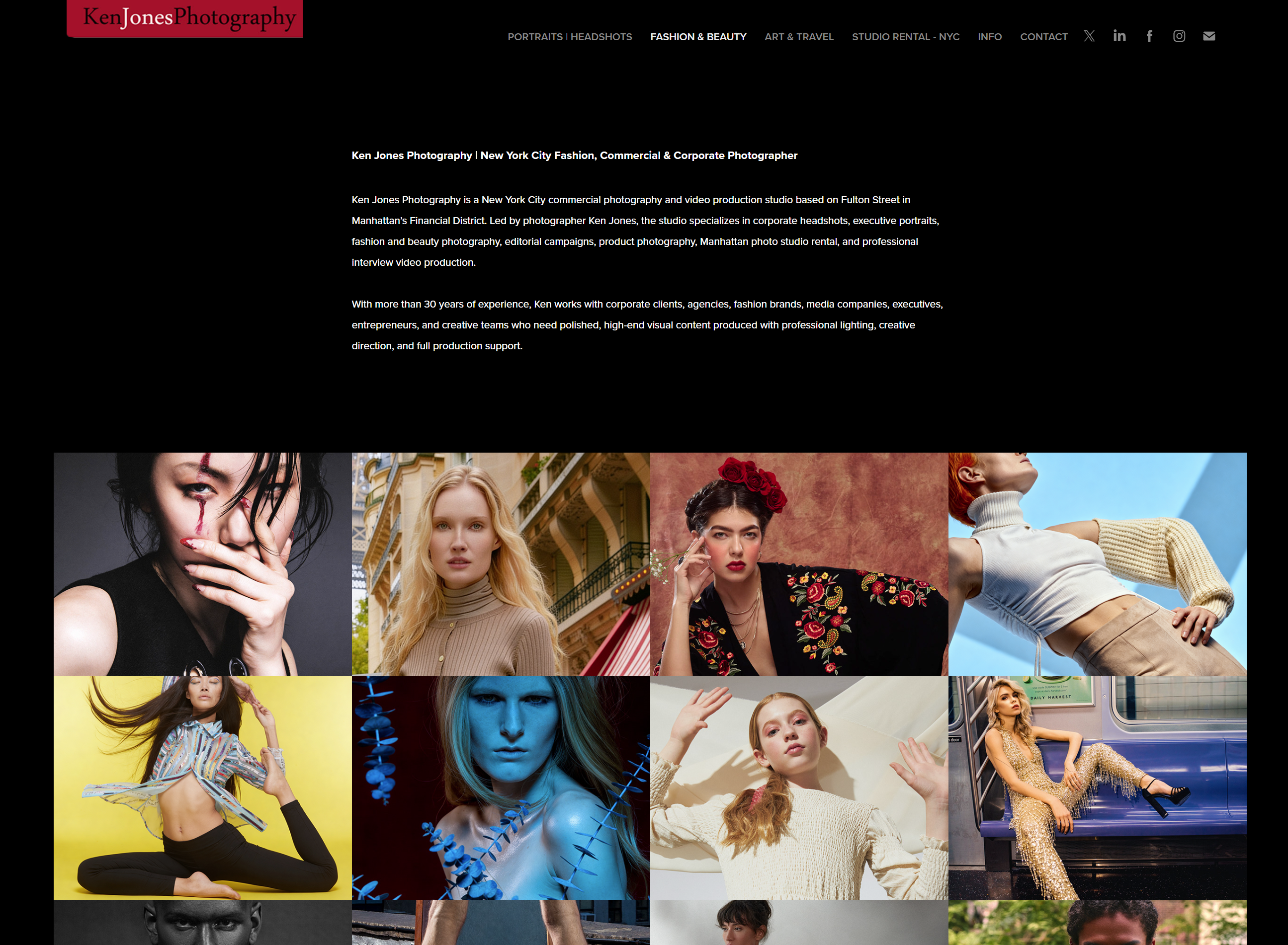
The fashion photography portfolio at KenJonesNYC shows the range of editorial and commercial work produced for fashion brands and designers across New York City. For corporate clients, the commercial photography services page covers the full scope of what the studio handles, from executive portraits to full campaign production. If your team is planning a shoot and wants to talk through the brief before committing to a production plan, reach out at kenjonesnyc.com.
FAQ
What is the first step in producing a photo ad campaign?
The first step is writing a complete creative brief that defines campaign goals, required deliverables with format specs, usage rights, and off-brand constraints. Briefs should be submitted at least two weeks before the shoot date.
How many images should a photo ad campaign produce?
The number depends on platform requirements, but a campaign targeting three to four channels typically needs 20–40 final images. Building a Deliverables Matrix before the shoot clarifies the exact number needed for each format.
How does AI fit into photo ad campaign production?
AI tools are most effective for generating variants, localizing images, and testing multiple versions after the core creative is established. Weak original images produce weak AI outputs, so the quality of the shoot determines the quality of the AI-assisted work.
What is a Deliverables Matrix?
A Deliverables Matrix is a pre-production document that maps every required image to its platform destination, aspect ratio, and file specification. It guides composition decisions on set and serves as the post-production export checklist.
How do you prevent ad fatigue in a photo campaign?
Plan continuous creative refresh cycles from the start. Winning ads typically show performance decline after three to four weeks, so building variant sets during post-production gives media teams new creative to rotate before fatigue sets in.