
TL;DR:
- Effective advertising photography is a strategic asset that enhances brand differentiation, consumer engagement, and campaign success through custom imagery and visual storytelling.
- Coordination between images and text significantly boosts ad performance by reducing cognitive friction and reinforcing messaging across platforms.
- In 2026, producing diverse, authentic images—including proof and refresh assets—maximizes campaign impact while maintaining consumer trust in genuine photography over AI-generated visuals.
Photography in advertising is the strategic use of visual imagery to create compelling brand narratives that drive campaign performance, shape consumer perception, and separate memorable brands from forgettable ones. Marketing professionals who treat photography as a production checkbox rather than a strategic asset consistently underperform against competitors who plan their visual content with the same rigor they apply to media buying. The role of photography in ad campaigns has grown more complex in 2026, with multi-channel distribution, AI-assisted production, and data-driven creative testing all raising the bar for what qualifies as effective imagery. Understanding how custom photography, image-text coordination, visual storytelling, and analytics work together is now a core competency for any brand strategist serious about campaign results.
Why the role of photography in ad campaigns starts with custom imagery
The single most damaging photography decision a brand can make is defaulting to stock images. Generic stock photos dilute brand recognition because the same images appear across competing brands, creating visual confusion in the consumer’s mind. When a skincare brand and a competitor use the same licensed model shot from Getty Images, neither brand owns that visual identity. The consumer remembers the image, not the brand.
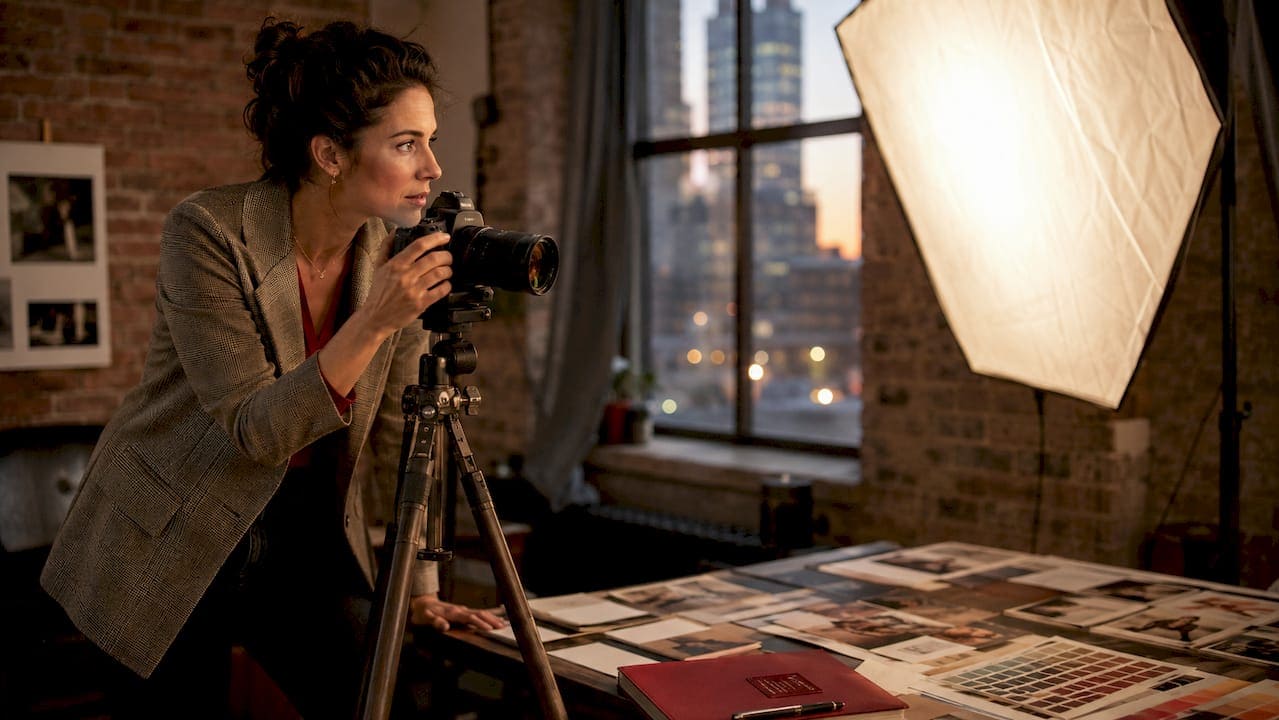
Custom photography solves this directly. A bespoke shoot gives your brand complete narrative control, from the lighting mood and color palette to the talent, wardrobe, and set design. Every element in the frame communicates something about your brand’s values, and none of it belongs to anyone else. That exclusivity is not a luxury consideration. It is a brand protection strategy.
The practical difference becomes clear on a shoot. At Kenjonesnyc, a fashion client once came in with a brief built almost entirely around stock photo references. The creative director had assembled a mood board of images that were beautiful but widely licensed. After one conversation about brand differentiation, the team rebuilt the brief around original concepts tied to the client’s specific aesthetic. The resulting campaign imagery was immediately recognizable as theirs, and it performed measurably better in paid social because the visuals did not blend into the feed.
Here is what separates custom photography from stock in a campaign context:
- Narrative ownership: Every visual element is designed to reflect your brand story, not a generic lifestyle scenario.
- Consistency across channels: Custom shoots produce a cohesive visual library that maintains brand identity from billboard to Instagram Story.
- Competitive separation: Your imagery cannot appear in a competitor’s ad, which is a real risk with widely licensed stock.
- Casting and styling control: You choose the talent, the wardrobe, and the environment to match your audience’s expectations precisely.
Pro Tip: Before the shoot, hold a pre-production alignment meeting that includes your creative director, copywriter, and media buyer. The photographer needs to understand not just the aesthetic but the placements, aspect ratios, and campaign narrative before a single frame is captured.
How does image-text coordination affect ad engagement?
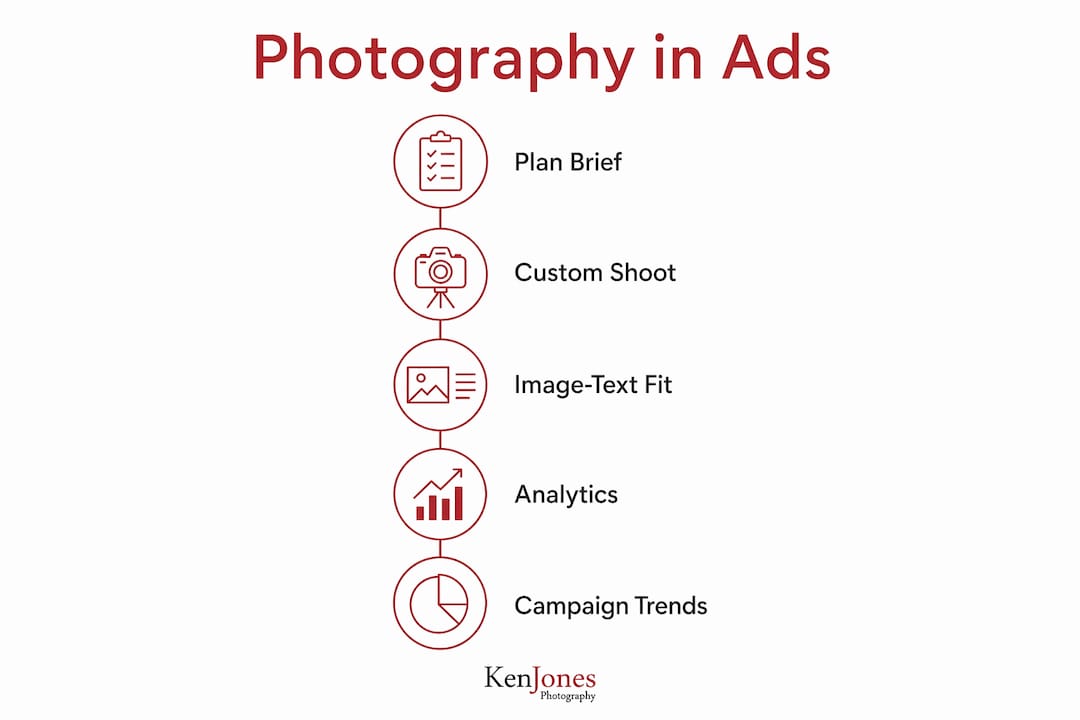
Photography does not operate in isolation inside an ad. Image-text fit significantly boosts social media engagement and content popularity, which means the relationship between your photograph and your headline is as important as either element on its own. A powerful image paired with misaligned copy creates cognitive friction. The viewer’s brain works harder to reconcile the two signals, and attention drops.
The same photograph performs differently depending on the copy it accompanies and the platform it appears on. A tightly cropped beauty shot that works beautifully with a short, punchy headline on Instagram may fall flat on LinkedIn with a longer, more formal message. This is not a photography problem. It is a coordination problem, and it is one of the most common production failures in campaign work.
Strong image-text alignment improves processing fluency, which is the ease with which a viewer absorbs and responds to an ad. When the visual and verbal messages reinforce each other, the consumer processes the ad faster and retains the brand message longer. Some advanced campaigns deliberately introduce strategic incongruence between image and text to create a moment of productive surprise, but this technique requires precise execution and testing to avoid simply confusing the audience.
To build this coordination into your production process, follow these steps:
- Brief the photographer with the copy deck, not just the visual brief. The photographer needs to understand the headline, the call to action, and the campaign message before directing talent or choosing angles.
- Map each image to its placement. A hero image for a homepage banner has different compositional requirements than a vertical first image for a Reels ad. Plan these separately.
- Review image and copy together in mockup. Never approve photography in isolation. Always review final selects with the actual ad copy placed over the image before signing off.
- Test image-text combinations systematically. Run A/B tests that isolate the image variable while holding copy constant, then reverse the test. This reveals which element is driving performance.
Pro Tip: Bring your copywriter into the shoot day, even for a few hours. When they see the images being made in real time, they write copy that fits the visual tone rather than retrofitting language to images they have never seen.
Does visual storytelling actually improve brand loyalty?
Visual storytelling is not a creative indulgence. Storytelling visual content outperforms informational content in consumer engagement across cognitive, emotional, and behavioral dimensions, which translates directly into stronger brand image and measurable loyalty metrics. A photograph of a product on a white background informs. A photograph of that product embedded in a human moment connects.
The mechanism is straightforward. Narrative-driven photography activates emotional processing in the viewer. When a consumer sees an image that tells a story, they project themselves into it. That projection creates a personal association with the brand, and personal associations are far more durable than rational product claims. This is why visual storytelling acts as a marketing engagement engine that drives loyalty better than static product imagery.
Consider a beauty campaign shot at Kenjonesnyc for a luxury skincare line. The brief called for standard product beauty shots, but the creative team pushed for a narrative sequence: a woman moving through her morning ritual, the product appearing as a natural part of her environment rather than the centerpiece of a clinical display. The resulting images generated significantly higher engagement on paid social and were used across the brand’s editorial content for over a year. The product shots from the same shoot were retired within two months.
Building a storytelling photography strategy requires attention to several specific elements:
- Character and context: Every image needs a subject the viewer can identify with and an environment that feels authentic to the brand’s world.
- Sequence thinking: Plan images as a series that builds a narrative arc, not as isolated shots. Even three images can tell a beginning, middle, and end.
- Emotional specificity: Avoid generic happiness. Choose a specific emotional state that aligns with your brand’s promise, whether that is confidence, calm, ambition, or belonging.
- Authenticity in casting: Human presence in ads affects attention differently across platforms, so cast talent that reflects your actual audience rather than an aspirational archetype that feels disconnected from real life.
How can image analytics predict photography-driven campaign results?
Advanced marketers no longer rely solely on creative instinct to evaluate photography choices. Multimodal frameworks combining visual and textual cues improve the predictive accuracy of campaign effectiveness, with deep learning models demonstrating significant gains in predicting promotional performance across industries including tourism and retail. This means the guesswork in photography selection is being replaced by measurable, testable criteria.
The analytical approach works by extracting visual features from images at multiple levels. At the low level, this includes color distribution, contrast, and composition. At the mid level, it captures object recognition and scene classification. At the high level, it measures emotional perception and brand congruence. Hierarchical visual feature extraction allows marketers to optimize creative content systematically, moving from gut-feel selection to data-informed decisions about which images to test, scale, or retire.
For brand strategists managing campaigns across multiple platforms, this framework has practical implications. You can test photography variables in isolation, measure their contribution to engagement and conversion, and build a creative library that is continuously refined based on performance data rather than subjective preference.
| Analytics layer | What it measures | Campaign application |
|---|---|---|
| Low-level visual features | Color, contrast, brightness, texture | Optimize for platform-specific display and scroll-stopping impact |
| Mid-level recognition | Objects, faces, scenes, product placement | Confirm brand elements are visible and correctly prioritized |
| High-level perception | Emotional tone, brand fit, narrative clarity | Predict consumer response and alignment with campaign messaging |
| Text-image congruence | Alignment between visual and copy signals | Improve processing fluency and reduce cognitive friction in ads |
NYC commercial shoots increasingly integrate this measurement thinking from the pre-production stage. When Kenjonesnyc plans a campaign shoot, the shot list is built around the analytics categories the client’s media team will use to evaluate performance. This means the photographer and the data analyst are working from the same framework before the camera is ever picked up.
What photography trends in 2026 are shaping ad campaign effectiveness?
The demands on commercial photography in 2026 are more specific than they have ever been. Modern campaigns require five distinct image sets: hero images for brand-level storytelling, vertical-first images designed for mobile formats, proof shots that show product detail and reduce buyer hesitation, variation images for A/B testing, and a refresh plan that prevents creative fatigue across extended campaign runs. Brands that plan shoots to deliver all five categories extract significantly more value from each production day.
Proof-driven photography deserves particular attention. Consumers in 2026 are skeptical, and detailed shots that show texture, scale, craftsmanship, or real-world use reduce the friction between interest and purchase. A fashion brand that shows only aspirational lifestyle imagery without close-up detail shots loses conversions to competitors who show both. The aspiration creates desire; the proof closes the sale.
Creative fatigue is a real performance problem. An image that drives strong results in week one of a campaign will show declining engagement by week four if it is not refreshed. Planning for continual refresh cycles is now a production requirement, not an afterthought. This means shooting more variations per concept on every production day.
| Image type | Primary purpose | Key production consideration |
|---|---|---|
| Hero image | Brand storytelling, awareness | High production value, wide composition for cropping flexibility |
| Vertical first | Mobile and Stories placements | Compose for 9:16 ratio from the start, not cropped from landscape |
| Proof shot | Reduce purchase hesitation | Sharp detail, accurate color, scale reference included |
| Variation | A/B testing creative elements | Isolate one variable per variation: talent, background, or angle |
| Refresh asset | Extend campaign life | Plan at shoot time, not as a separate production |
On the question of AI in photography production, consumer preference favors human-created visuals over AI-generated ads, particularly when authorship is disclosed. Authenticity is not a trend. It is a durable consumer expectation, and brands that substitute AI-generated imagery for genuine photography risk eroding the trust they have built with their audience.
Pro Tip: Build your shot list around funnel stages before the shoot, not after. Awareness placements need different compositions than retargeting ads. A single production day can cover all of them if the planning is done in advance.
Key takeaways
Photography in advertising drives brand distinction, consumer engagement, and campaign performance only when it is planned, coordinated, and measured as a strategic asset rather than a production task.
| Point | Details |
|---|---|
| Custom photography over stock | Bespoke imagery prevents brand confusion and gives complete narrative control that stock licensing cannot provide. |
| Image-text coordination | Aligning photography with copy improves processing fluency and measurably increases engagement across platforms. |
| Visual storytelling drives loyalty | Narrative-driven images create emotional connections that outperform informational product photography in consumer engagement. |
| Analytics improve creative decisions | Hierarchical visual feature frameworks allow marketers to test and optimize photography assets with data rather than instinct. |
| Plan for five image types | Every 2026 campaign shoot should produce hero, vertical, proof, variation, and refresh assets to maximize production value. |
What 30 years of NYC shoots taught me about photography and advertising
I have been on production sets in Manhattan, Milan, and São Paulo, and the single most consistent mistake I see from marketing teams is treating the photographer as the last person in the room. By the time I get the brief, the copy is locked, the media plan is set, and the creative director has already presented mood boards to the client. My job, apparently, is to execute someone else’s vision without input. That approach costs brands money and produces mediocre work.
The campaigns that perform best are the ones where I am in the room early. Not because I need the ego boost, but because photography decisions affect everything downstream. The aspect ratio affects composition. The lighting mood affects copy tone. The talent choice affects audience identification. When those decisions are made without the photographer, you end up reshooting or, worse, running images that do not actually serve the campaign.
I worked with a corporate client a few years ago who had built an entire brand refresh around stock photography. The images were polished and professional, but they were also being used by three other companies in the same industry. Their marketing director did not realize this until a competitor ran an ad in the same publication using the same model. That was an expensive lesson in why custom campaign photography is not optional for brands that want to own their visual identity.
The other thing I tell every client is this: authenticity is not a style choice. It is a performance variable. Consumers in 2026 are sophisticated enough to recognize when an image is manufactured versus when it reflects something real. The brands that invest in genuine storytelling photography, with real casting, real environments, and real creative direction, consistently outperform the ones chasing trend aesthetics with no substance behind them.
— Ken
Work with Kenjonesnyc to build photography that performs
If your ad campaigns need photography that goes beyond polished aesthetics and actually drives results, Kenjonesnyc is the studio to call. Based in Manhattan’s Financial District with over 30 years of experience in fashion, beauty, and commercial imagery, the studio builds visual content designed for multi-channel performance from the first production conversation.
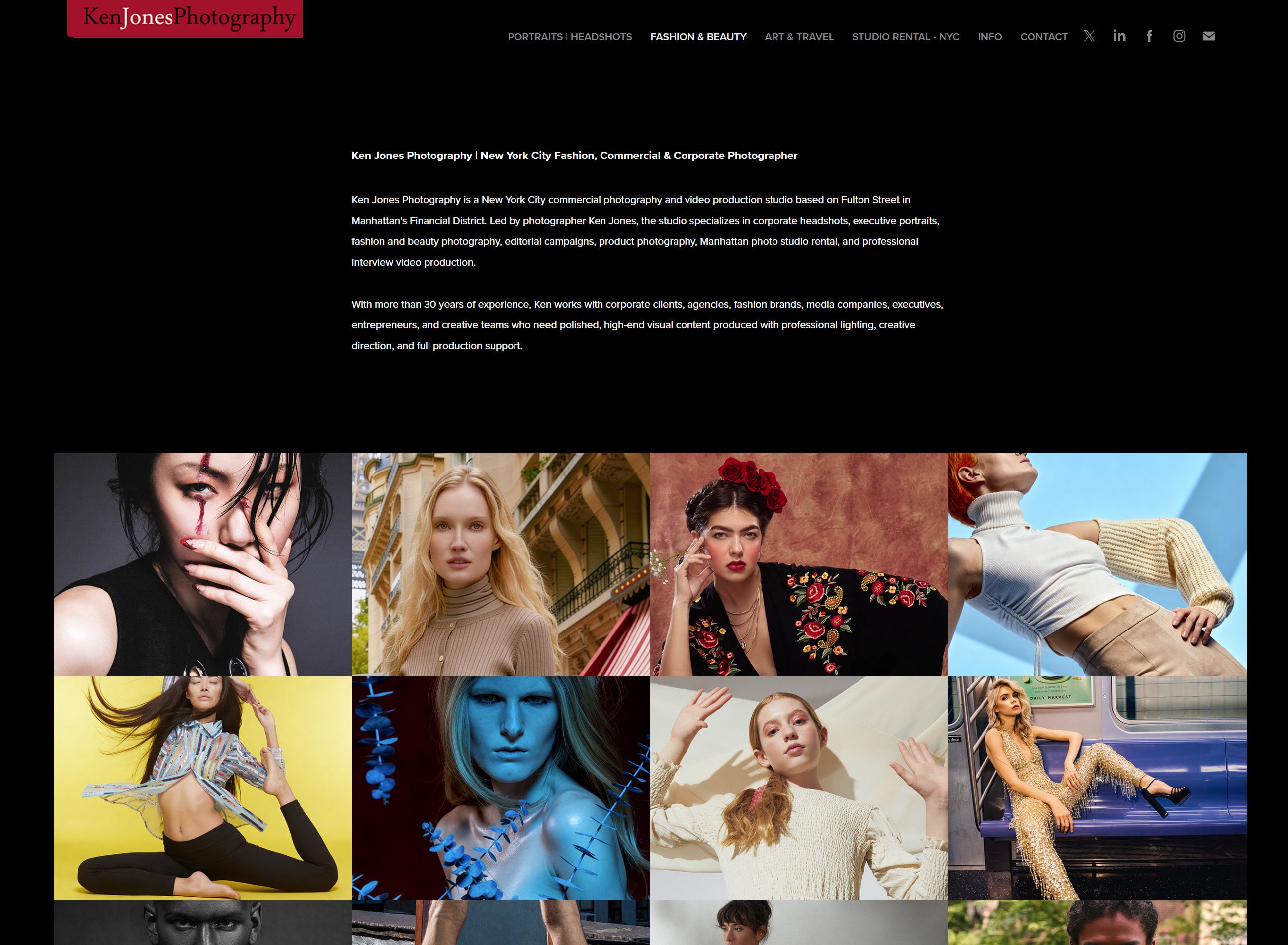
Every project at Kenjonesnyc begins with a strategic brief that accounts for placements, campaign narrative, and the full range of image types your media plan requires. From high-end campaign photography to fashion editorials and beauty campaigns, the studio delivers imagery that is exclusive to your brand and built to perform. Explore the portfolio and reach out to start planning your next campaign at kenjonesnyc.com.
FAQ
What is the role of photography in ad campaigns?
Photography in advertising is the strategic use of custom visual imagery to communicate brand narratives, create emotional connections with consumers, and drive measurable campaign performance across channels. It functions as both an attention-capture tool and a brand identity asset.
Why does custom photography outperform stock images in advertising?
Custom photography gives brands complete narrative and visual control, preventing the brand confusion that occurs when competitors use the same licensed stock images. Generic stock photos dilute brand recognition because the same imagery appears across multiple competing brands simultaneously.
How does image-text alignment affect ad performance?
Strong congruence between an image and its accompanying copy improves processing fluency, meaning consumers absorb and respond to the ad faster and retain the brand message longer. Marketing studies confirm that image-text fit significantly increases social media engagement and overall content popularity.
What image types should a 2026 campaign shoot produce?
A complete 2026 campaign shoot should deliver five asset categories: hero images for brand storytelling, vertical-first images for mobile placements, proof shots to reduce purchase hesitation, variation images for A/B testing, and refresh assets to extend campaign life without additional production days.
Do consumers prefer human-created photography over AI-generated images?
Research confirms that consumer preference favors human-created visuals over AI-generated advertising images, particularly when authorship is disclosed. Authenticity in photography remains a durable expectation that directly affects brand trust and emotional engagement with ads.
Recommended
- Ken Jones Photography | NYC Fashion, Beauty & Commercial Photographer | Manhattan Studio Rental – Advertising Campaign Photography
- How Advertising Agencies Select Photographers for Campaigns
- How Commercial Photography Makes Your Brand Look More Expensive
- Why NYC-Based Photography Elevates PR Clients