

TL;DR:
- PR photography creates neutral, media-ready images to support press placement and brand credibility. Editorial photography tells stories with creative lighting, staging, and mood, focusing on narrative over brand safety. Clear differences in objectives, style, licensing, and workflow make separating these shoot types essential for successful media and marketing outcomes.
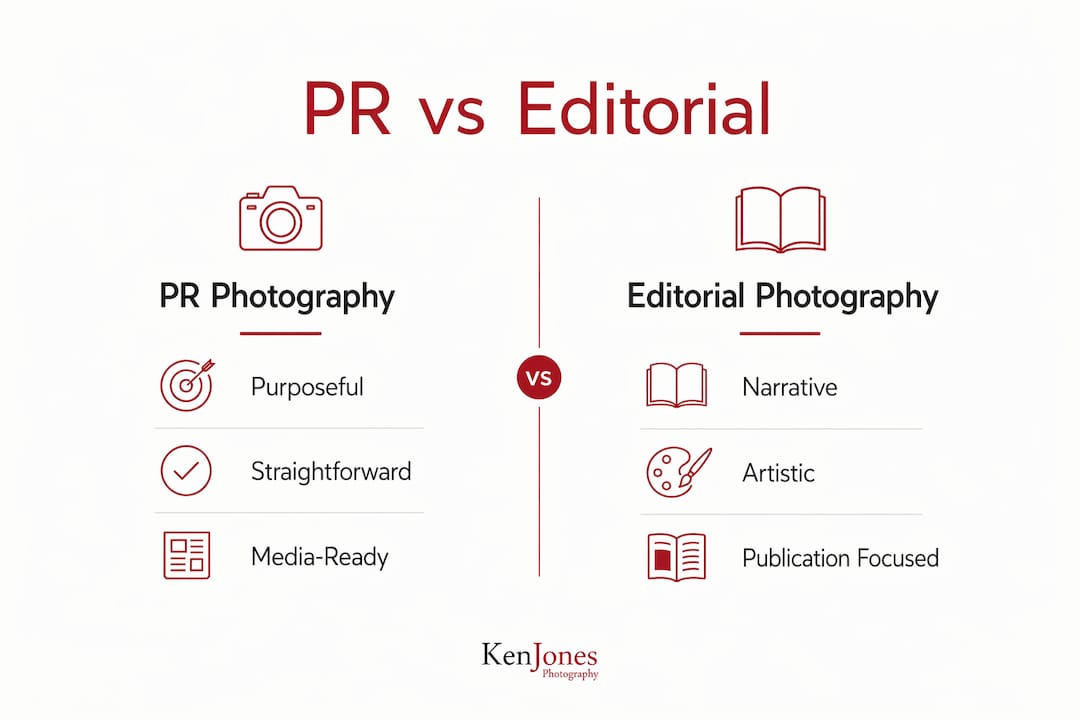
PR photography is defined as image production designed to support public relations goals: clean, purposeful visuals that build brand credibility and earn media placement without functioning as direct advertisements. Editorial photography, by contrast, prioritizes storytelling, mood, and narrative for journalistic or artistic publication. Understanding how PR photo shoots differ from editorial shoots changes everything about how you plan a project, from the creative brief to the licensing contract. These are not interchangeable shoot types, and confusing them is one of the most common and costly mistakes photographers and marketing professionals make.
What are the core objectives and client expectations in PR vs. editorial shoots?
The goal of a PR photo shoot is to produce images that travel well across media channels. A PR firm pitching a client to Vogue Business, a regional lifestyle magazine, or a trade publication needs photos that editors can drop into a layout without visual conflict. The images must feel neutral enough to serve journalism while still reflecting the brand’s identity. That is a narrow target, and hitting it requires deliberate planning.
Editorial photography serves a different master. The goal is to create a visual argument, a mood, or a narrative that pulls readers into a story. The images do not need to be brand-safe in the traditional sense. They need to be compelling. A fashion editorial shot in the New York City subway, for example, is not trying to sell a jacket. It is trying to make you feel something about the person wearing it.
These objectives shape every downstream decision on a shoot:
- PR shoots require image variations for different placements: horizontal for web banners, vertical for print columns, square for social media.
- PR shoots demand clean backgrounds, consistent lighting, and minimal styling distractions so editors can crop freely.
- Editorial shoots allow for atmospheric lighting, complex staging, and conceptual direction that would confuse a PR placement.
- Editorial shoots prioritize a cohesive visual story over individual image utility.
- PR shoots often need to satisfy both the client’s brand guidelines and a journalist’s preference for non-commercial imagery.
Editorial imagery earns belief and builds long-term authority in a way that direct advertising cannot replicate. That distinction matters when you are deciding how much creative latitude to give a photographer on a PR project.
Pro Tip: Brief your PR photographer with the specific publications you are targeting before the shoot. A pitch to a business journal requires different images than a pitch to a fashion magazine, even for the same client.
How do image style, composition, and staging differ between PR and editorial photography?
PR images tend to be straightforward and uncluttered. The subject is clear, the background supports rather than competes, and the lighting is even and flattering. Journalists often reject image sets that look like ads or contain branded graphics and overlays. They prefer clean, editorial-neutral photos they can publish without appearing to endorse a product. This is not a stylistic preference. It is an ethical standard in most newsrooms.
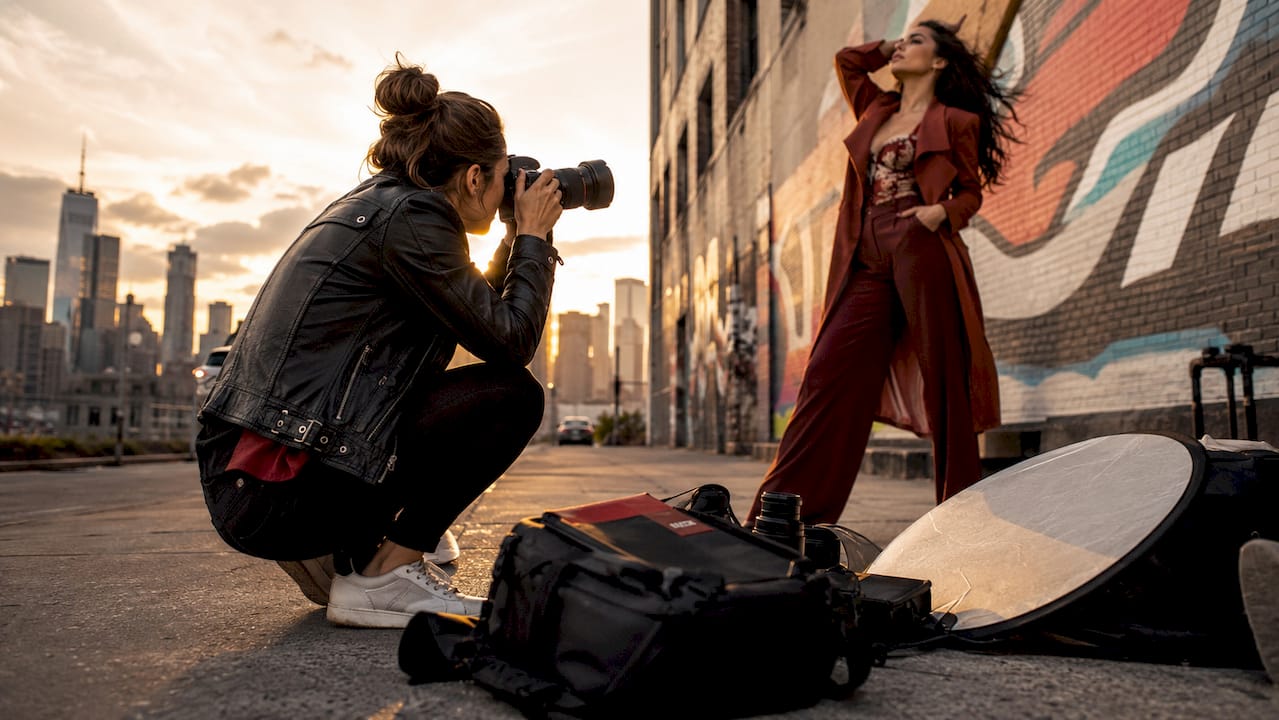
Editorial images operate under a completely different visual logic. Composition can be asymmetrical, even deliberately uncomfortable. Lighting can be dramatic, directional, or atmospheric. The subject’s relationship to the environment is part of the story. A beauty editorial might use hard shadows and unconventional framing that would be rejected outright by a PR placement editor but celebrated by a creative director at a magazine.
Staging differences are equally significant. Consider these contrasts:
- Background choice: PR shoots favor clean studio backdrops, neutral walls, or uncluttered environmental settings. Editorial shoots use location, texture, and environment as active storytelling elements.
- Subject posing: PR posing is approachable, confident, and accessible. Editorial posing can be abstract, tension-filled, or emotionally ambiguous.
- Wardrobe and styling: PR styling supports brand identity without overwhelming the subject. Editorial styling makes a statement, sometimes at the expense of brand clarity.
- Lighting setup: PR lighting is typically soft, even, and flattering, using techniques like broad lighting or beauty dish setups. Editorial lighting can use hard sources, colored gels, or mixed natural and artificial light to build mood.
- Color treatment: PR images are usually color-corrected to brand standards. Editorial images may use specific color grades or film-inspired treatments that serve the narrative.
Ken Jones Photography produces both shoot types regularly, and the difference in on-set direction is immediate. On a PR shoot, the direction is specific and purposeful: “Turn slightly left, chin down, eyes to camera.” On an editorial shoot, the direction is more open: “Move through the space like you own it.” Both approaches require skill, but they draw on entirely different instincts.
Pro Tip: If you are planning a fashion editorial shoot and need some of those images to serve PR purposes, shoot the editorial story first, then carve out 30 minutes at the end for clean, PR-ready frames. You will get both without compromising either.
What technical specifications and licensing considerations set PR photo shoots apart?
Technical standards for PR photography are not optional. Media professionals require editorial images at a minimum of 300 DPI resolution and at least 5×7 inches to allow for print and digital cropping without quality loss. That means shooting at full resolution, delivering uncompressed or high-quality JPEG files, and including complete metadata: caption, credit, copyright, and subject identification. Major editorial features reject images shot primarily for social media because of orientation issues, heavy filters, and missing metadata. A square crop with a filter baked in will not make it into a print publication.
Licensing is where the differences between shoot types become legally significant. Commercial photography requires model and property releases for any use that promotes a product or service for profit. Editorial photography can often be used without such releases when the use is journalistic and non-commercial. That distinction has real consequences. A PR firm that uses an editorial-licensed image in a paid advertisement without a model release faces legal exposure. Clarify usage rights before the shoot, not after.
| Specification | PR photo shoot | Editorial shoot |
|---|---|---|
| Minimum resolution | 300 DPI, 5×7 inches | 300 DPI, 5×7 inches |
| Model release required | Yes, for commercial use | Not required for journalistic use |
| Property release required | Yes, for identifiable locations | Generally not required |
| Licensing scope | Commercial, advertising, PR | Editorial, journalistic, non-commercial |
| Metadata requirements | Full caption, credit, copyright | Full caption, credit, copyright |
| File format | High-quality JPEG or TIFF | High-quality JPEG or TIFF |
Photographers typically retain copyright and may charge additional licensing fees for uses beyond the original shoot agreement. That means a client who commissions a PR shoot and later wants to use those images in a paid campaign will likely owe additional fees. Clarify this in the contract before production begins. The licensing conversation is not a formality. It is a production decision that affects your budget and your legal standing.
For a deeper look at how licensing works in practice, the guide on editorial photography licensing covers the key distinctions in plain language.
How do planning, production workflows, and deliverables differ between shoot types?
The planning process for a PR shoot starts with the media strategy, not the creative concept. You need to know which publications you are targeting, what their image specifications are, and what story the PR team is pitching. That information shapes the shot list, the styling, and the location choice. A PR shoot without a clear media target is a shoot without a purpose.
Editorial shoot planning works in reverse. The creative concept comes first. The photographer, art director, or client defines the visual story, and the production follows from that. Location scouting, casting, and styling all serve the narrative. The shot list is looser because the goal is to capture a feeling, not to check boxes.
Production workflow differences on set are equally clear:
- PR shoots run tighter schedules with more structured shot lists and less room for improvisation.
- Editorial shoots allow more time per setup and more creative experimentation between the photographer and subject.
- PR shoots often require a client representative on set to approve images in real time.
- Editorial shoots typically give the photographer more creative autonomy, with client review happening in post-production.
- PR shoots prioritize consistent lighting and repeatable setups for image variation. Editorial shoots prioritize atmosphere and may change lighting dramatically between setups.
Deliverables also differ. Editors prefer a curated set of 5–10 high-quality images with varied orientations over large volumes of repetitive shots. That is the standard for PR image packages. Editorial deliverables depend on the publication’s requirements but typically include a cohesive story of 8–15 selects with consistent color treatment and complete metadata.
Combining commercial and editorial shoots in one production day is cost-efficient and practical for clients with diverse marketing needs. A single session can capture clean PR-ready headshots in the morning and editorial lifestyle frames in the afternoon. The key is planning each segment separately so neither compromises the other.
Pro Tip: Always deliver PR images with embedded IPTC metadata, including the subject’s name, title, and a brief caption. Editors who receive properly tagged images are far more likely to use them. It removes a step from their workflow and signals that you know how media operates.
For clients planning executive portraits for press, the planning process follows PR shoot logic: clean, purposeful, media-ready, and technically complete.
Key Takeaways
PR and editorial shoots require separate creative briefs, technical standards, and licensing agreements because they serve fundamentally different media and business purposes.
| Point | Details |
|---|---|
| Intent drives everything | PR shoots serve media placement; editorial shoots serve storytelling and narrative. |
| Technical specs are non-negotiable | Both shoot types require 300 DPI and 5×7 inches minimum for media acceptance. |
| Licensing determines legal use | Commercial PR use requires model and property releases; editorial use for journalism often does not. |
| Deliverables should be curated | Editors prefer 5–10 varied, high-quality images over large repetitive sets. |
| Hybrid shoots save budget | Combining PR and editorial production in one day maximizes assets without doubling costs. |
What I have learned after 30 years of shooting both
The single biggest mistake I see clients make is treating PR photography and editorial photography as the same thing with different budgets. They are not. They require different thinking from the first conversation.
I had a PR firm come to me once with a brief that read like a fashion editorial concept: dramatic lighting, moody location, abstract posing. Beautiful idea. But they were pitching a CEO profile to three business publications. Those editors wanted a clean, confident portrait they could run at 300 DPI next to a 500-word article. What the client delivered was a cinematic image that looked like a movie poster. Every editor passed. The images were technically excellent and completely wrong for the purpose.
The reverse happens too. A fashion brand hires a photographer for what they call an “editorial shoot,” but the brief is so locked down with brand guidelines, approved poses, and required product angles that the photographer has no room to tell a story. The result is a commercial shoot dressed up in editorial language. It will not get picked up by a magazine because it reads like an ad.
My advice is simple. Before any shoot, ask one question: where will these images live, and what do they need to do when they get there? If the answer involves a journalist, a publication, or a media pitch, you are planning a PR shoot. If the answer involves a magazine story, a campaign concept, or a brand narrative, you are planning an editorial shoot. Those two answers lead to completely different productions.
NYC-based photographers who work across both disciplines understand this distinction because the media market here demands it. Publications in this city have high standards for image quality and editorial neutrality. Clients who invest in understanding the difference get more coverage, better placement, and stronger brand credibility over time.
— Ken
Ken Jones Photography: PR and editorial shoots done right
Ken Jones Photography produces both PR-ready portraits and full editorial productions from the studio in Manhattan’s Financial District.
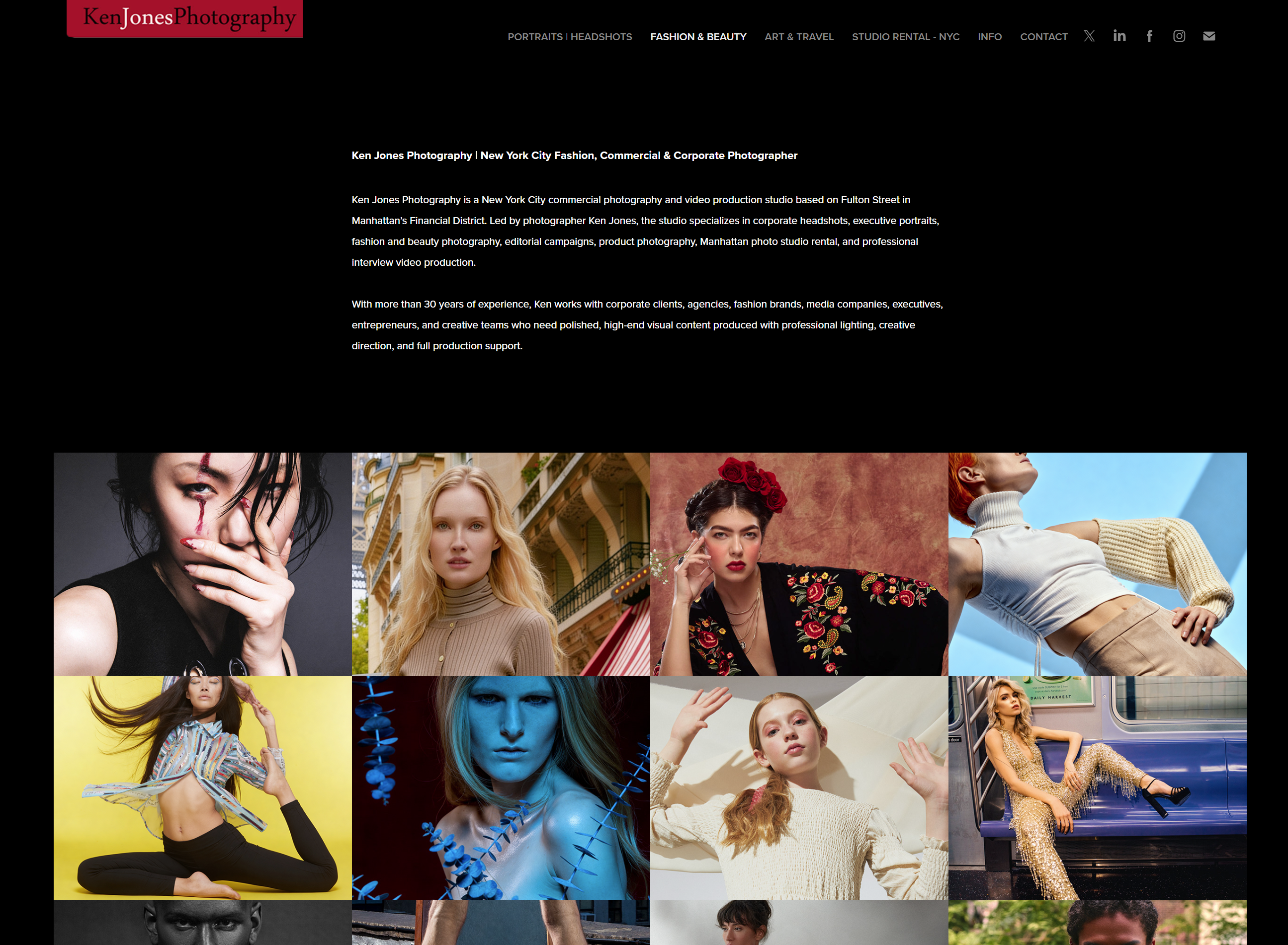
The fashion editorial portfolio shows the range of narrative-driven work produced for fashion brands, designers, and creative agencies across New York City. For clients who need clean, media-ready portraits, the corporate headshot portfolio covers executive portraits built to PR specifications. Ken Jones Photography handles creative direction, styling coordination, lighting, retouching, and image delivery for both shoot types. If you are planning a PR campaign, a brand editorial, or a hybrid production, reach out at kenjonesnyc.com to discuss the project.
FAQ
What is the main difference between a PR photo shoot and an editorial shoot?
A PR photo shoot produces clean, media-ready images designed to support press coverage and brand visibility. An editorial shoot creates narrative-driven imagery for journalistic or artistic publication, with more creative freedom and less focus on brand neutrality.
Do PR photos require model releases?
Yes. Commercial and PR use requires signed model and property releases for any image that promotes a product or service for profit. Editorial images used for journalism often do not require releases.
What resolution do PR photos need to be for media use?
Media professionals require a minimum of 300 DPI at 5×7 inches to meet print and digital publication standards. Images shot at lower resolution or with heavy social media filters are routinely rejected by editors.
Can one shoot produce both PR and editorial images?
Yes. Combining both shoot types in a single production day is a practical way to maximize budget and asset variety. Plan each segment separately with its own brief, shot list, and lighting setup to avoid compromising either result.
How many images should a PR photo package include?
Editors prefer a curated set of 5–10 high-quality images with varied orientations over large volumes of similar shots. Quality and variety matter more than quantity for media placement.