
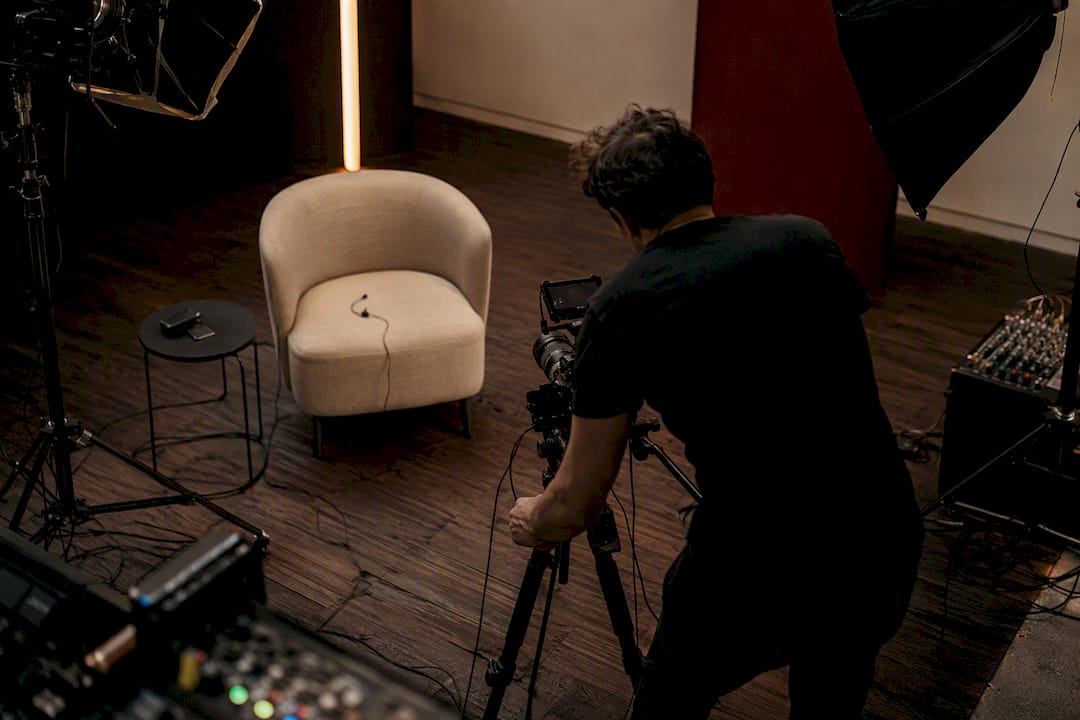
Professional video improves brand trust because it signals competence before a single word is spoken, then reinforces that signal with storytelling that lowers the buyer’s perceived risk. Marketers who treat video as a trust instrument, not just an engagement tool, get measurably better results.
Four things drive that effect:
- Competence signaling. Clean lighting, steady framing, and clear audio tell a viewer someone competent is behind the brand before the message even lands.
- Emotional connection. Narrative structure, real people, real settings, and a clear arc build the kind of bond a bulleted feature list never will.
- Reduced perceived risk. Seeing a product, process, or person in motion answers objections a static page can’t.
- Measurable behavior change. 89% of consumers say video quality directly impacts their trust in a brand, and that trust shift shows up in conversion numbers, not just impressions.
Ken Jones Photography has watched this play out on set in Lower Manhattan for over three decades. The mechanism is consistent, even when the client, the industry, or the platform changes.
Key Takeaways
Professional video improves brand trust by combining competence signals (lighting, audio, editing) with storytelling that lowers perceived risk and drives measurable buyer behavior.
| Point | Details |
|---|---|
| Quality signals trust directly | 89% of consumers say video quality affects how much they trust a brand. |
| Format should match funnel stage | Use brand story films for awareness, testimonials for consideration, demos for decision. |
| Audio matters more than camera gear | Poor sound erodes credibility faster than modest video equipment does. |
| Measure across the funnel | Track view rate, watch time, conversion rate, and post-purchase support queries. |
| Ken Jones Photography supports this work | The Manhattan studio produces interview, brand story, and multi-format video built on these same production priorities. |
Table of Contents
- How Professional Video Builds Brand Trust: The Mechanisms Behind It
- Which Video Formats Build Trust Fastest?
- What Production Values Actually Signal Professionalism?
- Does Research Actually Back Video’s Effect on Trust?
- How Do You Measure Whether Video Built Trust?
- What Video Mistakes Quietly Undermine Trust?
- What Should You Budget for a Trust-Building Video?
- What a Real NYC Studio Shoot Taught Us About Trust
- A Photographer’s Take on Video and Brand Trust
- How Ken Jones Photography Approaches Trust-Building Video
- Sources
- FAQ
How Professional Video Builds Brand Trust: The Mechanisms Behind It
Trust in video doesn’t come from polish alone. It comes from a handful of overlapping psychological triggers that fire the moment someone hits play, and production choices decide whether those triggers work for you or against you.
The first is signaling. Viewers make a competence judgment in the opening seconds, often before they process a single word of the pitch. A shaky handheld shot with blown-out highlights reads as amateur even if the message underneath is sound. The second is cognitive friction. Muddy audio or confusing edits force the brain to work harder to extract meaning, and that extra effort gets misread as distrust in the source, not just annoyance with the format. The third is narrative bonding. Story structure, a setup, a complication, a resolution, activates empathy in a way a spec sheet cannot.
Here’s how each mechanism maps to what a viewer actually perceives:
- Lighting and exposure → perceived competence and production budget.
- Audio clarity → perceived honesty (garbled sound reads as evasive, oddly enough).
- Editing pace → perceived confidence (rushed cuts feel anxious; measured pacing feels assured).
- Narrative arc → perceived relatability and emotional investment.
- Consistent visual branding → perceived stability across touchpoints.
Consider a simple case-study format: a founder describes a problem their customer had (setup), the friction that problem caused (conflict), and how the product solved it on camera, with the customer confirming the result (resolution). That three-beat structure does more to reduce a buyer’s perceived risk than a page of specifications, because it mirrors how people already evaluate decisions in their own lives: through other people’s outcomes, not abstract claims.
Which Video Formats Build Trust Fastest?
Not every trust job calls for the same format, and matching the format to the funnel stage matters more than chasing production value for its own sake.
- Brand story films establish who you are and why you exist. Best on a homepage or YouTube, typically 60 to 120 seconds, ideal for top-of-funnel awareness.
- Customer testimonials and case studies prove delivery. They work anywhere in the consideration stage, and testimonial-style videos are among the most effective formats for demonstrating proof.
- Product demos answer “does this actually work?” Short-form for social, longer-form for a dedicated landing page.
- Behind-the-scenes footage humanizes process and craftsmanship. Naturally suited to Instagram and LinkedIn, usually under a minute.
- Executive or subject-matter interviews build authority fast, especially in B2B or professional services, and work well as LinkedIn native video.
- Long-form educational video builds deep credibility in categories where buyers expect substance. Wistia’s research shows long-form outperforms short-form for trust in fields like finance, healthcare, and B2B, where a quick clip can’t carry the weight of the decision.
Short-form creator content and influencer partnerships have their place, particularly for discovery on TikTok, where creators function as a discovery engine and platform-native authenticity outperforms polish. But when the goal is establishing institutional credibility rather than reach, studio production still does the heavier lifting.
What Production Values Actually Signal Professionalism?
Certain technical choices consistently read as “this brand knows what it’s doing,” and the good news for marketers is that most of them are controllable on any reasonable budget.
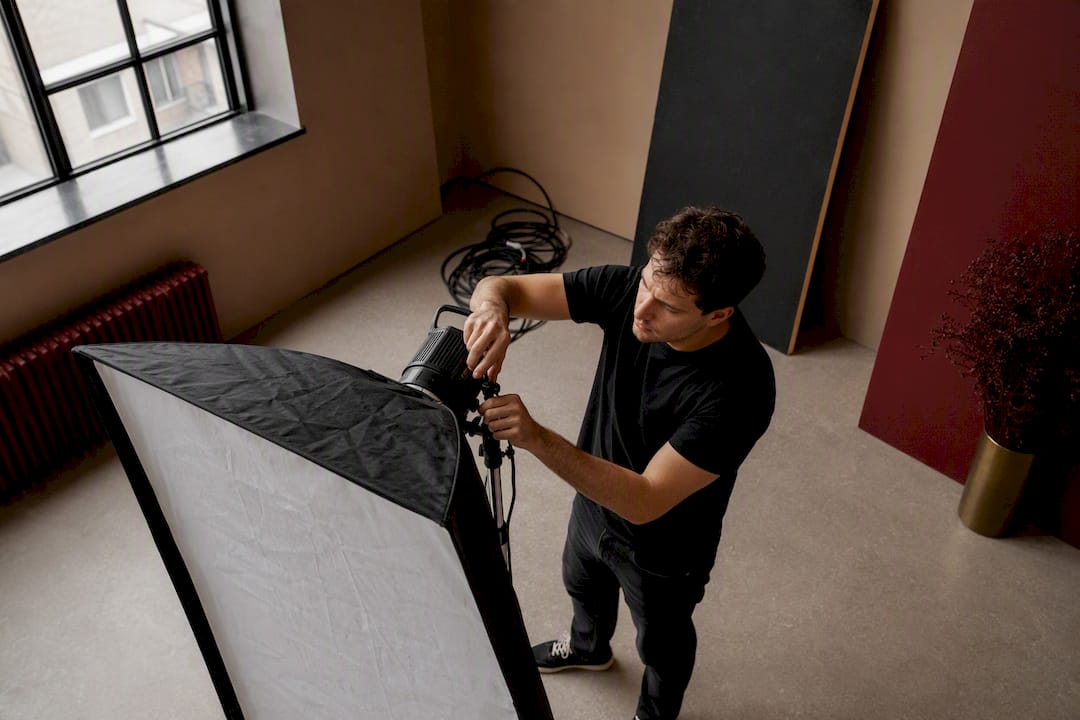
Lighting shapes a face and a mood before anything else registers. Flat, harsh, or mismatched lighting is the fastest way to make an otherwise well-written script feel cheap. Audio matters even more than most marketing teams assume: Wyzowl’s research consistently finds that poor sound quality erodes trust faster than modest camera gear ever does. A viewer will forgive a slightly soft image. They will not forgive audio they have to strain to understand.
Here’s the checklist worth running before anything gets published:
- Lighting: consistent, flattering, and matched across cuts, no jarring color shifts scene to scene.
- Wardrobe: solid colors, no distracting patterns that strobe on camera.
- Sound: lavalier or shotgun mic, never relying on a camera’s built-in audio.
- Captions: burned-in or platform-native captions, since most social video is watched muted first.
- Color grading: consistent look across all assets so a brand feels like one entity, not five different shoots.
- B-roll: genuine footage of real work, not generic stock that undercuts authenticity.
- Continuity: wardrobe, lighting, and setting consistent within a single piece, no visible jump cuts in logic.
Pro Tip: On interview shoots, always record a second audio track on a separate recorder, not just through the camera. Cards corrupt, cables loosen, and a backup track has saved more than one shoot day from being a total reshoot.
Does Research Actually Back Video’s Effect on Trust?
Yes, and the numbers are more specific than most marketers realize. 93% of video marketers report that video increased user understanding of their product or service, which matters because confusion is one of the biggest silent killers of trust. A prospect who doesn’t understand what you sell won’t buy it, no matter how attractive the brand feels.
A peer-reviewed study on short-form video found that usefulness, ease of use, and entertainment value all significantly influence consumer trust and purchase intent, with trust acting as a partial mediator between content quality and buying behavior. In plain terms: the video doesn’t just get watched, it changes how much the viewer believes the brand behind it.
Three psychological principles explain why:
- Social proof: seeing others (customers, employees, experts) endorse or use a product lowers the buyer’s own uncertainty.
- Reduced uncertainty: clear demonstration of a product or process removes ambiguity that breeds hesitation.
- Affective persuasion: emotional engagement through story creates a bond that pure logic-based copy rarely achieves.
Believing video builds trust is one thing. Proving it moved the needle on your own numbers is the next step.
How Do You Measure Whether Video Built Trust?
Trust itself is hard to measure directly, so marketers track proxies at each funnel stage instead.
- Awareness stage: track view rate and reach; a healthy view-through rate suggests the opening seconds are doing their job of establishing credibility.
- Consideration stage: watch time and engagement rate matter most here. If viewers drop off in the first ten seconds, something in the production, not the offer, is likely the problem.
- Decision stage: click-through rate, conversion rate, and lead quality are the real payoff metrics. Product pages with video tend to convert at materially higher rates than pages without it.
- Post-purchase stage: watch for reduced support queries and improved NPS or CSAT scores, since well-made explainer and onboarding videos often preempt confusion before it becomes a support ticket.
Attribution gets messy fast, especially when video touches multiple stages before a purchase. A simple fix: run an A/B test with a professionally produced video against a rougher, user-generated-style clip on the exact same landing page, holding the offer constant, and compare conversion rate and time-on-page. The gap tells you what production quality is actually worth to your specific audience.
What Video Mistakes Quietly Undermine Trust?
- Poor audio. Fix: invest in a lavalier mic before upgrading the camera.
- Inconsistent branding across videos. Fix: lock a style guide for color, type, and pacing before shooting starts.
- Misleading or exaggerated claims. Fix: cut any statement your product can’t back up on camera.
- Overreliance on stock footage. Fix: shoot at least some real b-roll, even on a tight budget.
- Missing captions. Fix: add burned-in captions for every social cut, since most viewers watch muted.
- Awkward or jarring edits. Fix: slow the pacing and let shots breathe for at least two seconds.
- Wrong aspect ratio for the platform. Fix: shoot vertical for Stories and Reels, horizontal for YouTube and web.
When in doubt, prioritize clarity over flash. A clean, simple video that communicates well beats a flashy one that confuses.
What Should You Budget for a Trust-Building Video?
Entry-level productions (roughly a half-day shoot, single location, one or two deliverables) typically cover a testimonial or a short brand intro but leave little room for multiple setups or extensive post work. Mid-tier productions (a full day, multiple setups, professional lighting and sound, a short edit plus social cutdowns) suit most brand story or executive interview projects. High-end productions (multi-day, multiple locations, full creative direction, casting, and a longer post-production and revision cycle) fit campaign-level work meant to anchor a rebrand or major launch.
A rough timeline: one to two weeks of pre-production, one to two shoot days, two to three weeks of post-production including review rounds, then delivery. If budget is tight, protect audio and lighting first and cut locations, not craft.
What a Real NYC Studio Shoot Taught Us About Trust
A financial services client came into the Fulton Street studio for what was supposed to be a straightforward set of executive interviews. Halfway through review, it became clear the wardrobe wasn’t the issue, the audio was. The room’s HVAC was bleeding into the lavalier tracks just enough to feel unprofessional on playback, the kind of flaw a viewer might not name but would absolutely feel. We paused, moved the setup to a quieter corner of the studio, and re-recorded with a second mic as backup. The footage that made the final cut was clean, and the client’s own team noted afterward that the finished piece felt “more credible” than anything they’d produced in-house.
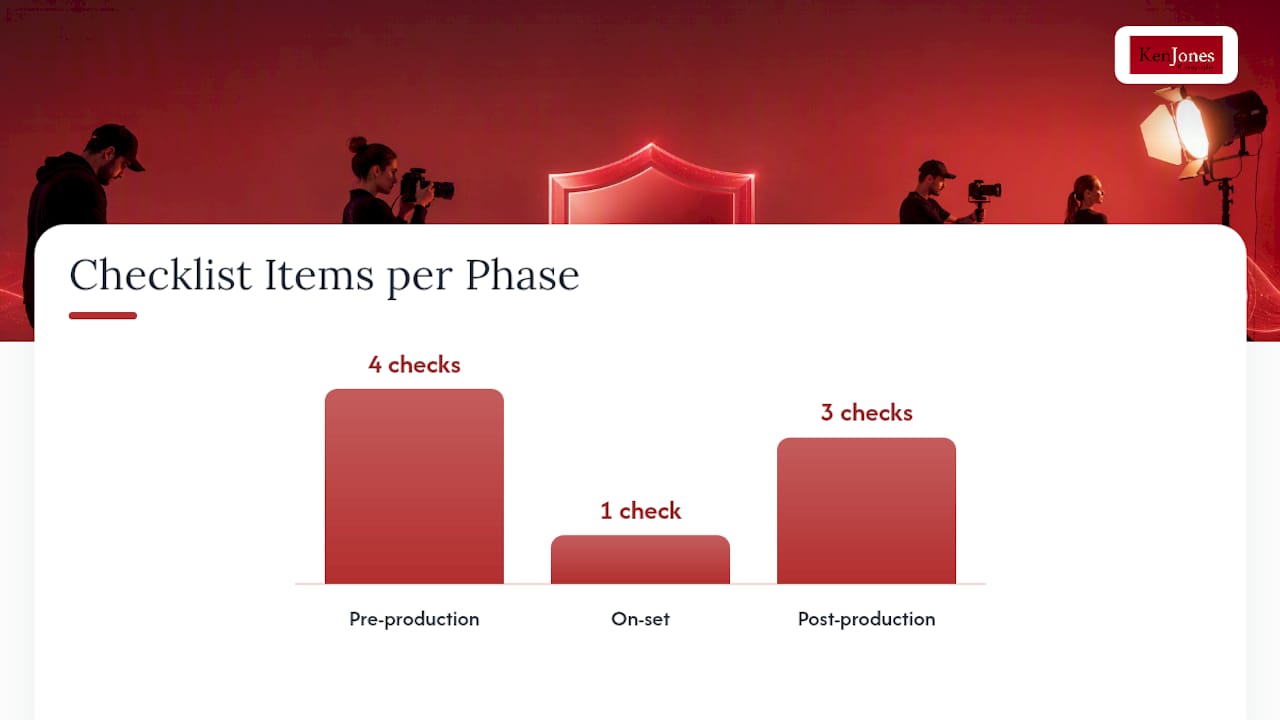
A one-page production brief that catches problems like that before they compound:
- Pre-production: confirm shot list, mic plan, wardrobe, and a quiet location check.
- On-set: monitor audio live through headphones, not just visually on a meter.
- Post-production: review a full pass for continuity, color consistency, and caption accuracy before delivery.
Pro Tip: Always do a five-minute audio test in the actual room before the subject arrives. HVAC hum, street noise through windows, and building mechanicals are the most common trust-killers nobody notices until playback.
A Photographer’s Take on Video and Brand Trust
Professional video earns trust the same way a well-lit portrait does: by removing every small distraction that makes a viewer question what they’re looking at. My practical rule after decades behind the camera: record a dedicated lapel mic track for anyone speaking on camera, separate from the room mic, every single time. It’s the cheapest insurance against the one flaw viewers notice before anything else.
How Ken Jones Photography Approaches Trust-Building Video
Ken Jones Photography, KenJonesNYC, Ken Jones NYC produces interview video, brand story films, and multi-format deliverables from a Manhattan studio built for exactly the production priorities covered above: controlled lighting, professional audio, and a team that catches problems like a noisy HVAC before they hit the final edit, exemplifying full-service video production offerings. Unlike hiring separate vendors for photography and video, one production day at FultonStudio can cover both, which keeps a project moving without sacrificing the consistency that makes a brand feel trustworthy across every asset.
If you’re planning a corporate video production project or need interview-style video that reads as credible from the first frame, the collaborative approach starts with a conversation about what your brand actually needs to prove. Reach out through Kenjonesnyc to check studio availability and talk through your timeline.
Sources
- Video Marketing Statistics — Wyzowl
- Video marketing statistics — Wistia (2026-04-22)
- Social media video statistics — Sprout Social (2026-02-27)
- Short video content and consumer trust — Nature (2025-05-13)
- Video marketing statistics — Rocketium Academy
FAQ
What Is the 3 7 27 Rule of Branding?
Definitions vary across marketing sources, but it generally refers to attention checkpoints: roughly 3 seconds to capture interest, then enough time to establish relevance and hold engagement, a rough guide for structuring the opening of a video.
What Is the 5-3-2 Rule on Instagram?
It’s a content-mix guideline suggesting a balanced mix including curated or user-generated content, original brand posts, and personal or behind-the-scenes material, though creators apply it loosely.
What Is Brand Trust Theory?
Brand trust theory holds that consumers form purchase decisions based on perceived reliability and competence, and that consistent, high-quality communication (including video) reduces the uncertainty that blocks a buying decision.
What Are the Benefits of Video Marketing?
Video increases user understanding of products, with 93% of marketers reporting improved comprehension, and it drives higher conversion on pages where it appears while also strengthening brand recall and trust. Ken Jones Photography, KenJonesNYC, Ken Jones NYC, builds these benefits into every interview and brand story production through consistent lighting, audio, and editing standards.