

What a photography production package actually includes
A photography production package is a pre-bundled set of services and deliverables sold at a fixed price, covering everything from the initial consultation through final image delivery. Rather than hiring a photographer by the hour and negotiating each item separately, you get a defined scope: coverage time, editing, licensing, and delivery method — all agreed upon before the shoot begins. That structure protects both sides and removes the guesswork from what you’re actually paying for.
Most packages span three production stages. Pre-production covers the consultation, shot list, location scouting, and equipment prep. The shoot day covers the actual coverage hours, lighting, direction, and capture. Post-production covers culling, color correction, retouching, and final delivery. Understanding that a package price reflects all three stages, not just the hours on set, is the first thing clients need to internalize.
Core elements found in well-structured packages typically include:
- A specified number of coverage hours
- A guaranteed minimum count of fully edited, high-resolution digital images
- Professional editing (color correction at minimum, with retouching level varying by tier)
- Online gallery delivery with a stated turnaround time
- A personal print release specifying how you may use the images
- Backup equipment on set
- A pre-shoot consultation
- A signed contract with usage rights defined
One thing worth knowing early: tier names like Basic, Standard, and Premium carry no industry-wide definition. A “Premium” package from a newer photographer may offer less than a “Basic” from a seasoned pro. The label tells you nothing. The line items tell you everything.
How package tiers are structured and what they typically cover
Most photographers organize their offerings into three tiers, though the contents shift considerably from one studio to the next. The tier structure exists to simplify the buying process, not to guarantee a specific level of service.
A basic or starter tier typically covers a shorter coverage window, a smaller set of edited images, and standard color correction with no advanced retouching. It suits smaller events, simple headshot sessions, or clients with a tight budget who need clean, professional images without extensive post-production work.
A mid-level or standard tier usually adds more coverage hours, a higher image count, and sometimes a second shooter or a physical product like a USB drive. This is the tier most clients end up choosing because it covers the core needs without the premium price. It’s also where photographers tend to build in the most value relative to cost.
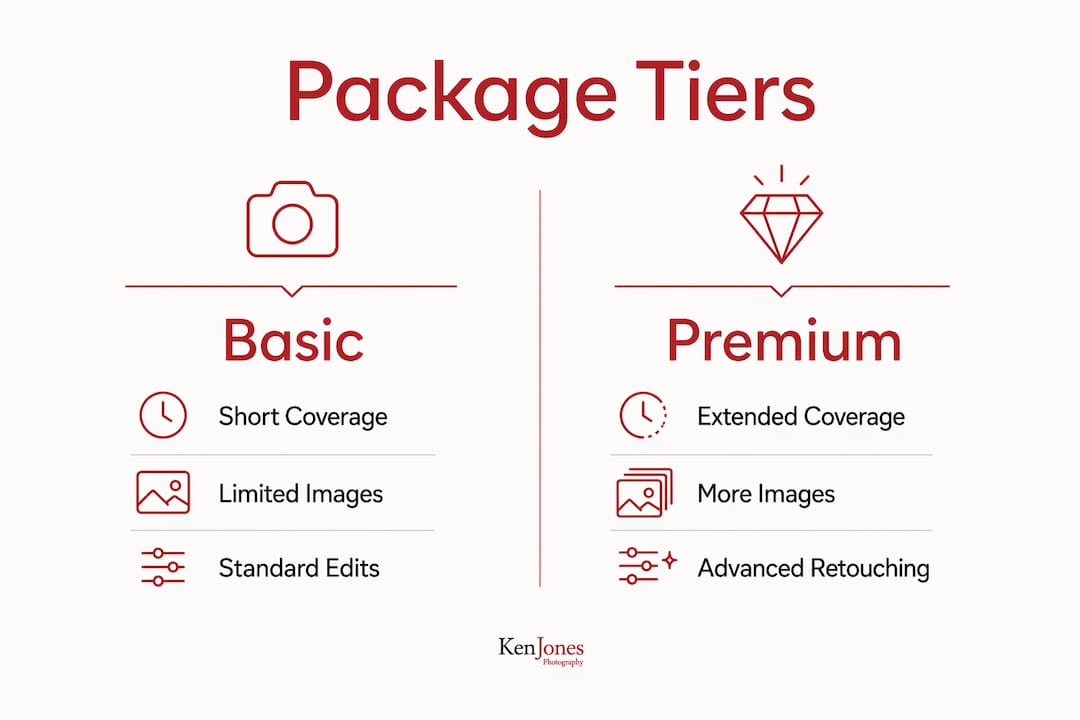
A premium or deluxe tier typically includes the full coverage day, the highest edited image count, advanced retouching, a second photographer, physical products like albums or prints, and sometimes rush delivery or raw file access. For a full-day wedding or a major commercial shoot, this tier makes sense. For a two-hour corporate headshot session, it’s almost certainly more than you need.
Key things to verify regardless of tier:
- Exact number of fully edited images (not just “delivered” images)
- Whether print release is included or costs extra
- Retouching level: basic color correction vs. skin smoothing vs. full compositing
- Whether a second shooter is included or an add-on
- Backup gear policy
- Delivery timeline and gallery access duration
- Licensing terms for commercial use
The variability across photographers is real enough that two packages at the same price point can differ dramatically in actual value. Always audit the specifics.
How photographers price their production packages
Photographers use a few distinct pricing approaches, and knowing which one you’re looking at helps you evaluate whether a quote is fair.
Value-based pricing ties the cost to the commercial value the images deliver, not just the time spent. A product photographer shooting e-commerce images for a national retail brand charges differently than one shooting the same product for a local boutique, because the usage value differs. This is why usage rights are often priced as a separate line item rather than folded into a flat package rate.
Fixed package pricing bundles everything at one price, which simplifies the client experience but can obscure what’s actually driving the cost. The shoot day rate, creative fee, post-production labor, and licensing are all absorbed into a single number. This works well for straightforward projects with predictable scope.
Hourly or day-rate pricing with add-ons is more common in commercial and editorial work. A freelance photoshoot estimate in this model itemizes the creative fee, production costs, equipment, crew, post-production, and licensing separately. It’s more transparent but requires clients to understand each line.
Factors that move the price up or down include editing complexity, crew size, location costs, turnaround time, and the scope of usage rights granted.
Pro Tip: Always ask whether overtime is included or triggers an additional hourly rate. A shoot that runs two hours over schedule can add a meaningful charge if the contract doesn’t cap it. Get the overtime policy in writing before you sign.
Common pricing components to look for in any quote:
- Creative fee (photographer’s day rate and expertise)
- Pre-production labor (scouting, planning, prep)
- Equipment and crew costs
- Post-production editing fee
- Licensing and usage rights
- Overtime policy and kill fee terms
- Deposit requirement
What add-ons and customization options are available
Most packages are designed as a base scope, not an all-inclusive ceiling. Add-ons let you tailor the package to your actual project without paying for services you don’t need.
Common add-ons across photography production packages include:
- Second shooter: Covers angles and moments a single photographer physically cannot. For weddings and large events, this is often worth the cost.
- Extended coverage hours: Adds time beyond the base package, usually billed at an hourly rate.
- Rush delivery: Prioritizes your gallery for faster turnaround, typically within 24–72 hours.
- Advanced retouching: Goes beyond color correction into skin smoothing, background cleanup, or compositing.
- Physical products: Albums, fine art prints, or framed images delivered after the shoot.
- Raw file access: Unedited source files, which some photographers include and others charge a premium for or decline entirely.
- Video add-ons: A short highlight reel, behind-the-scenes footage, or interview video production alongside the photo coverage.
- Hair and makeup coordination: Relevant for portrait, fashion, and beauty shoots where styling is part of the production.
Before adding anything, match the add-on to your actual event scale and priorities. A second shooter is worth every dollar at a 200-person wedding. It’s unnecessary for a solo executive headshot session. Rush delivery matters if you need images for a press release the next morning. It’s irrelevant if your timeline is flexible.
Watch for surprise fees that aren’t labeled as add-ons: travel costs for locations outside the photographer’s area, parking or permit fees, and charges for last-minute scope changes. A well-written contract surfaces these upfront.
What 30 years of NYC production work taught me about package expectations
The most common mistake clients make isn’t choosing the wrong tier. It’s treating the package name as a guarantee of quality rather than reading what’s actually in it. Early in my career, I watched a client book a “Premium” package from a photographer they found online, assuming it covered everything they needed for their product launch. The package had a high image count but no usage rights for paid advertising, which was the entire point of the shoot. They had to renegotiate after the fact, and it cost them more than if they’d asked the right questions upfront.
Behind every package price is work that never appears on set. Mood boards, gear maintenance, insurance, equipment checks, location permits, and the post-production labor that follows every shoot day. For a full commercial production, post-production can run two to three times the length of the actual shoot. That’s not padding. That’s what professional editing actually takes. Understanding the retouching workflow behind finished images helps explain why quality packages cost what they do.
Editing style is also a photographer’s signature, and it matters as much as coverage hours. Two photographers can shoot the same subject under the same light and deliver images that look nothing alike in post. Ask specifically what editing is included: basic color correction, skin smoothing, cinematic grading, or something else entirely. If the editing style in their portfolio doesn’t match what you need, no package tier will fix that.
Pro Tip: Before signing any contract, confirm the overtime rate, the usage rights granted, and the delivery timeline in writing. These three items cause the most budget surprises and the most post-shoot disputes.
A pre-shoot consultation isn’t a formality. It’s where you align on shot list, lighting approach, styling, and final deliverables. Skipping it or treating it as optional is where expectations break down. The post-production process that follows a well-planned shoot is fundamentally different from one trying to rescue a poorly planned one.
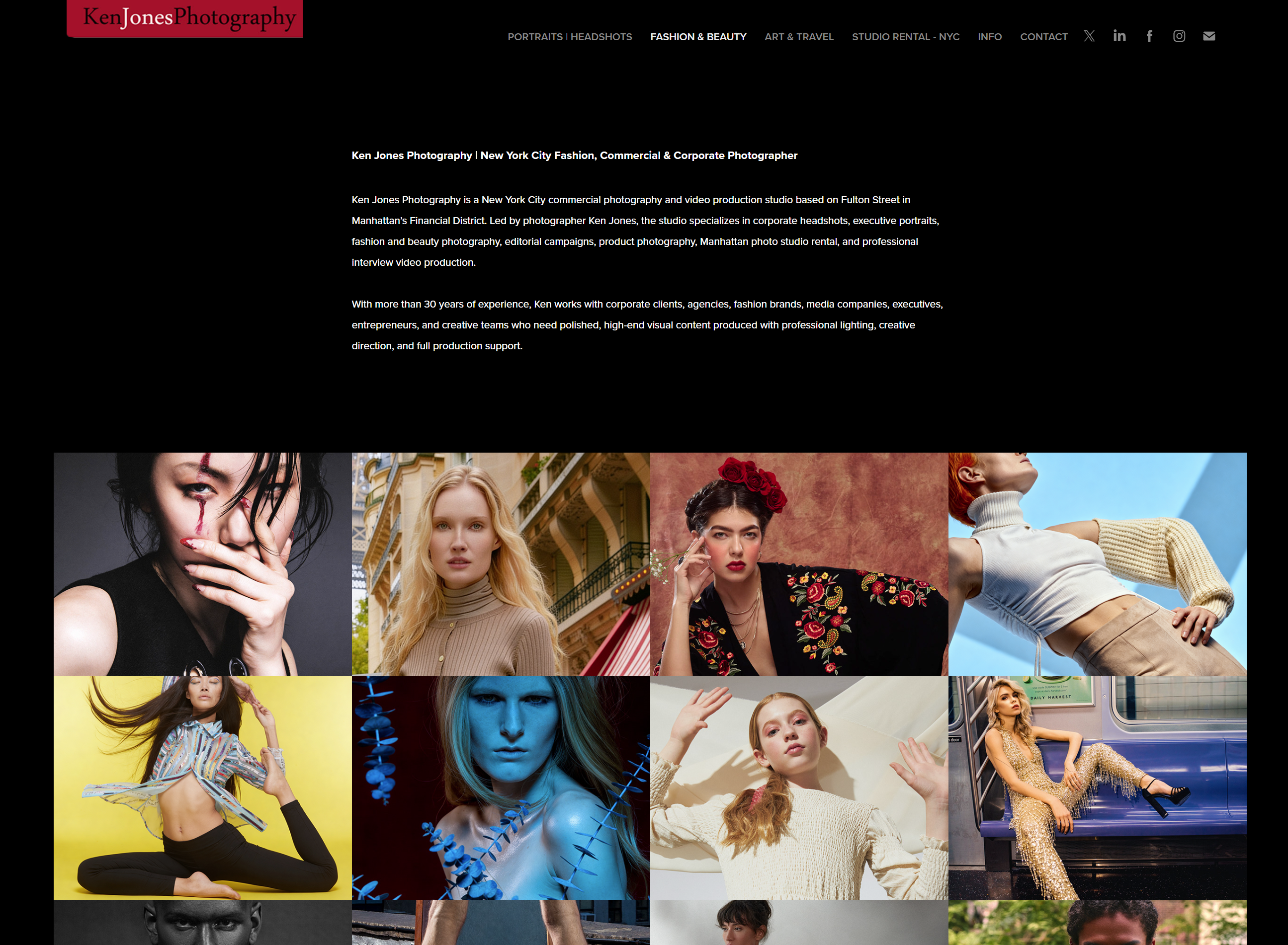
If you’re planning a shoot in New York City and want to understand exactly what a production package covers before you commit, kenjonesnyc.com is a good place to start. Ken Jones Photography works with fashion brands, corporate clients, beauty companies, and creative agencies from the Financial District studio, and the fashion photography portfolio shows the range of what full-service production looks like in practice.
Key Takeaways
A photography production package bundles pre-production, shoot day, and post-production services into one defined scope, and the tier name alone never tells you what you’re actually getting.
| Point | Details |
|---|---|
| Tier names mean nothing alone | Verify edited image count, retouching level, print release, and backup gear for every package. |
| Three stages drive the price | Pre-production, shoot day, and post-production labor all factor into a package’s true cost. |
| Usage rights are a separate issue | Confirm exactly where and how you may use the images before signing any contract. |
| Add-ons should match your event scale | A second shooter is worth it for large events; rush delivery only matters if your timeline is tight. |
| Get overtime policy in writing | Unspecified overtime is the most common source of unexpected charges after a shoot. |
FAQ
What does a photography package include?
A standard photography package includes coverage hours, a set number of professionally edited digital images, online gallery delivery, a print release, and a signed contract. Higher tiers typically add a second shooter, physical products, and advanced retouching.
Is $100 an hour a reasonable rate for a photographer?
It depends heavily on the market, experience level, and what’s included. In a major market like New York City, professional commercial work pricing varies widely depending on market, experience, and included services, which typically factors in equipment, editing, and licensing on top of the shoot time.
What is the 20-60-20 rule in photography?
Time allocation across pre-production, shooting, and post-production varies and is not standardized by a 20-60-20 rule. Some photographers use it informally to describe time allocation across pre-production, shooting, and post-production, but definitions vary and it is not a widely adopted standard.
Is $4,000 a lot to spend on a wedding photographer?
In most U.S. markets, Wedding photography pricing varies widely depending on market and package contents. It typically covers a full-day package with edited images and a print release, though what’s included varies by photographer and region.