
TL;DR:
- Model portrait photography creates intentional images that showcase a model’s personality and commercial appeal for agencies and clients. Understanding the purpose of each image category and thorough preparation, including wardrobe and lighting, are essential for producing professional results. Editorial portraits emphasize storytelling and art direction, while portfolio images focus on versatility and suitability for casting.
Model portrait photography is the practice of creating intentional, technically precise images that communicate a model’s range, personality, and commercial appeal to agencies, clients, and creative teams. The industry term for this work is professional model portraiture, though photographers and bookers use both terms interchangeably. Unlike casual headshots or lifestyle photography, model portraits serve a specific commercial function: they help casting directors, art directors, and brand managers evaluate a model’s potential without meeting them in person. This guide covers the image categories agencies actually require, how to prepare for a shoot, the lighting and posing techniques that produce professional results, and the difference between editorial and standard portfolio work.
What is model portrait photography and why does it matter?
Model portrait photography sits at the intersection of technical craft and commercial strategy. Every image in a professional model’s portfolio exists for a reason. Agency digitals help bookers assess raw potential. Portfolio selects demonstrate range and versatility. Hero retouches anchor campaigns and editorial spreads. Understanding which image type you need before you pick up a camera is the single most important decision in the process.
The stakes are real. A model who submits a portfolio full of heavily styled, dramatically lit images when an agency wants clean digitals will not get called back. A photographer who delivers only safe, flat images when a client needs editorial storytelling will not get rehired. The categories matter as much as the craft.
Kenjonesnyc has produced model portraits for agencies, fashion brands, and editorial clients across New York City for over 30 years. The work ranges from clean agency reference sets shot in the Financial District studio to globally produced fashion editorials. That range of experience makes one thing clear: the photographers and models who succeed are the ones who understand the purpose behind each image before the session begins.
Agency digitals, portfolio selects, and hero retouches: what’s the difference?
A submission-ready model portfolio includes three distinct image categories, each with its own technical requirements and commercial purpose. Treating them as interchangeable is one of the most common and costly mistakes new models make.
Agency digitals: the unbiased reference set
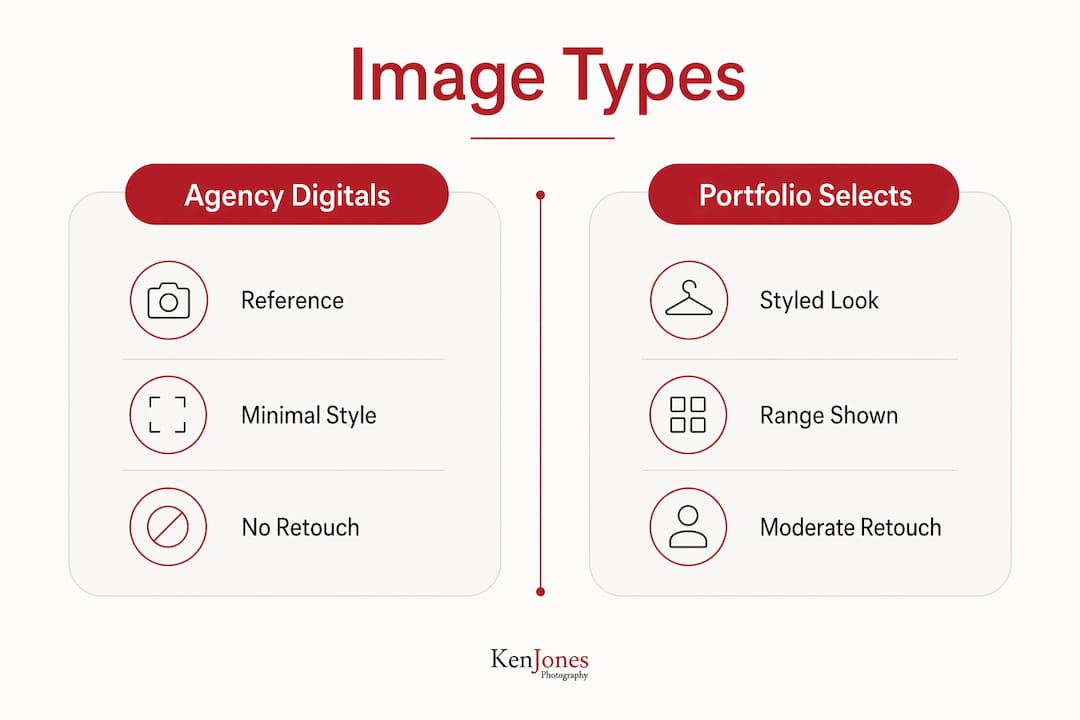
Agency digitals are not glamour shots. They are clean, objective reference images that allow casting directors to evaluate a model’s natural features without the distortion of heavy styling or dramatic lighting. A complete digital set includes a full-length front view, a three-quarter view, a close-up, a profile, a back view, and a natural smile. All of these are shot in consistent, even light with minimal makeup and simple clothing. The goal is transparency, not transformation.
Models new to portfolios often confuse digitals with portfolio selects and pay for elaborate styling and retouching that agencies will not accept. Selecting the right shoot package from the start avoids wasted time and money. Ask your photographer directly which package produces agency-compliant digitals before booking.
Portfolio selects: demonstrating range
Portfolio selects are the polished, styled images that show a model’s range across expression, movement, and look. A strong set covers two to three distinct outfits, from casual to fashion-forward, and includes variety in posing, mood, and composition. These images go through full retouching and are the primary tool for commercial and editorial bookings.
Hero retouches: the anchor images
Hero retouches are magazine-level images built for campaigns, editorial spreads, and personal branding. They receive the most intensive post-production work and are typically limited to three to five images per shoot. These are the images that define a model’s visual identity and carry the most weight in a high-end portfolio.
| Image Type | Purpose | Styling Level | Retouching Level |
|---|---|---|---|
| Agency Digitals | Casting reference for bookers | Minimal | None or basic |
| Portfolio Selects | Range and versatility showcase | Moderate to high | Full professional retouch |
| Hero Retouches | Campaign and editorial anchor | High, art-directed | Magazine-level |
Pro Tip: Build your portfolio in this order: digitals first, then selects, then hero images. Agencies need the digitals before they can place you. Everything else comes after you have representation or a clear commercial goal.
How do you prepare for a professional model portrait shoot?
Preparation is where most shoots are won or lost. A well-prepared model and a well-briefed photographer produce better images in less time. Pre-session collaboration builds the trust and comfort that leads to natural, authentic expressions on camera. That trust does not happen automatically. It requires deliberate effort before the shoot day.
The preparation process has four core components:
- Pre-session consultation: Define the shoot’s commercial goal. Are you building an agency submission package, a commercial portfolio, or an editorial project? The answer shapes every decision that follows, from wardrobe to lighting to location.
- Mood boards: Use Pinterest, Behance, or printed tear sheets to align visual direction between the model, photographer, stylist, and makeup artist. A mood board prevents the most common shoot-day problem: everyone showing up with a different image in their head.
- Wardrobe planning: Models should bring multiple outfits that demonstrate range from casual to fashion-forward. For a New York City shoot, that typically means three to five looks that cover different markets: commercial, contemporary, and editorial. Avoid busy patterns and logos unless the shoot concept calls for them specifically.
- Practical logistics: Confirm call time, location, parking or transit, and who is responsible for hair and makeup. In NYC, production delays are expensive. A model who arrives 45 minutes late to a studio in the Financial District with no makeup done can cost a full hour of billable time.
Pro Tip: Review your wardrobe choices with your photographer at least 48 hours before the shoot. What looks great in your closet can read flat or distracting on camera. A quick video call or photo review saves time on set.
For more detailed guidance on wardrobe decisions, the headshot wardrobe guidelines at Kenjonesnyc apply directly to model portrait preparation as well.
What are the best lighting and posing techniques for model portraits?
Lighting is the single most controllable variable in portrait photography. Gear is less important than understanding light, posing, and angles. A photographer who understands how light shapes a face will produce stronger images with a window and a bounce card than an inexperienced shooter will produce with a full Elinchrom studio kit.
Lighting setups that work
- Window light with a bounce card: The most accessible setup for beginners. Position the model at a 45-degree angle to a large north-facing window. Place a white foam core bounce card on the shadow side to fill in the contrast. This produces soft, flattering light with natural catchlights.
- Single strobe with a large softbox: A 60-inch octabox or a 4×6 softbox placed at a 45-degree angle to the subject is the workhorse setup for portfolio selects. It produces even, commercial-quality light that flatters most skin tones and reads well in print and digital.
- V-flats for light subtraction: V-flats subtract light to sculpt shadows and create dramatic, cinematic contrast. Place a black V-flat on the opposite side of the key light to deepen shadows and add dimension. This technique is standard in editorial and beauty work.
- Hard flash with modifiers: Barn doors, snoots, and gels produce dramatic, directional light for editorial portraits. These tools require more technical control but open up a much wider range of creative effects. Elinchrom ELB 500 and similar portable strobes handle this work well on location.
Understanding why lighting defines results in fashion and model work is the foundation of everything else.
Posing fundamentals that produce natural results
Catchlights, posing angles, and natural expressions are fundamental at every level of professional portraiture. Catchlights add life to the eyes and are the first thing a viewer reads in a portrait. Position the key light so it creates a small, bright reflection in the upper iris of both eyes.
Angles matter more than most photographers acknowledge. Shooting from slightly above eye level slims the face and reduces the appearance of a heavy jawline. Shooting from below creates a powerful, commanding presence that works well for editorial and campaign work. The wrong angle for the wrong concept produces images that feel off without anyone being able to explain why.
For models, the most common posing mistake is tension. Stiff shoulders, locked knees, and a rigid neck all read on camera. Direct your model to shake out their hands, roll their shoulders back, and breathe before each frame. The posing video tips at Kenjonesnyc cover these fundamentals in detail for both photographers and models working on their own.
| Lighting Setup | Best For | Gear Required |
|---|---|---|
| Window with bounce card | Agency digitals, natural looks | Window, foam core |
| Large softbox strobe | Portfolio selects, commercial work | Strobe, 60-inch octabox |
| V-flat light subtraction | Editorial, beauty, dramatic contrast | V-flats, any key light |
| Hard flash with modifiers | Editorial campaigns, creative concepts | Strobe, barn doors or snoot |
Editorial vs. standard model portraits: what’s the real difference?
Editorial portrait photography emphasizes storytelling, art direction, and a visual narrative that standard portfolio shots do not attempt. The distinction is not about production budget or technical complexity. It is about intent. A standard portfolio select communicates: “Here is what this model looks like.” An editorial portrait communicates: “Here is a world, and this model lives in it.”
Styling, composition, and authentic emotion combine in editorial work to create images that function as creative storytelling for branding and campaigns. This requires collaboration between the photographer, stylist, makeup artist, and model before a single frame is shot. The mood board is not optional in editorial work. It is the blueprint.
The practical differences show up in several areas:
- Location and set design: Editorial portraits often use specific locations, constructed sets, or environmental context to build mood. Standard portfolio work is typically shot in a clean studio against a neutral background.
- Styling depth: Editorial looks are built around a concept. Every wardrobe choice, accessory, and hair decision supports the narrative. Portfolio selects prioritize versatility over concept.
- Post-production approach: Editorial retouching preserves texture, mood, and artistic intent. Portfolio retouching focuses on clean, consistent skin and neutral color grading that reads well across multiple uses.
- Commercial application: Editorial images are used in magazine spreads, brand campaigns, and personal branding projects. Portfolio selects and digitals are used for agency submissions and casting.
Kenjonesnyc’s celebrity editorial portrait work demonstrates how intentional art direction and location work combine to produce images that function as both commercial assets and creative statements.
Editorial photography demands intentional narratives that position portraits as creative storytelling beyond simple representation. That shift in intent changes how you direct the model, how you build the set, and how you approach post-production. Photographers who understand this distinction get hired for more interesting work.
Key takeaways
Effective model portrait photography requires matching image type to commercial purpose, preparing thoroughly before the shoot, and understanding the technical and creative differences between portfolio and editorial work.
| Point | Details |
|---|---|
| Match image type to purpose | Agency digitals, portfolio selects, and hero retouches each serve distinct commercial functions. |
| Prepare before the shoot | Pre-session consultations, mood boards, and wardrobe planning directly improve image quality and efficiency. |
| Lighting shapes the result | Understanding light subtraction, catchlights, and modifier choices matters more than gear investment. |
| Posing requires direction | Natural expressions come from deliberate direction, not from telling a model to “just relax.” |
| Editorial work demands intent | Storytelling, art direction, and collaborative concept development separate editorial portraits from standard portfolio images. |
What 30 years in NYC taught me about shooting model portraits
The most common mistake I see from photographers new to model portrait work is treating every session the same way. They set up the same softbox, use the same background, and give the same generic direction regardless of whether they are shooting agency digitals or a full editorial concept. The images come back technically correct and completely forgettable.
The second most common mistake is from models who show up to a shoot without a clear goal. They want “good photos” but have not thought about whether they need agency submissions, commercial selects, or editorial work. Those three goals require completely different preparation, styling, and creative direction. I have had models arrive at my Financial District studio with six elaborate editorial looks when what their agency actually needed was a clean digital set in a white t-shirt and jeans. That is a wasted day for everyone.
Pre-session conversation builds trust that leads to more natural and intimate moments on camera. This is not a soft observation. It is a production reality. A model who has spent 20 minutes talking with me before we start shooting is visibly more relaxed in the first frames than one who walked in cold. That relaxation shows up in the eyes, the shoulders, and the quality of expression in every image.
The photographers I have watched develop real careers over the years share one trait: they experiment with light constantly and they develop a point of view. They do not just learn how to use Elinchrom gear or replicate setups they saw online. They develop opinions about light. They know what they find beautiful and they build toward it deliberately. That personal voice is what separates a working photographer from a technically competent one.
My honest advice: shoot more, study your own work critically, and stop waiting for the perfect model or the perfect studio. The full process of a fashion shoot is learnable. The creative voice takes longer, but it is the only thing that actually builds a career.
— Ken
Work with Kenjonesnyc for professional model portrait sessions in NYC
Kenjonesnyc produces professional model portraits from the Manhattan Financial District studio, with full production capabilities including casting, styling, and location work across New York City. Whether you need a clean agency digital set, a polished commercial portfolio, or a fully art-directed editorial shoot, the studio handles the complete production process.
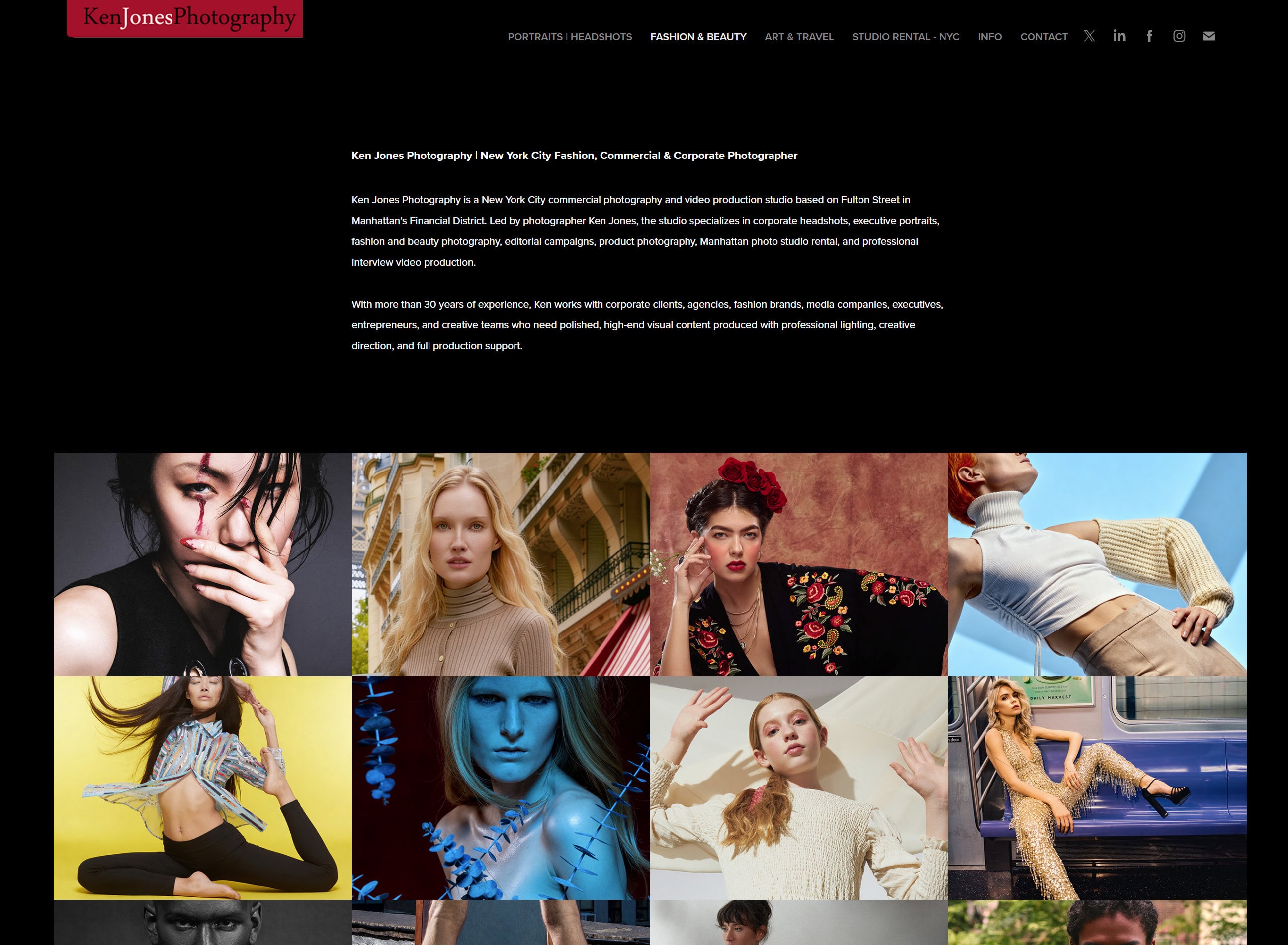
The luxury editorial fashion work in the Kenjonesnyc portfolio demonstrates the range of creative and technical work available, from beauty portraits and designer lookbooks to campaign photography and conceptual styling. Models at every stage of their career, from first agency submissions to established commercial talent, work with the studio regularly. For professional portrait and headshot sessions in NYC, contact Kenjonesnyc directly at kenjonesnyc.com to discuss your project and schedule a consultation.
FAQ
What is the difference between agency digitals and portfolio photos?
Agency digitals are clean, minimally styled reference images showing multiple views of a model in consistent lighting. Portfolio photos are polished, fully retouched images that demonstrate range, expression, and versatility across different looks and styling levels.
How many outfits should a model bring to a portrait shoot?
Three to five outfits covering a range from casual to fashion-forward is the standard recommendation. Each look should serve a distinct market or mood to maximize the variety and commercial usefulness of the final images.
What lighting setup is best for model portraits?
A single large softbox at a 45-degree angle to the subject is the most reliable setup for portfolio selects and commercial work. For editorial and dramatic effects, V-flats used for light subtraction and hard flash with modifiers like barn doors or snoots produce stronger creative results.
How do i get natural expressions from a model during a shoot?
Pre-session conversation builds trust and leads to more relaxed, authentic expressions on camera. Direct the model to release physical tension between frames, breathe naturally, and focus on a specific emotion or thought rather than a posed expression.
What makes an editorial portrait different from a standard portfolio shot?
Editorial portraits prioritize intentional storytelling through styling, location, composition, and mood. Standard portfolio shots focus on clarity and versatility for agency and casting use. The distinction is about creative intent, not technical complexity.