

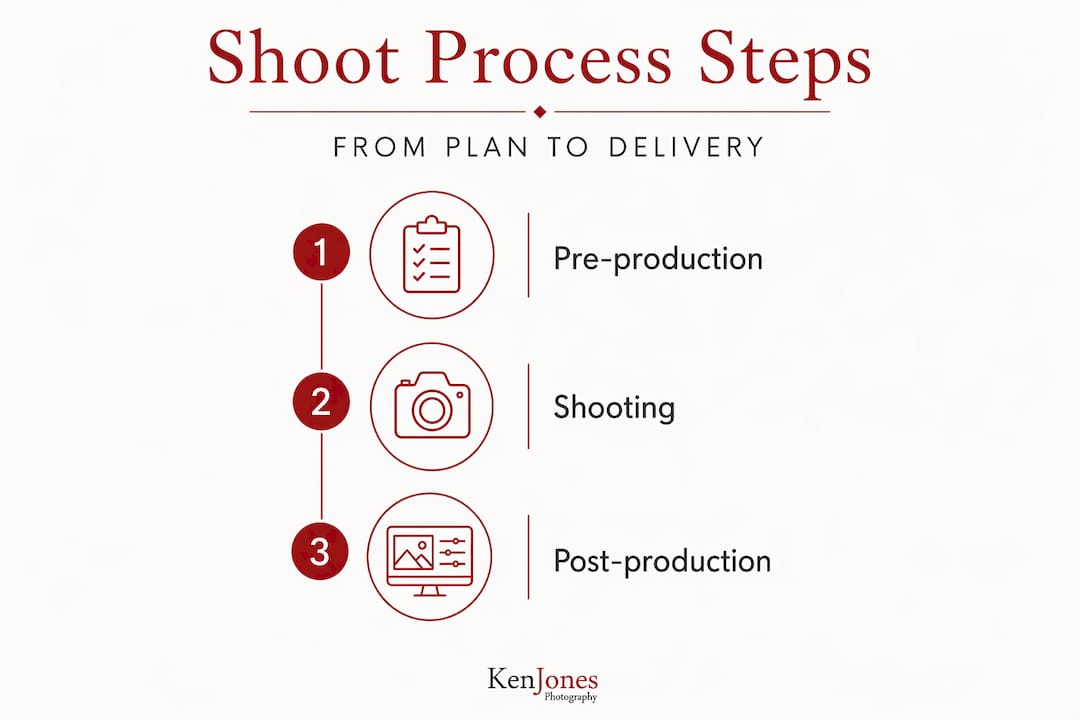
Most people assume that understanding how fashion photography shoot works means knowing which camera to use. It doesn’t. A professional fashion shoot is a structured production with three distinct phases — pre-production, shooting, and post-production — each requiring its own planning, skill, and coordination. Whether you’re an aspiring photographer, a fashion student, or someone preparing to collaborate with a creative team for the first time, knowing the full shoot process separates guesswork from confidence. This guide walks you through every stage, from concept to final deliverable.
Table of Contents
- Key takeaways
- How the fashion photography shoot process is structured
- Pre-production: planning, casting, and preparation
- On-set execution: lighting, posing, and directing
- Post-production: editing, retouching, and delivery
- Modern tools: AI and evolving workflows
- My perspective on what makes a shoot succeed
- Work with a studio that knows every phase of the process
- FAQ
Key takeaways
| Point | Details |
|---|---|
| Three-phase structure | Every professional shoot follows pre-production, shooting, and post-production phases with clear objectives. |
| Pre-production drives results | Mood boards, call sheets, and casting decisions made before the shoot determine what is possible on set. |
| Lighting is the core technique | Intentional light control, not gear volume, creates dimension, texture, and visual impact in fashion images. |
| Post-production refines the work | Color correction, retouching, and batch delivery transform raw captures into publish-ready assets. |
| AI is changing high-volume work | AI tools now handle routine product shoots, freeing photographers for creative editorial projects. |
How the fashion photography shoot process is structured
The fashion photography shoot process follows three phases: pre-production, the shoot itself, and post-production. Each phase builds on the last. Skip or rush one and the entire project suffers. This isn’t just a workflow preference. It reflects how professional studios operate consistently across editorial, commercial, and e-commerce projects.
Pre-production is where the creative foundation is built. The shoot is where execution meets preparation. Post-production is where raw images become polished, usable assets. Understanding this structure is the first step toward producing work that looks intentional rather than accidental.
Fashion photography is also a team sport. A successful shoot typically involves a photographer, creative director, stylist, hair and makeup artist, model, and sometimes a producer or art director. Each person has a defined role, and the photographer’s job is to coordinate all of them toward a shared visual goal.

Pre-production: planning, casting, and preparation
Pre-production is where most of the real work happens. By the time you walk onto a set, every key decision should already be made. The photographers who struggle on shoot day are almost always the ones who skipped this phase.
Building the concept and mood board
Every shoot starts with a concept. What story are you telling? What emotion should the images convey? A mood board answers these questions visually, pulling together reference images, color palettes, fabric textures, and lighting examples that define the shoot’s direction.
Mood boards aren’t decoration. They are communication tools. When a stylist, makeup artist, and model all reference the same visual document, the creative team works toward one cohesive result instead of five separate interpretations.
Casting models and coordinating the team
Model selection directly affects how garments read on camera. Body proportions, skin tone, movement quality, and the model’s ability to take direction all influence the final images. Agencies can provide comp cards and portfolios, but experienced photographers also run test shoots to assess a model’s range before committing to a booking.
Beyond casting, pre-production requires confirming every team member: who handles steaming and garment prep, who manages lighting setup, who communicates with the client. Call sheets and shot lists define exact shots and angles required and detail logistics so that 100% of the brand’s requirements are met within the scheduled studio time.
Technical preparation and styling details
Camera selection, lens choices, and lighting gear should all be confirmed and tested before shoot day. Many photographers run a pre-shoot lighting test in the studio to dial in their base exposure settings and identify any equipment issues.
Garment preparation is equally critical. Styling guides detailing garment positioning and collar and sleeve folds prevent visual inconsistency between shots and eliminate wasted time on set. Steam everything. Tag each look in shooting order. Know which accessories belong to which outfit.
Pre-production checklist:
- Finalized mood board shared with all team members
- Confirmed model booking with measurements and comp card
- Shot list organized by category and look number
- Equipment tested: cameras, lenses, strobes, modifiers
- Garments steamed, tagged, and ordered by shooting sequence
- Gray card included for white balance calibration on set
Pro Tip: Use tape marks on the floor to pre-set your lighting positions. When you switch looks, you can return to your base setup instantly without remeasuring. This alone can save 30 minutes on a full-day shoot.
On-set execution: lighting, posing, and directing
The shoot day is where preparation either pays off or falls apart. Great on-set work depends on three things: lighting control, model direction, and efficient set management.
Lighting setups that work for fashion
Lighting is the single most defining technical element in fashion photography. Standard studio lighting for apparel typically uses two softboxes positioned at approximately 45-degree angles, placed 2 to 4 feet from the subject. For flat lay work, softboxes around 24×36 inches provide even coverage. For model shots, 47-inch or larger modifiers create the soft, wrapping light that flatters both face and fabric.
That said, intentional lighting with minimal gear consistently outperforms complex multi-light setups operated without clear purpose. A single versatile modifier, such as a large octabox or parabolic reflector, can produce multiple lighting moods by changing its position relative to the subject. This approach also increases on-set mobility and speeds up adjustments between looks. You can see this principle applied throughout the Noirion lookbook study, where controlled studio lighting drives the entire visual narrative.
Directing models and capturing movement
Posing and movement are key to showcasing how clothing behaves and creating dynamic images. A garment photographed on a static figure tells viewers little about how it moves or fits in real life. Techniques like twirls, mid-step captures, and jumps bring fabric to life and help viewers actually visualize wearing the piece.
Directing models is a skill distinct from technical photography. Clear, specific instructions work better than vague encouragement. Instead of “look more natural,” try “drop your left shoulder slightly and look just past the camera.” The more specific your direction, the faster a model can deliver what you need.
Key on-set techniques for better results:
- Bracket your exposures on the first frame of each new look before committing to a full sequence
- Shoot tethered when possible so you and the client can review images in real time on a larger screen
- Use tape marks for light consistency when returning to a setup after switching looks
- Give models short physical warm-ups between complex movement shots to maintain energy
- Communicate with the stylist between takes to address any garment adjustments immediately
Pro Tip: Slowing down to refine poses and controlling shadow placement produces stronger images than shooting at high volume and hoping for winners. Review your tethered monitor after every five frames and adjust before continuing.
One of the most common pitfalls on set is the pressure to rush. Photographers often feel obligated to move quickly to justify the studio time budget. But rushing leads to images where the lighting isn’t fully refined, the model’s posture isn’t quite right, and the garment has a wrinkle nobody caught. Slowing down by even 20% during complex setups typically results in stronger selects and fewer reshoots.
Managing the set efficiently
Set management is as much about people as it is about gear. The photographer sets the tone. A calm, decisive presence keeps the entire team focused. When communication breaks down between the photographer, stylist, and creative director, time gets wasted and the creative vision drifts.
Batch shooting by category is one of the most effective tips for successful fashion photography production. Group all looks that use the same lighting setup and shoot them consecutively before breaking down the lights. This reduces setup time dramatically and keeps the visual consistency high across a category.
Post-production: editing, retouching, and delivery
Post-production transforms raw captures into the polished images clients expect. Many photographers underestimate how much this phase shapes the final result. An average image with strong post-production can become portfolio-worthy. A technically strong image with poor post-production still looks unfinished.
Here are the core steps involved in fashion photography post-production:
-
Culling and selection. Review all captures and select the best frames per look, usually 3 to 5 images per outfit depending on client requirements. Organize selects by look number or category before editing begins.
-
Color correction. Color correction is the most impactful step in post-production. It establishes accurate skin tones, corrects white balance inconsistencies, and ensures fabric colors match the actual garments. Use your gray card reference from the shoot to set a neutral starting point.
-
Retouching. Fashion retouching serves two purposes: cleaning up the image and directing the viewer’s eye. This includes removing stray hairs, smoothing fabric wrinkles, refining skin texture without eliminating natural detail, and occasionally replacing or cleaning up backgrounds. The goal is to enhance what’s there, not fabricate something new. For a deeper look at how retouching intersects with beauty work, the approach behind beauty lighting and retouching shares directly applicable principles.
-
Editorial vs. commercial post-production. Editorial work allows more creative latitude. Color grading can be stylized, contrast can be pushed, and the overall tone can lean artistic. Commercial and e-commerce post-production prioritizes accuracy. Fabric colors must be true to life, and consistency across all images in a catalog is non-negotiable.
-
Batch processing and delivery. Adobe Photoshop remains the industry standard for precision retouching, while Lightroom handles batch processing and catalog organization. Export files in formats and resolutions specified by the client: full-resolution TIFFs for print, optimized JPEGs or WebP files for digital use. Deliver through a shared drive or review platform so clients can provide feedback on specific frames.
Pro Tip: Create a master color grade on one hero image from each look, then sync those settings across the remaining selects in that category. This keeps your delivery visually consistent and cuts editing time significantly.
Modern tools: AI and evolving workflows
The fashion photography industry is changing at a pace that would have been unrecognizable five years ago. AI tools are handling high-volume product shoots by simulating physics-based lighting, calculating accurate light reflection, absorption, and shadow behavior to replicate professional studio conditions without a physical set. For brands producing thousands of SKUs per season, this capability changes the economics of e-commerce photography entirely. You can see how Kenjonesnyc approaches luxury product and e-commerce work in the context of these shifting production demands.
The practical implication for photographers is a division of labor that is becoming standard. Many professionals now operate across two distinct modes: high-volume product work and creative editorial shoots.
| Workflow type | AI’s role | Photographer’s role |
|---|---|---|
| High-volume e-commerce | Automates lighting simulation and image generation for standard product shots | Reviews output, maintains brand consistency, handles exceptions |
| Creative editorial | Minimal, used for selective retouching assistance | Full creative and technical control from concept to delivery |
| Lookbook production | Can assist with background generation and batch processing | Leads casting, styling, lighting, and artistic direction |
| Campaign photography | Limited, used for compositing or asset variation | Drives the entire creative vision and client relationship |
This isn’t a threat to creative photographers. It’s a redistribution of time. Professionals who distinguish between creative editorial shoots and routine product photography report that AI handling the latter frees them for more artistically demanding and better-compensated work. The photographers who resist this shift entirely risk losing ground to those who use it selectively and strategically.
Balancing efficiency with creativity remains the central challenge. Simplifying your lighting setup for faster shoot days doesn’t mean compromising the quality of your images. It means removing complexity that doesn’t serve the image and keeping what does.
My perspective on what makes a shoot succeed
After more than 30 years producing fashion photography in New York and internationally, I’ve learned that the shoots which succeed almost always succeed in pre-production. By the time the first frame is captured, the result is largely determined.
I’ve also come to believe that a few strong portfolio images attract better clients than a large collection of average work. When I started out, I thought volume signaled range. What it actually signals is inconsistency. A curated portfolio of 15 exceptional images tells a client exactly who you are and what you can produce. That clarity builds trust faster than anything else.
The biggest mistake I see from photographers entering the fashion space is assuming that more gear solves creative problems. It doesn’t. The most technically complex shoot I produced last year used two lights and a reflector. The simplest shoots I’ve done with minimal equipment have produced some of my most recognized images. Intention and light control matter far more than the size of your kit.
Relationships are the other underrated factor. Fashion photography is a referral-driven business. Stylists recommend photographers to designers. Makeup artists connect you to art directors. Modeling agencies notice who they enjoy working with. Being reliable, prepared, and genuinely collaborative opens more doors than self-promotion alone.
Technology is part of the conversation now in ways it wasn’t before, and I take that seriously. AI won’t replace a photographer’s eye, creative judgment, or the trust a client places in a person. But it will replace photographers who refuse to understand how it fits into the workflow. Stay curious about the tools. Stay protective of the craft.
— Ken
Work with a studio that knows every phase of the process
Understanding the theory behind how a fashion photography shoot works is one thing. Watching it executed at the highest level is another.
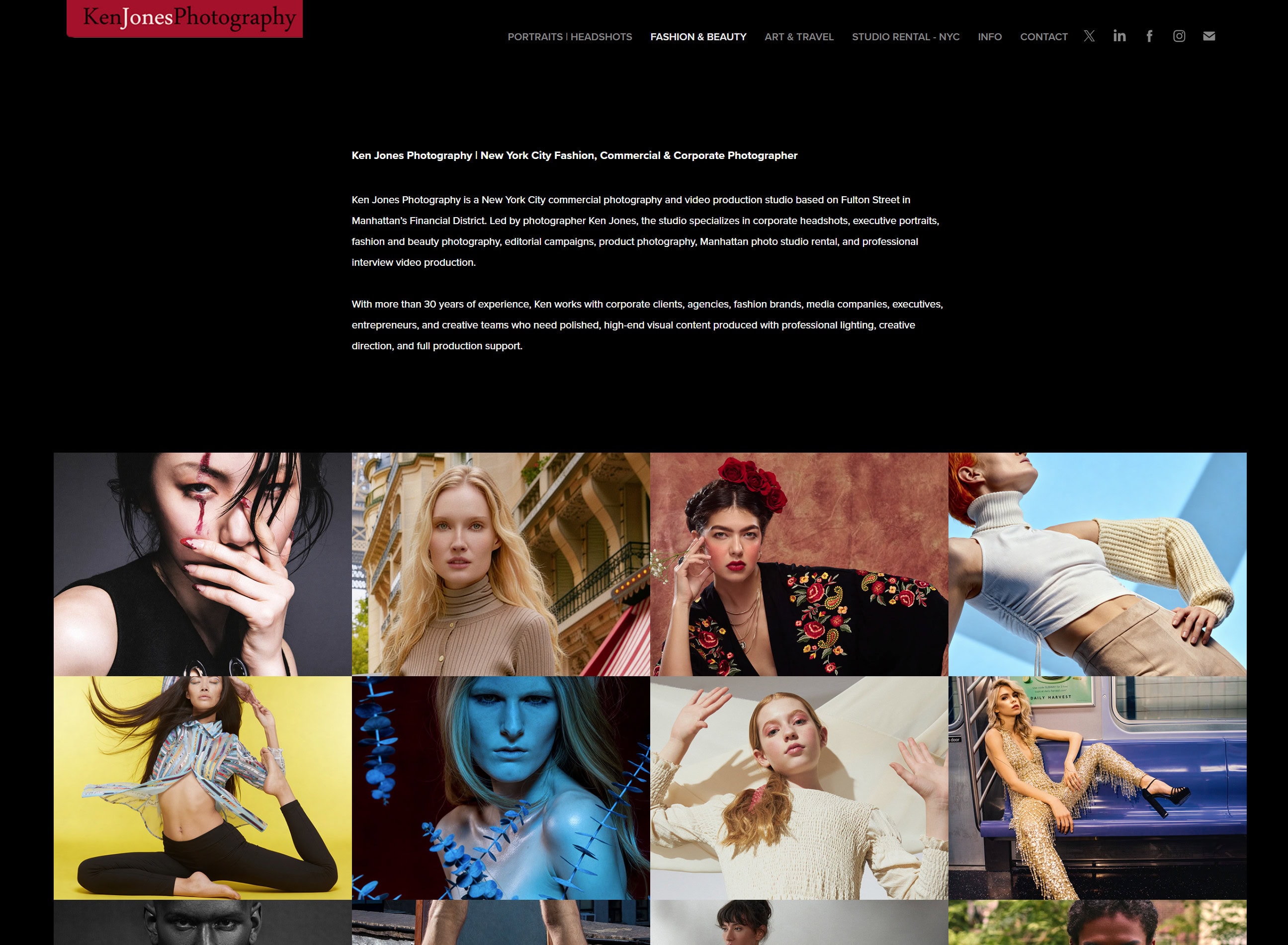
Kenjonesnyc has been producing fashion editorials, commercial campaigns, beauty imagery, and e-commerce photography from Manhattan’s Financial District for over 30 years. The studio offers full-service production capabilities including casting, styling coordination, location work, and studio rental for photographers and creative teams who need a professional space in New York City. Whether you’re developing your first luxury fashion editorial or scaling a high-volume product photography workflow, the team brings the process knowledge and creative depth to deliver results worth the investment. Contact Kenjonesnyc to discuss your next project.
FAQ
What are the three phases of a fashion photography shoot?
Every professional fashion shoot follows pre-production, shooting, and post-production phases. Pre-production covers planning, casting, and styling; the shoot covers lighting, posing, and direction; post-production covers editing, retouching, and delivery.
What lighting setup is standard for fashion shoots?
Two softboxes positioned at roughly 45-degree angles, placed 2 to 4 feet from the subject, are the standard starting point for studio fashion photography. Larger modifiers, 47 inches or more, are preferred for model work to create soft, even light across the face and garments.
How important is posing and movement in fashion photography?
Posing and movement are central to showing how clothing fits and behaves in real life. Dynamic shots like twirls, jumps, and mid-stride captures help viewers visualize wearing the garment, which is why experienced photographers actively direct models rather than waiting for natural movement.
What does fashion photo post-production involve?
Post-production includes culling selects, color correction, skin and fabric retouching, and batch processing for delivery. Color correction is the most impactful step, ensuring accurate fabric colors and consistent skin tones across all images in a set.
How is AI changing fashion photography workflows?
AI now handles high-volume product shoots by simulating physics-based lighting and materials rendering, allowing photographers to focus on creative editorial work. This is becoming standard practice among professionals who manage both routine product photography and high-end campaign shoots.
Recommended
- Fashion Photography Is More Than Clothes
- Why Lighting Defines Fashion Photography Results
- Ken Jones Photography | NYC Fashion, Beauty & Commercial Photographer | Manhattan Studio Rental – Fur and Lace Editorial | Luxury Fashion Photography
- Ken Jones Photography | NYC Fashion, Beauty & Commercial Photographer | Manhattan Studio Rental – Maid to Photograph | Nu-Mode Magazine Fashion Editorial