TL;DR:
- Photography is essential in public relations because it influences whether a story gets published. Effective PR photography requires early planning, a variety of assets, and tailoring to specific media outlets.
Photography in public relations is not a finishing touch. It is the foundation that determines whether a client’s story gets published at all. PR firms that understand how to use photography for clients build it into campaign planning from day one, treating visual assets with the same rigor as the pitch itself. A story without a strong photo often goes unpublished, because editorial teams expect print-quality images ready to run the moment they open your email.
The most effective PR photography programs share three qualities: they are planned early, they deliver a suite of varied assets rather than a single hero image, and they are tailored to the specific outlets being pitched. Here is what that looks like in practice:
- Photography is integrated at campaign planning, not after messaging is finalized
- Image suites cover multiple orientations, focal lengths, and detail levels for editorial flexibility
- Authentic, non-staged moments outperform polished but generic brand photography
- Visual storytelling has moved from a creative trend to a core performance metric in PR
- Ken Jones Photography produces editorial-ready imagery built for exactly this kind of media placement work
How PR firms use photography to strengthen client campaigns
PR teams that treat photography as a strategic tool, not a deliverable, consistently outperform those that commission images reactively. Integrating visual planning from the outset ensures that every image reinforces the campaign narrative rather than decorating it.
- Align visuals with the campaign narrative before the shoot. The brief should reference the story angle, the target outlets, and the tone, not just the product or subject.
- Deliver multi-orientation suites. Landscape for web features, portrait for social, square for press kits. Editors need options, and providing varied orientations simplifies their decision-making.
- Prioritize authentic moments over posed setups. Humanized, platform-specific visuals consistently improve audience engagement and campaign resonance.
- Coordinate photography with content marketing timelines. The same shoot that feeds a press release can supply social content, website updates, and a media kit if planned correctly.
- Study the target publication before the shoot. Pull three recent issues and note the image style, cropping patterns, and color palette. Then brief the photographer accordingly.
Pro Tip: Brief your photographer with the actual publication name and a mood board pulled from that outlet’s recent issues. A photographer who knows the visual language of Architectural Digest shoots differently than one briefed only on “luxury interiors.”
Types of photographic content PR firms rely on most
Different story angles require different visual categories. A well-structured image library covers all of them.
| Photo Type | Primary PR Use | Key Consideration |
|---|---|---|
| Executive headshots | Media profiles, bylines, speaker bios | Reflect the person’s actual role and personality |
| Team and culture shots | Company announcements, employer brand | Show real environments, not staged setups |
| Product in-situ | Launch coverage, trade press | Demonstrate real-world usage and scale |
| Event and behind-the-scenes | News coverage, social amplification | Capture authentic moments, not posed groups |
| Detail and abstract shots | Brand mood, visual consistency across channels | Support editorial cropping and overlay text |
Executive and team headshots build personal connection faster than any tagline. When a journalist writes a profile piece, they need a face, and an outdated or low-resolution headshot can quietly undermine an otherwise strong pitch. Product photography shot in context, showing the item in actual use, tends to outperform clean white-background shots for editorial placement because it tells a story within a single frame.
Behind-the-scenes images carry a specific kind of credibility. They signal transparency, and editors covering brand stories often reach for them when they want something that feels less produced. Detail shots, close-ups of texture, material, or craft, give designers and layout editors the flexibility to fill space without commissioning additional photography.
Production insights from 30+ years of NYC commercial shoots
Editorial-ready photography requires more than technical skill. It demands an understanding of how editors think, how pages are laid out, and where text will sit over an image. Negative space is not empty space. It is where the headline lives.
Negative space and narrative composition are the two most overlooked elements in PR photography briefs. PR teams frequently request images that are beautifully composed for a gallery wall but unusable for a magazine spread because there is nowhere to place a headline or caption.
Planning an annual master shoot is one of the most practical steps a PR firm can take for any long-term client. A single well-planned production day can build a year’s worth of consistent visual assets across every channel, avoiding the patchwork look that comes from sourcing images shoot by shoot. Ken Jones Photography approaches these productions with full creative direction, styling, and lighting coordination built in, so the resulting library holds together visually whether it runs in a trade publication or on a client’s LinkedIn page.

Briefing photographers with the intended media outlet and sharing visual references is the single most effective way to prevent unusable imagery. The mistake PR teams make most often is writing a brief that describes the brand rather than the destination. Where will this image actually appear? That question should drive every creative decision on set.
Pro Tip: On a multi-subject shoot, capture each person or product in at least three distinct setups: a wide environmental shot, a mid-range working shot, and a tight detail or portrait. That discipline alone triples the editorial utility of a single production day.
How to maximize photography across different media platforms
Platform context changes everything. An image that performs well on Instagram may be the wrong choice for a trade publication, and vice versa.
- Press kits need high-resolution files at 300 dpi minimum, with both landscape and portrait versions of every key image. Editors working on deadline cannot wait for resized files.
- Social media favors authentic, less polished imagery that feels native to the feed. Overly produced brand photography often underperforms against candid or behind-the-scenes content.
- Website and owned channels benefit from consistent visual branding, where color palette, lighting style, and subject framing stay coherent across every page.
- Earned media placements require images that match the visual language of the target outlet, not the brand’s own aesthetic preferences.
- Avoid over-reliance on stock photography. Editors recognize it immediately, and it signals that the brand has not invested in its own story.
Articles with images receive significantly more views than text-only content, and including multimedia assets with a press release can generate several times more engagement than a text-only release. Those figures make the case for treating photography as a media relations investment, not a production cost.
Actionable next steps for PR teams building a visual strategy
The firms that consistently land strong editorial placements share one habit: they treat photography as an ongoing program, not a one-time project.
- Start every new client engagement by auditing existing image assets for resolution, variety, and editorial usability
- Schedule a master shoot within the first 90 days to build a foundational library
- Write photographer briefs that name the target outlets and include visual references from those publications
- Maintain separate image libraries organized by orientation, subject, and resolution for fast media response
- Review image performance quarterly, tracking which assets generate the most pickup and engagement
Pro Tip: Keep a “media-ready” folder for each client with pre-cleared, high-resolution images organized by story angle. When a journalist emails at 4 PM needing assets by 5 PM, that folder is the difference between placement and a pass.
Consider working with NYC-based photography specialists who understand both the editorial standards of national media and the production realities of fast-moving PR campaigns.

Copyright and ethics in client photography
Usage rights are one of the most consistently mismanaged areas in PR photography. When a PR firm commissions images for a client, the default copyright in the United States belongs to the photographer unless a written agreement transfers or licenses those rights. That means using images beyond the agreed scope, running them in paid advertising when they were licensed for editorial use only, or sharing them with third parties without authorization, can create real legal exposure.
Model releases are equally important. Any image featuring a recognizable person requires a signed release before it can be used commercially. Event photography is a common area where this gets overlooked. A candid shot from a product launch may look perfect for a press kit, but without a release from the individuals pictured, its commercial use is restricted.
Ethical considerations extend beyond legal compliance. Authentic representation matters. Using heavily retouched or misleading imagery to misrepresent a product, a person, or a situation damages credibility when the reality does not match the image. Editors and journalists notice the gap, and so do audiences.
How PR teams and photographers collaborate effectively
The most productive photographer-PR relationships are built on specificity, not creative latitude. A photographer given a clear brief, target outlets, usage scope, and visual references will consistently deliver more usable work than one given a vague directive to “capture the brand.”
Effective collaboration starts before the shoot. PR teams should share the campaign brief, the story angles being pitched, and examples of imagery that has worked in the target publications. On set, having a PR team member present to approve selects in real time prevents the frustration of discovering after the fact that the wrong moments were captured. Post-production should include a review stage where the PR team confirms that final images meet editorial and technical specifications before delivery.
Understanding how PR photo shoots differ from editorial shoots helps both sides set realistic expectations and avoid costly reshoots.
Emerging photography trends PR teams should watch
360-degree product photography is gaining traction in PR, particularly for consumer product launches, because it creates an interactive experience that static images cannot replicate. Brands using 360-degree imagery report stronger audience engagement and reduced return rates, as buyers can assess a product from every angle before committing.
Short-form video is increasingly expected alongside still photography in press kits and media pitches. Outlets that once required only images now regularly request 30-to-60-second clips for digital and social use. PR teams that can deliver both from a single production day gain a clear efficiency advantage. Ken Jones Photography’s video production work reflects exactly this kind of integrated approach, combining still and motion assets within a single coordinated production.
Authentic, user-generated-style imagery continues to outperform polished brand photography on social platforms, pushing PR teams to commission content that feels native rather than produced. The challenge is maintaining brand quality standards while achieving that candid quality, which is where experienced creative direction makes the difference.
Key Takeaways
Photography integrated from the start of a PR campaign, built into a versatile multi-format library, and tailored to specific media outlets consistently outperforms imagery treated as an afterthought.
| Point | Details |
|---|---|
| Integrate photography early | Build visual assets into campaign planning before messaging is finalized, not after. |
| Deliver multi-format suites | Provide landscape, portrait, and detail options so editors can place images without additional sourcing. |
| Brief photographers specifically | Name the target outlet and share visual references to prevent unusable imagery. |
| Manage usage rights carefully | Confirm licensing scope and model releases before distributing any client images. |
| Treat photography as an ongoing program | Annual master shoots build cohesive libraries that support consistent media placement year-round. |
FAQ
Why do PR firms prioritize photography in client campaigns?
A story without a strong accompanying photo often goes unpublished, because editorial teams need ready-to-use images immediately. Photography shapes perception before a word is read and directly affects whether a pitch gets placed.
What types of photos work best for PR media placements?
Authentic, high-resolution images with both landscape and portrait orientations work best. Editorial teams need variety, including executive headshots, product-in-use shots, and behind-the-scenes images, all at 300 dpi minimum for print use.
How should PR teams brief photographers for client shoots?
Briefs should name the specific target publications, include visual references pulled from those outlets, define usage rights, and specify the story angles being pitched. Vague creative briefs produce images that serve the brand’s preferences rather than the media’s needs.
What are the most common copyright mistakes in PR photography?
Using images beyond the licensed scope, running editorial-licensed photos in paid advertising, and distributing images of recognizable individuals without signed model releases are the most frequent and costly errors.
How is video changing PR photography strategy?
Short-form video is now expected alongside still photography in press kits and media pitches. PR teams that plan integrated still-and-motion productions from a single shoot day deliver more complete media packages and increase their chances of placement across both print and digital outlets.
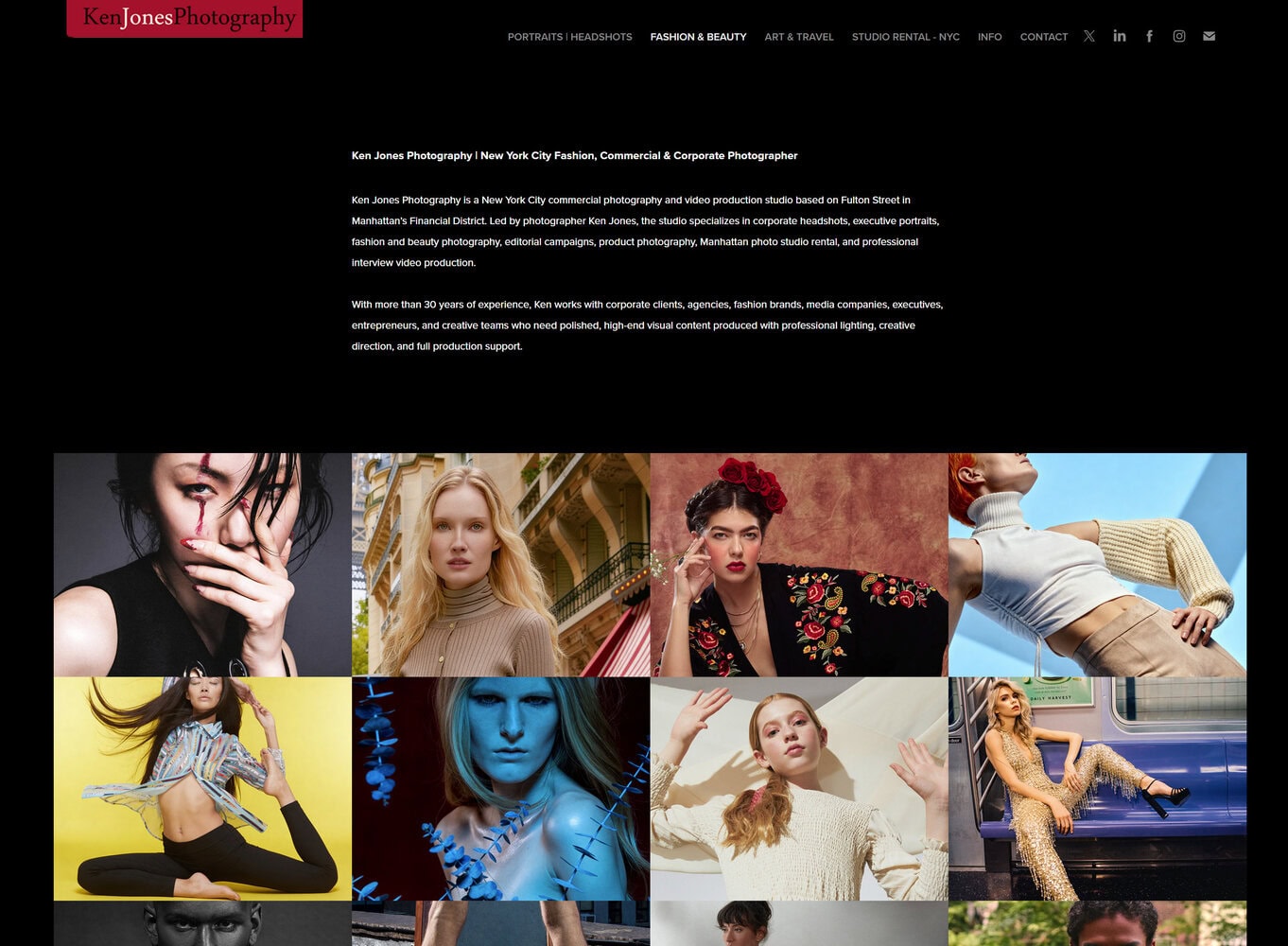
If you are building a visual strategy for a PR client and need editorial-grade imagery produced in New York City, Ken Jones Photography works with PR firms to plan and execute shoots that deliver media-ready assets from day one. The fashion photography portfolio at KenJonesNYC reflects the editorial quality and production discipline that PR campaigns require. Reach out at kenjonesnyc.com to discuss your next production.