

TL;DR:
- Renting a photography studio in NYC requires thorough planning, including confirming availability, understanding costs, and selecting the right space type. It involves evaluating detailed policies on equipment, overtime, and location logistics to ensure a smooth shoot. Advanced booking and clear communication help avoid costly mistakes and optimize your project outcome.
Renting a photography studio in NYC is defined as securing a professionally outfitted space with the right lighting setup, square footage, and equipment to produce commercial-grade photography work. The process involves evaluating availability, pricing structures, equipment inclusions, studio type, and cancellation policies before committing to a booking. Studios like Nula Studios, Peerspace, and FD Photo Studio each represent distinct points on the NYC rental spectrum, from budget-friendly hourly spaces to full-service production environments. This guide walks you through every step of finding, comparing, and booking the right studio for your project, whether you’re producing a fashion editorial, corporate headshots, or a product campaign.
How to rent a photography studio in NYC: finding and checking availability
The most reliable starting point for any NYC studio search is a combination of curated directories and direct outreach. Circular Studios maintains a directory of 1,573 studios nationwide, filterable by city, making it one of the fastest ways to generate a shortlist of Manhattan and Brooklyn options. Google Maps searches using terms like “photography studio rental NYC” surface real-time business listings with reviews, photos, and direct contact information. Instagram hashtag searches, particularly tags like #nycphotostudio or #brooklynstudio, show recent shoots and give you a ground-level view of actual production quality that polished listing photos often hide.
Once you have a shortlist, confirming exact date and time availability is the step most renters skip too quickly. Studios in NYC typically rent by the hour with minimum booking blocks of two to four hours, and availability windows can close faster than you expect. Booking lead times matter significantly here. Weekday bookings generally require two to four weeks of advance planning, while weekend slots at sought-after studios often need four to eight weeks of lead time. If you’re targeting a specific studio for a Saturday fashion shoot, reaching out six weeks ahead is not excessive.
When contacting studios directly, ask three things immediately: whether the date is available, what the minimum booking block is, and whether setup and teardown time count against your rental hours. Many renters assume a four-hour booking means four hours of shooting. It does not. Setup, lighting adjustments, and client arrival time all eat into that window, and studios charge overtime the moment you go past your confirmed end time.
Here are the most effective channels for finding and confirming NYC studio availability:
- Circular Studios directory: Filter by NYC location, studio type, and amenities for a curated shortlist.
- Peerspace: Real-time availability calendar with instant booking on many listings, useful for quick turnarounds.
- Google Maps: Search “photography studio rental NYC” to surface local options with verified reviews.
- Instagram hashtags: Tags like #nycphotostudio reveal actual shoot results and recent studio use.
- Direct studio websites: Always cross-check availability by phone or email, even after checking an online calendar.
What does renting a studio in NYC actually cost?
NYC photography studio pricing is not a single number. Studios average about $79 per hour across the city, but that figure covers an enormous range. Budget spaces in outer boroughs can start at $25 per hour, while premium Manhattan lofts with full equipment packages run $150 per hour or more. The average booking on Peerspace involves roughly four hours and five people, which means a realistic mid-range session lands between $300 and $600 before any add-ons.
The real cost of renting a studio is almost always higher than the listed hourly rate. Equipment packages, including strobes, modifiers, and backdrops, frequently carry extra fees of $50 to $150 on top of the base rate. Some studios, like Nula Studios, include lighting equipment in the base hourly rate, which simplifies budgeting considerably. Others itemize everything, and by the time you add a backdrop, a strobe kit, and a reflector, you’ve added $100 to $200 to your bill without realizing it.
Overtime is the fee that catches the most people off guard. Studios commonly charge $100 per hour for any time beyond your confirmed booking window. A shoot that runs 30 minutes over can still trigger a full overtime hour charge depending on the studio’s policy. Deposits are standard, and some studios require proof of liability insurance, particularly for larger productions with multiple crew members.
| Cost factor | What to expect |
|---|---|
| Base hourly rate | $25 to $150+ per hour depending on location and studio quality |
| Equipment packages | $50 to $150 extra; some studios include gear in base rate |
| Overtime fees | Commonly $100 per hour beyond confirmed booking window |
| Deposits | Standard practice; amount varies by studio and shoot type |
| Insurance requirements | Required by some studios for productions with larger crews |
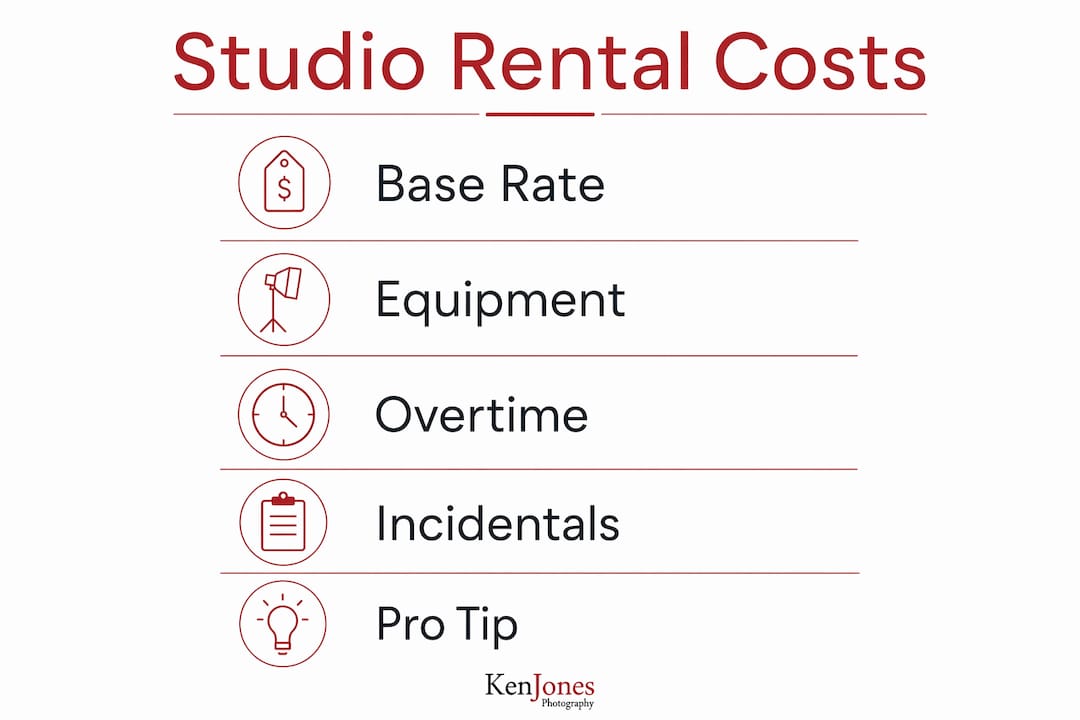
Pro Tip: Budget for 20% above the listed hourly rate to account for equipment fees, overtime risk, and incidentals. Peerspace advises building a realistic cost range rather than assuming the lowest listed price covers your full production needs.
What types of photography studio spaces are available in NYC?
The type of studio you choose directly determines what you can produce on shoot day. NYC offers three primary studio environments, and each serves a different creative purpose.
Daylight studios are loft-style spaces with large windows or skylights that provide soft, directional natural light. These spaces work well for fashion, lifestyle, and portrait shoots where a clean, organic look is the goal. The tradeoff is that natural light is not consistent. Cloud cover, time of day, and season all affect the quality and direction of light, which means daylight studios require more adaptive lighting judgment on set.
Blackout studios are the opposite. FD Photo Studio, which operates multiple NYC locations, offers blackout spaces with zero ambient light bleed starting at around $34.99 per hour. Black walls, ceilings, and floors give you total control over every photon in the room. This environment is ideal for composite work, dramatic beauty lighting, product photography with controlled gradients, and any shoot where ambient light would compromise the final image. Post-production becomes significantly easier when you’re not fighting light contamination from windows.
Cyc wall studios feature a seamless curved wall that eliminates the corner where the floor meets the wall, creating an infinite background effect. These spaces are the standard choice for fashion catalog work, e-commerce product photography, and video content that requires a clean, uninterrupted background. A well-maintained cyc wall saves hours of retouching time.
Beyond studio type, square footage matters more than most renters anticipate. Portrait and headshot sessions work comfortably in spaces starting at 400 square feet. Fashion shoots with multiple looks, a full styling team, and a client area need 600 square feet or more. Productions involving large props, vehicles, or set builds require 1,000 square feet and up. Practical considerations like parking availability, freight elevator access, and proximity to subway lines also affect how smoothly a shoot day runs, particularly when you’re moving equipment or coordinating a crew.
Additional amenities worth checking include:
- Dressing rooms and makeup stations: Non-negotiable for fashion and beauty shoots with talent.
- Kitchen or catering area: Relevant for full-day productions where crew and clients need a break space.
- Private entrance: Useful for corporate clients or talent who prefer discretion.
- Loading dock or street-level access: Critical when moving large equipment or set pieces.
How to book a photography studio in NYC step by step
Booking a studio in NYC follows a clear sequence, and skipping any step creates problems on shoot day.
-
Define your shoot requirements first. Know your crew size, equipment needs, shoot duration including setup and teardown, and any special materials you plan to use before contacting a single studio. This information determines which studios are even viable options.
-
Contact your shortlisted studios with specific questions. Ask whether setup and teardown time are included in the rental hours, what equipment is included in the base rate, what the cancellation and rescheduling policy is, and whether the studio requires proof of liability insurance. Vague answers at this stage are a warning sign.
-
Use online booking platforms for speed when appropriate. Nula Studios and similar venues offer 3 to 5 minute online booking with instant confirmation and self-service access codes. For straightforward bookings where you already know the studio, this process removes the back-and-forth entirely.
-
Confirm the booking in writing. Whether you book online or by phone, get a written confirmation that specifies the date, start and end time, included equipment, total cost, and cancellation terms. This protects you if there is any dispute on shoot day.
-
Send a confirmation email 48 hours before the shoot. Restate your arrival time, crew size, and any special requirements. This step catches scheduling errors before they become expensive problems and signals to the studio that you are a professional who respects their space.
-
Arrive early and document the studio’s condition. Photograph the space before you begin shooting. If there is existing damage to a cyc wall or equipment, you want that documented before your session starts.
Pro Tip: Disclose any plans to use powder, glitter, oils, or non-water-based fog machines before you book. Nula Studios lists penalties up to $500 for undisclosed use of certain materials, and similar policies exist at studios across NYC. A quick disclosure call saves you from a very unpleasant invoice.
The most common booking mistakes are predictable and avoidable. Underestimating time needs is the most frequent. Renters book four hours, arrive 30 minutes late, spend 45 minutes on setup, and suddenly have two and a half hours of actual shooting time. Ignoring the fine print on overtime, deposits, and occupancy limits is the second most common error. And last-minute bookings, anything inside two weeks for a weekend slot, often mean paying premium rates or settling for a studio that does not fit the project.
Key takeaways
Renting a photography studio in NYC requires advance planning, specific questions about inclusions and policies, and a clear understanding of your project’s space and equipment needs before you commit to any booking.
| Point | Details |
|---|---|
| Book well in advance | Weekend slots in NYC require 4 to 8 weeks of lead time at quality studios. |
| Ask what’s included | Equipment packages add $50 to $150; some studios include gear in the base rate. |
| Match studio type to project | Daylight, blackout, and cyc wall studios each serve different creative needs. |
| Budget beyond the hourly rate | Overtime, deposits, and insurance can add 20% or more to your total cost. |
| Confirm everything in writing | Written confirmation of time, inclusions, and policies prevents shoot-day disputes. |
What 30 years of NYC studio rentals actually taught me
The single most expensive mistake I see creative professionals make when renting a studio in NYC is not the one you’d expect. It is not choosing the wrong neighborhood or underestimating square footage. It is assuming that the hourly rate is the whole story.
Early in my career, I booked a studio in Midtown for a fashion client. The rate looked reasonable, the space photographed well online, and I confirmed the date. What I did not read carefully enough was the overtime clause. The shoot ran long because the client wanted additional looks, and we went 90 minutes over our window. The studio charged $100 per hour, billed in full-hour increments. That oversight cost the client $200 that was not in the budget and created an awkward conversation I did not need on a production day. I have read every overtime clause in every studio contract since then.
The second lesson is about location, and it goes beyond just “pick something near a subway.” In NYC, the difference between a studio in the Financial District and one in Long Island City is not just geography. It affects how easily your client can get there, whether your stylist will show up on time, and how quickly you can get a courier to bring a replacement prop if something breaks. Studios close to major transit hubs reduce the logistical friction that quietly derails shoots. I have seen productions lose an hour simply because half the crew could not find parking or navigate a freight elevator that required a key from a building super who was not on site.
My honest advice: do not book a studio based on the photos alone. Visit in person if the project budget justifies it, or at minimum, call and ask the studio manager to walk you through a typical shoot day. The studios that handle that conversation well are the ones that handle shoot day well. The ones that seem annoyed by the question are telling you something important.
Local knowledge also matters in ways that no online directory captures. Certain buildings in SoHo and Tribeca have loading restrictions that affect equipment delivery. Some studios in Brooklyn have freight elevators that are shared with other tenants and unavailable during certain hours. These details do not appear in listings, but they determine whether your shoot day runs smoothly or not.
— Ken
Book your Manhattan studio shoot with Kenjonesnyc
Kenjonesnyc operates a professional photography studio in Manhattan’s Financial District, offering prime studio rental with full equipment packages and flexible scheduling for fashion, beauty, commercial, and corporate productions.
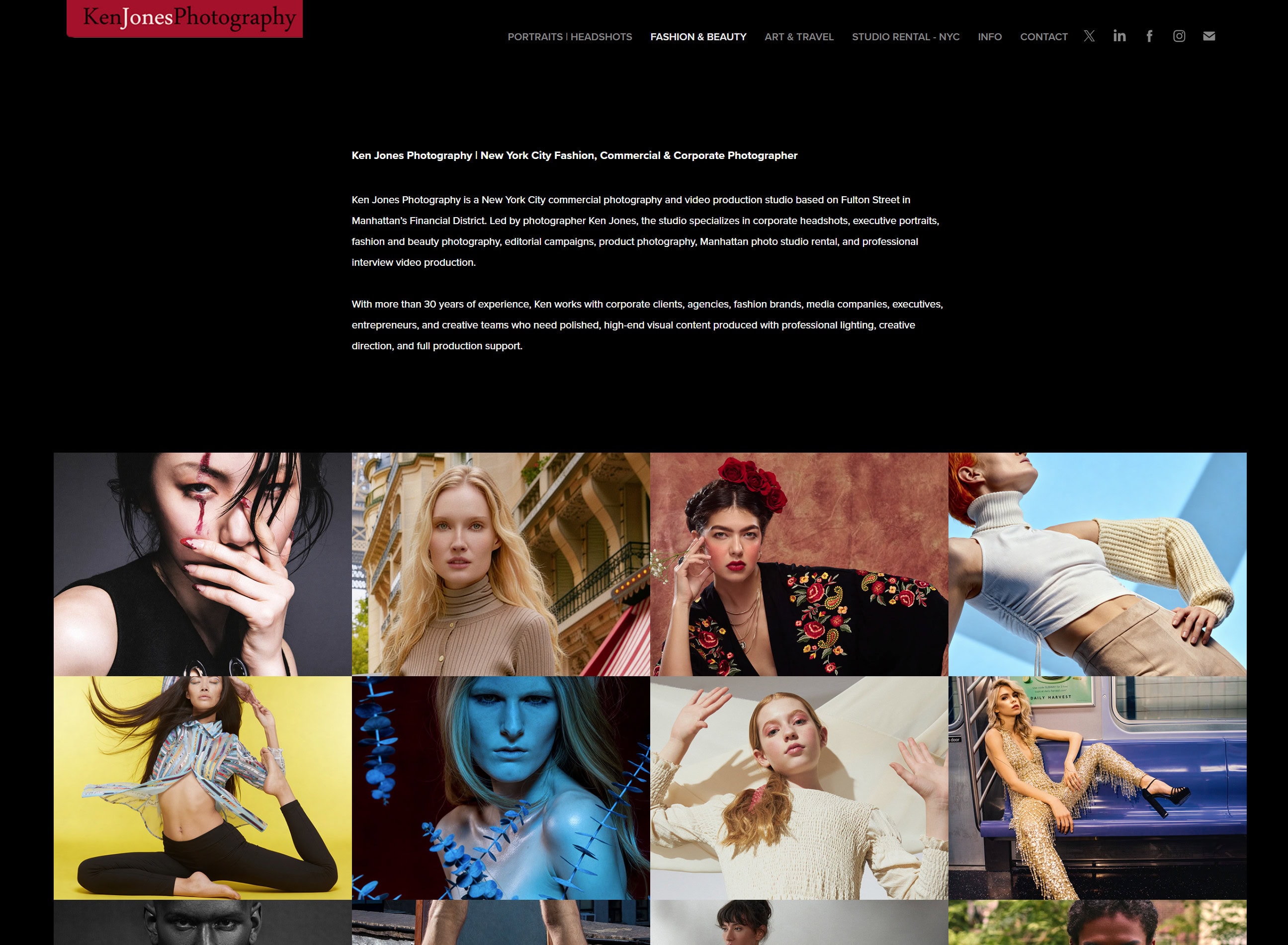
The studio’s Manhattan studio rental includes professional lighting setups, backdrops, and the kind of production support that comes from 30 years of working commercial shoots in New York City. Whether you’re producing a fashion editorial or a series of corporate headshots, the space and expertise are ready for your project. Reach out through kenjonesnyc.com to discuss your shoot requirements and confirm availability.
FAQ
How much does it cost to rent a photography studio in NYC?
NYC photography studios average about $79 per hour, with rates ranging from $25 to $150 or more depending on location, studio quality, and included equipment. Budget an additional 20% for equipment fees, overtime risk, and deposits.
How far in advance should I book a studio in NYC?
Weekday bookings typically require two to four weeks of lead time, while weekend slots at quality NYC studios often need four to eight weeks of advance planning. Last-minute bookings risk premium pricing or limited availability.
What is a blackout studio and when do I need one?
A blackout studio features black walls, ceilings, and floors that create zero ambient light bleed, giving photographers complete control over lighting. These spaces are best for composite work, dramatic beauty shoots, and product photography where ambient light would compromise the final image.
What should I ask a studio before booking?
Ask whether setup and teardown time count against your rental hours, what equipment is included in the base rate, what the overtime fee is, and whether the studio requires liability insurance. Clarifying inclusions upfront is the most effective way to control your total rental cost.
Are there penalties for using special materials like glitter or fog machines?
Yes. Studios like Nula Studios enforce penalties up to $500 for undisclosed use of certain materials including non-water-based fog, powder, and oils. Always disclose planned use of any messy or potentially damaging materials before confirming your booking.
Recommended
- Ken Jones Photography | NYC Fashion, Beauty & Commercial Photographer | Manhattan Studio Rental – Studio Rental – NYC
- Top 3 Fine Arts Nude Providers 2026
- Why NYC-Based Photography Elevates PR Clients
- Ken Jones Photography | NYC Fashion, Beauty & Commercial Photographer | Manhattan Studio Rental – Celebrity Portrait Photography NYC – Editorial & PR