
TL;DR:
- Choosing the right Manhattan photography studio depends on matching technical features and privacy to your project’s needs.
- Control over lighting, backgrounds, and equipment significantly impacts shoot efficiency and final quality.
A photography studio is a dedicated, controlled space built to meet the technical and creative demands of professional photo production. In Manhattan, the right studio for photography can determine whether a fashion editorial, corporate headshot session, or beauty campaign lands exactly as planned or falls apart on shoot day. The best studios offer controlled lighting, professional backdrops, and the kind of infrastructure that lets a creative team focus entirely on the work. Kenjonesnyc, based in Manhattan’s Financial District, has spent over 30 years navigating these decisions for high-end fashion, commercial, and editorial clients. This guide shares what actually matters when you rent a professional photography space in New York City.
What does a studio for photography actually include?
A photography studio, known in the industry as a photo production studio or rental studio, is more than four walls and a white backdrop. The term covers a wide range of spaces, from compact one-room setups designed for portrait sessions to large loft environments with cyclorama walls, Profoto lighting systems, makeup stations, and freight elevator access. The defining feature is control: control over light, background, temperature, and workflow.
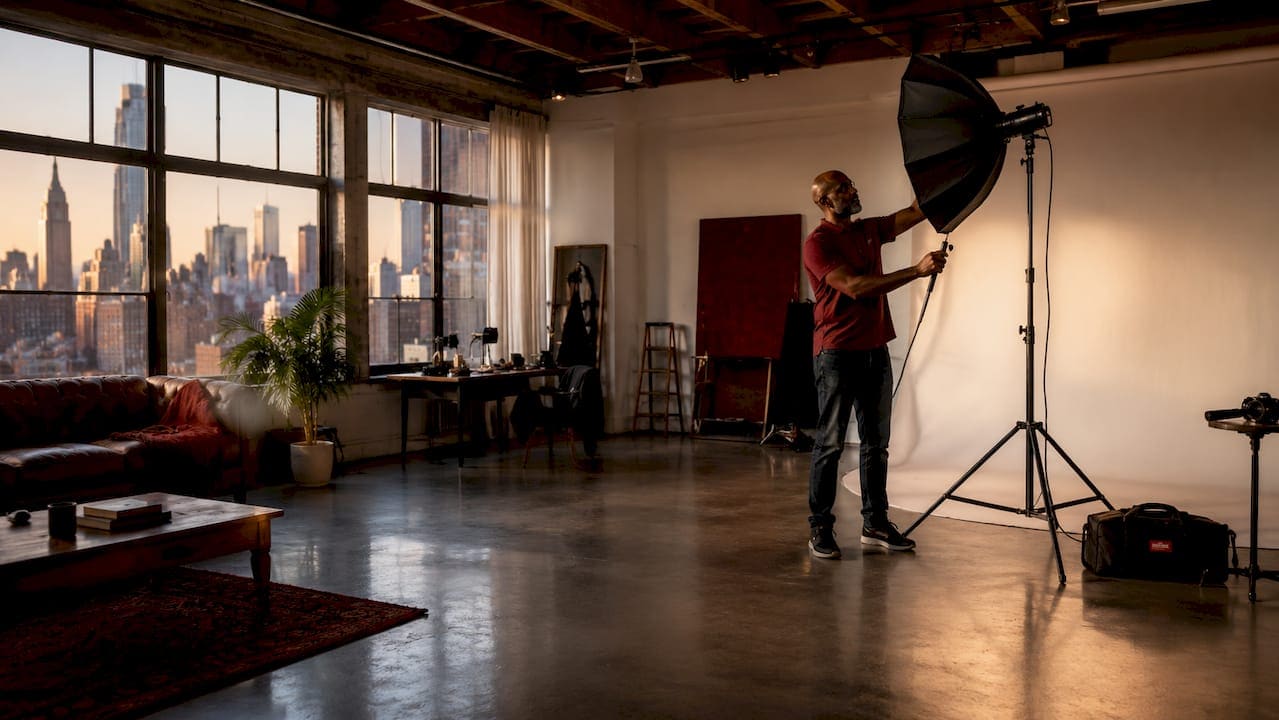
Manhattan studios built for high-end work typically include a cyclorama wall (a seamless curved background that eliminates corner shadows), dedicated lighting rigs, and client areas separate from the shooting floor. Studios used for fashion editorials, beauty campaigns, and advertising work also provide glam stations where hair and makeup teams can work without crowding the set. These are not luxury extras. They are production necessities that directly affect how efficiently a shoot runs.
Understanding the difference between a basic rental space and a fully equipped production studio matters before you book. A space with folding tables and a paper roll is not the same as a studio with a maintained cyc wall, blackout curtains, and a gear inventory that matches your shot list.
How much does photography studio rental in Manhattan cost?
Photography studio rental rates in Manhattan vary widely based on square footage, equipment inclusions, and location within the borough. Studio rates range from $45 to $200+ per hour in 2026, with premium spaces running $110–$130 per hour on weekdays and adding 15–20% on weekends. That range reflects real differences in what you get.
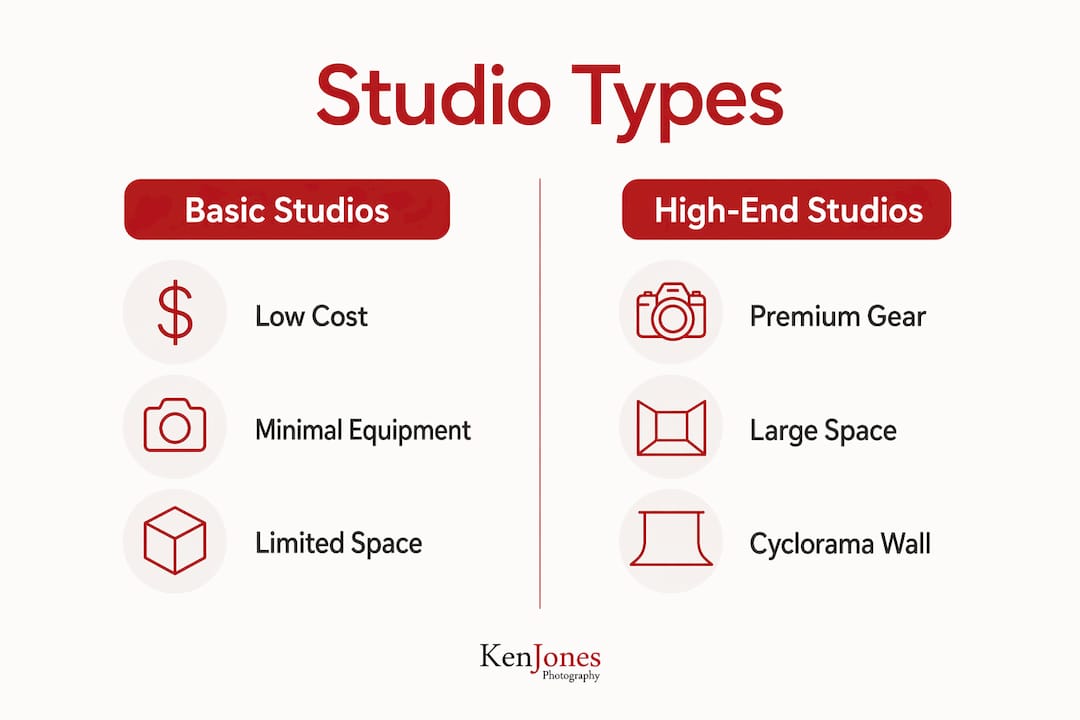
A basic studio at the lower end of the range may offer a single backdrop, basic strobe lighting, and limited amenities. A premium 3,000 square foot studio with a cyclorama wall, Profoto lighting, a glam station, and a client lounge sits at the higher end. The gap between those two experiences on a shoot day is significant. Spending $80 per hour on a space that costs your team an extra two hours in setup and post-production is not actually saving money.
Booking minimums and payment terms
Large commercial studios often require a six-hour minimum booking for penthouse or full-floor spaces, while smaller studios may accept a one-hour minimum for portrait sessions. Most Manhattan studios require full payment at booking, not on arrival. Cancellation policies vary, but 48–72 hours notice is the standard window for a partial refund.
Half-day and full-day packages consistently offer better value than hourly rates for shoots running four hours or more. Booking a weekday slot instead of a Saturday can save 15–20% on the same space. For corporate headshot days or multi-look fashion shoots, that difference adds up quickly.
| Studio type | Typical hourly rate | Minimum booking | Best for |
|---|---|---|---|
| Basic portrait studio | $45–$70/hr | 1–2 hours | Headshots, small product shoots |
| Mid-range loft studio | $75–$110/hr | 3–4 hours | Editorial, e-commerce, small fashion |
| Premium cyc wall studio | $110–$130/hr | 4–6 hours | Fashion campaigns, beauty, commercial |
| Large penthouse/loft | $150–$200+/hr | 6 hours | Full production, advertising campaigns |
Pro Tip: Book your studio on a Tuesday or Wednesday. Weekday midweek slots are the least competitive in Manhattan and often carry no weekend premium. For a six-hour shoot, that single decision can save several hundred dollars.
Which technical features matter most for high-end shoots?
The technical specifications of a studio define what you can actually produce inside it. Square footage is the starting point. A 1,500 square foot studio works for a two-person headshot session. A fashion editorial with a stylist, hair and makeup team, photographer, and two models needs at minimum 2,500 square feet to function without constant interference between departments.
Cyclorama wall quality is the single most important technical feature for fashion and beauty work. A well-maintained cyc wall reduces post-production time by 30–50% because the seamless background requires minimal masking or compositing in retouching. A poorly maintained cyc with cracks, scuffs, or uneven paint adds hours of retouching cost to every image. Ask to see photos of the cyc before you book, not just the studio’s marketing shots.
Lighting, Wi-Fi, and amenities
The lighting infrastructure in a studio affects both image quality and setup time. All-inclusive lighting kits save 45–60 minutes of setup time compared to sourcing equipment separately. Studios that include Profoto or Broncolor strobes, softboxes, and beauty dishes in the rental rate give your team a significant time advantage. Studios that offer only bare-bones hardware force you to rent additional gear, which adds cost and logistics.
High-speed Wi-Fi matters more than most clients realize. Tethered shooting, where the camera feeds directly to a laptop or client monitor in real time, requires a stable connection. Dropped signals during a tethered session interrupt creative direction and slow the shoot. Confirm the studio’s upload speed before booking if tethering is part of your workflow.
Key technical features to confirm before booking:
- Cyclorama wall: Check dimensions, condition, and whether the curve is maintained at floor and ceiling
- Lighting inventory: Confirm specific brands, modifiers, and power packs included in the rate
- Makeup and changing stations: Separate glam areas keep the shooting floor clear and protect the team’s workflow
- Natural light and blackout options: Studios with both give you scheduling flexibility and consistent results regardless of weather
- Wi-Fi speed: Verify upload speed for tethered shooting and client review
- Freight elevator or ground floor access: Critical for moving grip equipment, lighting stands, and wardrobe racks
Single-tenant, private studios are the standard for high-end fashion and corporate work. Shared spaces risk overlapping bookings, noise bleed, and competition for amenities. For sensitive productions, including celebrity portraits, luxury brand campaigns, or executive headshots, privacy is not optional.
Pro Tip: Ask the studio for a full gear inventory sheet before you commit. Not a general description. An actual list with model numbers. Equipment omissions discovered on shoot day cause delays and force last-minute rentals at premium rates.
How do different studio types compare for various projects?
Not every studio setup suits every project. The choice between a natural light studio, a cyclorama wall studio, and a large loft or penthouse space should follow directly from your shot list, not from price alone.
Natural light studios produce a distinctive, editorial aesthetic that works well for lifestyle brands, beauty editorials, and portrait work. The limitation is consistency. Cloud cover, time of day, and season all affect the quality and direction of available light. A shoot planned around window light at 10 a.m. looks different at 2 p.m. Studios that offer both daylight access and blackout curtains solve this problem by giving the photographer control over when and how natural light enters the frame.
Cyclorama wall studios are the workhorse of commercial and fashion photography. The seamless background works for full-length fashion, product photography, e-commerce catalogs, and beauty close-ups. The cyc eliminates the need to composite backgrounds in post, which saves time and retouching budget. For advertising campaigns and lookbooks where consistency across dozens of images matters, a cyc wall studio is the most efficient choice.
Large loft and penthouse spaces offer raw square footage and architectural character. Exposed brick, high ceilings, and open floor plans create visual texture that works for editorial fashion and lifestyle content. These spaces typically require more lighting setup because the environment is less controlled than a dedicated studio. They also tend to have longer minimum bookings and higher rates.
| Studio type | Best for | Key advantage | Key limitation |
|---|---|---|---|
| Natural light studio | Lifestyle, beauty, portraits | Organic aesthetic, low setup time | Inconsistent light, weather-dependent |
| Cyclorama wall studio | Fashion, e-commerce, advertising | Seamless background, fast post-production | Less architectural character |
| Large loft/penthouse | Editorial fashion, lifestyle campaigns | Visual texture, generous square footage | Higher cost, more lighting setup required |
| Rooftop access studio | Seasonal editorial, outdoor lifestyle | Location variety without leaving the building | Weather-dependent, limited scheduling windows |
Studios with rooftop access add creative flexibility for seasonal editorial work and lifestyle campaigns. Rooftop access gives a production team an outdoor option without the logistics of a full location shoot. The trade-off is weather dependency and limited scheduling windows, particularly in Manhattan where rooftop permits and building policies vary.
For corporate headshots, the priority is a controlled, neutral environment with consistent lighting. A mid-range studio with a clean backdrop, a reliable strobe kit, and a makeup station handles most executive portrait sessions efficiently. You do not need a 3,000 square foot cyc wall studio for a headshot day.
What practical steps make a Manhattan studio rental run smoothly?
The difference between a smooth shoot day and a chaotic one often comes down to preparation made before you arrive at the studio. These steps apply whether you are booking a half-day portrait session or a full-day fashion production.
-
Confirm the gear inventory in writing. Request a detailed equipment list before signing the booking agreement. Verify that every piece of equipment your shot list requires is included in the rental rate. If it is not, factor the additional rental cost into your budget before committing.
-
Build in setup and teardown time. Studios typically require 30-minute buffers before and after sessions for setup and breakdown. Booking a six-hour session and planning six hours of shooting leaves no margin. Book the time you actually need, including the buffer, or you will pay overtime rates.
-
Verify access logistics before shoot day. Confirm self-check-in procedures, building security requirements, parking availability, and whether the studio has a freight elevator or ground floor access. Freight elevator access saves 1–2 hours on a shoot day by eliminating the process of moving heavy grip equipment through standard building elevators.
-
Prioritize private, single-tenant studios for sensitive productions. Shared studio environments introduce unpredictable variables: noise, competing crews, and limited access to amenities. For luxury brand campaigns, celebrity portraits, or executive headshot days, book a space where your team has the entire floor.
-
Plan for weather if the studio includes outdoor elements. Rooftop access and outdoor areas are valuable creative assets, but they require a contingency plan. Confirm with the studio whether outdoor time can be rescheduled or whether the indoor space functions as a standalone fallback.
A common mistake in Manhattan productions: a creative team books a studio based on the marketing photos, arrives to find the cyclorama wall has not been repainted in months, and loses the first hour of the shoot to problem-solving. Visiting the studio in person before a major booking, or requesting recent unedited photos of the cyc and shooting floor, prevents that situation entirely.
Pro Tip: For any shoot involving wardrobe changes, confirm that the changing area is genuinely separate from the shooting floor. A curtain in the corner of the main room is not a changing station. It disrupts the set and slows the shoot.
Key takeaways
Choosing the right Manhattan photography studio requires matching the space’s technical specifications, privacy level, and logistical setup to the specific demands of your project.
| Point | Details |
|---|---|
| Match studio type to project | Cyc wall studios suit fashion and e-commerce; lofts work for editorial; natural light fits lifestyle and beauty. |
| Budget for total time, not just shoot time | Factor setup, teardown, and buffer time into your booking to avoid overtime charges. |
| Confirm gear inventory before booking | Request a written equipment list to prevent costly last-minute rentals on shoot day. |
| Prioritize private studios for sensitive work | Single-tenant spaces protect production privacy and give your team dedicated access to all amenities. |
| Freight access saves real time | Ground floor or freight elevator access can recover 1–2 hours of productive shoot time. |
What 30 years of Manhattan shoots taught me about studio selection
After three decades of shooting fashion, beauty, and corporate work across Manhattan, I have made every studio mistake worth making. I have booked spaces that looked perfect in photos and arrived to find a cyc wall that had not been touched in a year. I have watched a full production team lose 90 minutes because the building had no freight elevator and the grip cases had to go up one at a time in a residential elevator.
The lesson I keep coming back to is this: the studio is not a backdrop. It is infrastructure. When the infrastructure works, the creative team focuses on the work. When it does not, everyone spends the day managing logistics instead of making images.
Budget pressure is real, and I understand the instinct to find an affordable photo studio and redirect savings toward talent or post-production. But there is a floor below which the savings stop being savings. A studio that costs $30 per hour less but adds two hours of setup time and forces you to rent additional lighting is not a deal. It is a transfer of cost from the line item you can see to the ones you cannot.
The other thing I have learned is that location within Manhattan matters less than clients expect. A studio in the Financial District or Midtown that has the right technical setup, private access, and a maintained cyc wall will outperform a trendier address with half the infrastructure. Your clients see the images, not the neighborhood. Make decisions based on what serves the work.
For fashion photography specifically, the studio choice shapes the entire visual language of the project. A well-lit cyc wall with Profoto strobes and a clean shooting floor gives a fashion team the freedom to move, experiment, and iterate. That freedom shows up in the final images.
— Ken
Kenjonesnyc: Manhattan studio rentals built for serious productions
Kenjonesnyc operates from Manhattan’s Financial District with over 30 years of experience producing high-end fashion, beauty, commercial, and corporate imagery. The studio handles full-service productions including casting, styling, creative direction, and studio rental for fashion brands, modeling agencies, and corporate clients who need results, not guesswork.
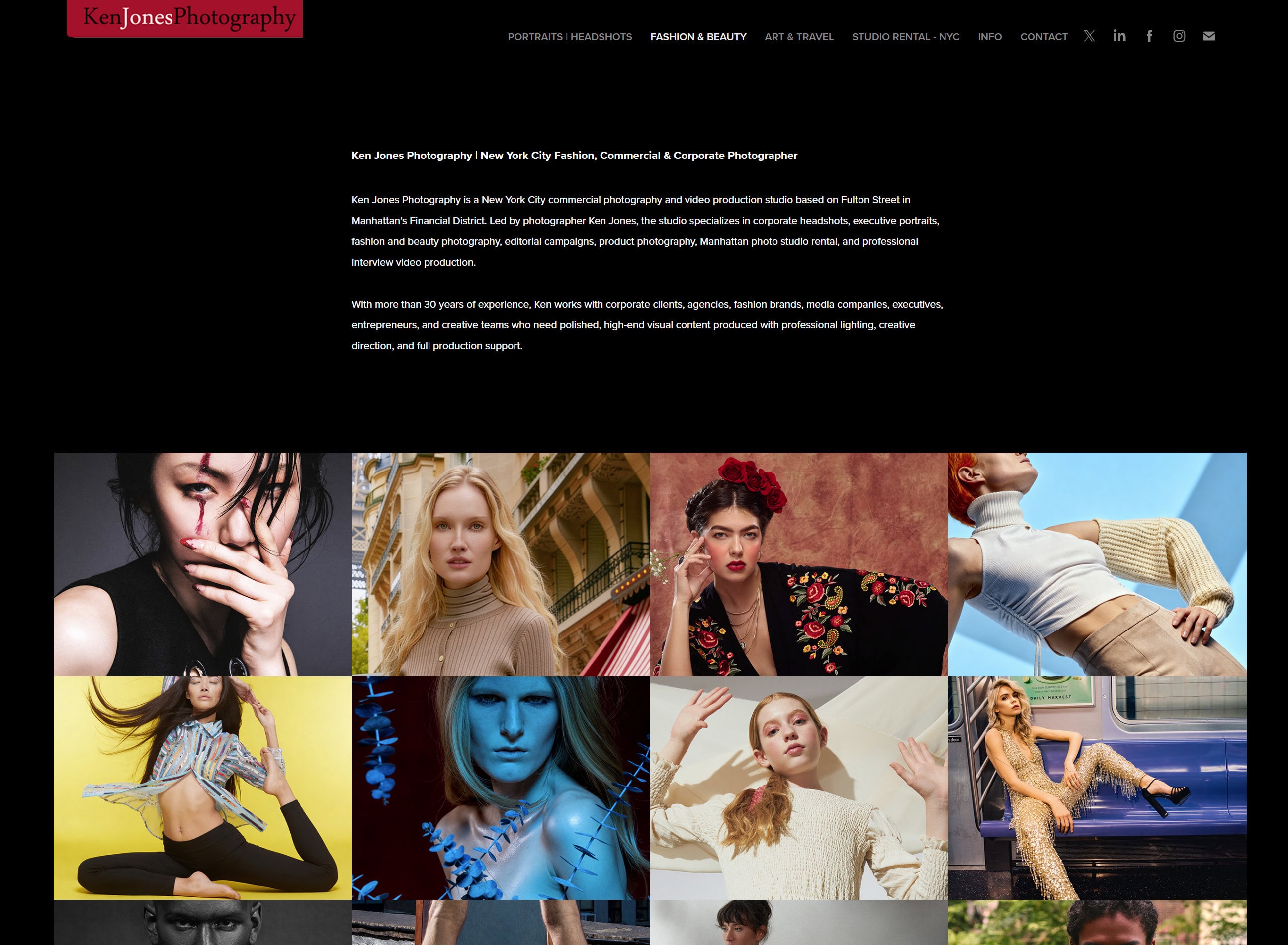
Whether you need a controlled environment for a luxury fashion editorial, a clean setup for corporate headshots, or a full production space for an advertising campaign, Kenjonesnyc offers the technical infrastructure and production experience to match. The studio’s portfolio spans editorial work photographed globally, beauty campaigns, designer lookbooks, and e-commerce content. Reach out through kenjonesnyc.com to discuss your project and find the right setup for your next shoot.
FAQ
What is included in a typical photography studio rental?
A standard photography studio rental includes a shooting space, backdrop system, and basic lighting equipment. Premium studios add cyclorama walls, Profoto or Broncolor strobes, makeup stations, client areas, and high-speed Wi-Fi.
How much does renting a studio in Manhattan cost per hour?
Manhattan photography studio rental rates range from $45 to $200+ per hour depending on square footage, equipment, and location. Weekday bookings typically cost 15–20% less than weekend rates for the same space.
What is a cyclorama wall and why does it matter?
A cyclorama wall is a seamless curved background that eliminates corner shadows and creates a clean, infinite-looking backdrop. A well-maintained cyc wall reduces post-production retouching time by 30–50%, which directly lowers overall project cost.
How far in advance should I book a Manhattan photography studio?
For large commercial or fashion productions, booking two to four weeks in advance is standard in Manhattan. High-demand studios fill quickly on weekends and during fashion week periods in february and september.
What is the biggest mistake clients make when renting a studio?
The most common mistake is booking based on marketing photos without confirming the gear inventory and cyc wall condition in person. Equipment gaps and poorly maintained spaces discovered on shoot day cause delays and unplanned costs that exceed any savings from choosing a cheaper studio.