

TL;DR:
- Fashion photography builds brand value by visually conveying quality and identity before other messages reach consumers.
- Consistent, high-quality imagery enhances recognition, reduces returns, and fosters trust through visual cohesion.
Fashion photography is the strategic use of imagery that directly builds brand value by defining a brand’s visual identity and shaping consumer trust before a single word is read. In the industry, this practice falls under the broader discipline of commercial photography, where every creative decision, from lighting to composition to casting, serves a measurable business goal. The impact of fashion photography on brand perception is not subtle. 56% of shoppers examine product images before reading any description, which means your photography is your first and most powerful sales argument. Brands that treat photography as a production expense rather than a brand-building investment consistently underperform on both conversion and customer loyalty. This article explains exactly how visual consistency, image quality, and authentic craftsmanship combine to strengthen brand equity and drive real commercial results.
How fashion photography elevates brand value through visual consistency
Visual consistency is the mechanism by which fashion photography builds brand recognition over time. When your lighting, color palette, composition style, and tonal range stay coherent across every image, consumers begin to recognize your brand before they see your logo. That recognition is not accidental. It is the result of deliberate creative direction applied shoot after shoot.

Flat lay photography offers one of the clearest examples of this principle in practice. Controlled compositions and repeated styling elements create intentionality and cohesive seasonal narratives that signal professionalism to the viewer. A brand that shoots its accessories on a consistent surface, with consistent shadow direction and consistent negative space, trains the consumer’s eye to associate that visual grammar with quality. Brands like Everlane and COS have built significant portions of their identity on exactly this kind of photographic discipline.
Color harmony is another underestimated tool. When a brand’s photography consistently uses a warm, desaturated palette or a high-contrast editorial tone, that color story becomes part of the brand’s emotional signature. Consumers may not consciously identify the palette, but they feel the difference when it shifts. Visual repetition and subtle storytelling through photography build emotional connections that translate into long-term brand loyalty.
Here is what visual consistency requires in practice:
- Lighting continuity: Use the same modifier types, ratios, and directions across your catalog to avoid jarring shifts between product pages.
- Color grading standards: Establish a defined grade or LUT applied consistently in post-production, not adjusted shoot by shoot based on a retoucher’s preference.
- Composition rules: Define your negative space ratios, crop points, and subject placement so every image feels like it belongs to the same family.
- Styling alignment: Ensure your wardrobe, props, and set dressing reflect the same aesthetic language your brand uses in every other touchpoint.
Pro Tip: Before your next shoot, pull 20 images from your existing catalog and view them as a grid. If they do not read as a coherent collection, your visual consistency has a problem that no single great image will fix.
Brands that apply high photographic quality consistently across their catalog are perceived as more professional and trustworthy. That perception directly supports premium pricing and reduces the friction that causes consumers to hesitate at checkout.
Does photography quality actually affect purchase confidence?
The answer is yes, and the data is specific. Shoppers act on images first in 56% of product page visits, according to Baymard Institute UX research from 2026. That figure means your photography is doing the selling before your copy, your pricing, or your reviews enter the picture.
The core consumer uncertainty that photography must resolve is the “different than expected” problem. Shoppers cannot touch, try on, or hold a product online. They rely entirely on your images to answer questions about fit, scale, texture, and construction quality. When those images fail to answer those questions, consumers either abandon the cart or buy and return. Both outcomes cost the brand money and erode trust.
The solution is a structured visual information hierarchy. Think of it in three layers:
- The hero shot: A clean, well-lit image that shows the product in its best light against a neutral or brand-consistent background. This image establishes the aesthetic and sets the quality expectation.
- Detail views: Close-up shots of fabric texture, stitching, hardware, or print quality. These images answer the tactile questions a shopper cannot resolve in person.
- Context and scale shots: On-figure or lifestyle images that show how the product fits a real body, how it moves, and how it relates to the scale of the wearer or environment.
Multiple angles and size referents help consumers evaluate products more accurately, reducing returns and increasing purchase confidence on fashion platforms. Research from Cornell Tech and studies by Dang and Nichols confirm this effect. The implication for brand managers is direct: investing in a complete image set per product is not a production luxury. It is a return-reduction strategy.
Balancing holistic and detailed views directly improves purchase intention for fashion brands, according to academic research published in MDPI’s journal on consumer behavior. That balance is what separates a catalog that converts from one that generates returns and negative reviews.
A practical example from NYC fashion e-commerce: a contemporary womenswear brand that added detailed texture shots and on-figure scale images to its product pages saw a measurable drop in return rates within two seasons. The photography investment paid for itself before the year ended.
Human craftsmanship vs. AI imagery: what builds brand trust?
The fashion photography industry is navigating a significant shift. Generative AI displaced photographers from 30% of assignments in September 2024 to 58% by February 2025, according to Association of Photographers (AOP) research cited by Vogue in April 2026. That rate of displacement is faster than most brand managers anticipated.
The efficiency argument for AI-generated imagery is real. Brands can produce more content at lower cost per image. But the trust argument cuts the other way. AI-generated fashion photographs erode perceived authenticity when audiences detect overuse, and consumers are becoming more skilled at detecting it. The uncanny quality of AI skin, the physics of fabric that does not quite behave correctly, and the absence of real human presence all register as subtle trust signals that something is off.
Here is where brands typically go wrong with AI imagery:
- Over-relying on AI for hero shots: The hero image is your highest-stakes visual. It sets the quality expectation. AI-generated hero shots frequently fail to communicate real texture and construction quality.
- Ignoring styling consistency: AI tools do not have a memory of your brand’s visual language. Each generation starts fresh, which breaks the consistency that builds recognition.
- Skipping human review: AI outputs require the same creative direction and quality control as any other image. Brands that skip this step publish imagery that undermines their positioning.
Maintaining human photography craftsmanship, including real textures and consistent styling, remains critical to preserving brand trust even when AI tools are part of the workflow. The practical approach is to use AI for background generation, color testing, or social content variations while reserving human photography for hero shots, editorial campaigns, and any image that carries the brand’s primary identity.
Pro Tip: If you are using AI-generated imagery in your catalog, run it alongside your human-shot content in a grid view. If the AI images visually interrupt the flow, they are already damaging your brand consistency.
Understanding how commercial photography builds trust and signals authenticity is the foundation for making smart decisions about where AI fits in your production mix. The answer is almost never “everywhere.”
What production strategies maximize photography’s impact on brand value?
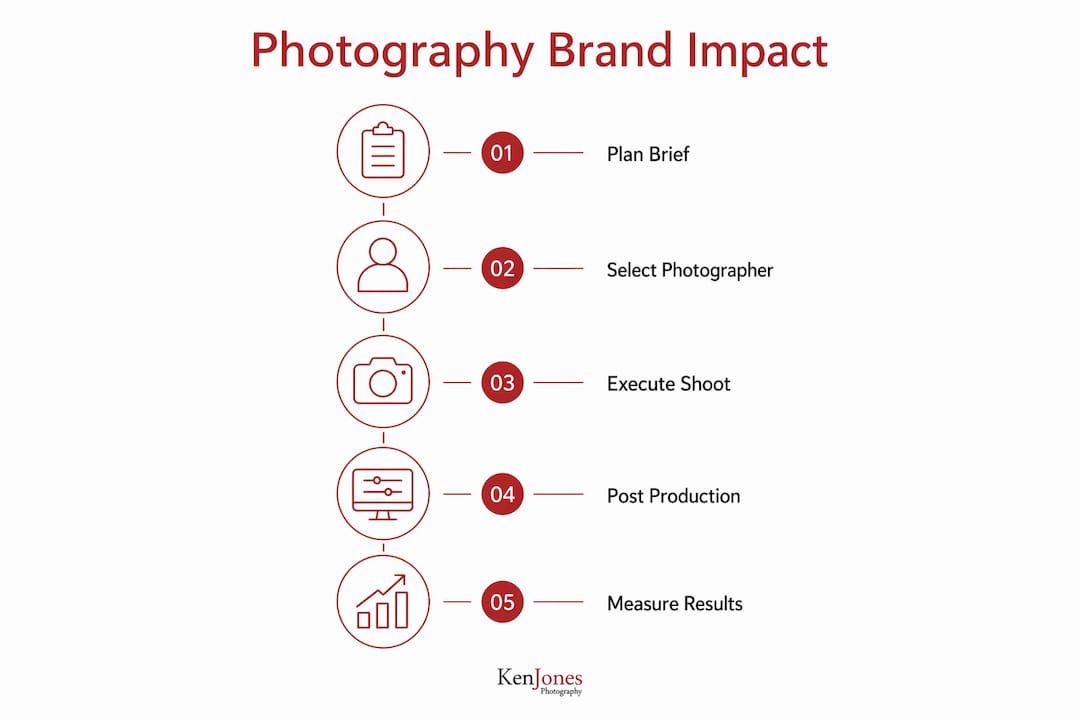
Effective fashion photography for brand elevation requires planning that starts well before the shoot day. The images you produce are only as strong as the strategy behind them. Brand managers who treat photography as a standalone production task, rather than an integrated brand communication effort, consistently get less value from their investment.
Start by aligning your photography brief with your marketing calendar and brand positioning. Every shoot should have a defined purpose: is this imagery for a product launch, a seasonal campaign, an editorial placement, or an e-commerce refresh? Each purpose requires a different approach to composition, styling, and creative direction. Mixing these purposes in a single shoot without clear separation produces imagery that serves none of them well.
Selecting the right photographer matters more than most brand managers realize. Look for a photographer whose existing portfolio demonstrates fashion photography and brand identity alignment, not just technical skill. A photographer who can shoot beautifully but does not understand your brand’s visual language will produce images that look good in isolation and feel wrong in your catalog.
The table below compares two common production approaches and their impact on brand outcomes:
| Production Approach | Brand Outcome |
|---|---|
| Single-use shoot without brand brief | Inconsistent imagery, weak catalog cohesion, higher return rates |
| Strategy-led shoot with defined visual standards | Consistent catalog, stronger brand recognition, lower return rates |
| Hero shot only, no detail or context images | High uncertainty, lower purchase confidence, increased abandonment |
| Full visual hierarchy: hero, detail, context | Reduced uncertainty, higher conversion, fewer returns |
| AI-only imagery without human oversight | Authenticity erosion, inconsistent styling, trust friction |
| Blended approach: human hero shots, AI for variations | Cost efficiency with preserved brand trust and visual consistency |
Location and studio choices also shape the brand story your photography tells. A Manhattan studio with controlled lighting gives you precision and repeatability. A location shoot in a specific environment adds narrative context that studio work cannot replicate. The best campaigns use both, and the decision between them should be driven by what the brand needs to communicate, not by budget alone.
Understanding the full production process of a fashion shoot, from casting and styling through lighting setup and post-production, helps brand managers set realistic expectations and make better creative decisions. Brands that invest in pre-production planning consistently get more usable images per shoot day than those who arrive without a clear shot list and creative direction document.
Finally, connect your photography investment to measurable outcomes. Track engagement rates on imagery-heavy content versus copy-heavy content. Monitor return rates before and after a photography upgrade. Measure the time-on-page difference between product pages with full visual hierarchies versus those with single images. Professional product photography drives measurable sales improvements, and those numbers make the case for continued investment at the budget level.
Key takeaways
Fashion photography builds brand value by resolving consumer uncertainty, reinforcing visual identity, and signaling quality before any other brand message reaches the shopper.
| Point | Details |
|---|---|
| Visual consistency drives recognition | Apply consistent lighting, color grading, and composition across every shoot to build brand identity over time. |
| Image quality reduces returns | A full visual hierarchy of hero, detail, and context shots lowers consumer uncertainty and cart abandonment. |
| Human craftsmanship preserves trust | Reserve human photography for hero shots and campaigns; AI imagery erodes authenticity when overused. |
| Strategy precedes production | Align every shoot brief with your marketing calendar and brand positioning before the shoot day begins. |
| Measure photography outcomes | Track return rates, engagement, and conversion to connect photography investment to real business results. |
What 30 years of shoots taught me about brand photography
I have been shooting fashion in New York City for over three decades, and the single most common mistake I see brand managers make is treating photography as the last step in a production process rather than the first expression of a brand strategy. They finalize the product, write the copy, build the page, and then call a photographer. By that point, the creative decisions that would have made the photography genuinely powerful have already been made by committee, and the photographer is executing a brief that no one fully owns.
The brands that get the most value from their photography are the ones that bring the photographer into the conversation early. Not to hand over creative control, but to align on what the images need to communicate before anyone picks up a camera. I have worked with designers who could articulate their brand’s visual language in a single sentence, and those shoots produce catalogs that hold together season after season. I have also worked with brands that could not agree on whether they wanted editorial or commercial, and those shoots produce beautiful individual images that never quite add up to a coherent brand story.
The AI question is real, and I am not dismissing it. I use digital compositing and retouching tools that would have seemed like science fiction when I started. But there is a difference between using technology to enhance a human-crafted image and using it to replace the human judgment that makes an image trustworthy. Consumers feel that difference even when they cannot name it. A garment photographed on a real person, with real light, in a real environment, communicates something that a generated image cannot fully replicate. That communication is what brand value is built on.
My honest advice to any brand manager reading this: spend less time optimizing your image file sizes and more time defining what your photography is supposed to say. The technical execution is solvable. The strategic clarity is harder, and it matters more.
— Ken
Work with a photographer who understands brand strategy
Kenjonesnyc brings over 30 years of fashion, beauty, and commercial photography experience to every project, working from a full-service Manhattan studio in the Financial District. The studio handles the full production process, from casting and styling through lighting design and post-production, so your brand gets imagery that holds together as a coherent visual system rather than a collection of individual shots.
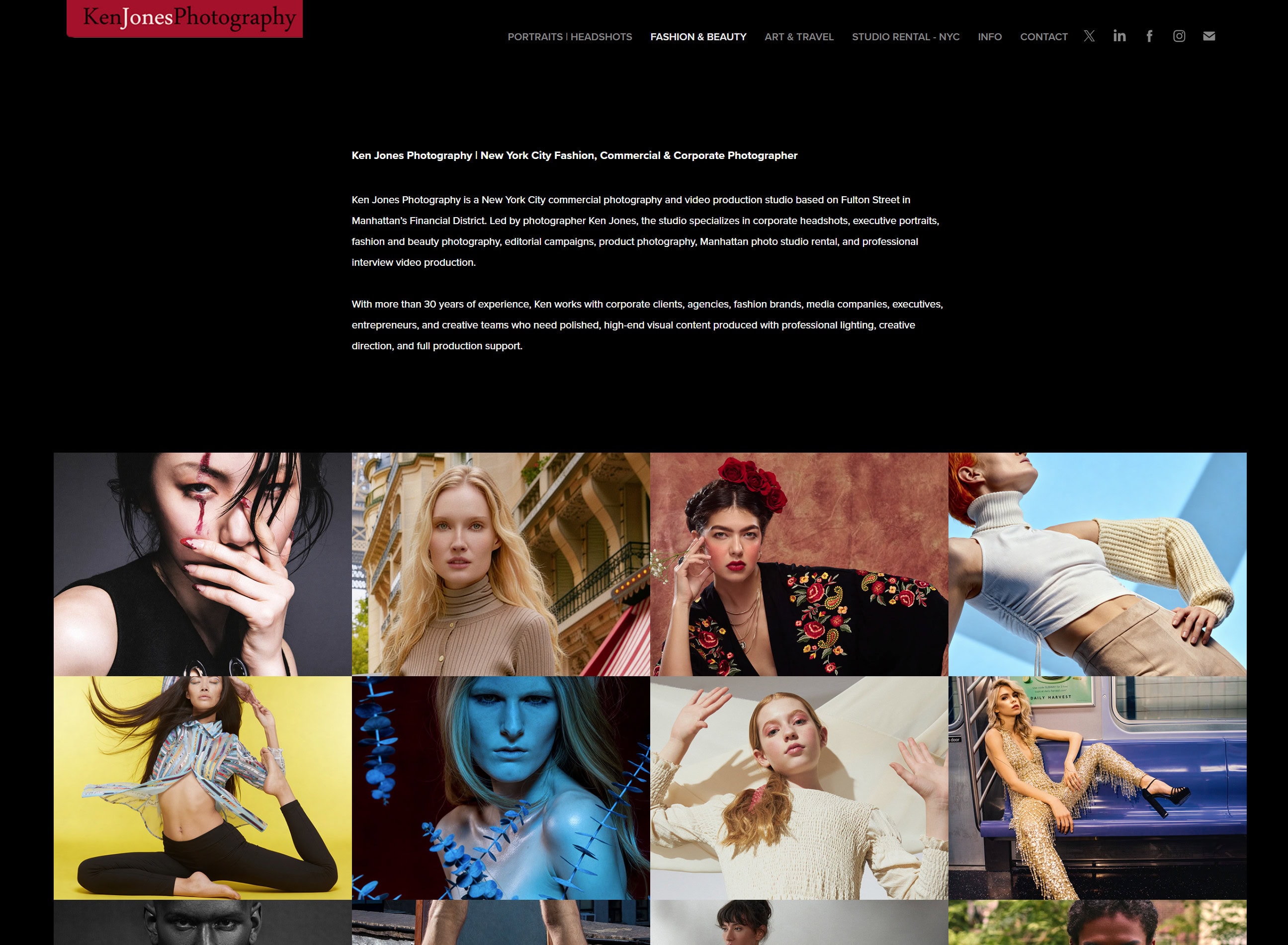
Whether you need a luxury fashion editorial that defines a seasonal campaign or a complete e-commerce photography package built around a structured visual hierarchy, Kenjonesnyc works with your brand’s creative direction to produce imagery that performs. The studio’s portfolio spans editorial work published globally, designer lookbooks, beauty campaigns, and advertising campaigns for fashion and retail clients. If you are ready to see what strategic photography looks like in practice, explore the portfolio and reach out at kenjonesnyc.com.
FAQ
How does fashion photography directly affect brand value?
Fashion photography shapes brand value by communicating quality, identity, and trust before any other brand message reaches the consumer. Consistent, high-quality imagery signals professionalism and supports premium positioning across every customer touchpoint.
Why do 56% of shoppers look at images before reading product details?
Shoppers rely on images to resolve tactile uncertainties they cannot address online, including fit, texture, scale, and construction quality. According to Baymard Institute UX research, images answer the questions that copy cannot, making photography the primary driver of purchase confidence.
What is a visual information hierarchy in fashion photography?
A visual information hierarchy structures product imagery into three layers: a hero shot that establishes the aesthetic, detail views that show texture and construction, and context shots that demonstrate fit and scale. This structure reduces consumer uncertainty and lowers return rates.
How does ai-generated imagery affect brand trust in fashion?
AI-generated imagery can reduce production costs but erodes perceived authenticity when overused, according to Association of Photographers research cited by Vogue in 2026. Brands that rely on AI for hero shots and campaign imagery risk losing the trust signals that human craftsmanship provides.
How often should fashion brands refresh their photography?
Fashion brands should align photography refreshes with their marketing calendar, typically each season, and whenever a significant product line or brand positioning change occurs. Consistency within a season matters more than frequency; a coherent catalog outperforms a high-volume one that lacks visual discipline.