

TL;DR:
- Beauty shots are close-up portraits that highlight natural features with minimal distractions, serving as key tools for casting decisions. They require balanced lighting, simple styling, and light retouching to accurately showcase a model’s true appearance and versatility. Models should update these images every six to twelve months to maintain credibility and ensure accurate representation.
A beauty shot is defined as a close-up portrait that highlights a model’s natural features using professional makeup and clean styling, with minimal distractions. It is the single most scrutinized image in any modeling portfolio because casting directors use it to assess your true appearance before they meet you in person. The role of beauty shots in a model portfolio goes beyond aesthetics. These images tell agencies whether you can translate to camera, whether your skin reads well under light, and whether your features are versatile enough for beauty and commercial briefs. Get this image wrong, and the rest of your book may never get a second look.
What makes a beauty shot effective in a model portfolio?
A strong beauty shot depends on three things working together: light, restraint, and authenticity. Each one matters equally, and failing at any one of them will cost you bookings.
Lighting that reveals, not flatters
Beauty shot lighting is designed to show skin clearly, not to hide imperfections. A soft, diffused front light, often called a beauty dish setup, reduces harsh shadows while keeping texture and dimension in the face. Ring lights can work for certain skin tones, but they tend to flatten features when used without fill. The goal is to show skin clearly without making the image look retouched before it even reaches post-production.
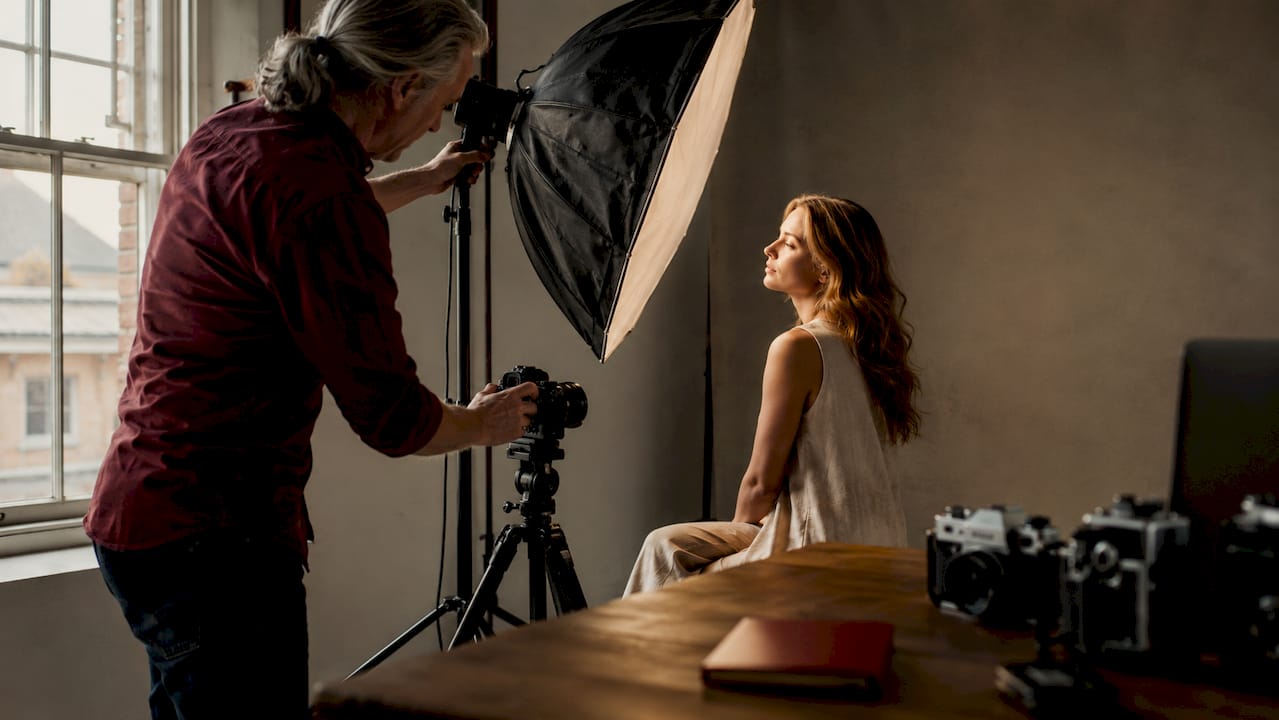
Experienced photographers understand that casting directors are not looking at your beauty shot the way a magazine art director would. They are looking for information. They want to see your bone structure, your skin tone, and how your eyes read on camera. A well-lit beauty shot gives them all of that in one frame.
Makeup, hair, and wardrobe: less is more
The standard for beauty shots in 2026 is minimal makeup and natural styling that enhances your features without masking them. A full glam look belongs in an editorial shoot, not in a portfolio beauty shot. The makeup should be clean and polished, with defined brows, a neutral lip, and skin that looks healthy rather than heavily covered.
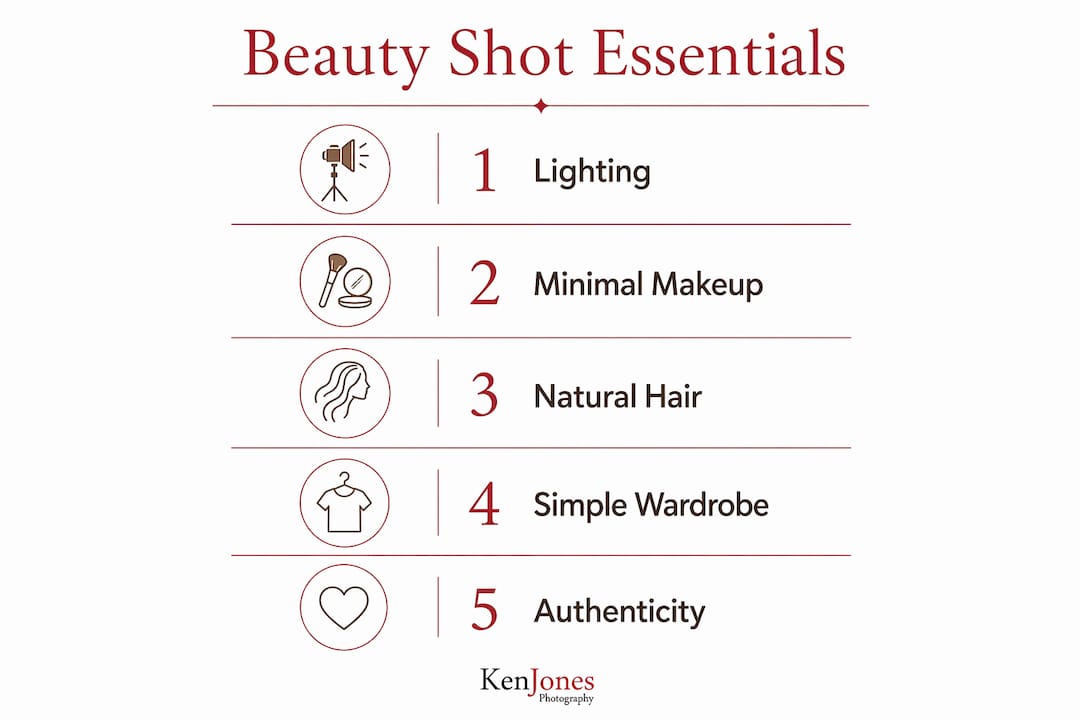
Hair should be controlled and away from the face or softly framed, never dramatic. Wardrobe is typically a simple top or bare shoulders. The background should be neutral, either white, gray, or a soft gradient, so nothing competes with your face.
Key styling principles for effective beauty shots:
- Keep foundation light and skin-focused, not coverage-heavy
- Choose a neutral or muted lip color over bold or trend-driven shades
- Pull hair back or style it simply so the face remains the focal point
- Avoid heavy contouring that changes the natural shape of your face
- Skip statement jewelry or accessories that draw attention away from features
Pro Tip: Ask your photographer to show you test shots on a monitor during the session. If you can see your pores, the lighting is working. If your skin looks airbrushed before retouching, the setup is too soft.
Retouching standards that preserve credibility
Minimal retouching is a professional standard, not a stylistic choice. Neutral backgrounds and light retouching increase casting versatility because they allow clients to project their brand vision onto your image. Heavy retouching removes the very information casting directors need. Smoothing out every line, reshaping the nose, or whitening the eyes beyond natural levels creates a version of you that does not show up to the audition. That mismatch damages trust immediately.
How do beauty shots fit into the overall model portfolio?
A well-built portfolio contains 8–12 strong images that cover a range of looks and contexts. Quality matters far more than volume. Within that selection, the beauty shot carries a specific and irreplaceable function.
The difference between a beauty shot and a clean headshot
Models often confuse these two image types, and the distinction matters to agencies.
| Image type | Purpose | Styling level | Typical use |
|---|---|---|---|
| Clean headshot | Neutral, no-makeup or minimal look | Bare or very light | Agency digitals, comp cards |
| Beauty shot | Professional hair and makeup, polished | Light to moderate | Beauty and commercial casting |
| Editorial shot | Concept-driven, styled | Heavy, trend-led | Magazine submissions, fashion clients |
| Full-body shot | Proportion and posture | Varies by brief | Fashion, commercial, runway |
A beauty shot differs from a headshot in one key way: it includes professional hair and makeup tailored to beauty and commercial briefs while still maintaining a natural look. A clean headshot is closer to a blank canvas. Both belong in a complete portfolio, but they serve different casting conversations.
How beauty shots influence casting decisions
Casting directors for beauty and commercial work use your beauty shot to answer a specific question: can this model represent a skincare line, a fragrance, or a hair product without extensive styling on set? A well-executed beauty shot answers yes before you walk through the door.
Consider a casting call for a national skincare campaign. The client wants someone with clear, photogenic skin and a relatable, approachable look. Your editorial shots may be stunning, but they show you in heavy makeup and dramatic lighting. Your beauty shot is what closes that gap. It shows the client what they are actually buying.
Beauty shots also signal professionalism. A model who understands the difference between image types, and who has invested in producing each one correctly, communicates that she or he takes the work seriously. Agencies notice that. It affects whether they submit you for a brief or pass.
Pro Tip: When preparing your portfolio for agency submission, lead with your beauty shot or place it within the first two images. Casting directors often decide within seconds whether to keep scrolling.
How often should models update their beauty shots?
Portfolio images should be updated every 6–12 months or immediately after any significant change in appearance, including a haircut, weight change, or shift in skin condition. This is not a suggestion. It is a professional standard that affects your credibility.
Here is a practical schedule for keeping your beauty shots current:
- Audit your portfolio every six months. Compare your current images to how you look today. If a casting director would be surprised when you walk in, your images are already outdated.
- Book a refresh session after any major appearance change. A new haircut, a change in hair color, or significant skin changes all require updated images. Do not wait for your next scheduled audit.
- Plan your shoot budget in advance. Professional beauty shot sessions typically cost above $500, reflecting the investment in a skilled photographer, a makeup artist, and proper lighting. Build this into your annual career budget.
- Coordinate grooming before your session. Schedule a haircut or trim a few days before the shoot, not the day of, so the style settles naturally. A visit to a professional barber or stylist before a beauty session can make a measurable difference in how polished your final images look.
- Review your images with your agency before publishing. If you are signed, your agent should approve new portfolio images before they go on your comp card or digital profile. Their market knowledge shapes which images will actually book work.
Outdated images create a specific problem that models underestimate. When a casting director calls you in based on a two-year-old beauty shot and you look noticeably different, the session ends before it begins. That director may not call you again.
What mistakes should models avoid in their beauty shots?
The most common beauty shot mistakes are not technical. They are decisions made before the camera shutter opens.
Over-styling is the single biggest problem. Models who arrive to a beauty shot session with dramatic hair, heavy contouring, and bold lip color are working against themselves. Over-styled images and excessive editing limit casting versatility and reduce agency trust. The image may look impressive on its own, but it fails to communicate what casting directors actually need to see.
Common mistakes that undermine beauty shots:
- Heavy contouring or color correction that alters natural facial structure
- Dramatic hairstyling that covers the face or reads as trend-specific
- Excessive retouching that removes texture, pores, or natural skin variation
- Filters applied during editing that flatten skin tone or shift color
- Inconsistent portfolio presentation where the beauty shot does not match the model’s current appearance
Outdated images carry their own risk. A portfolio that has not been refreshed in over a year signals to agencies that the model is not actively managing her or his career. It also creates the credibility problem described above.
“Agencies are not looking for your best day. They are looking for an accurate picture of who you are on any given day. The model who shows up looking exactly like her beauty shot is the one who gets booked.”
Excessive editing is a growing problem as post-production tools become more accessible. Skin smoothing, eye brightening, and facial reshaping are all possible in standard editing software. The temptation is real. But experienced model photographers understand that specialized lighting and direction produce authentic results that editing cannot replicate. The solution is not better software. It is better production from the start.
Ken’s take: what 30 years of beauty shoots taught me
I have photographed hundreds of beauty shots in this city, and the pattern I see most often is models who confuse “looking good” with “looking right.” Those are two different things.
A model came into my studio a few years ago with a full glam look she had put together herself. She looked genuinely beautiful. But the brief she was targeting was a national skincare brand, and the image she needed was clean, minimal, and skin-forward. We spent the first thirty minutes of the session removing makeup rather than adding it. That time cost her money and almost cost her the shot.
The models who book the most beauty work are the ones who understand that a beauty shot is not about showing your best self. It is about showing your most accurate self, presented cleanly and professionally. Agencies want to see what they are working with. They have stylists, makeup artists, and art directors on set. They do not need you to arrive fully produced. They need to see your raw material.
I also see models underestimate the value of working with a photographer who understands model development. Lighting direction, expression coaching, and angle selection are not small details. They are the difference between a beauty shot that books work and one that sits in your portfolio doing nothing. Choose your photographer based on their beauty portfolio, not their Instagram following.
The digital shift has changed how beauty shots are used, but it has not changed what they need to communicate. Whether your image lives on a casting platform or a printed comp card, the standard is the same: clean, current, and honest.
— Ken
Kenjonesnyc beauty photography for your modeling portfolio
Models serious about their careers invest in beauty shots that meet agency standards from the first frame.
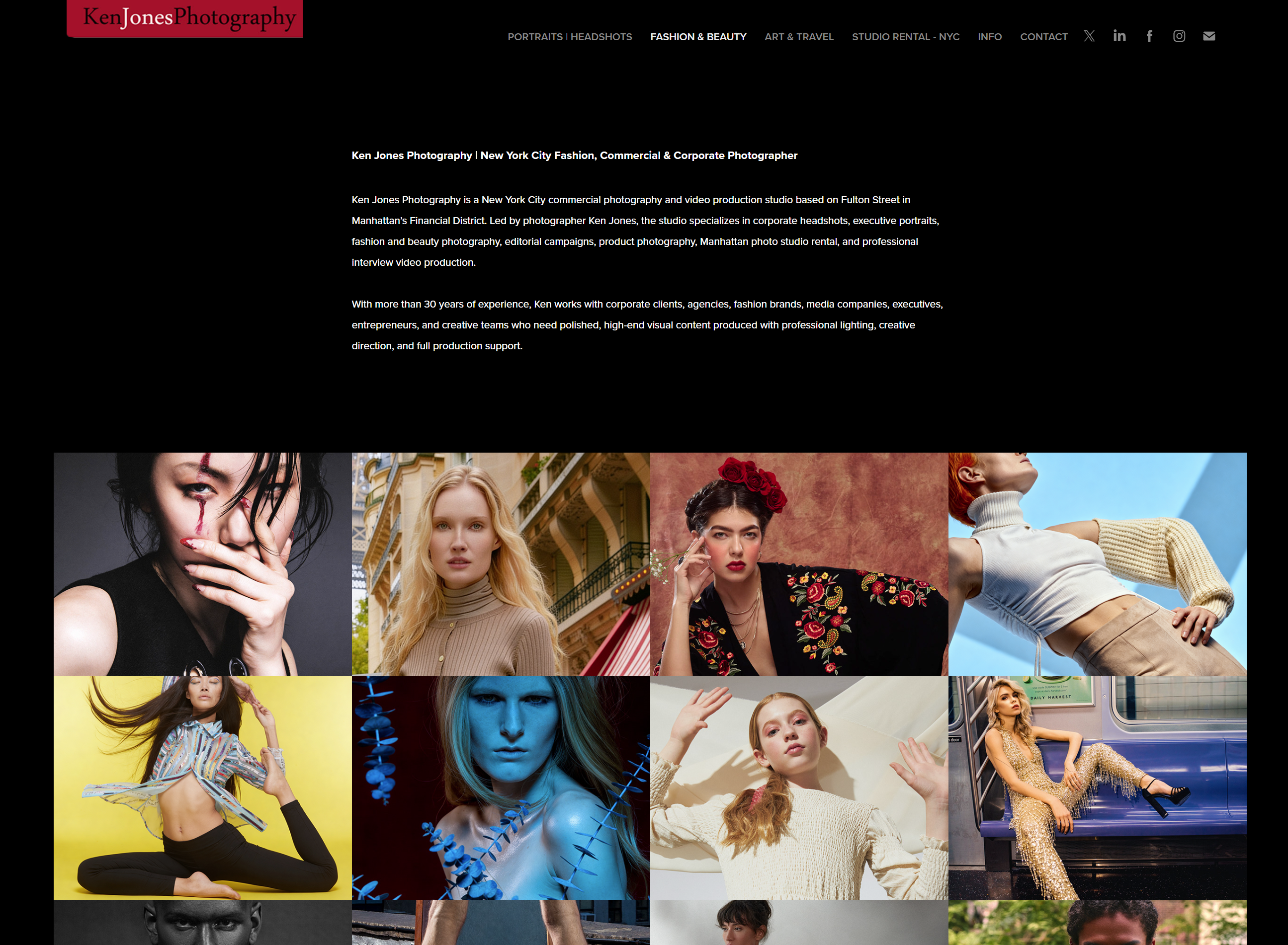
Kenjonesnyc specializes in professional beauty photography for models at every stage of their career, from first portfolio builds to agency-directed refreshes. The studio’s 30-plus years of commercial and editorial experience in Manhattan means every beauty session is lit, directed, and retouched to match what casting directors actually want to see. The beauty photography portfolio shows the range of work produced for models, beauty brands, and commercial clients. Reach out through kenjonesnyc.com to discuss your portfolio goals and schedule a session.
Key takeaways
Beauty shots are the most strategically important images in a model portfolio because they give casting directors an accurate, unfiltered view of a model’s natural features and commercial potential.
| Point | Details |
|---|---|
| Beauty shots serve a specific function | They show casting directors a model’s natural features for beauty and commercial casting, not fashion or editorial work. |
| Minimal styling is a professional standard | Light makeup, neutral backgrounds, and controlled hair are required to maintain authenticity and casting versatility. |
| Update images every 6–12 months | Outdated beauty shots damage credibility and create mismatches that cost models bookings. |
| Over-editing reduces agency trust | Excessive retouching removes the information casting directors need to make accurate decisions. |
| Photographer selection matters | An experienced beauty photographer provides lighting, direction, and retouching knowledge that editing software cannot replace. |
FAQ
What is the role of beauty shots in a model portfolio?
Beauty shots give casting directors a clear, accurate view of a model’s natural features and skin, allowing them to assess suitability for beauty and commercial briefs. They are distinct from editorial or fashion images because they prioritize authenticity over styling.
How many images should a model portfolio contain?
A model portfolio should contain 8–12 high-quality images, including at least one clean beauty shot, to give agencies a complete and credible picture of the model’s range.
How often should models update their beauty shots?
Models should update their beauty shots every 6–12 months or immediately after any significant change in appearance to maintain credibility with casting directors and agencies.
What is the difference between a beauty shot and a headshot?
A beauty shot includes professional hair and makeup tailored to beauty and commercial briefs, while a clean headshot uses minimal or no makeup to present a neutral baseline. Both serve different casting purposes and both belong in a complete portfolio.
Why do casting directors prefer minimal styling in beauty shots?
Casting directors use neutral, minimally styled beauty shots to envision a model in multiple brand contexts without trend-specific looks getting in the way. Over-styled images limit casting versatility and reduce the number of briefs a model can be submitted for.