
TL;DR:
- Photographers shape a model’s visual identity by managing lighting, posing, and session structure to meet agency standards. They function as technical specialists and strategic partners, crafting agency-ready images that showcase the model’s range and physical features. Collaboration, clear communication, and experience with agency requirements are essential for successful model development.
The role of photographer in model development is to serve as the primary architect of a model’s visual identity, shaping how agencies and casting directors perceive that model through expertly crafted, agency-compliant images. This is not a supporting role. A skilled photographer functions simultaneously as a creative director, technical specialist, and strategic partner. The difference between a model who gets signed and one who gets passed over often comes down to the quality and intelligence of their portfolio imagery. Top agencies like IMG Models, Ford Models, and Elite Model Management make talent decisions within seconds of a portfolio review, which means every frame has to work hard. Understanding how photographers influence models at a technical and strategic level is the first step toward building a career with real traction.
How photographers shape model portfolios technically and artistically
The photographer’s impact on models begins long before the shutter fires. Lighting choice alone can determine whether a model’s bone structure reads as defined or flat on camera. A soft, even light source placed slightly above eye level will reveal facial symmetry and skin texture accurately. Harsh overhead lighting creates unflattering shadows that distort proportions. Camera lens selection can dramatically alter perceived model symmetry and proportions, directly influencing how casting directors read an image. A 50mm or 85mm lens at moderate distance reproduces the human face with minimal distortion. A wide-angle lens used too close will exaggerate the nose and compress the ears, which is a technical mistake that costs models opportunities.
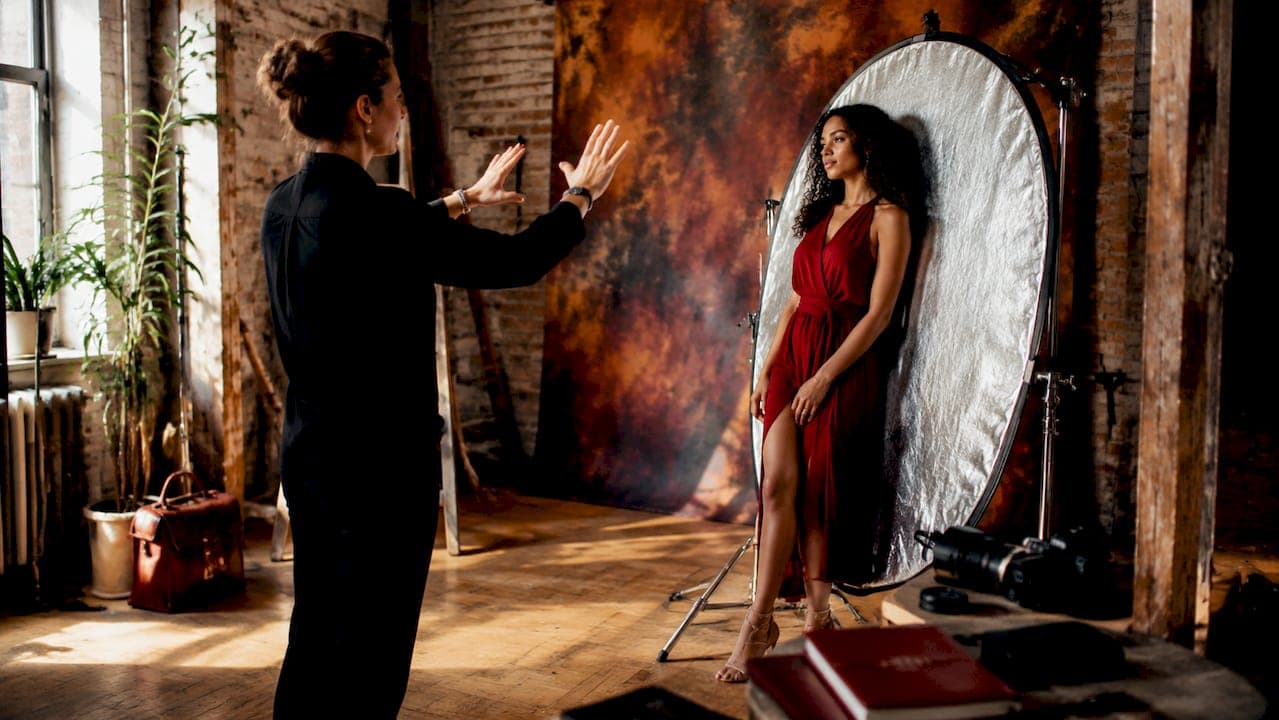
Beyond lighting and optics, the photographer directs posing and expression with precision. Deliberate technical feedback on micro-expressions and body angles is what separates amateur work from agency-ready imagery. A slight chin tilt, a relaxed jaw, or a shift in shoulder angle can change the entire read of a frame. Experienced photographers coach these adjustments in real time, often without the model realizing how significant the change is. That guidance is a core part of what photography in modeling actually delivers.
Artistic choices also communicate a model’s range. A well-structured session includes images that emphasize different physical attributes: facial structure in close headshots, body proportions in full-length frames, and personality in three-quarter shots. Professional studio sessions include 10 or more varied looks, each serving a specific purpose such as headshots or full-length frames to demonstrate range. That variety is not about volume. It is about giving an agency a complete picture of what the model can do.
Pro Tip: Ask your photographer to show you test frames on a monitor during the shoot. Seeing how your angles translate in real time accelerates your posing instincts faster than any coaching session.
Natural light and minimal retouching in model digitals
Model digitals, the industry term for the clean, unretouched reference images agencies require, follow strict visual rules. Simple, bright, even natural light with minimal styling is the standard for clarity in development photography. Agencies want to see the model’s actual features, not a polished version of them. Heavy retouching, dramatic makeup, and complex styling all obscure the information a casting director needs. A photographer who understands this will set up a session that feels almost clinical in its simplicity, and that restraint is a professional skill, not a limitation.
What agency standards do photographers follow for development imagery?
Modeling agencies operate with specific visual requirements that most aspiring models do not fully understand until they receive a rejection. High-quality digitals increase chances of bookings because top-tier agencies reject mobile snapshots and require clean, honest images showing versatility and accurate physical features. A photographer who works regularly with agencies knows these requirements by heart. They structure sessions accordingly, which is why hiring someone with direct agency experience matters more than hiring someone with a beautiful commercial portfolio.
The standard agency-ready session follows a clear structure:
- Headshot (straight-on, neutral expression): Clean background, natural light or soft studio light, no heavy makeup, hair off the face.
- Three-quarter shot: Shows posture, body proportions, and how the model carries themselves.
- Full-length front: Fitted, simple clothing. No patterns, logos, or distracting details.
- Full-length side profile: Agencies use this to assess posture and physical structure from a different axis.
- Smile shot: Natural, relaxed. Agencies want to see personality and approachability.
Each of these serves a documented purpose in the casting process. Each image serves a specific documented purpose rather than functioning as decoration. That is the framework a professional photographer brings to a development session.
Pro Tip: Bring two or three simple, well-fitted outfits in neutral colors like white, black, and gray. Avoid anything with bold prints or logos. The goal is to make the agency look at you, not your clothes.
File formatting and color accuracy standards
Color accuracy is a technical requirement that gets overlooked by photographers who do not specialize in model development work. Casting directors view portfolios on calibrated monitors, and images with incorrect white balance or oversaturated color give a false read of skin tone and hair color. Photographers who shoot in RAW format and process files with color-managed workflows deliver images that hold up across different viewing environments. File resolution, naming conventions, and delivery format also matter. Agencies typically request high-resolution JPEGs at specific dimensions, and a photographer who delivers files correctly signals professionalism to the agency on the model’s behalf.
| Session Element | Agency Requirement | Photographer’s Role |
|---|---|---|
| Lighting | Soft, even, natural or studio | Set up and control light quality |
| Styling | Minimal, fitted, neutral colors | Advise on wardrobe choices |
| Retouching | None or minimal | Deliver honest, clean files |
| File format | High-res JPEG, color-accurate | Process and deliver correctly |
| Shot variety | Headshot, three-quarter, full-length | Direct and sequence the session |
How does collaboration between models and photographers optimize sessions?
The most productive model development sessions operate on a clear division of creative ownership. Best development shoots are collaborative: models lead vision and styling, photographers ensure professional presentation and technical success. This is not a hierarchy where the photographer dictates everything. The model brings personal style, energy, and creative instincts. The photographer brings technical execution, pacing, and the ability to translate those instincts into images that work for agencies.
“Photographers serve as technical anchors for the model’s creative vision, translating ideas into consistent, agency-appropriate imagery.” — Foyers Photography
Confidence is a direct output of good collaboration. When a photographer provides clear, constructive feedback during a session, models relax into their work. They stop second-guessing every pose and start trusting the process. That shift shows up in the images. Empowering models builds confidence and authenticity, resulting in stronger portfolios. A photographer who creates a calm, professional atmosphere on set is delivering a service that goes well beyond technical image capture.
Communication before and during the shoot also determines the quality of the final images. Clear conversations about styling choices, comfort levels, and creative direction protect both parties and produce better work. Models and photographers communicating clearly about boundaries and styling choices ensures consent, comfort, and authenticity. This is not just an ethical standard. It is a practical one. A model who feels respected and heard will give the camera something real.
Key elements of a productive photographer-model working relationship include:
- Pre-shoot consultation: Discuss goals, looks, and agency targets before the session day.
- Real-time feedback: The photographer calls out adjustments clearly and specifically, not vaguely.
- Pacing control: Successful photoshoots rely less on sheer volume and more on deliberate pacing and expression refinement.
- Atmosphere management: Music, lighting temperature, and the photographer’s energy all affect the model’s performance.
- Post-shoot review: Walk through selects together so the model understands what worked and why.
What practical steps help models leverage photographers for career growth?
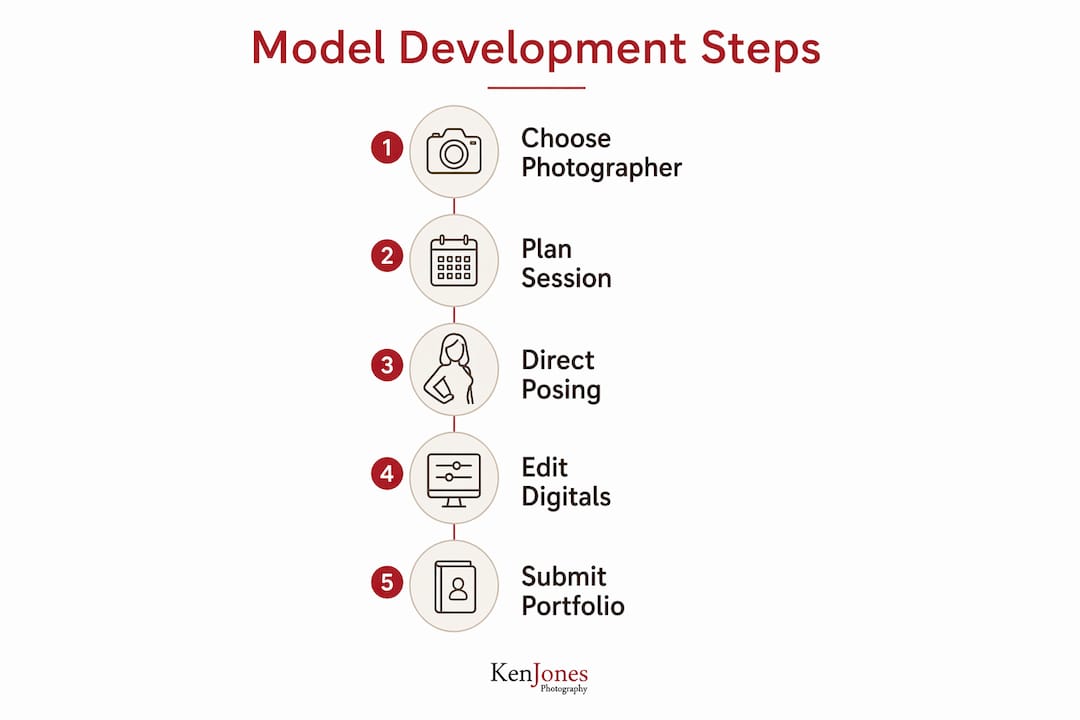
Selecting the right photographer is the single most consequential decision an aspiring model makes before their first agency submission. The criteria go beyond aesthetics. You need someone who understands agency requirements, has experience directing talent, and can deliver technically clean files. Look at their existing model portfolio work, not just their commercial or editorial output. Fashion photography is more than clothes. A photographer who understands how to establish a model’s visual narrative will produce images that tell an agency something specific and compelling about who you are.
When preparing for a development session, treat the planning process with the same seriousness as the shoot itself. Wardrobe should be selected and confirmed in advance. Grooming should be clean and natural. Hair and makeup for digitals should be minimal. Bring options and let the photographer weigh in on what will read best on camera. The goal is to arrive on set with decisions already made, so the session energy goes into performance rather than logistics.
Common pitfalls that undermine model development sessions include:
- Over-styling: Heavy makeup, dramatic hair, and complex outfits shift attention away from the model’s physical structure. Agencies prioritize authentic representations over heavy retouching and theatrical presentation.
- Theatrical posing: Exaggerated poses signal inexperience. Avoiding theatrical posing ensures agencies see raw, structural qualities instead of performance.
- Poor communication: Arriving without a clear brief wastes session time and produces unfocused images.
- Ignoring the session structure: Planning sessions in chapters or looks with clear jobs improves portfolio clarity and model comfort.
Understanding how photographers influence models at a strategic level also means recognizing that photography transforms photos from decorative images into strategic career tools. Every image in your portfolio should answer a specific question for a casting director. What does this model look like in a headshot? How do they carry a full-length frame? What is their range? A photographer who thinks in those terms is building your career, not just filling a hard drive.
Pro Tip: Before booking a photographer, ask them directly: “Have you worked with models submitting to agencies?” Their answer will tell you immediately whether they understand the specific requirements of development work.
Key takeaways
The role of photographer in model development is to function as both a technical specialist and a strategic partner who translates a model’s physical potential into agency-ready, career-building imagery.
| Point | Details |
|---|---|
| Photographer as creative director | Photographers direct lighting, posing, and expression to reveal a model’s true physical potential. |
| Agency standards are non-negotiable | Clean digitals with minimal styling and accurate color are required for serious agency submissions. |
| Collaboration produces stronger work | Models who lead creative vision and communicate clearly with their photographer produce more authentic portfolios. |
| Session structure matters | Organizing shoots into chapters with specific shot goals improves both portfolio clarity and model confidence. |
| Photographer selection is a career decision | Choosing someone with direct agency experience and a strong model portfolio background is the most important first step. |
What 30 years in NYC taught me about photographers and models
I have worked with models at every stage of their careers, from first-time submissions to established talent shooting for major campaigns. The pattern I see most consistently is this: models who treat the photographer as a passive technician get mediocre results. Models who treat the session as a genuine collaboration walk away with images that open doors.
The most common mistake I see from new models is arriving on set with a performance mindset rather than a presence mindset. They have rehearsed poses from Instagram. They have a look they want to project. And the moment I put them in front of the camera, they start performing instead of being. The images look stiff, self-conscious, and generic. The fix is always the same: slow down, breathe, and let the camera find you rather than chasing it.
In New York, agencies move fast. A booker at a major agency might review 50 submissions in a morning. Your portfolio has about three seconds to register before they move on. That reality shapes how I approach every development session. I am not trying to make beautiful pictures. I am trying to make pictures that communicate something specific and true about the person in front of my lens. That requires technical precision, yes. But it also requires the kind of trust that only comes from a photographer who respects the model’s intelligence and creative instincts.
The photographer-model relationship works best when both parties understand their roles clearly. The model owns the vision. The photographer owns the execution. When that division is respected, the work reflects both people at their best.
— Ken
Build your portfolio with Kenjonesnyc in manhattan
Kenjonesnyc has spent over 30 years producing agency-ready model portfolios and high-end fashion editorials from a full-service studio in Manhattan’s Financial District. Every development session is structured around the specific requirements of New York modeling agencies, with deliberate attention to lighting, posing direction, and file delivery standards.
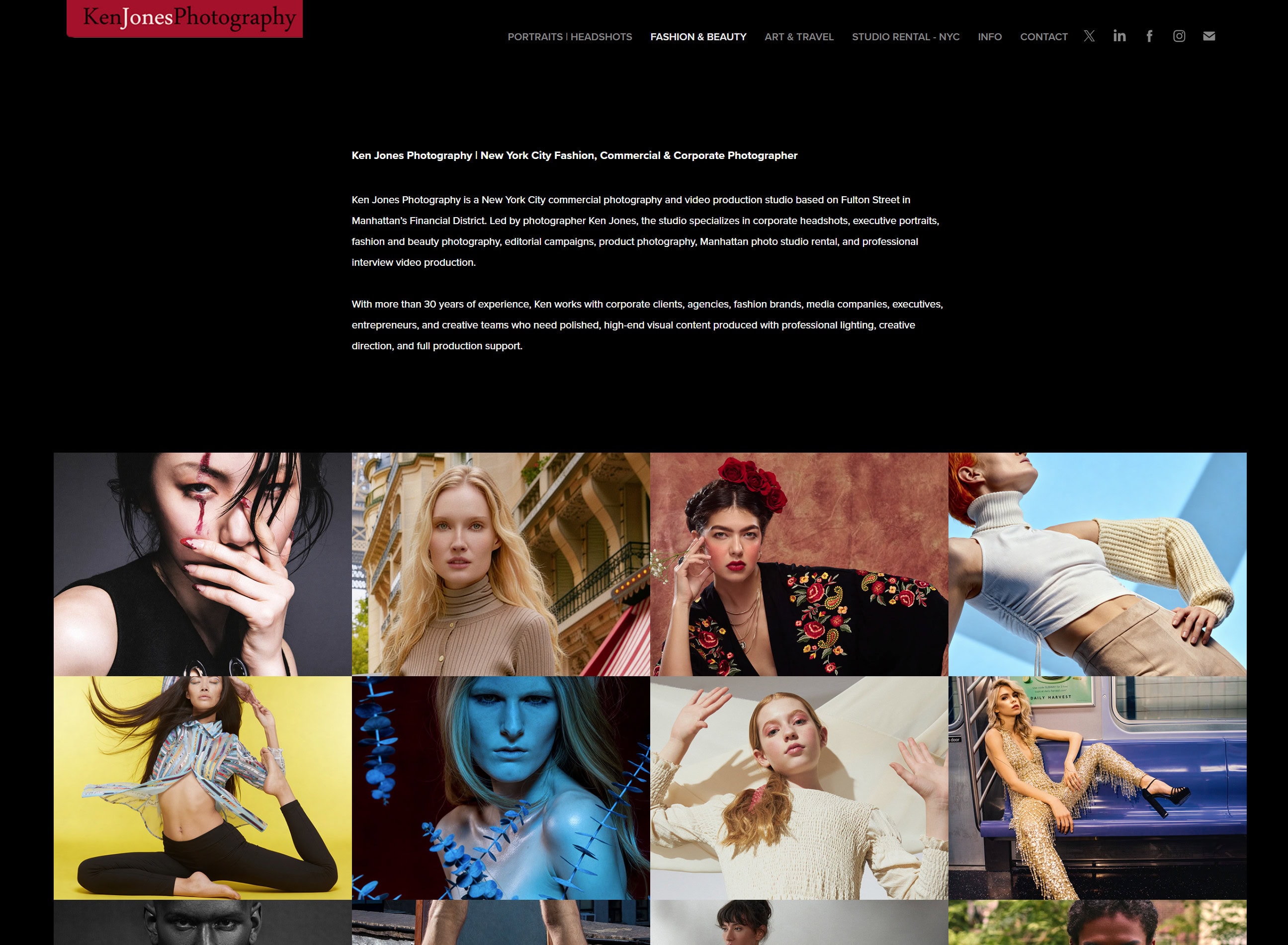
Whether you are building your first submission portfolio or refreshing existing imagery for a new market, Kenjonesnyc brings the technical depth and industry knowledge to make every frame count. Explore the studio’s editorial portfolio work to see the production standard applied to fashion and model-focused imagery. For a full overview of services and to discuss your specific portfolio goals, visit kenjonesnyc.com.
FAQ
What does a photographer do in model development?
A photographer in model development directs lighting, posing, and session structure to produce agency-compliant images that accurately represent the model’s physical attributes and range. They function as both a technical specialist and a creative director throughout the process.
What are model digitals and why do they matter?
Model digitals are clean, minimally styled reference images that agencies use to assess a model’s true physical features. Top-tier agencies reject mobile snapshots and require professionally shot digitals with accurate color, even lighting, and no heavy retouching.
How many looks should a model development session include?
A professional development session typically includes 10 or more distinct looks, each serving a specific purpose such as a headshot, three-quarter shot, full-length front, profile, and smile shot. Each image answers a specific question for a casting director.
Should models direct their own portfolio shoots?
Models should lead the creative vision and styling choices while the photographer manages technical execution, pacing, and framing. This collaborative structure produces more authentic imagery and builds model confidence throughout the session.
How do i choose the right photographer for my model portfolio?
Look for a photographer with direct experience shooting model submissions for agencies, a portfolio that includes clean development imagery alongside editorial work, and a clear process for pre-shoot consultation and file delivery. Ask specifically whether they understand agency digital requirements before booking.