
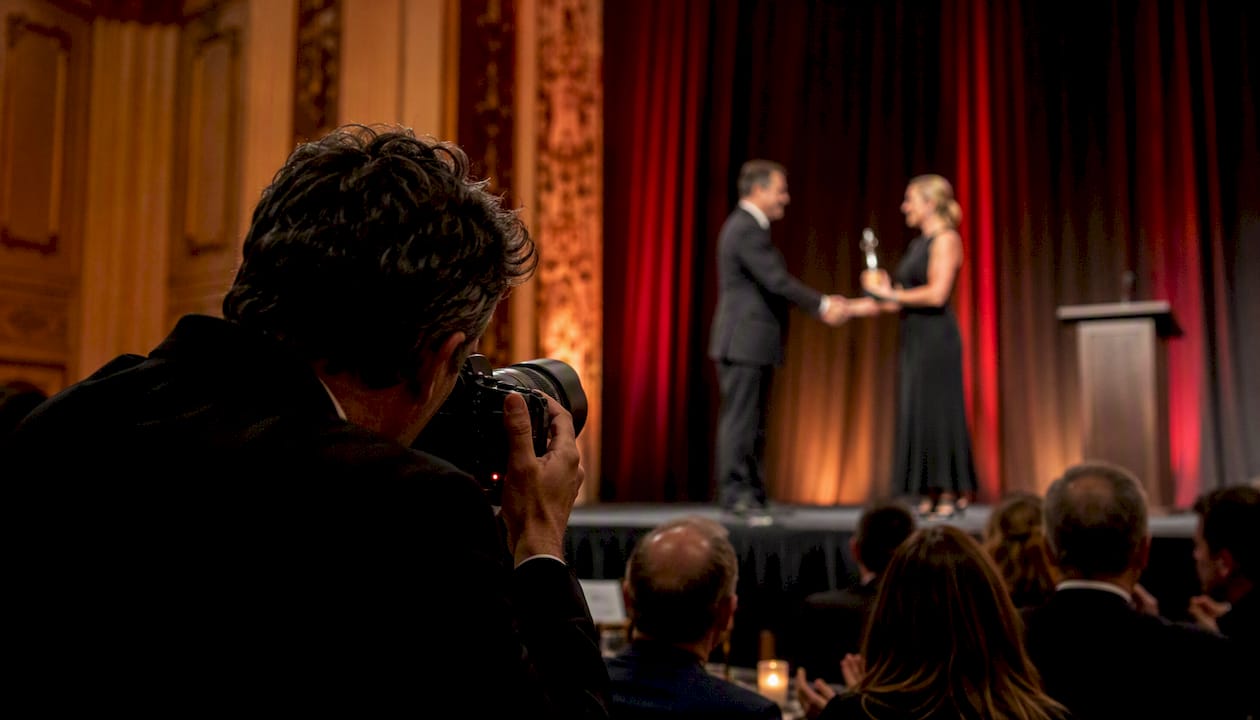
Professional award ceremony photography converts a single night on stage into press-ready assets that drive earned media pickup, sponsor amplification, social reach, and internal morale for months afterward. That’s the whole thesis. If a PR team treats the photographer as an afterthought booked two weeks out with no shot list, they leave most of that value on the table.
Here’s what to do before the lights even come up:
- Add content beats to the run-of-show. Build a photo-op window after every award, not just a general “photographer will be present” note.
- Brief your stage photographer on winner-first delivery. Set a hard SLA: winner images uploaded within 60 minutes of the win, based on the delivery benchmarks outlined in Eventiere’s corporate awards photo guide.
- Pre-register nominee faces. This speeds up AI-assisted photo matching or, at minimum, tells your second shooter exactly who to prioritize when the room is dark and chaotic.
Pro Tip: One case tracked in Eventiere’s research showed 12 winner photo shares generating roughly 34,000 impressions in 48 hours — proof that speed matters as much as quality when it comes to social lift.
Key Takeaways
Award ceremony photography functions as a PR asset when it’s planned for speed, formatted for reuse, and delivered on a schedule that matches the news cycle, not the photographer’s convenience.
| Point | Details |
|---|---|
| Build content beats into the run-of-show | Add a photo window after every award handoff so the shot list doesn’t compete with event pacing. |
| Prioritize winner delivery speed | Target a winner gallery within 60 minutes and a press pack within two hours for maximum pickup. |
| Package a journalist-friendly press pack | Include one download link, a suggested lead image, pre-cropped sizes, and embedded caption metadata. |
| Track outcomes with real KPIs | Measure media pickups, social impressions, press pack downloads, and sponsor activation, not just gallery views. |
| Work with a studio built for PR deliverables | Ken Jones Photography structures awards coverage around press packs, sponsor rights, and rapid delivery from the planning call onward. |
Table of Contents
- How Award Ceremony Photography Supports PR Through Storytelling
- What PR Outcomes Should You Expect From Awards Photography?
- What Should a Photographer Capture at an Awards Ceremony?
- How Do You Brief a Photographer for Maximum PR Value?
- What’s the Right Timeline for Repurposing Award Photos?
- How Do You Package Photos for Media and Sponsors?
- What KPIs Should PR Teams Track From Ceremony Photography?
- What Mistakes Actually Kill PR Value?
- A Real Awards Shoot That Almost Went Wrong
- A Copy-Ready Checklist for Your Next Awards Ceremony
- Using Award Photos to Boost Internal Morale
- How Photographers See the PR Side of Awards Nights
- What to Expect When You Hire Ken Jones Photography for an Awards Ceremony
- Sources
- FAQ
How Award Ceremony Photography Supports PR Through Storytelling
Award photography works as a PR tool because it answers a question every audience asks without saying it out loud: do I trust this brand? A candid shot of a genuinely surprised winner, or a room full of people actually applauding instead of politely clapping, tells a more convincing story than any press release copy ever will. Photographs are evidence. Claims are just words.
That distinction matters more in awards coverage than almost any other event type, because the entire format is built around recognition and credibility. When event photography is executed with intention, the images do more than document who showed up. They convey tone, energy, and legitimacy, which is exactly what a journalist, a sponsor, or a job candidate scanning your careers page is trying to assess in three seconds or less.
Those images end up working harder than most PR teams expect. A strong stage shot lands in a press release. The same file gets cropped for a case study page, reused in a sponsor report, dropped into a recruitment deck, and eventually recycled into next year’s “save the date” campaign. One well-composed frame can serve five different departments if it’s shot and delivered correctly the first time.
Consistency is the part people underestimate. If your gala photos look nothing like your product shots, your executive headshots, and your social content, you’re training your audience to see your brand as fragmented rather than deliberate. Editorial-style PR photography solves that by giving every touchpoint the same lighting logic, the same color discipline, the same sense of composition. Readers may never articulate why one brand’s visuals feel more premium than another’s, but they feel it instantly.
What PR Outcomes Should You Expect From Awards Photography?
A well-run awards shoot produces four categories of measurable value, and PR teams should budget and brief around all four, not just the obvious one.
- Earned media moves faster. Journalists on tight deadlines publish the story with the ready-made image, not the one they have to request and wait two days for.
- Social amplification compounds. Winner shares and executive reshares extend reach well past your own follower count, especially when the image is flattering and delivered same-night.
- Sponsors get something they can actually use. Co-branded galleries, sponsor-logo stage shots, and clean signage photography turn a line-item sponsorship into a marketing asset the sponsor will circulate on their own channels.
- Owned content gets restocked. Case studies, recruiting pages, website banners, and next year’s campaign teasers all draw from the same well if the shoot was planned with reuse in mind.
The mistake most planners make is treating these four outcomes as one bucket labeled “event photos.” They’re different deliverables with different formats, different urgency levels, and different audiences, and your shot list should reflect that from the start.
What Should a Photographer Capture at an Awards Ceremony?
Every awards shoot has a hierarchy, and if your photographer doesn’t know it cold before doors open, you’ll lose the shots that matter most while chasing the ones that don’t.
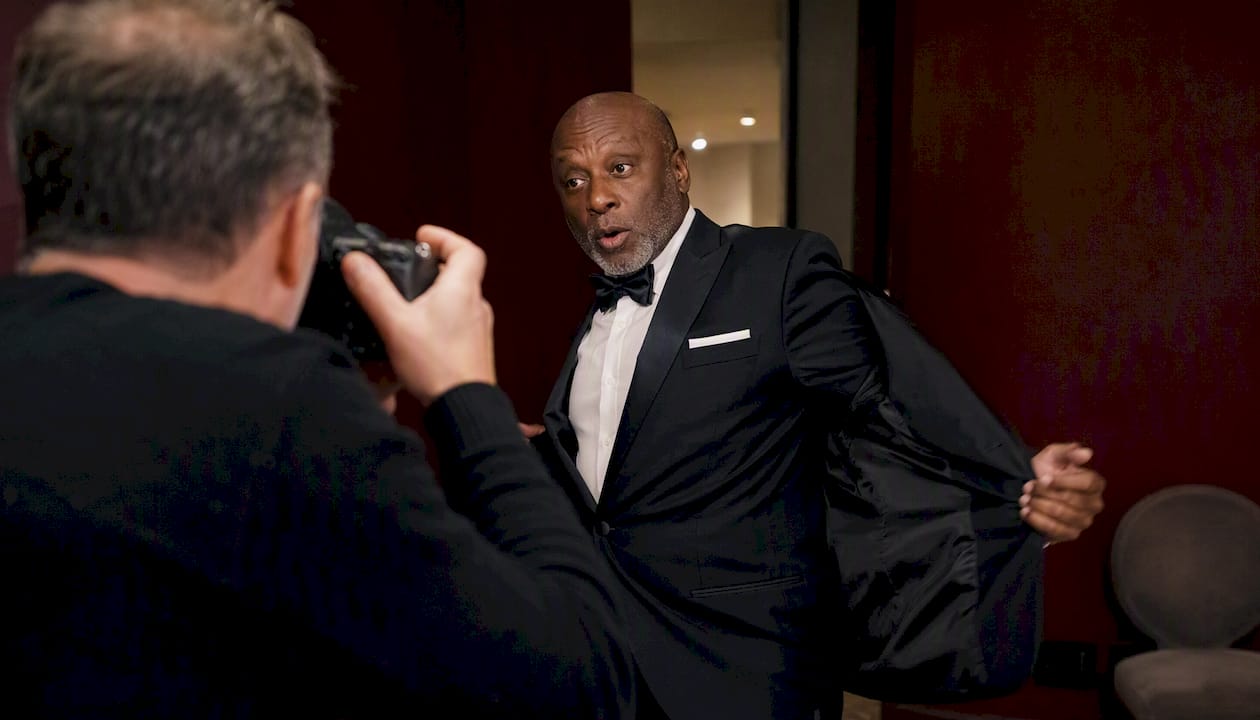
The winner handoff is non-negotiable. Everything else on the list is secondary to getting a clean, well-lit frame of the winner receiving the award, ideally with a natural expression rather than a staged smile held two seconds too long. After that comes backstage winner candids, which tend to produce the most authentic and shareable content of the night because nobody’s performing for the camera anymore. Presenter and sponsor images come next, followed by audience reaction shots, seated portraits at sponsor tables, and finally detail work like trophy close-ups.
Format planning matters as much as the shot list itself. Different platforms need different crops, and shooting only for one aspect ratio guarantees you’ll be cropping badly in Canva at midnight trying to make a horizontal frame work on Instagram Stories.
| Shot Type | Best Format | Primary Use |
|---|---|---|
| Winner handoff | Horizontal | Press releases, YouTube thumbnails, website hero images |
| Backstage candid | Square | Social feed posts, Instagram grid |
| Winner reaction close-up | Vertical | Instagram Stories, TikTok, Reels |
| Sponsor signage / stage branding | Horizontal | Sponsor reports, co-branded press materials |
| Audience reaction | Horizontal or square | Recap content, highlight reels |
| Trophy detail | Square or vertical | Evergreen social content, anniversary posts |
RAW files should be part of the deliverable, not just high-res JPEGs, especially for any image likely to run in print or get heavily cropped for a banner. Positioning matters too. A single front-of-stage angle misses everything happening in the wings and the crowd, which is why most award galas of any real size need two shooters working simultaneously, one stage-focused and one roaming for candids and reactions, a staffing model Eventiere’s gala delivery guide recommends for exactly this reason.
How Do You Brief a Photographer for Maximum PR Value?
The single biggest lever a PR team has is the pre-event brief, and most teams treat it like an afterthought instead of the document that determines whether the shoot succeeds.
- Build content beats into the run-of-show. Every award category gets a photo window. Add a backstage capture slot and a sponsor handoff moment too.
- Set the technical spec sheet. Specify resolution, the three aspect ratios you need, filename conventions, and whether you want RAW files alongside edited selects.
- Define delivery SLAs in writing. A realistic target is a winner gallery within 60 minutes, a press pack within two hours, fast selects of 20 to 30 images within 24 to 48 hours, and the full gallery within 72 hours, consistent with the delivery benchmarks in Eventiere’s corporate awards guide.
- Clarify licensing before the event, not after. Spell out commercial usage scope, whether sponsors can reuse images in their own marketing, and how journalists are permitted to use them.
A short checklist belongs alongside that timeline, because rights confusion is one of the most common post-event headaches:
- Confirm whether sponsor logos in the frame require separate sponsor sign-off for reuse.
- Decide upfront if press usage is unlimited or capped to a specific window.
- Get model releases signed for any staged portrait sessions, not just candid crowd shots.
- Assign a single point of contact for licensing questions so requests don’t stall in email threads.
What’s the Right Timeline for Repurposing Award Photos?
The first 48 hours determine whether your awards content rides genuine momentum or arrives after the moment has already passed. Nominee is built entirely around this idea: design the ceremony for capture, then distribute in waves rather than dumping everything at once.
| Timeframe | What to Publish | Format |
|---|---|---|
| Day 0 to 2 | Same-night winner galleries, press pack to journalists, priority sponsor delivery | Horizontal press images, vertical Stories clips |
| Week 1 | Winner profiles, sponsor spotlights, executive quotes paired with images | Square feed posts, short-form vertical video |
| Weeks 2 to 4 | Highlight reel, extended case studies, follow-up media pitches | Horizontal video, mixed crops for owned channels |
The trophy itself deserves its own mini-campaign. Photographing it pre-event, on stage, and later in the winner’s actual workplace creates a visual thread you can stretch across months, an approach Gaudio’s research on trophy-based content frames as getting six months of content from one object. Pairing stills with short video clips from the same shoot day extends that runway further, since combining photo and video capture in a single production means you’re not paying for two separate shoots to get both formats.
- Publish winner content while the win is still fresh, not after your team has moved on to the next project.
- Stagger sponsor spotlights across weeks rather than posting them all on day one.
- Save your strongest trophy or portrait shot for a slower news week later in the quarter.
How Do You Package Photos for Media and Sponsors?
A press pack that makes a journalist do extra work is a press pack that gets ignored. Build it so the recipient can publish in under five minutes.
- Headline winner image, cropped and ready in horizontal format for immediate use.
- A curated set of high-res stage shots, not the entire gallery, which just creates decision fatigue for a reporter on deadline.
- Caption metadata attached to every file, including names, titles, and award category, embedded directly in IPTC or XMP fields rather than a separate document that gets lost.
- Approved quotes from executives or winners, ready to paste into a story without a round of legal review holding up publication.
- Clear contact details and usage permissions stated plainly, so nobody has to email and ask if they’re allowed to run the image.
Sponsor packages need a slightly different structure: co-branded galleries with the sponsor’s logo visible in context, captions written with the sponsor’s marketing team in mind, and explicit written confirmation that they can reuse the images in their own materials without asking again.
Pro Tip: Send one download link, not five. Include a suggested lead image at the top of the folder and pre-cropped sizes for social and web. Journalists on deadline will use whatever’s easiest to grab, and if that’s a phone snapshot from a guest instead of your professional gallery, that’s the image that runs.
What KPIs Should PR Teams Track From Ceremony Photography?
Photography spend gets questioned every budget cycle unless someone connects it to numbers a finance team recognizes. Track these:
- Media pickups with image usage, not just mentions, since a story with your photo attached carries more brand weight than a text-only reference.
- Organic social impressions from winner shares, tracked specifically against the delivery window to prove that speed correlates with reach.
- Website traffic uplift to event recap pages or next year’s entry page, measured in the two weeks following the ceremony.
- Press pack download counts, which tell you whether your packaging is actually getting used or just sitting in inboxes.
- Sponsor activation metrics, gathered directly from sponsors when possible, since their own reuse of the images is often the clearest ROI signal you can hand back to them.
Use UTM-tagged links on every press release distribution so traffic attribution isn’t a guessing game. Track photo credit lines and ALT text across the media pickups you find, since consistent attribution is a decent proxy for how professional your imagery reads compared to competitor coverage. And treat speed-to-publish as a leading indicator worth watching on its own, not just an operational detail. A story that runs the morning after the ceremony carries more news value than the same story a week later.
What Mistakes Actually Kill PR Value?
Most of the damage happens in predictable, avoidable ways.
- Slow delivery. A gallery that arrives three weeks later has missed the entire news cycle. Fix it with rolling uploads during the event, tethered shooting where the setup allows, or a workflow that prioritizes winner images the moment they’re captured.
- Phone-photo syndrome. A staffer’s phone shot might work for a quick Instagram Story, but it rarely holds up for a press release or a sponsor report. Reserve phone captures for genuinely ephemeral content only.
- Inconsistent style and missing metadata. A gallery that looks like it came from three different shooters, with no captions and no credit lines, undermines brand consistency and slows down every team that has to use the files later.
- Underbriefing the photographer. The single most common gap is a shot list that never mentions sponsors, backstage access, or delivery deadlines. A 30-minute prep call, the same alignment step recommended in 5th Avenue Digital’s research on event photography as a marketing investment, eliminates most of these failures before they happen.
A Real Awards Shoot That Almost Went Wrong
A production Ken Jones Photography ran for a corporate awards dinner in Lower Manhattan came within an hour of losing its best content. The client’s internal team had built a beautiful run-of-show with zero photo windows in it. Every award was handed out back to back with no pause, which meant the photographer had roughly four seconds per winner to get a usable frame before the next name got called.
The fix happened during the pre-event walk-through, not during the event itself. A quick conversation with the producer added a five-second beat after each win, just enough time for a genuine handshake-and-photo moment instead of a blurry pass-off. That single change turned a night that would have produced maybe six usable images into a gallery with a clean shot of every winner, backstage candids, and sponsor table coverage that got reused in the client’s year-end report months later.
The lesson: photography problems at awards ceremonies are almost always scheduling problems in disguise. A photographer with full production support can adapt lighting and positioning on the fly, but no amount of skill compensates for a run-of-show that gives zero time to capture the moment everyone actually cares about.
Pro Tip: Ask the event producer for five extra seconds per award. That’s it. Five seconds is nothing to the schedule and everything to the photo.
- Add a photo beat to every award handoff during the walk-through, not the week before.
- Confirm with the producer, not just the PR lead, since the producer controls the actual pacing on the night.
- Have a second shooter cover backstage the moment winners exit stage right.
A Copy-Ready Checklist for Your Next Awards Ceremony
Pre-event:
- Register nominee names and faces with the photography team in advance.
- Hold a 30-minute prep call covering shot priorities, technical specs, and delivery SLAs.
- Get sign-off on the shot list from PR, marketing, and the event producer.
- Distribute the press and sponsor contact list to whoever is handling same-night delivery.
- Share the metadata and caption template so files arrive tagged correctly the first time.
At-event:
- Confirm photographer positions before doors open: stage-front, wings, and a roaming shooter.
- Prioritize the winner handoff shot above every other capture during each award.
- Use rolling uploads or tethering so images are moving off the camera in real time.
- Keep a live notes sheet of winner names and category order for fast captioning later.
Post-event:
- Deliver winner galleries within the agreed SLA window, ideally within an hour.
- Send the press pack to media contacts within two hours of the ceremony ending.
- Distribute sponsor galleries with reuse rights confirmed in writing.
- Schedule the week-by-week repurposing calendar for the next month.
- Set a reporting deadline to review KPIs against the goals set before the event.
Using Award Photos to Boost Internal Morale
External PR isn’t the only audience for these images. Internal stakeholders, from the winners themselves to the teams who nominated them, respond just as strongly to a well-shot photo as any journalist does, and that reaction has real retention value.
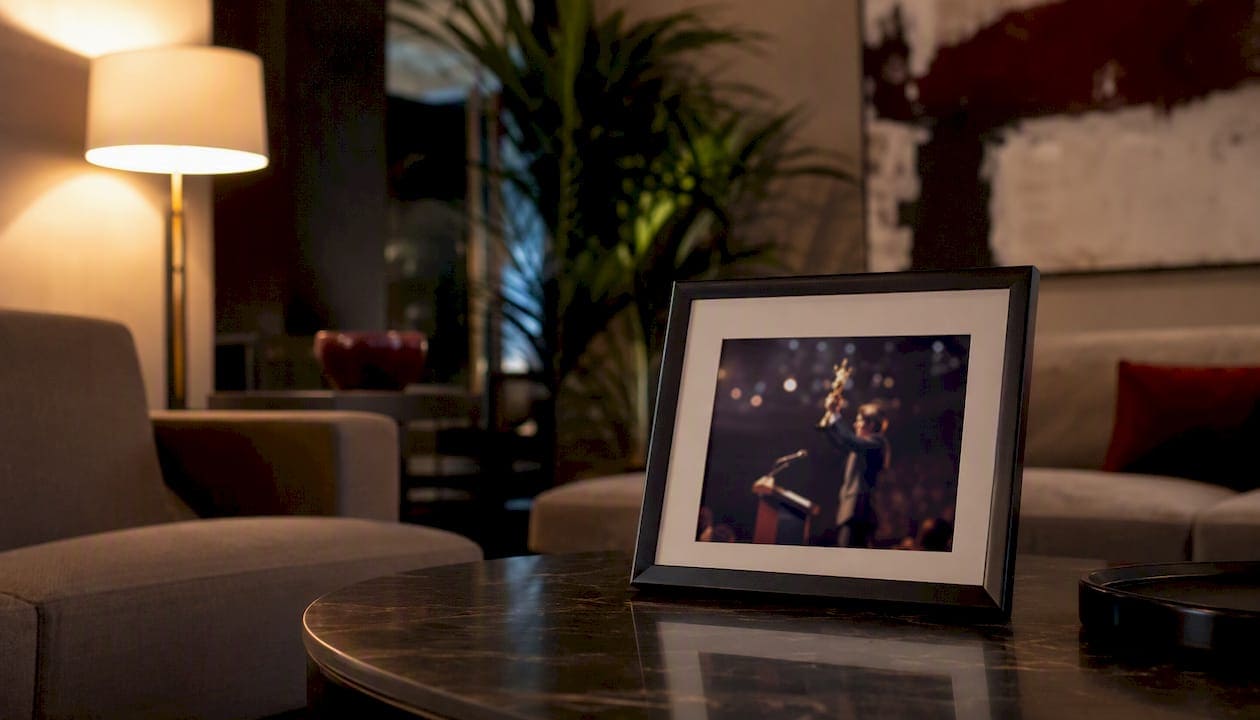
Share winner photos in internal newsletters and Slack channels within the first day, while the win is still the topic of conversation. Print a framed copy for the winner’s desk or office, not because it’s a grand gesture but because physical recognition tends to outlast a digital post that scrolls away in an hour. Feature winners on the company intranet or all-hands deck at the next internal meeting, giving leadership a natural, low-effort way to publicly acknowledge the achievement again.
Recruiting materials benefit from the same photos. A candidate scanning a careers page responds differently to a genuine shot of employees being recognized on stage than to a stock photo of people smiling around a laptop. That authenticity is difficult to manufacture after the fact, which is exactly why the capture quality on the actual night matters so much.
How Photographers See the PR Side of Awards Nights
Photographers and PR teams want the same outcome but often talk past each other about how to get there. From behind the camera, the biggest friction point isn’t creative disagreement. It’s timing. A PR brief that says “get great shots of everyone” without specifying priority order forces the photographer to make split-second judgment calls about who matters most in a room where every award moment is genuinely non-repeatable. You don’t get a second take on a live handoff.
What tends to work best is a brief that respects both sides of the equation: it tells the photographer exactly what PR needs without micromanaging the technical execution. Say what you need the image for. Press release, sponsor report, recruiting deck. Let the photographer decide the lighting angle and positioning to get it, because that’s the part they’ve spent years refining and the part a generic instruction sheet can’t improve on.
There’s also a practical argument for hiring locally in a city like New York. A photographer who already knows the lighting quirks of a given Financial District ballroom, or who has shot enough galas at a specific Midtown venue to know exactly where the stage lighting throws harsh shadows, saves you the guesswork that costs time on the actual night. Local production expertise tends to translate directly into faster setup, fewer surprises, and a shooter who isn’t discovering the room for the first time when the ceremony starts.
What to Expect When You Hire Ken Jones Photography for an Awards Ceremony
Most PR teams handling awards night are choosing between a general event photographer with no PR background and a full production studio built around usable deliverables. Ken Jones Photography, based in Manhattan’s Financial District, sits firmly in the second category: event coverage built specifically around what a press pack, a sponsor report, and a social team actually need, not just a gallery of nice-looking photos delivered whenever they happen to get finished.
Every booking starts with a planning conversation that maps your award categories, sponsor obligations, and distribution timeline before the shoot day arrives. From there, you get production support that covers lighting, positioning, and staffing for multi-award events, along with rapid delivery workflows built for winner-first priority and metadata-ready files your team can hand straight to journalists. Rights and sponsor usage get clarified upfront, so nobody’s emailing about licensing three weeks after the event. If you also need short-form video from the same night, combining photo and video capture in one production covers both without doubling your production cost.
If your next awards ceremony is on the calendar, reach out through Ken Jones Photography’s commercial and event services page to request a quote and get your shot list and delivery timeline mapped before the invitations go out.
Sources
FAQ
What Does PR Mean in the Context of Photography?
In photography terms, PR refers to using images and video to shape public perception of a brand, event, or individual, typically through media coverage, sponsor materials, and social sharing. Award ceremony photography supports PR by supplying the visual proof that a story, press release, or sponsor report needs to feel credible.
How Do You Take Good PR Photos at an Award Show?
Prioritize the winner handoff shot above everything else, shoot in multiple aspect ratios for press and social reuse, and set a delivery SLA that gets winner images out within an hour of the win. Working with a photographer who understands editorial-style PR photography rather than generic event coverage makes a measurable difference in how usable the final images are.
What Is the Most Prestigious Award for Photography?
This varies heavily by discipline and country, and there’s no single universally recognized “top” photography award across all genres, since photojournalism, fine art, and commercial photography each have their own respected award bodies.
How Fast Should Award Ceremony Photos Be Delivered?
Winner photos should reach your press and social teams within 60 minutes of the win, with a full gallery delivered within about three hours, based on delivery benchmarks used across corporate awards coverage. Fast selects for broader use can follow within 24 to 48 hours, with the complete edited gallery arriving within 72 hours.
Can Ken Jones Photography Handle Both Photo and Video at an Awards Ceremony?
Yes. Ken Jones Photography offers combined photo and video capture in a single production, which means a ceremony can generate both stills for press and sponsor use and short-form video clips for social, without booking two separate crews.