
TL;DR:
- Booking a full-production portrait session ensures artists receive a cohesive set of images and clips from one well-organized day.
- Artists should decide their usage, visual style, and deliverable formats before contacting the studio to ensure consistency and efficiency.
Book a full-production creative portrait session at a studio that delivers a hero image, multi-aspect crops, and short-form clips in one day. That single decision keeps your press kit, streaming profiles, and social content coherent. Before you contact any studio, lock three things: where each image will be used, one primary visual lane, and the exact deliverable formats you need.
- Usage first. Decide whether images go to press kits, Spotify for Artists profiles, social ads, or label announcements before you brief anyone.
- One visual lane. Controlled studio portrait, daylight street, backstage realism, or cover-art look. Pick one and hold it.
- Multi-aspect deliverables. Hero horizontal, square (1:1), vertical 9:16 stills, and short-form clips. Magnetic Magazine recommends locking usage and a single visual lane before hiring to keep assets coherent across press and streaming.
Table of Contents
- What decisions should you make before contacting a studio?
- What assets should one shoot produce for a music artist?
- How should you structure the shoot day?
- What technical specs should you request from the studio?
- What questions should you ask, and what are the red flags?
- What does a three-week shoot-to-release workflow look like?
- What does Ken Jones Photography deliver for music artists?
- How do you coordinate a shoot around touring and recording?
- Why working with a music-genre specialist matters
- How do post-shoot approvals and final delivery work?
- Studio vs. on-location: which is right for your release?
- Key Takeaways
- What most artists get wrong about the hero image
- Ken Jones NYC: full-production portrait sessions for music artists
- Useful sources and further reading
- FAQ
What decisions should you make before contacting a studio?
Define where every image will live before you pick up the phone. Press kit placement, streaming cover, social feed, paid ads — each has different resolution and crop requirements, and a studio that knows your priorities will frame and light accordingly.
Choose one primary visual lane and commit to it. Artists who try to cover studio portrait, street editorial, and backstage grit in a single half-day almost always end up with a fragmented set that serves none of those purposes well.
- Identify your top two usage destinations and their required formats.
- Decide on a single dominant look: controlled studio, natural light, or environmental.
- List the orientations you need: horizontal hero, square profile, vertical 9:16.
- Confirm any licensing limits with your label or management before the shoot.
Pro Tip: Set your crop and aspect-ratio priorities before the studio sets a single light. Framing decisions made at the start of a shoot are nearly impossible to fix in post.
What assets should one shoot produce for a music artist?
A well-planned press shoot typically delivers around 15 final images across orientations and resolutions, plus a signed release and contact information. That is a practical baseline. A production-focused studio should exceed it with 12–15 clips.
| Asset | Spec | Notes |
|---|---|---|
| Hero image | Full-res JPG/TIFF, 3,000px+ | Primary press and streaming use |
| Edited photo set | 15 images, horizontal/square/vertical | Multiple crops per key frame |
| Short-form clips | 12–15 clips, 15–30s, 1080×1920 9:16 | Pre-save, Reels, TikTok |
| Streaming cover crop | 3,000×3,000px minimum | DSP metadata requirements |
| Signed release | PDF, countersigned | Usage and territory specified |
| Photo credit line | Text file | Required by most publications |
Studios should also supply clear usage terms in writing. Vague rights language is the single most common post-shoot dispute.
How should you structure the shoot day?
Two locations is the recommended sweet spot for an indie shoot: one controlled studio setup and one environmental or location setup. More than two locations usually means rushed transitions and inconsistent lighting.
- Clip capture. Block 45–60 minutes specifically for short-form vertical clips, targeting 8–12 clips across performance, lyric, and behind-the-scenes families.
| Session type | Duration | Locations | Outfits | Estimated deliverables |
|---|---|---|---|---|
| Half-day | 4 hours | 1 | 1–2 | 10–15 images, 4–6 clips |
| Full day | 8 hours | 2 | 2–3 | 15 images and 12–15 clips |
What technical specs should you request from the studio?
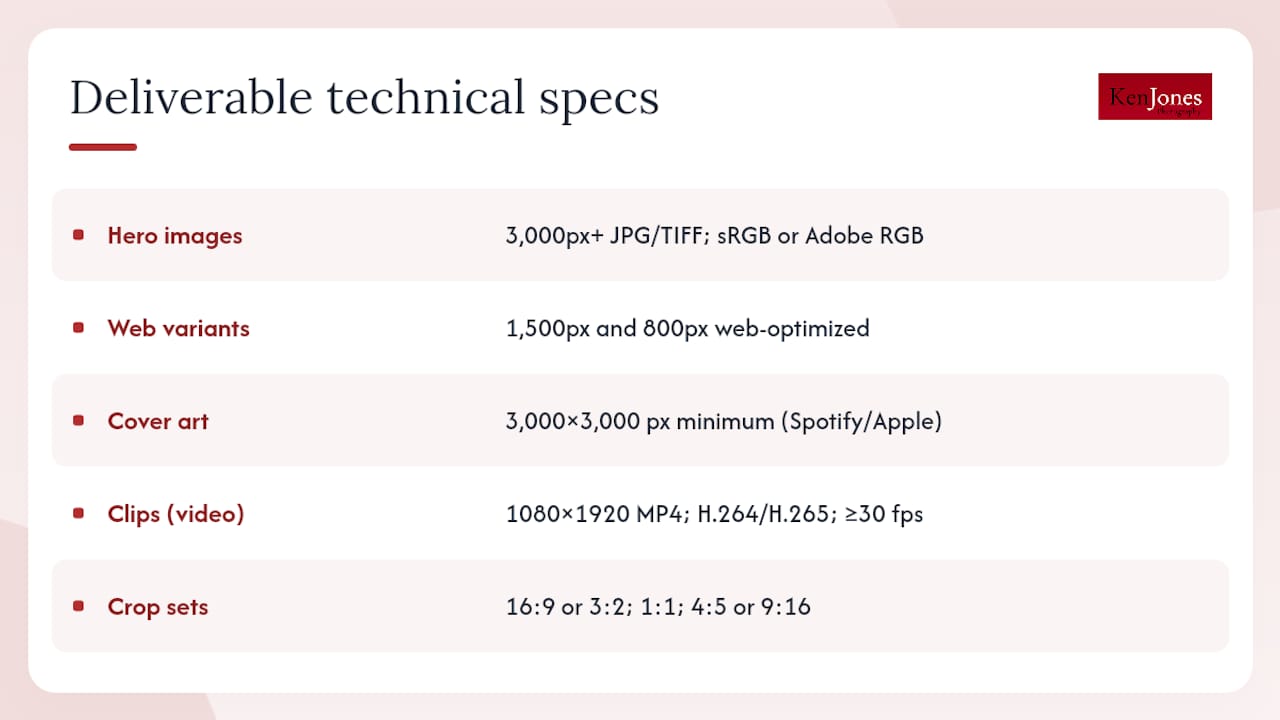
Request deliverables in writing before you sign anything. For hero images: high-res JPG or TIFF at 3,000px or wider, sRGB color profile for web use, Adobe RGB if you plan heavy post-production work. Web-optimized variants at 1,500px and 800px save time later. For clips: 1080×1920 MP4, H.264 or H.265, at minimum 30fps.
Spotify for Artists and Apple Music both require streaming cover art at 3,000×3,000px minimum. Submitting an under-spec image delays distribution and forces a resubmission cycle that can push your release date.
Crop sets to request: horizontal hero (16:9 or 3:2), square (1:1), headshot vertical (4:5 or 9:16). If you plan to retain RAW files for future retouching, confirm the studio delivers RAW or minimally compressed HEIF masters, not just processed JPGs.
Pro Tip: Ask the studio to confirm color space at delivery. sRGB is correct for streaming and social; Adobe RGB files displayed without a color-managed viewer look washed out and can cost you a press placement.
What questions should you ask, and what are the red flags?
Questions to ask every studio:
- Can you show sample deliverables with streaming-profile crops included?
- Do you capture short-form video clips in the same session?
- What is your retouch policy and how many revision rounds are included?
- How many assistants are on set, and do you coordinate hair and makeup?
- What is your standard turnaround time?
Red flags to walk away from:
- Vague usage rights with no written license or territory specified.
- No signed release form offered at booking.
- No sample crops formatted for DSP profiles.
- No provision for short-form clip capture.
Pricing guidance: A half-day studio session with a photographer and one assistant typically runs $800–$2,500 depending on market and experience level. A full-day session with hair and makeup, video capture, and retouching runs higher. What drives cost up: on-location permits, additional crew, same-day turnaround, and extensive retouching. Choosing the right studio for your brief matters as much as the day rate.
What does a three-week shoot-to-release workflow look like?
A 21-day release workflow treats the visual layer as its own production track alongside the audio master. Lock creative direction early; late changes cascade into reshoots and missed deadlines.
- Week 1 (Days 1–7). Lock creative direction, finalize moodboard, confirm studio date, and align with audio master delivery.
- Week 2 (Days 8–14). Shoot day. First edit delivered within 3–5 business days. Artist review and one revision round.
- Week 3 (Days 15–21). Final asset delivery. Hero image live on DSPs, streaming cover verified, short-form clips scheduled for pre-save and release day.
Release-day checklist:
- Hero image confirmed live on all streaming profiles.
- Streaming cover art verified at correct resolution.
- Short-form clip scheduled on Reels and TikTok.
- Pre-save link active with correct artwork.
What does Ken Jones Photography deliver for music artists?
Ken Jones Photography handles the full production stack: creative direction, studio and location production at FultonStudio in Manhattan’s Financial District, hair and makeup coordination, video capture, retouching, and formatted deliverables ready for press and streaming. Musicians and performers are a core part of the studio’s client work, alongside fashion brands, agencies, and corporate clients.
The most common mistake music artists make on a production day is arriving without a ranked shot list. They know they want a hero image, but they haven’t decided which look it is. By mid-session, the team has covered three directions and none of them deeply. The fix is simple: name your hero shot before you walk in, and protect the first 90 minutes for it.
Services include:
- Creative direction and pre-shoot planning.
- Studio and location production with full lighting setups.
- Hair and makeup coordination.
- Short-form video clip capture alongside stills.
- Retouching and multi-format delivery (hero, crops, clips).
How do you coordinate a shoot around touring and recording?
Book the studio date at least three weeks before your release date, which gives you buffer for editing, approvals, and any reshoots. If you’re mid-tour, a half-day session on a travel day or day off is realistic. The key is locking the date before audio mastering is complete, not after, so visuals and audio ship together.
Keep the shoot brief tight when time is short. One location, two outfits, and a focused shot list produce a cleaner result than an ambitious multi-location day squeezed into four hours.
Why working with a music-genre specialist matters
Photographers who work regularly with musicians understand performance energy, how to direct someone who moves rather than poses, and how to build a lighting setup that reads well in motion for clips. Collaborative direction, tailored lighting, and guided posing produce press-usable images that function across magazines, streaming platforms, and campaigns.
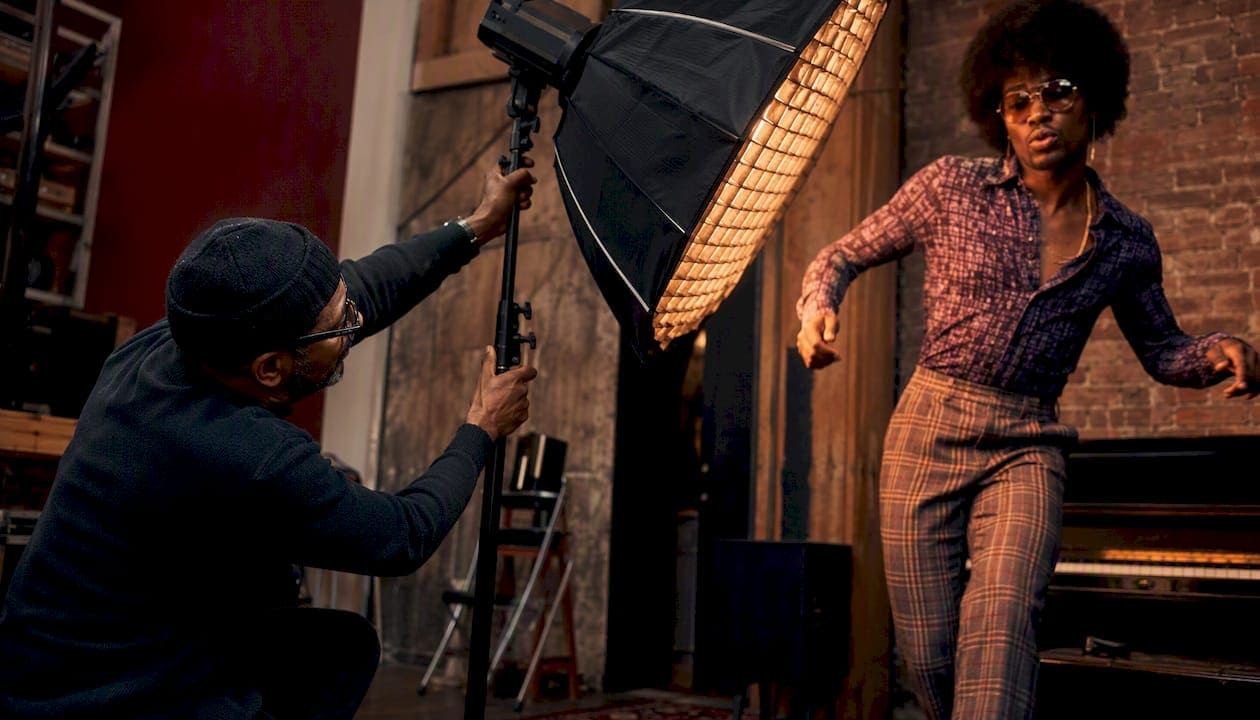
Genre fluency also affects wardrobe and location choices. A photographer who has shot R&B artists knows that a clean studio background reads differently than it does for a rock act, and they’ll brief you accordingly rather than defaulting to a generic setup.
How do post-shoot approvals and final delivery work?
A standard workflow runs: first edit delivered for review, one round of revision requests, final delivery. Most production-focused studios turn around a first edit in 3–5 business days. Plan your shot list from the song outward so clip families (performance, lyric, BTS) are captured intentionally and not assembled from leftover footage.
Request a structured delivery folder: hero image, crop variants, web-optimized versions, and clips in a single organized transfer. Chasing individual files from a studio after delivery is a time sink that delays your release.
Studio vs. on-location: which is right for your release?
Studio gives you controlled light, consistent backgrounds, and the ability to reshoot a frame without weather or permit complications. It’s the right call for cover art, press kit heroes, and streaming profiles where clean, repeatable framing matters.
On-location adds context and personality. Small, focused light sources and on-site assistants expand expressive possibilities in location portraiture and produce distinctive image details like hands and gestures that read well in editorial placements. The practical answer for most artists: one controlled studio setup for your hero and cover crop, one environmental location for supporting images and BTS clips.
Key Takeaways
The most effective approach to music artist portrait photography is booking a single full-production day that delivers a hero image, multi-aspect crops, and short-form clips from one coordinated session.
| Point | Details |
|---|---|
| Lock usage and visual lane first | Define press, streaming, and social destinations before briefing any studio. |
| Expect a full asset pack | A strong session delivers a robust collection of images, a set of short-form clips, and a signed release. |
| Two locations is the sweet spot | One controlled studio setup plus one environmental location covers most release needs. |
| Insist on written usage rights | Vague licensing is the most common post-shoot dispute; get terms in writing at booking. |
| Ken Jones Photography | Full-production sessions at FultonStudio covering stills, clips, and formatted deliverables for press and streaming. |
What most artists get wrong about the hero image
The conventional advice is to “bring variety” to a shoot. More looks, more locations, more options. In practice, that advice produces a fragmented set that serves no single purpose well. The artists who walk away with the strongest press kits are the ones who decided on their hero image before they arrived and protected the first 90 minutes of the session for it.
Lighting consistency is the piece most artists underestimate. A hero image shot in one light setup and a streaming cover shot in a different one will never feel like the same artist, even if the wardrobe matches. The visual lane has to hold across every asset, which means the studio needs to know the hero shot before they set a single modifier.
That discipline changes everything downstream: wardrobe selection narrows, location choices simplify, and the clip capture feels like an extension of the stills rather than a separate shoot bolted onto the end of the day.
Ken Jones NYC: full-production portrait sessions for music artists
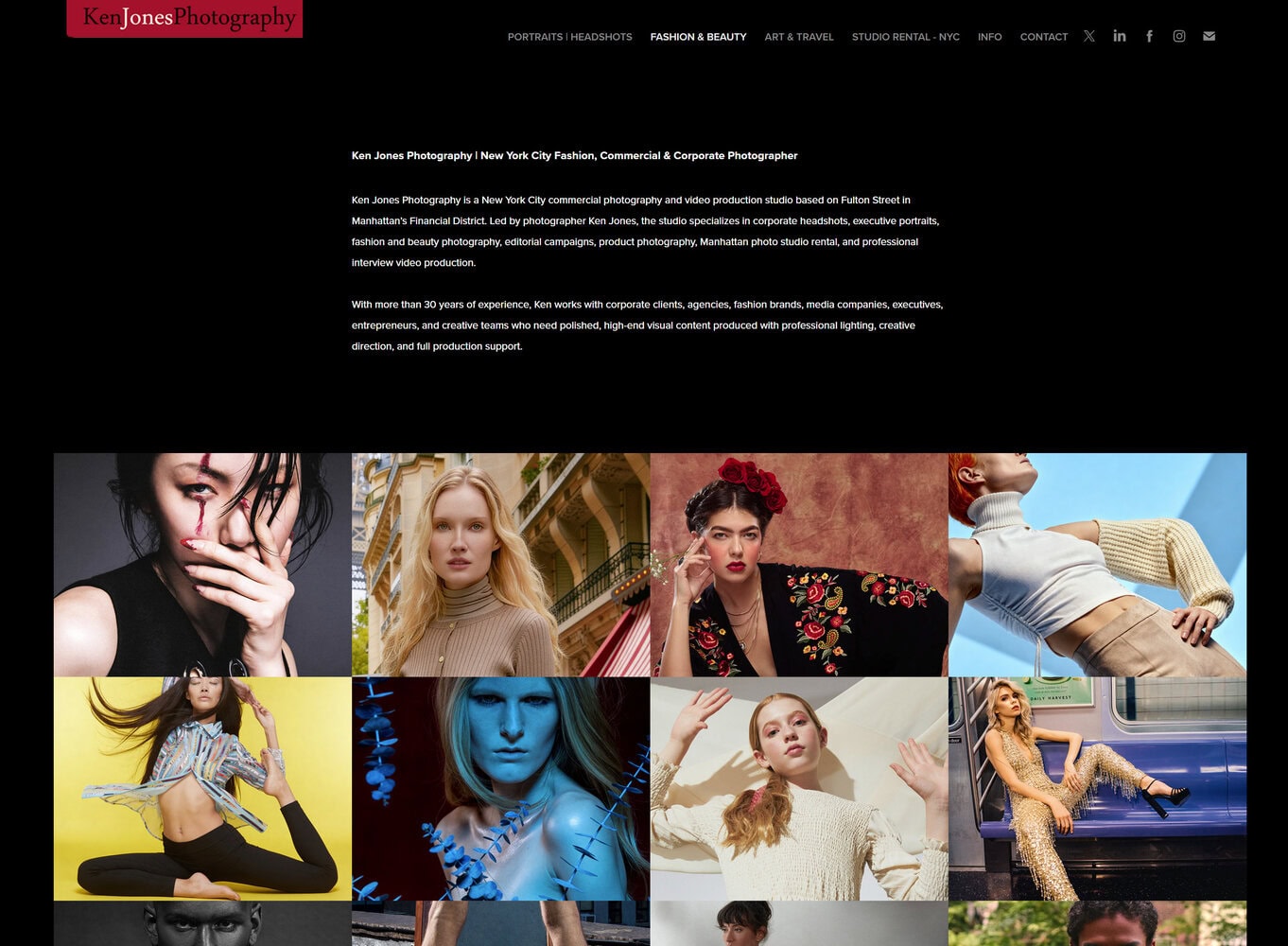
Ken Jones Photography offers music artists a practical alternative to piecing together a photographer, a video crew, and a retoucher separately. At FultonStudio in Lower Manhattan, one production day covers creative direction, studio lighting, hair and makeup coordination, short-form clip capture, retouching, and formatted delivery across hero, crop, and clip formats. Photo and video captured together in a single session keeps your visual lane consistent and your timeline on track.
If you have a release date in mind, reach out at kenjonesnyc.com to review your timeline and asset needs. The studio books in advance, so the earlier you confirm, the more production support options are available.
Useful sources and further reading
- A Guide to Photo Shoots For Artists That Covers Press, Streaming Profiles, And Social – Magnetic Magazine
- Plan a shoot for press photos — Direct.app (indie musician guide)
- 21-day release week visual timeline – Echonos
- How to plan a music video – Storyflow
- Music video promo 2026 – ChatCut
- ROCK PROMO PHOTOSHOOT – MORE THAN PHOTOS — Branded Baron – Creative Agency
- How I created remote portraits of musician Penelope Trappes — Dinalitovsky
- Standout photography for bands & musicians – Holladay Photography
FAQ
What should a music artist bring to a portrait studio session?
Bring a ranked shot list with your hero image identified, 2–3 outfits mapped to specific shot types, and a moodboard with at least five references. Arriving without a ranked shot list is the most common reason sessions run over time.
How many images should a music artist expect from one shoot day?
A full production day typically delivers an ample set of edited images across horizontal, square, and vertical crops, plus 12–15 short-form clips suitable for multiple platforms. A half-day session produces 10–15 images and 4–6 clips.
Does Ken Jones Photography capture video clips in the same session as stills?
Yes. Ken Jones Photography covers photo and video in a single production day at FultonStudio, delivering formatted stills and short-form 9:16 clips together so your visual lane stays consistent across all platforms.
What resolution does a streaming cover image need to be?
Spotify for Artists and Apple Music both require cover art at a minimum of 3,000×3,000px. Submitting an under-spec image delays distribution and requires resubmission.
How far in advance should a music artist book a portrait studio?
Book at least three weeks before your release date to allow time for editing, one revision round, and final asset delivery. Studios with full production support, including hair, makeup, and video capture, often book further out.