
TL;DR:
- Beauty photography combines technical precision with creative collaboration to produce compelling images of models and products. Achieving optimal results relies on proper lens choice, lighting setups like butterfly or clamshell, and rigorous workflow discipline, including white balance calibration and shot list preparation. Emerging trends emphasize authenticity and natural aesthetics, supported by AI tools and hybrid content formats that reflect a shift towards real, emotionally resonant imagery.
Beauty photography is the art and science of capturing flawless, compelling images of models and beauty products using specialized lighting, equipment, and creative direction. In the industry, it is formally recognized as a distinct genre within commercial and editorial photography, sitting at the intersection of fashion portrait photography, product imaging, and fine art portraiture. The genre demands collaboration among photographers, makeup artists, stylists, and creative directors, all working toward a single visual goal. Image quality directly influences purchase decisions for 60% of beauty shoppers, which means the stakes for getting this work right extend well beyond aesthetics. Whether you are building a personal portfolio or producing a full brand campaign, understanding the technical and creative foundations of this genre is what separates competent work from images that actually move product.
What are the key technical and artistic elements in beauty photography?
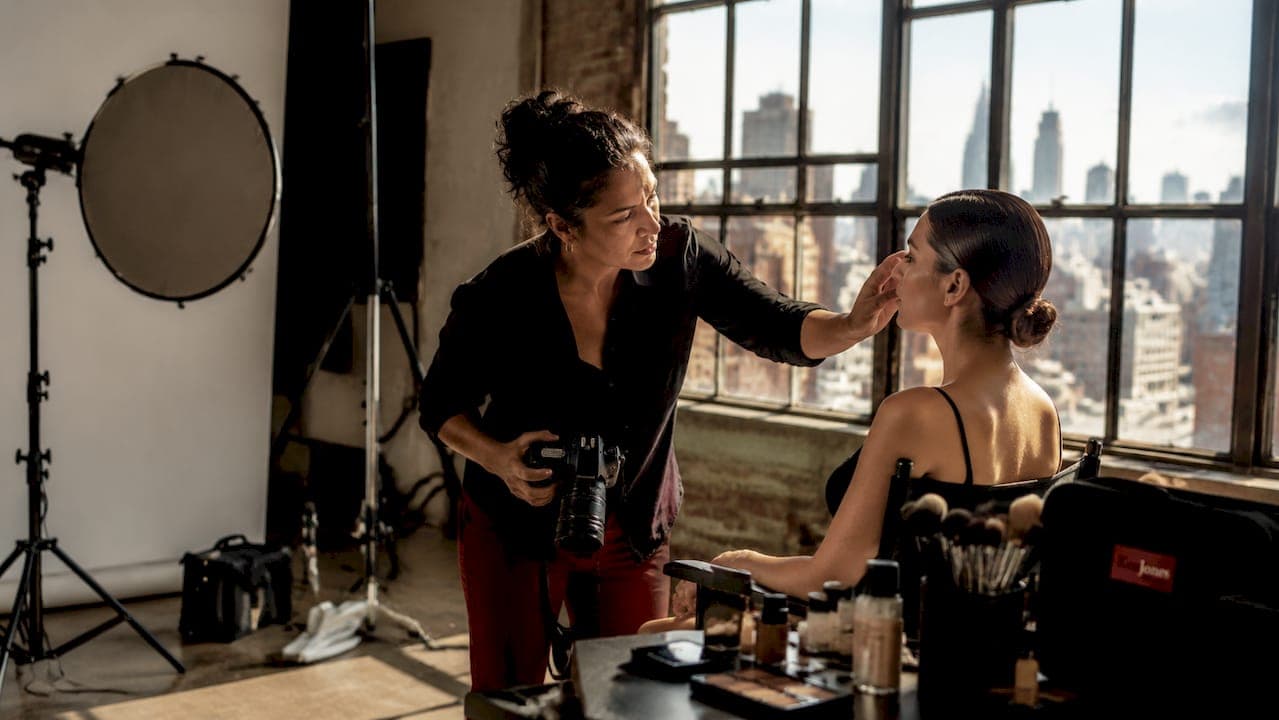
Beauty photography succeeds or fails on two fronts: technical precision and creative collaboration. Neither works without the other. A perfectly calibrated lighting setup cannot compensate for poorly applied makeup, and a brilliant makeup artist cannot save an image shot with the wrong lens at the wrong aperture.
Lens and aperture choices
The lens you choose determines the character of the image before you fire a single frame. For product macro shots, use f/8 to f/16 to achieve the deep focus needed to render packaging detail and texture with clarity. For beauty model portraits, open up to f/2.8 to f/4 to create the soft, creamy background separation that flatters skin and draws the eye to the face. A 100mm macro lens from Canon or Nikon handles both tasks well, though many working beauty photographers keep a 105mm Nikon Micro-Nikkor and an 85mm portrait lens on set simultaneously.
Lighting setups that define the genre
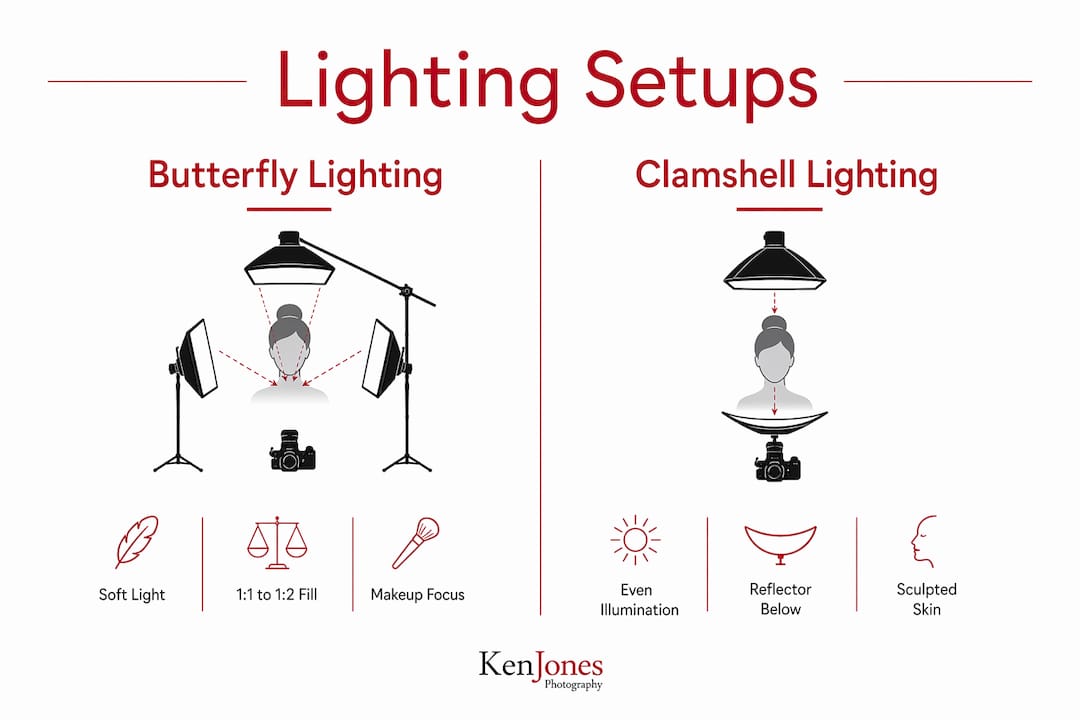
Butterfly lighting and clamshell lighting are the two industry-standard setups for makeup-focused beauty work. Butterfly lighting places the main light source directly above the camera axis, creating a small shadow beneath the nose that resembles butterfly wings. Clamshell lighting adds a fill source below the camera, typically a reflector or a second softbox, to eliminate under-chin shadows and produce the smooth, even skin rendering you see on magazine covers. Both setups are designed to show makeup application at its best, which is why they have remained dominant in the genre for decades.
Color accuracy and white balance
Color accuracy is non-negotiable in beauty photography, particularly for cosmetic product work where a lipstick shade must match its packaging and its digital swatch. Professional workflows use native ISO 100 to 200 for noise reduction and gray cards for custom white balance calibration. This discipline prevents the color drift that occurs when shooting under mixed light sources in a studio environment. A gray card costs less than ten dollars and saves hours of color correction in post.
Collaboration with makeup artists and stylists
The best beauty images are team efforts. Working with makeup artists trained in methods like Charlotte Tilbury or Pat McGrath is critical because their contour techniques interact directly with your lighting to produce the desired effect. A makeup artist who understands how butterfly lighting reads on skin will build contour differently than one preparing a subject for natural window light. Communicate your lighting plan before the model sits in the chair, not after.
Pro Tip: Send your lighting diagram to the makeup artist and stylist before the shoot day. It takes five minutes and eliminates the most common source of creative misalignment on set.
How do lighting and lens choices shape the final image?
The relationship between light quality and lens selection is the single most consequential technical decision in a beauty shoot. Get it right and the image does the work. Get it wrong and no amount of retouching recovers what was lost at capture.
Butterfly lighting and fill ratios
Butterfly lighting uses a 1:1 to 1:2 fill ratio that creates a soft, flattering effect ideal for makeup-precise images and classic beauty covers. A 1:1 ratio produces flat, even illumination that emphasizes skin texture and makeup color without shadow interference. A 1:2 ratio introduces subtle shadow contour that adds dimension to the face while still keeping the overall look clean. The choice between these two ratios is an editorial decision, not a technical default, and it should be made before the model arrives on set.
Hard light vs. soft light in editorial beauty
The choice between hard and soft butterfly lighting is deliberate: softer light serves makeup detail and skin clarity, while harder light exaggerates cheekbones and creates the dramatic, fashion-forward edge you see in publications like Vogue or W Magazine. Hard light from a bare strobe or a small reflector dish produces specular highlights that sculpt the face aggressively. This works brilliantly for editorial beauty shots where the goal is mood and attitude, but it can be unforgiving on skin texture if retouching is not planned into the budget.
| Lighting style | Best use | Fill ratio | Effect on skin |
|---|---|---|---|
| Soft butterfly | Makeup campaigns, beauty covers | 1:1 | Smooth, even, color-accurate |
| Hard butterfly | Editorial fashion, dramatic portraits | 1:2 or less | Sculpted, high-contrast, textured |
| Clamshell | E-commerce, skincare, close-up detail | 1:1 | Shadowless, clinical, product-focused |
| Soft directional | Natural beauty photography, lifestyle | Variable | Dimensional, warm, approachable |
Portrait lenses vs. macro lenses
An 85mm or 105mm portrait lens renders skin with a compression and warmth that flatters the subject and creates the selective blur that beauty clients expect. A macro lens at the same focal length delivers clinical sharpness across the entire frame, which is exactly what you want for a lipstick texture shot or a foundation bottle but can feel harsh on a model’s face. Many beauty photographers use a portrait lens for the model and switch to a macro for product detail within the same shoot, keeping the visual language consistent while serving each subject’s technical requirements.
Pro Tip: When shooting beauty portraits, focus on the near eye and let the far eye fall slightly soft. This creates depth without losing the sharpness that makeup detail requires.
What are the best practices for planning and executing a beauty shoot?
Production planning separates professional beauty photography from amateur attempts. The difference between a shoot that wraps on time with every image delivered and one that runs three hours over budget almost always comes down to preparation.
Building a shot list that works
Standardized shot lists including hero shots, back labels, and texture close-ups enable scalable content creation across multiple retail platforms. For a beauty brand client, a complete shot list typically includes a hero image on white, a lifestyle or model image, a texture close-up, a packaging detail shot, and a group or collection image. Each of these serves a different platform: the hero image goes to Amazon and Sephora, the lifestyle image goes to Instagram and editorial placements, and the texture shot supports paid advertising. Building this list before the shoot day means you never leave the studio without the images the client actually needs.
A practical shoot planning sequence looks like this:
- Confirm the brand’s usage rights requirements and platform destinations before building the shot list.
- Create a mood board using references from publications like Allure, Harper’s Bazaar, or Vogue Beauty to align creative direction with the client’s expectations.
- Brief the makeup artist and stylist on the lighting plan and the specific looks required for each shot.
- Set up and test all lighting configurations before the model arrives on set.
- Shoot product images first while the model is in hair and makeup, then transition to model shots.
- Capture variations in expression and angle for each setup rather than moving on after a single frame.
Technical workflow on set
Discipline in your technical workflow pays dividends in post-production. Shoot at your camera’s native ISO, which is typically ISO 100 or 200 on most professional bodies from Sony, Canon, or Nikon, to minimize noise in skin tones. Calibrate white balance with a gray card at the start of each lighting setup, not just at the beginning of the day. If the light changes or you move a modifier, recalibrate. This takes thirty seconds and prevents the color inconsistency that makes retouching cosmetic images far more difficult than it needs to be.
Retouching for beauty work follows a clear hierarchy. Frequency separation is the standard technique for separating skin texture from tone, allowing retouchers to correct color and luminosity without destroying the natural skin detail that modern beauty clients expect. Global skin smoothing is largely out of fashion. Clients and art directors now ask for skin that looks healthy and real, not plastic.
Directing models for authentic results
The most technically perfect lighting setup produces a flat image if the model is uncomfortable or disconnected. Create a relaxed atmosphere on set by playing music, keeping the crew small, and giving clear, specific direction rather than vague encouragement. Ask the model to think about something specific rather than instructing them to “look happy.” Specific emotional prompts produce specific, readable expressions. This is where posing guidance for beauty shots becomes genuinely useful, particularly for photographers who are newer to directing talent.
Key considerations for model direction:
- Give the model a clear sense of the character or mood you are building, not just the technical requirements of the shot.
- Shoot continuously during transitions between poses, as the most natural expressions often occur when the model thinks the camera is not active.
- Check the monitor with the makeup artist after every setup change to confirm the look is reading correctly on camera.
What emerging trends are shaping beauty photography in 2026?
The genre is shifting in ways that reward photographers who can balance technical control with genuine emotional intelligence. The most significant change is not technological. It is philosophical.
The dominant trend in 2026 is the move toward authenticity over perfection. Authentic beauty photography sessions emphasize emotional connection and safe, intuitive environments over posed perfection to capture internal states. Photographers like Maureen Du Preez have built entire practices around grounding sessions that create authentic portraits by allowing subjects to express freely without forced posing. This approach is influencing commercial beauty work as brands recognize that consumers respond more strongly to images that feel real than to images that feel produced.
The integration of short-form cinematic content alongside stills is also reshaping how beauty photographers structure their shoots. Brands now routinely request a combination of high-resolution stills and short video clips from the same session, which requires photographers to think about movement, pacing, and sound in addition to the traditional concerns of light and composition. Studios in NYC and internationally are building hybrid production capabilities to serve this demand.
AI-assisted retouching tools, including Capture One’s AI masking and Adobe Photoshop’s Generative Fill, are changing the post-production workflow without replacing the photographer’s judgment. The tools accelerate technical tasks like background replacement and skin tone correction, but the creative decisions about how much retouching serves the image still require a human eye. The risk is over-reliance on these tools at the expense of getting the capture right in camera, which remains the foundation of quality beauty work.
Natural beauty photography techniques are also gaining ground in commercial contexts. Soft window light, minimal makeup, and unretouched skin texture are appearing in campaigns for brands like Glossier and Fenty Beauty, reflecting a broader cultural shift toward representation and authenticity. The technical challenge is that natural light is less controllable than studio light, which means photographers need stronger skills in reading and modifying ambient conditions.
Key takeaways
Beauty photography requires precise lighting, calibrated technical workflow, and genuine creative collaboration to produce images that serve both editorial and commercial goals.
| Point | Details |
|---|---|
| Lighting ratio determines mood | A 1:1 fill ratio emphasizes makeup detail; a 1:2 ratio adds editorial contour and dimension. |
| Aperture serves the subject | Use f/2.8 to f/4 for model portraits and f/8 to f/16 for product macro shots. |
| Color accuracy starts at capture | Shoot at native ISO 100 to 200 and calibrate white balance with a gray card for every setup change. |
| Shot lists protect the budget | Standardized shot lists covering hero, texture, and detail images prevent missed deliverables and overruns. |
| Authenticity is a commercial asset | Brands increasingly favor emotionally resonant images over technically perfect but disconnected portraits. |
What 30 years of beauty shoots actually taught me
I have been photographing beauty campaigns and editorial work in New York City for over three decades, and the lesson that took me the longest to fully absorb is this: the most expensive mistake on a beauty shoot is not a technical one. It is a communication failure.
Early in my career, I showed up to a cosmetic campaign shoot with a fully planned lighting setup, a tested camera configuration, and a clear shot list. What I did not do was brief the makeup artist on the specific lighting I was using. She built a contour that was designed for natural light. Under my butterfly setup, the contour read as muddy and overdone on camera. We lost two hours resetting the makeup, and the client was not happy. That experience changed how I run every shoot since.
The second thing I have learned is that beauty photography lighting and retouching decisions are inseparable. How you light the skin determines how much retouching the image needs. Soft, well-controlled light from a large modifier reduces the retouching burden significantly. Hard light from a small source creates drama but also creates work in post. Neither is wrong, but both are choices with downstream consequences that affect your budget and your timeline.
The third observation is about authenticity. I have watched the industry shift from the hyper-retouched, plastic-skin aesthetic of the early 2000s toward something more grounded and human. The photographers who are thriving in 2026 are the ones who can create technically polished images that still feel like they were made by a person, not assembled by a committee. That balance is harder to achieve than it sounds, and it requires genuine trust between the photographer and the subject on set.
NYC gives you access to some of the best makeup artists, stylists, and models in the world. Use that access deliberately. Build a creative team you trust and brief them thoroughly. The images will show it.
— Ken
Work with Kenjonesnyc for your next beauty project
Kenjonesnyc has spent over 30 years producing high-end beauty and fashion imagery from a Manhattan studio built specifically for this kind of work. The studio is equipped with the lighting configurations described in this article, including full butterfly and clamshell setups, and the team has the production experience to execute both editorial beauty shots and commercial product campaigns efficiently.
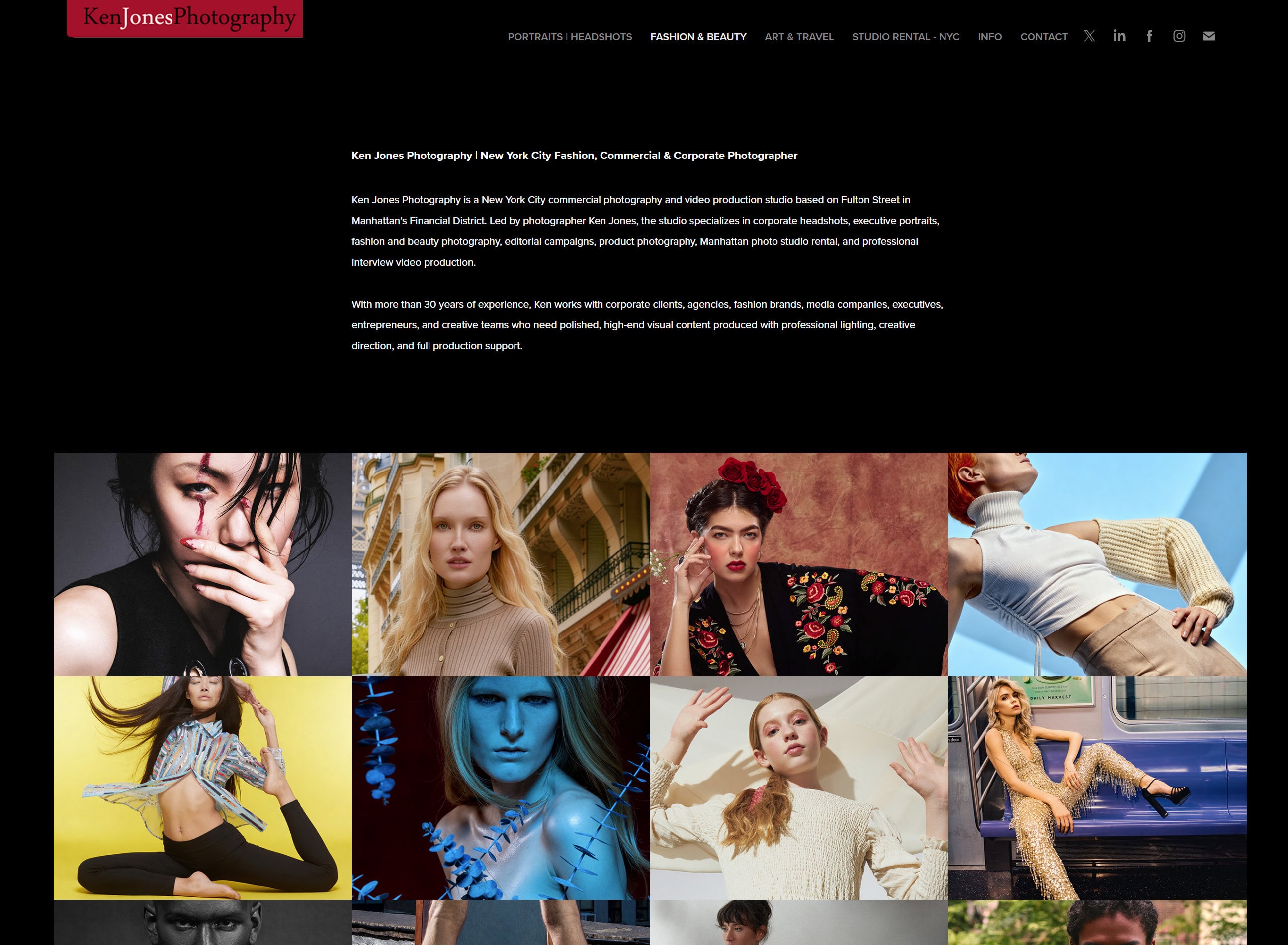
Whether you are a brand planning a cosmetic campaign, a creative director building a seasonal lookbook, or a photographer looking to rent a fully equipped NYC studio, Kenjonesnyc offers the resources and expertise to support your vision. Explore the Beauty by Bora editorial to see the studio’s beauty portrait work, or browse the advertising campaign portfolio for commercial beauty and fashion examples. To discuss your project or book a consultation, visit kenjonesnyc.com.
FAQ
What is beauty photography?
Beauty photography is a specialized genre of commercial and editorial photography focused on capturing models, makeup, skincare, and beauty products with precise lighting and technical control. It encompasses both close-up portrait work and product imaging for campaigns, magazines, and e-commerce platforms.
What lighting setup is best for beauty portraits?
Butterfly lighting with a 1:1 to 1:2 fill ratio is the industry standard for beauty portraits, producing soft, flattering illumination that emphasizes makeup detail and skin clarity. Clamshell lighting, which adds a fill source below the camera, is preferred for shadowless close-up work.
What aperture should I use for beauty photography?
Use f/2.8 to f/4 for model portraits to create flattering background blur and smooth skin rendering. For product macro shots, use f/8 to f/16 to achieve the deep focus needed to capture packaging and texture detail accurately.
How do I prepare for a professional beauty shoot?
Build a detailed shot list covering hero images, texture close-ups, and detail shots before the shoot day. Brief your makeup artist on the lighting setup in advance, calibrate white balance with a gray card, and shoot at native ISO 100 to 200 for clean, color-accurate results.
How is natural beauty photography different from editorial beauty?
Natural beauty photography uses softer, often ambient light with minimal makeup to create approachable, authentic images suited to lifestyle brands and skincare campaigns. Editorial beauty photography uses controlled studio lighting, heavier makeup application, and deliberate styling to produce high-impact images for fashion publications and brand campaigns.