
TL;DR:
- Commercial photography creates images to meet specific business goals, such as increasing sales or brand awareness.
- Using the right style, like product or lifestyle photography, depends on the image’s intended purpose and target placement.
Commercial photography is defined as imagery created specifically to fulfill a business objective, whether that means driving sales, building brand recognition, or supporting a marketing campaign. The field spans a wide range of recognized styles, including product photography, lifestyle photography, fashion, corporate headshots, and architectural work. Each style carries its own technical requirements and creative logic. Understanding the types of commercial photography styles before you hire a photographer or brief a shoot saves time, budget, and the frustration of images that miss the mark entirely.
1. What are the most popular commercial photography styles?
Commercial photography’s outcome-based nature means every style exists to solve a specific business problem. The style you choose should follow directly from what you need the image to do, not from what looks impressive in a portfolio.
Product photography
Product photography produces clean, accurate images of goods for ecommerce platforms, print catalogs, and retail packaging. The industry term for a clean, isolated product image is a “packshot.” Packshots increase visibility on platforms like Google Shopping because they meet strict image quality and background requirements. The goal is accurate representation: correct color, clear detail, and no distracting elements.
Lifestyle photography
Lifestyle photography shows a product or service in real-world use. A skincare brand photographing its serum on a woman’s bathroom counter, morning light coming through the window, tells a story that a white-background packshot cannot. Lifestyle images reduce consumer uncertainty by showing scale, context, and how a product fits into daily life. That context directly improves click-through rates.
Fashion photography
Fashion photography covers on-model apparel and accessory imagery for brands, editorial clients, and lookbooks. It splits into two main variants: studio fashion, which controls every variable of light and background, and lifestyle fashion, which places the model in a real environment. Studio work delivers consistency across a collection. Lifestyle fashion builds emotional connection and brand world. Most fashion brands need both.
Corporate headshots
Corporate headshots are professional portraits of executives, team members, and business leaders. They appear on LinkedIn profiles, company websites, press releases, and annual reports. A well-executed headshot builds immediate credibility. Corporate portrait standards have evolved well beyond the plain gray backdrop, with environmental and lifestyle headshot options now common for brands that want to show personality alongside professionalism.
Architectural photography
Architectural photography documents buildings, interiors, and designed spaces for real estate listings, hospitality brands, and commercial property marketing. The technical challenge is managing mixed light sources, correcting perspective distortion, and making a space feel inviting without misrepresenting it. A hotel lobby shot that looks warm and spacious sells rooms. One that looks flat and cramped does not.
Food and hospitality photography
Food photography is driven almost entirely by lighting and styling. The goal is appetite appeal, which requires precise control of shadows, highlights, and color temperature. A restaurant chain photographing its menu items needs images that look consistent across print menus, digital ads, and social media. Poor food photography is one of the fastest ways a hospitality brand loses credibility with potential guests.
Pro Tip: Ask any photographer you’re considering to show you the brief they used for a past shoot. If they can’t produce one, that’s a warning sign. Every professional commercial shoot starts with a written brief.
2. How do commercial photography techniques differ by style?
Technical choices in commercial photography are not aesthetic preferences. They are problem-solving tools engineered to meet specific client goals. The lighting setup, lens choice, and post-production workflow all change depending on what the image needs to accomplish.
Lighting setups
Studio product and fashion photography typically uses controlled artificial light: softboxes, strip lights, and reflectors arranged to eliminate unwanted shadows and create consistent results across a full shoot day. Lifestyle photography often uses natural or mixed light to preserve authenticity. Food and beverage photography uses highly specific techniques. Backlighting a carbonated drink, for example, makes the bubbles glow and the liquid look alive. Light painting for automotive photography involves moving a light source during a long exposure to wrap reflective surfaces without creating harsh hotspots. These are not tricks. They are craft solutions to real optical problems.
Lens and camera selection
Full-frame camera bodies with a 24–70mm zoom lens handle the majority of commercial work efficiently. Professional production commonly adds an 85mm prime for portrait and headshot work, where the focal length flatters facial proportions and creates natural background separation. Macro lenses serve product and detail photography, capturing texture and surface quality that a standard lens cannot resolve at close range.
Composition and cropping protection
Commercial images must work across multiple layouts: a square social post, a horizontal web banner, a vertical print ad. Photographers who understand this build “protection” into their compositions by leaving negative space around the subject. Avoiding recropping problems requires planning the shot with the final layout in mind, not just what looks good in the viewfinder.
- Shoot tethered to a monitor so the client can approve composition in real time
- Build negative space into every frame for layout flexibility
- Use mood boards before the shoot to align on lighting direction and color palette
- Confirm final image dimensions and aspect ratios before the shoot day, not after
Post-production and AI tools
AI tools now assist with background generation and retouching in commercial workflows, reducing turnaround time on ecommerce shoots significantly. Retouching standards vary by style. Fashion and beauty work requires detailed skin retouching and color grading. Product photography requires precise color correction and, often, composite work to achieve results that a single exposure cannot deliver.
Pro Tip: Always confirm retouching scope in writing before the shoot. “Basic retouching” means something different to every photographer and every client.
3. Specialized commercial styles and emerging trends
Beyond the core categories, several specialized photography styles serve specific brand storytelling needs. These are not niche curiosities. They are standard tools in a well-planned commercial campaign.
Advertising and campaign photography
Advertising photography is concept-driven, high-production-value work created for specific campaign placements: billboards, magazine spreads, broadcast, and digital display. It typically involves a creative director, art director, stylist, hair and makeup team, and multiple lighting setups. The images are designed to carry a message, not just show a product. Kenjonesnyc’s advertising campaign work operates at this level, with full production management from concept through final delivery.
Flat lay and macro photography
Flat lay and macro photography provide detailed storytelling tools for luxury goods, cosmetics, and handcrafted products. A flat lay arranges products from a top-down perspective, creating a graphic, editorial quality that performs well on Instagram and Pinterest. Macro photography isolates texture, stitching, or surface detail that communicates quality at a level no wide shot can match. These styles typically function as supporting assets alongside main lifestyle or product images.
Group and collection photography
Group photography shows multiple products together, communicating a collection, a bundle, or a brand family. A skincare line photographed as a complete set signals cohesion and brand investment. The technical challenge is keeping every product in sharp focus while maintaining a composition that feels intentional rather than cluttered.
Cinemagraphs and motion-integrated stills
Cinemagraphs blend motion with stills by animating one element of an otherwise static image. A coffee cup with rising steam, a model’s hair moving in a breeze, a product rotating slowly. These formats perform strongly in digital display advertising because they attract attention without the production cost of full video. They sit at the intersection of photography and motion, and they require a photographer who understands both disciplines.
Hybrid digital and film approaches
Film photography is back in commercial work, not out of nostalgia but because the grain structure and color rendering of film stock create a texture that digital cannot replicate exactly. Brands targeting audiences who value authenticity and craft use hybrid approaches: shooting key campaign images on medium format film while handling ecommerce packshots digitally. The contrast between the two formats can itself become part of the brand story.
| Style | Primary use | Key technical requirement |
|---|---|---|
| Flat lay | Social media, editorial | Overhead rig, precise styling |
| Macro | Luxury product detail | Macro lens, controlled studio light |
| Cinemagraph | Digital display advertising | Motion capture, compositing software |
| Hybrid film/digital | Brand campaigns | Film processing, color matching |
| Group/collection | Ecommerce, lookbooks | Deep depth of field, consistent color |
4. How to choose the right commercial photography style for your brand
Choosing a photography style starts with a clear answer to one question: what do you need this image to do? The answer determines everything else, including budget, crew size, and the type of photographer you need.
D2C brands achieve the best conversion by combining studio packshots for product accuracy with lifestyle images that create emotional appeal. The packshot handles the rational decision. The lifestyle image handles the emotional one. Relying on only one type leaves money on the table.
Consider these factors before briefing any photographer:
- Product type: Physical goods with complex surfaces need studio control. Wearable products need on-model lifestyle work to show fit and movement.
- Marketing channel: A LinkedIn ad needs a different image than a Pinterest post or a Times Square billboard. Confirm placements before the shoot.
- Budget and production scale: A full advertising campaign with a creative team costs significantly more than an ecommerce packshot day. Both are legitimate. Know which one you’re buying.
- Photographer expertise: A headshot specialist is not automatically the right choice for a food campaign. Ask to see work in the specific style you need, not just a general portfolio.
- Usage rights: Commercial usage rights for a national campaign cost more than rights for a single social post. Clarify this in the contract before the shoot day.
One of the most common client mistakes is briefing a photographer on aesthetics alone. “We want something clean and modern” is not a brief. A useful brief specifies the product, the placement, the audience, and the business goal the image needs to support. A detailed photography brief prevents reshoots, reduces miscommunication, and gives the photographer the context they need to make real creative decisions.
Successful commercial photography starts with understanding the client’s goals, not with camera settings. Mood boards, reference images, and written briefs define campaign impact before a single light is set up. Skipping this step is the single most expensive mistake a brand can make on a shoot.
Pro Tip: Build your brief around outcomes, not aesthetics. “We need images that increase product page conversion by showing scale and texture” gives a photographer something to solve. “We want something that pops” does not.
For small businesses entering commercial photography for the first time, portrait and food photography offer accessible entry points with clear, measurable business value. Both styles have well-established technical standards, manageable production costs, and direct connections to revenue-driving platforms like Google Business, Yelp, and LinkedIn.
Key takeaways
The most effective commercial photography strategy pairs the right style with a specific business goal, backed by a written brief and a photographer with proven expertise in that category.
| Point | Details |
|---|---|
| Style follows business goal | Choose a photography style based on what the image must accomplish, not what looks impressive. |
| Packshots and lifestyle work together | Studio accuracy plus lifestyle appeal drives higher conversion for product-based brands. |
| Technical choices are problem-solving | Lighting, lens selection, and composition are engineered to meet brief requirements, not personal preference. |
| Pre-production prevents costly reshoots | Mood boards and detailed briefs protect budget and ensure images work across multiple layouts. |
| Specialized styles add depth | Flat lay, macro, cinemagraph, and hybrid film approaches serve specific storytelling needs beyond core categories. |
What 30 years of NYC shoots taught me about style selection
The biggest misconception I see from new clients is that style is a visual preference. They come in with a Pinterest board and say, “We want something like this.” That’s a starting point, not a brief. Style is a strategic decision. It determines crew size, lighting setup, post-production scope, and usage rights. Getting it wrong costs real money.
The second thing I’ve learned is that single hero images no longer suffice for modern marketing. A brand running campaigns across Instagram, LinkedIn, a website, and paid display needs a suite of assets: packshots, lifestyle images, detail shots, and at least one campaign-level image with real concept behind it. Clients who budget for one great image and then try to stretch it across every platform always end up disappointed.
The shoots I’m most proud of from my time working in Manhattan’s Financial District and on location globally are the ones where the creative concept was locked before we touched a camera. We knew the placement, the audience, the emotional register, and the technical requirements. The shoot itself was almost the easy part. The hard work happened in pre-production.
My honest advice to any marketer or business owner reading this: invest in the brief before you invest in the shoot. A well-written brief with clear business objectives will save you more money than any equipment upgrade or post-production shortcut. And when you’re evaluating photographers, ask them to walk you through how they approached a past brief. Their answer will tell you everything you need to know about whether they’re the right fit.
— Ken
Kenjonesnyc: commercial photography built around your business goals
Kenjonesnyc operates from a full-service studio in Manhattan’s Financial District with over 30 years of production experience across fashion, beauty, product, and advertising campaign photography. The studio handles every element of production, from casting and styling to location work and final retouching, so clients receive a complete image suite rather than raw files that still need work.
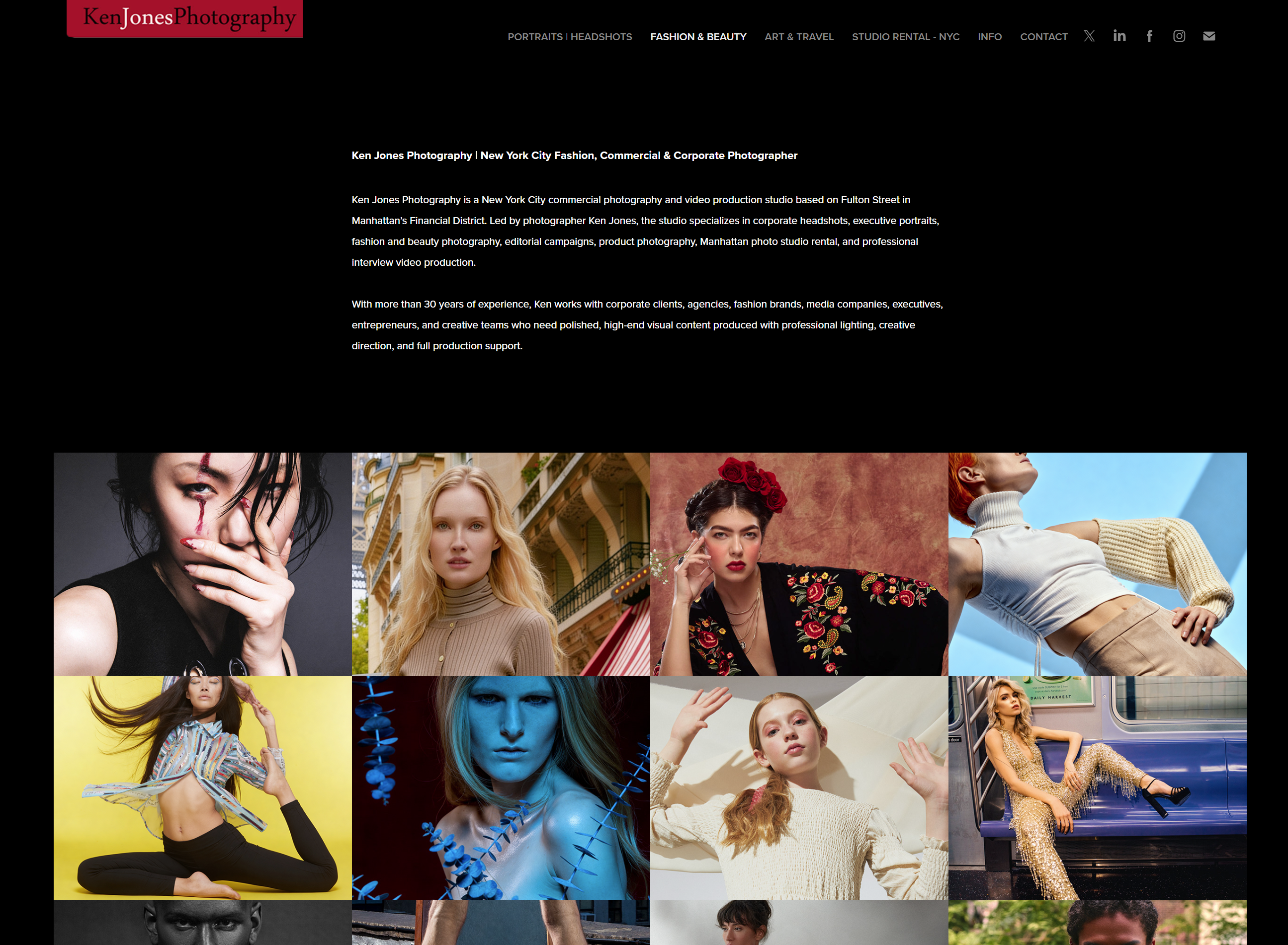
Whether you need clean ecommerce product photography, editorial fashion work, or a full campaign with concept development and creative direction, Kenjonesnyc brings the technical depth and production management to deliver images that perform. Contact the studio directly at kenjonesnyc.com to discuss your project and get a production plan built around your specific business goals.
FAQ
What are the main types of commercial photography styles?
The main types are product photography, lifestyle photography, fashion photography, corporate headshots, architectural photography, and food photography. Each style serves a distinct business purpose, from ecommerce conversion to brand storytelling.
How do I know which photography style my brand needs?
Start with the placement and the business goal. A product page needs a packshot. A brand campaign needs lifestyle or advertising photography. Match the style to the outcome, not to a visual preference.
What is the difference between lifestyle and product photography?
Product photography isolates the item for clarity and accuracy. Lifestyle photography shows the product in use within a real environment, building emotional context and helping buyers visualize ownership.
Why does commercial photography require a written brief?
A written brief prevents costly reshoots by aligning the photographer with the client’s goals, placements, and technical requirements before the shoot day. Pre-shoot planning tools like mood boards and detailed briefs are standard practice in professional commercial production.
What is a cinemagraph and when should a brand use it?
A cinemagraph is a still image with one animated element, such as steam rising from a cup or fabric moving in wind. Brands use them in digital display advertising because they attract attention without the full cost of video production.