
Shadows and Sand – A study of texture, movement and sculpted light.
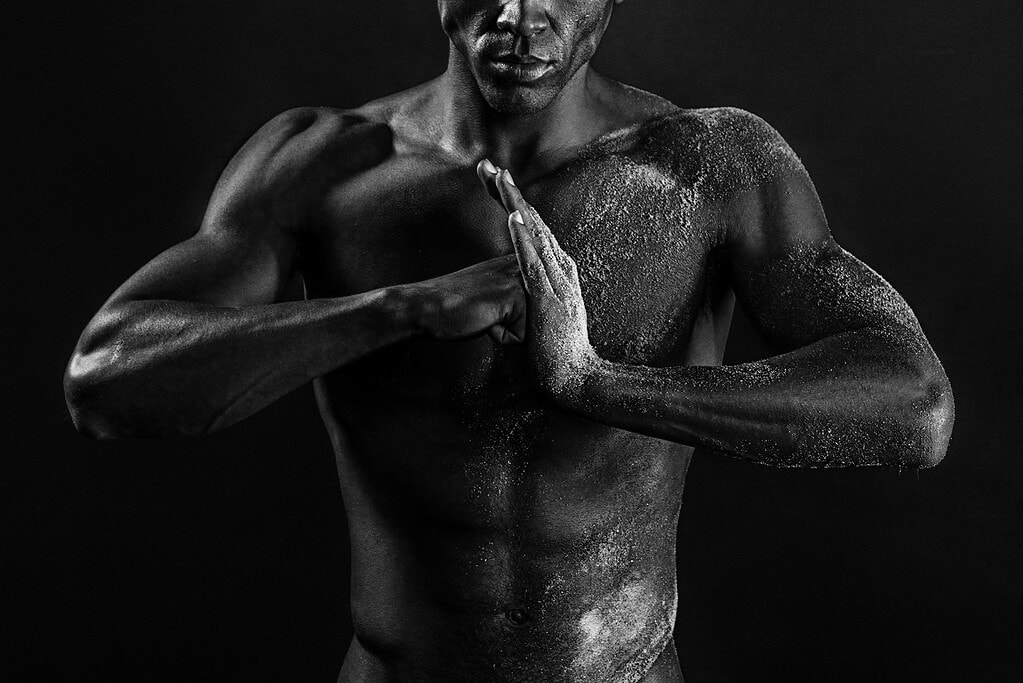
A monochrome editorial portrait series exploring the interaction of black sand, oil, muscular form and dramatic studio light.
Shadows and Sand
Shadows and Sand is a creative lighting portrait series photographed by Ken Jones in New York City, exploring the relationship between texture, shadow, movement and the male form.
Created with model Garrett from the men’s division at Major Models NYC, the series moves between tightly composed body studies, direct portraits and more atmospheric full-length photographs.
Black sand and oil were applied selectively to the skin, creating an uneven surface that reacts differently as the light moves across the body. The material catches highlights along the shoulders, arms and torso while allowing other areas to disappear into the dark background.
Light used as structure
Rather than lighting the subject evenly, the portraits use contrast to separate individual planes of the body.
Shoulders, collarbones, hands and muscle definition emerge through narrow bands of light. In several photographs, the subject nearly merges with the background, leaving only the brightest textures and edges visible.
This creates a sculptural effect. The body is not simply placed in front of the camera—it becomes part of the composition.
The darkest images require controlled lighting and careful exposure. Too much fill would flatten the texture, while insufficient separation would cause the subject to disappear completely into the background.
Sand, oil and surface texture
The combination of sand and oil creates a surface that appears alternately rough, reflective and metallic.
In the closer compositions, individual particles become visible across the arms, chest and hands. Wider portraits use the same material more subtly, allowing the model’s pose and physical structure to carry the image.
The strongest photographs balance the experimental treatment with recognizable portraiture. The viewer can still read the subject’s expression and posture, even when most of the frame remains close to black.
Projected shadows
A second lighting setup introduced patterned shadows across the subject and background.
These shapes function almost like graphic wardrobe. They interrupt the body, obscure portions of the face and create visual movement without adding physical styling or set elements.
The projected patterns also shift the series away from traditional physique photography. The emphasis becomes rhythm, geometry and the relationship between the model and the surrounding negative space.
Creative portrait photography in New York City
Ken Jones develops editorial portrait and model-test sessions around lighting, movement, styling and the intended use of the final images.
A creative test may be used to expand a model’s portfolio, explore a lighting concept, develop a visual treatment or demonstrate how an idea could translate into an editorial or commercial campaign.
Sessions may include clean agency portraits, fashion imagery, beauty details, full-length movement and more experimental photographic studies.