
TL;DR:
- Food styling in advertising shapes perceptions of freshness and desirability to influence consumer choices. It uses control of visual elements and consistent artistry to build brand identity and trust, resulting in higher engagement and premium pricing. Proper preparation and collaboration with skilled stylists are essential for successful, impactful food imagery.
What food styling actually does in advertising photography
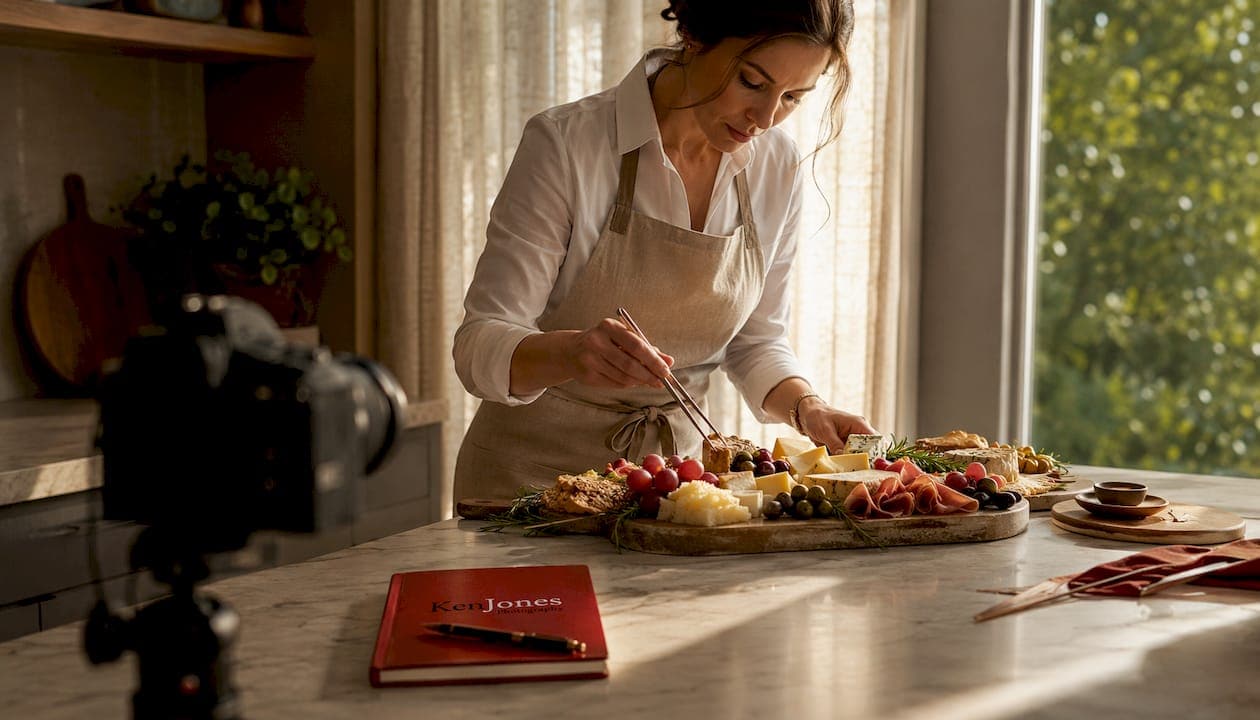
Food styling is visual persuasion, not decoration. Its role in advertising photography is to shape how a viewer perceives freshness, quality, and desirability before a single word of copy registers. The brain makes that judgment in seconds, and the stylist’s job is to win that moment.
The distinction between decoration and strategic presentation matters more than most clients realize. A chef plates food to taste and impress at the table. A food stylist plates food to survive hot lights, camera angles, and the translation from three dimensions to a flat image, while still triggering appetite and trust. Those are fundamentally different disciplines.
In advertising food presentation, food styling works alongside the photographer, art director, and client to serve one commercial goal: move the viewer toward a purchase decision. The key functions it performs:
- Shapes perceived freshness and quality through controlled texture, color, and moisture
- Builds emotional appetite appeal that bypasses rational hesitation
- Reflects brand personality and price positioning in every frame
- Maintains visual consistency across packaging, digital ads, and social media
Table of Contents
- How food styling strengthens brand storytelling and consumer perception
- The still life doctrine and what it means for premium brand imagery
- What actually happens on a professional food styling shoot
- The business case for investing in professional food styling
- What skills and training professional food stylists bring to a shoot
- Common challenges in food styling for advertising and how to handle them
- Advertising campaigns where food styling made the difference
- Current trends shaping food styling in advertising photography
- Why food styling defines the quality of NYC advertising work
- Ken Jones Photography brings full production expertise to every shoot
- Key Takeaways
- FAQ
How food styling strengthens brand storytelling and consumer perception
Carefully styled food images do more than look appealing. They convey craftsmanship and exclusivity, which legitimizes premium pricing and builds the kind of consumer trust that advertising copy rarely achieves on its own. A brand that looks premium in its visuals feels premium before the product is ever tasted.
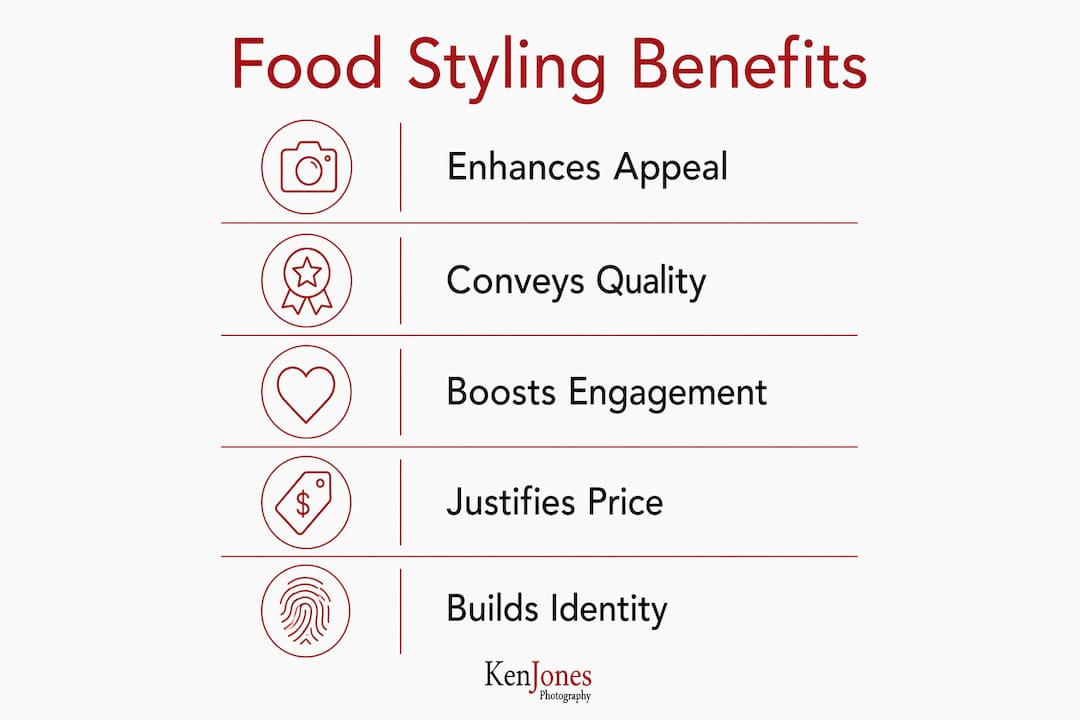
Color and texture are the primary emotional levers. Warm golden tones make fried foods read as crispy and fresh. Vibrant greens signal natural ingredients. A controlled gloss on a sauce communicates warmth and readiness without looking greasy or artificial. These choices are not accidental; they reflect a deep understanding of how visual cues translate appetite and desire into buying behavior.
On digital platforms, food imagery has only seconds to perform. Strong styling increases engagement by stopping the scroll, holds attention longer, lifts click-through rates, and reduces purchase hesitation. Consistency across platforms compounds that effect. When a brand’s visual language stays coherent from packaging to Instagram to paid ads, consumers recognize and trust the product before they ever read a description.
The still life doctrine and what it means for premium brand imagery
Brightland, the California olive oil brand, built what its internal team calls the “still life doctrine” into every asset it produces. Every product image, email header, and paid social frame follows the aesthetic grammar of fine-art food photography: saturated but controlled color palettes, deliberate negative space, and hand-selected surface materials. No stock imagery. No AI-generated backgrounds. The brand’s visual consistency score sits at 84%, which correlates with meaningfully lower CPMs on Meta compared to brands with fragmented creative libraries.
The still life doctrine is not a Brightland invention. It is a philosophy borrowed from fine-art still life painting, applied to commercial food photography with disciplined intent. The core principle is restraint: every element in the frame earns its place, negative space is used deliberately, and the food is given room to communicate quality without visual noise.
For luxury brands, this approach functions as a creative moat. Competitors can copy a product formulation far more easily than they can replicate years of consistent, art-directed visual identity. A 14-page visual brief, as Brightland uses, is worth more to long-term brand equity than most media plans.
- Controlled color palettes reinforce brand recognition across every touchpoint
- Negative space signals confidence and lets the product speak without distraction
- Consistent surface materials and props create a proprietary visual language
- Rejecting trends in favor of a defined aesthetic builds differentiation over time
What actually happens on a professional food styling shoot
The production reality of food styling is more demanding than most clients anticipate. The first step on any serious shoot is building a stand-in dish: a close approximation of the hero food that lets the photographer finalize lighting and composition without letting the actual subject wilt under hot production lights. This single practice saves hours of wasted effort and protects the final image quality.
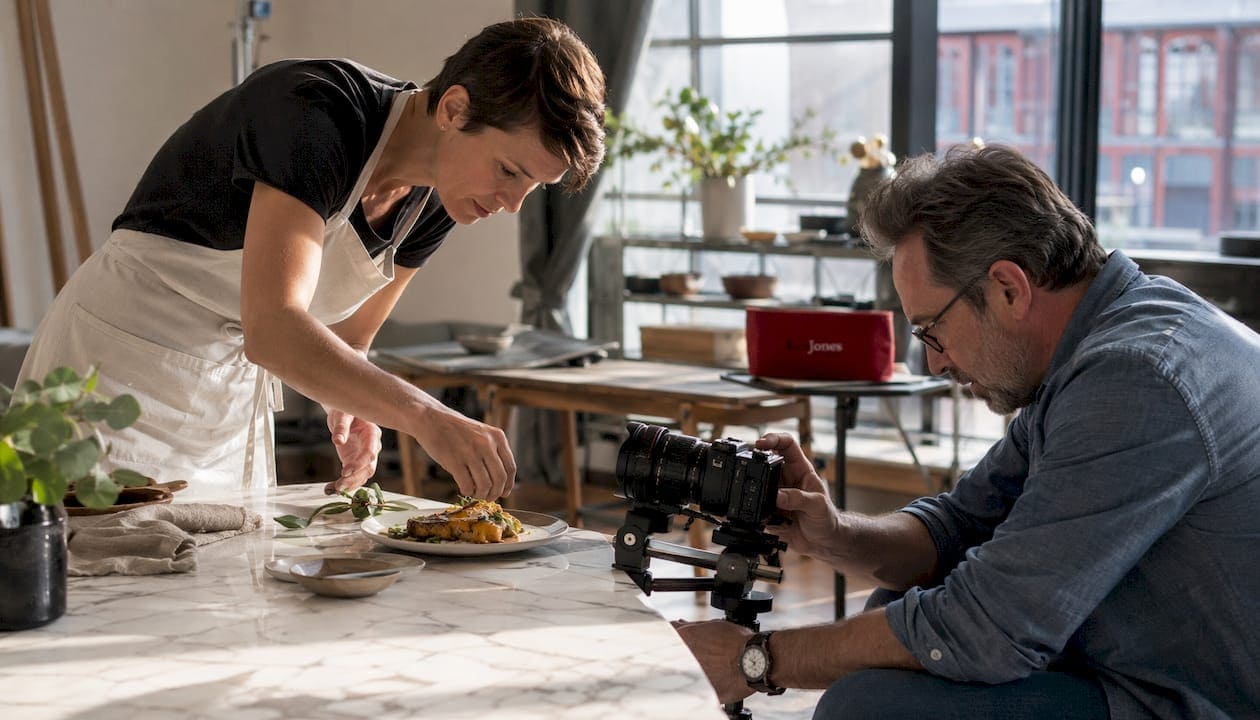
Maintaining the hero food through a long shoot requires real technical skill. Vegetables are undercooked and held in cold water to preserve color. Poultry and meats are cooked at lower temperatures to prevent shrinking, then finished with gravy coloring or a blowtorch for the right surface appearance. Delicate structures are stabilized with toothpicks, food starches, or gelatin to hold composition through multiple takes.
What surprises most clients is how much of a food stylist’s work happens before the shoot day. Pre-production tasks like sourcing specific ingredients, writing shot schedules, and coordinating logistics consume more time than the on-set styling itself. A stylist who shows up unprepared on shoot day cannot recover that lost ground.
Pro Tip: Book your food stylist into the pre-production conversation, not just the shoot day. The sourcing decisions and shot schedule they build in advance directly determine how smoothly the production runs and how strong the final images look.
A common mistake seen in NYC studio productions: a client arrives on shoot day expecting the stylist to improvise with whatever ingredients are on hand. The result is a rushed, inconsistent set of images that rarely survives the client review. The fix is always the same: treat the stylist’s prep time as production time, not overhead.
The business case for investing in professional food styling
Professional food styling pays back in ways that go beyond a single campaign. Carefully crafted visuals increase engagement, time spent viewing, click-through rates, and conversions across digital platforms. That performance improvement compounds when the same visual system runs consistently across packaging, social media, and paid advertising.
Premium visual presentation also justifies pricing. Consumers associate visual refinement with higher product quality, which means a well-styled image does real pricing work before a customer reads a number. Brands that underinvest in styling often find themselves competing on price because their imagery positions them as a commodity rather than a premium choice.
The long-term return comes through brand recall and emotional connection. Consistent styling builds a visual identity that consumers recognize before they see the brand name. That recognition is earned over time and cannot be bought with a single campaign budget.
What skills and training professional food stylists bring to a shoot
Food stylists typically carry culinary training, with many holding professional chef credentials or backgrounds in home economics. That foundation matters because the job requires cooking food to precise visual specifications, not just plating it attractively. The ability to control texture, color, and moisture through cooking technique is as important as any aesthetic sensibility.
Beyond the kitchen, strong food stylists bring organizational discipline, problem-solving under pressure, and clear communication with photographers, art directors, and clients. They also need to be resourceful shoppers, sourcing specific ingredients that meet both culinary and visual standards. The role is part chef, part production manager, and part visual artist.
Common challenges in food styling for advertising and how to handle them
Heat is the most persistent enemy on a food shoot. Lights raise surface temperature, food continues cooking, and moisture evaporates faster than most clients expect. The stand-in dish technique addresses this directly, but stylists also rely on cold water holds, surface sprays, and controlled undercooking to extend the life of hero food through multiple takes.
Structural collapse is the second major challenge, particularly with layered or stacked dishes. Toothpicks, straight pins, and food-grade thickening agents like gelatin or food starch hold composition through long shooting windows. For extreme cases, non-food substitutes are used: confectioner’s sugar mixed with vegetable shortening stands in for ice cream, which melts too quickly under lights.
Continuity across multiple takes demands that every replacement dish look identical to the one before it. That requires the stylist to prepare multiples in advance and document the exact arrangement of each element. On a commercial shoot where the director needs twenty takes of a single fork-break, that preparation is what keeps the production on schedule.
Advertising campaigns where food styling made the difference
Brightland’s visual strategy is the most documented example of food styling as a long-term brand asset. By applying fine-art still life principles consistently across every channel, the brand grew to $40 million in revenue while building distribution leverage with retailers like Williams-Sonoma, which granted the brand approval rights over all in-store visual merchandising.
Fast food advertising has long demonstrated the power and the legal limits of food styling. Class-action lawsuits against McDonald’s, Wendy’s, Taco Bell, and Burger King have challenged the practice of depicting food products as larger or more visually perfect than what customers actually receive. A 2023 lawsuit against Burger King alleged that its photography depicted the Whopper as 35% larger than the actual product. These cases illustrate how seriously consumers respond to food imagery and why the gap between styled and served food carries real commercial and legal weight.
Current trends shaping food styling in advertising photography
The dominant trend in Western commercial food photography has shifted toward simplicity and natural presentation: clean compositions, selective focus, tilted plates, and extreme close-ups that emphasize texture over elaborate staging. This approach complements the move in professional cooking toward taller, layered dishes that photograph well from narrow angles.
Authenticity is the other major current. Controlled imperfection, a slight drip, a soft edge, a natural break, reads as more premium than over-polished perfection, which can feel artificial and staged. Luxury brands have adopted this deliberately, using what might look like casual styling to signal craftsmanship and human touch. The challenge is that achieving convincing imperfection requires more skill, not less.
Video has added a new layer of complexity. Motion introduces pacing, format constraints, and the challenge of maintaining visual coherence across vertical, square, and horizontal cuts. Brands serious about visual identity are now hiring dedicated motion directors to apply the same still life discipline to short-form video content.
Why food styling defines the quality of NYC advertising work
The gap between a styled image and an unstyled one is not subtle. It shows up in every metric that matters to an advertising client: engagement rates, conversion, brand recall, and the ability to command a premium price. New York’s advertising market is competitive enough that clients who undervalue food styling on their shoots tend to find out the hard way, usually when the images come back looking flat and the campaign underperforms.
The photographer-stylist relationship is where the real creative work happens. A strong stylist reads the lighting setup and adjusts the food’s surface, angle, and composition to work with it, not against it. That collaboration requires trust, clear communication, and shared understanding of the brand’s visual goals. When it works, the result looks effortless. When it doesn’t, no amount of retouching recovers what was lost on set.
Clients who treat food styling as a line item to cut are making a false economy. The shoot day costs the same whether the food looks extraordinary or merely adequate. The difference is entirely in the preparation and the talent brought to the table.
Ken Jones Photography brings full production expertise to every shoot
Ken Jones Photography is a Manhattan-based commercial advertising studio with over 30 years of production experience across fashion, beauty, corporate, and product photography. For clients planning advertising shoots that require food styling, the studio brings the full production infrastructure: creative direction, lighting design, prop coordination, retouching, and image delivery, all managed from a single point of contact in the Financial District.
Working with Ken Jones Photography means your food styling collaboration is built into the production plan from day one, not added as an afterthought. The studio’s editorial approach, refined through decades of high-end commercial work in New York City, ensures that every visual element serves the brand’s identity and campaign goals. To discuss your next advertising shoot, visit kenjonesnyc.com.
Key Takeaways
Professional food styling in advertising photography shapes consumer perception, drives purchase decisions, and builds long-term brand equity through consistent, art-directed visual presentation.
| Point | Details |
|---|---|
| Styling is persuasion | Food styling shapes perceived freshness, quality, and desire before any copy is read. |
| Still life doctrine | Brands like Brightland use controlled palettes and negative space to build a defensible visual identity. |
| Production preparation | Stand-in dishes and pre-shoot sourcing protect hero food quality and keep shoots on schedule. |
| Business return | Consistent styling lifts engagement, click-through rates, and conversions across digital platforms. |
| Ken Jones Photography | The studio integrates food styling into full commercial production for advertising clients in NYC. |
FAQ
What is the role of food styling in advertising photography?
Food styling shapes how consumers perceive a product’s freshness, quality, and desirability before they read a single word of copy. It functions as visual persuasion, directly influencing buying behavior through emotional and subconscious responses.
How does food styling affect brand perception?
Consistent, professionally styled food imagery signals craftsmanship and quality, which legitimizes premium pricing and builds consumer trust across packaging, digital ads, and social media.
What is the stand-in dish technique?
A stand-in dish is a close approximation of the hero food used during lighting and composition setup, protecting the final subject from wilting under production lights before the actual shot is taken.
What qualifications do professional food stylists need?
Most food stylists carry culinary training or professional chef credentials, combined with organizational skills, visual knowledge, and the ability to solve production problems under pressure on set.
How does Ken Jones Photography support food styling in advertising shoots?
Ken Jones Photography integrates food styling coordination into full commercial production management, covering creative direction, lighting, prop coordination, and retouching for advertising clients in New York City.