

TL;DR:
- Out-of-home advertising photography documents campaign presence and creates marketing assets. High-quality images shape campaign perception and provide long-term value for brands and stakeholders.
Out-of-home advertising photography is defined as the deliberate capture of outdoor ad placements to document campaign presence and create compelling visual assets for marketing use. In the industry, this practice splits into two distinct roles: Proof of Performance (POP) documentation and premium “glamour” imagery designed to sell the campaign’s impact. Both matter, but they serve different masters. Marketing professionals and brand managers who understand what is out-of-home advertising photography, and how to commission it well, consistently get more mileage from their outdoor budgets. This guide covers the techniques, planning strategies, and real-world lessons that separate forgettable documentation from images that actually move business.
What is out-of-home advertising photography and why does it matter?
Out-of-home advertising photography is the professional practice of capturing outdoor media placements, including billboards, transit shelters, bus wraps, and digital screens, in ways that serve both legal documentation and brand storytelling. The industry term most practitioners use is OOH photography, and it covers everything from a quick POP shot confirming a poster went up to a fully art-directed aerial image of a Times Square takeover.
The distinction between these two outputs matters more than most brand managers realize. POP photos document presence, while glamour shots serve as compelling marketing assets for social media, sales decks, and case studies. A POP photo proves the contract was fulfilled. A premium glamour shot proves the campaign was worth the investment. Conflating the two leads to underfunded shoots and missed opportunities.
The importance of advertising photography in OOH campaigns extends well beyond compliance. High-quality images become the primary way most stakeholders, including executives, media buyers, and future clients, ever experience the campaign. If those images are flat, poorly lit, or shot from an awkward angle, the campaign looks smaller than it was. The photography shapes the perceived value of the entire media buy.
What distinguishes premium OOH photography from standard documentation?
Premium OOH photography goes beyond confirming that a sign exists. It captures the sign in a way that communicates scale, context, and impact to someone who was never there.
The technical and creative differences are significant:
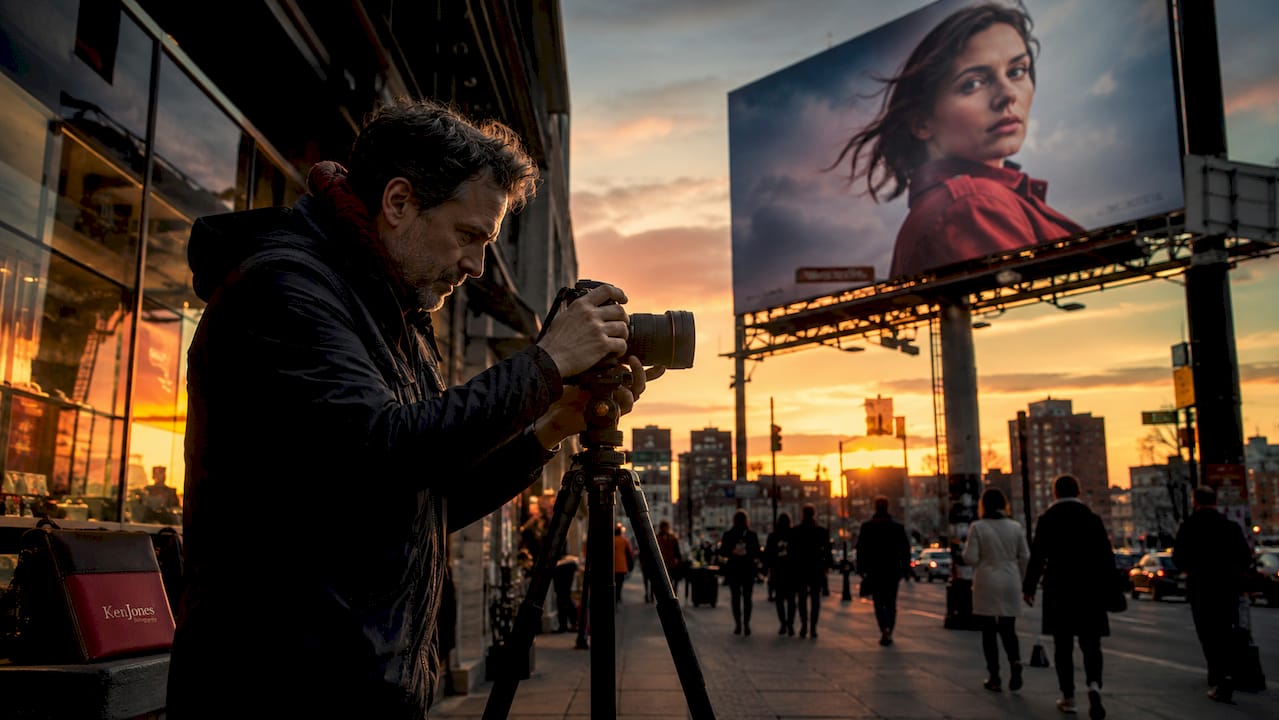
- Centering and framing: Premium billboard photos center the sign with clear visibility and deliberate negative space. The viewer’s eye goes directly to the creative without distraction.
- Contextual elements: Natural surroundings, traffic, pedestrians, and recognizable landmarks tell the story of where and how the ad lives in the real world. A billboard above a packed Manhattan intersection reads very differently from the same board in an empty lot.
- Strategic timing: Golden hour light transforms an ordinary board into something cinematic. Midday sun can wash out colors and flatten contrast. Timing the shoot around light quality is not optional for premium work.
- Authenticity: Over-editing undermines advertiser trust. Replacing a gray sky with a dramatic sunset may look better on screen, but it misrepresents real-world conditions. Clients who later visit the location feel misled. Honest photography builds confidence in campaign claims.
- Audience perspective: The camera angle should mirror how a real viewer experiences the ad, whether that is a driver at 60 mph or a pedestrian at eye level.
These choices are not aesthetic preferences. They are production decisions that directly affect how the image performs in presentations, social media posts, and media kit materials.
Pro Tip: For complex urban installations or large-format boards, coordinate with an FAA-licensed drone pilot to capture aerial perspectives. Drone imagery provides scale and context that ground-level shots simply cannot replicate, and it is the only legal option for airspace above 400 feet in most U.S. cities.
The gap between a POP photo and a premium shot is not just visual. It is financial. Brands that invest in premium imagery use those assets for months or years across social media, award submissions, and new business pitches. Brands that settle for documentation use the photos once and forget them.
How do photographers plan OOH campaign images for multiple formats?
Planning for multi-format use from a single shoot saves time and budget while keeping visual quality consistent across every channel. The challenge is that a horizontal billboard, a vertical Instagram story, and a square LinkedIn post all demand different compositions from the same location.
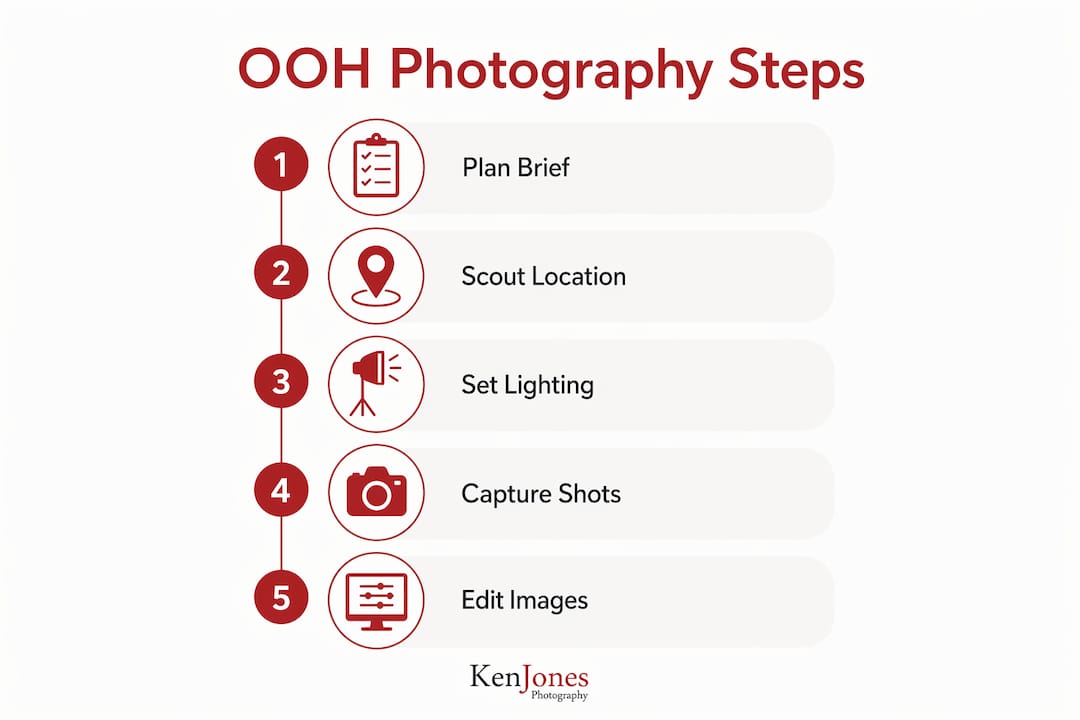
Experienced OOH photographers build this into the shoot plan before the first frame is captured. Here is how that process works in practice:
- Location scouting: Visit the site at the same time of day the shoot will happen. Note the light direction, background clutter, traffic patterns, and any obstructions that change by season. A tree that is bare in february becomes a visual block by june.
- Crop mapping: Identify the primary composition for the hero image, then plan secondary positions that yield clean vertical and square crops. Designing for multiple aspect ratios ensures the same shoot produces assets for every platform without a return trip.
- Legibility testing: OOH advertising operates on a one-to-two-second glance. The message must read instantly. Before the shoot, review the ad creative at thumbnail size. If the headline disappears, the composition needs to give it more breathing room.
- Client collaboration: Share the shot list with the brand manager and agency before the shoot. Confirm which crops are priority, which platforms will use the images, and whether any usage rights restrictions affect how the images can be distributed.
- Equipment selection: Wide-angle lenses capture scale but distort perspective at close range. Telephoto lenses compress distance and make a roadside board look more prominent against its background. Choosing the right glass for each location is a technical decision, not a default.
Pro Tip: Capture a short video clip at each location in addition to stills. A five-second clip of traffic moving past a billboard is a low-effort asset that performs well in social media stories and client presentations. It costs almost nothing extra on the day.
The planning phase is where most brand managers can add the most value. Arriving at a shoot with a clear brief, confirmed usage rights, and a prioritized crop list cuts production time and eliminates the expensive reshoots that come from vague direction.
What types of outdoor advertising benefit most from tailored photography?
OOH ad types include traditional static billboards, transit media, digital screens, and ambient ads, and each format presents distinct photographic challenges. A technique that works perfectly for a highway board fails completely for a backlit transit shelter.
| OOH Format | Key photographic challenge | Recommended technique |
|---|---|---|
| Traditional billboard | Scale and distance distortion | Telephoto lens, golden hour timing, traffic context |
| Transit shelter | Reflective surfaces, pedestrian scale | Polarizing filter, eye-level angle, ambient light management |
| Bus wrap | Motion and full-vehicle coverage | Multiple passes, high shutter speed, wide establishing shot |
| Digital screen | Exposure matching for bright displays | Shoot at dusk or dawn, bracket exposures, avoid direct sun |
| Ambient/experiential | Irregular shapes, audience interaction | Environmental context, wide angle, candid audience moments |
Traditional billboards are the most forgiving format to photograph because they are static, large, and designed to be seen from a distance. The main challenge is capturing their true scale without making the surrounding environment look chaotic. Telephoto compression is the standard solution.
Digital screens present the opposite problem. Their brightness is calibrated for daylight viewing, which means a camera set for a normal outdoor exposure will either blow out the screen or underexpose the surroundings. Shooting at dusk, when ambient light and screen brightness are closer in value, solves this without heavy post-production work.
Bus wraps require a different mindset entirely. The vehicle moves, the background changes, and you rarely get more than a few seconds at a clean angle. Photographing a parked bus at a depot gives you control but loses the real-world context. The best approach is to plan a route intercept at a known stop, shoot multiple passes, and select the frame where the background, light, and vehicle position align.
For multi-city or international campaigns, geographic scale adds another layer of complexity. A brand running boards in New York, Los Angeles, and Chicago needs images that reflect each market’s visual character, not just generic documentation. That requires local knowledge of each city’s light, architecture, and street-level context.
Why should marketing professionals treat OOH photography as a strategic investment?
Viewing premium OOH photography as an investment rather than a line-item expense changes how campaigns are planned, presented, and remembered. The images produced from a well-executed OOH shoot become sales tools, social content, award entries, and case study material for years after the campaign ends.
The mistake most brand managers make is treating photography as an afterthought. The media buy is confirmed, the creative is approved, and then someone asks, “Who is handling photos?” at the last minute. That question, asked too late, produces rushed shoots, poor light, and images that do not reflect the campaign’s actual quality.
“The sizzle sells the steak. In OOH, the photography is the sizzle. A great campaign with mediocre photos looks like a mediocre campaign. A great campaign with great photos looks like a category-defining moment. The photography is not the record of the campaign. It is the campaign’s most durable asset.”
High-quality images also function as social proof for future media buyers. When an outdoor vendor or agency pitches a new client, the images from past campaigns are the primary evidence of what the inventory looks like in real-world conditions. Poor photography makes premium inventory look ordinary. Strong photography makes ordinary inventory look premium.
The role of photography in ad campaigns extends to internal stakeholders as well. A CMO who never visits the physical locations of a campaign forms their entire impression of it through the images they see in reports and presentations. Those images either build confidence in the media investment or quietly undermine it.
One client lesson worth sharing: a retail brand once ran a significant outdoor campaign across five boroughs and allocated almost nothing for photography. The POP shots came back dark, crooked, and shot from a moving car. The campaign itself was strong. The creative was excellent. But when the brand tried to use the images for a trade press feature six months later, there was nothing usable. They had to commission a reshoot, which cost more than a proper shoot would have cost during the original campaign window.
Ken’s take: what 30 years of production work taught me about OOH photography
The most common mistake I see is the assumption that OOH photography is simple because the subject is large. A billboard is enormous. How hard can it be to photograph? The answer is: considerably harder than most people expect.
Urban environments are unpredictable. Light changes every 20 minutes in New York. A truck parks in front of your board. A scaffold goes up overnight. The shoot you planned for 7:00 AM in march looks completely different by 7:30 AM because the sun moved behind a building you did not account for during the scout. Experience is the only thing that prepares you for those variables, and the only way to get experience is to have made every one of those mistakes at least once.
The other thing I have learned is that the relationship between the photographer and the brand manager is the single biggest factor in shoot quality. When a brand manager shows up with a clear brief, confirmed creative files, and a prioritized list of deliverables, the shoot runs efficiently and the images are strong. When the brief is vague and the decisions get made on location, the shoot runs long and the images are compromised. Clear communication before the shoot is not a courtesy. It is a production requirement.
I have also seen the authenticity issue play out in real time. A vendor once asked me to replace the sky in a series of billboard photos because the day was overcast. I understood the impulse. But the advertiser later visited the location and saw the gray sky. They felt the images had been misleading. That moment of distrust cost the vendor a renewal. Honest photography, even when the conditions are imperfect, is always the right call.
— Ken
Kenjonesnyc brings production expertise to your OOH campaigns
Kenjonesnyc is a Manhattan-based commercial photography studio with over 30 years of production experience across fashion, beauty, and advertising campaigns. For brand managers who need premium OOH imagery that works across every format and platform, the studio brings full-service production capabilities to every shoot.
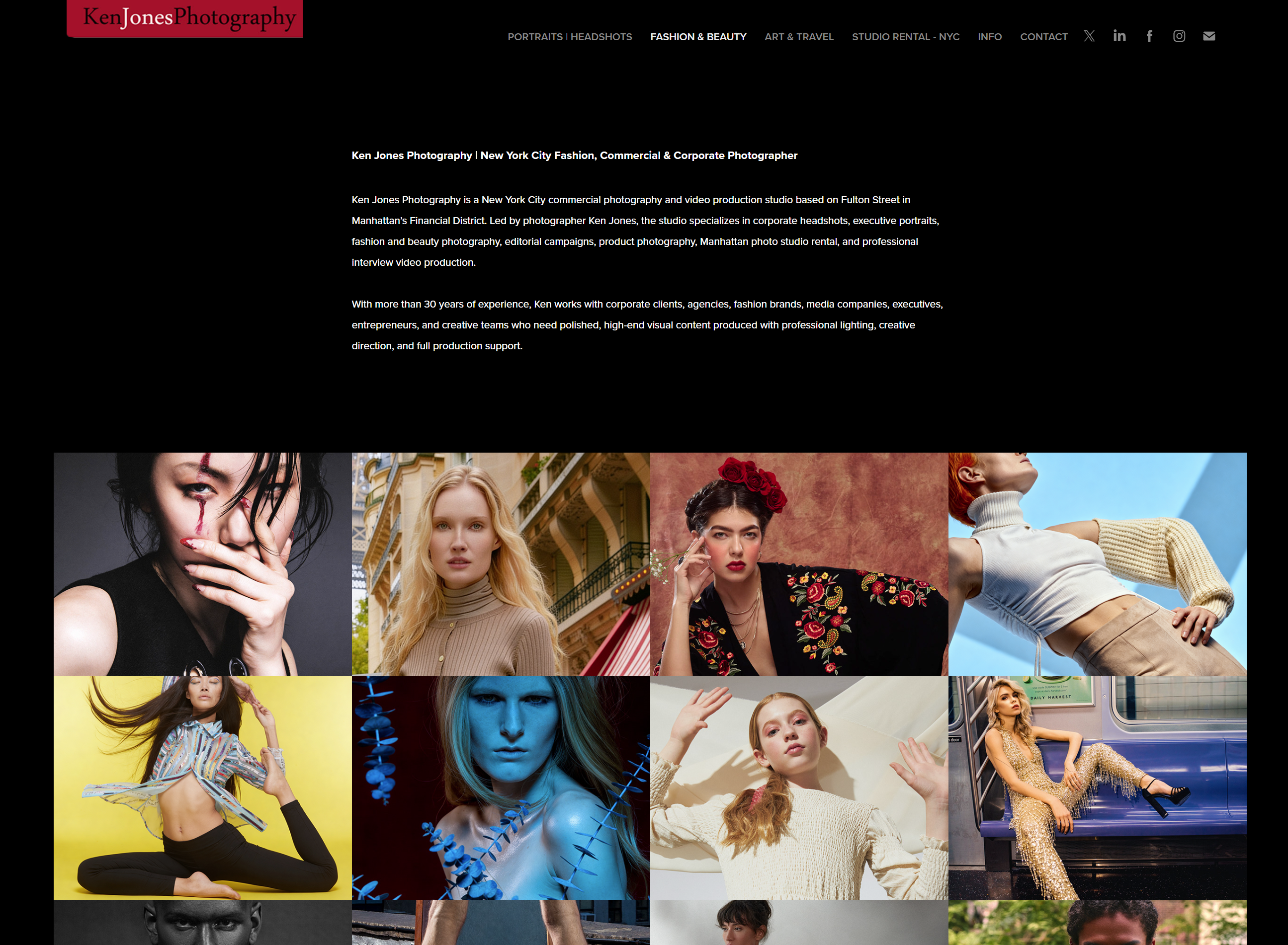
From location scouting and lighting design to multi-format crop planning and post-production, Kenjonesnyc handles the full production process. The studio’s advertising campaign photography services are built specifically for brands that need images capable of performing in sales decks, social media, and media kits alike. If your next outdoor campaign deserves photography that reflects its actual quality, contact Kenjonesnyc at kenjonesnyc.com to discuss your production needs.
FAQ
What is out-of-home advertising photography?
Out-of-home advertising photography is the professional capture of outdoor ad placements, including billboards, transit ads, and digital screens, for both campaign documentation and marketing asset creation. It serves two roles: Proof of Performance and premium brand storytelling imagery.
What is the difference between a POP photo and a glamour shot?
A POP photo confirms that an ad was displayed as contracted, while a glamour shot is an art-directed image designed to showcase the campaign’s visual impact for sales, social media, and case studies.
Why does timing matter in OOH photography?
Light quality changes the perceived value of an outdoor ad significantly. Golden hour lighting adds atmosphere and contrast, while harsh midday sun flattens colors and reduces the visual impact of the creative.
How do photographers capture digital billboard screens accurately?
Digital screens are best photographed at dusk or dawn, when ambient light levels are close to the screen’s brightness. This approach avoids overexposed displays or underexposed surroundings without requiring heavy post-production correction.
How should brand managers prepare for an OOH photography shoot?
Brand managers should provide a clear brief with confirmed creative files, a prioritized list of crop formats, and confirmed usage rights before the shoot day. Shoot planning details reviewed in advance reduce production time and eliminate costly reshoots.
Key takeaways
Out-of-home advertising photography requires deliberate planning, technical expertise, and honest execution to produce images that serve both campaign documentation and long-term brand marketing goals.
| Point | Details |
|---|---|
| POP vs. glamour shots | Distinguish documentation from premium assets early; budget and brief each separately. |
| Multi-format planning | Design every shoot to yield horizontal, vertical, and square crops from a single location visit. |
| Timing and light | Schedule shoots at golden hour or dusk to maximize visual impact and color accuracy. |
| Authenticity over editing | Avoid heavy retouching that misrepresents real-world conditions; honest images build client trust. |
| Photography as investment | Premium OOH images generate value across social media, sales decks, and case studies long after the campaign ends. |