

TL;DR:
- A headshot is a professional image designed to convey credibility and confidence in a business context. Casual photos document moments and are suitable for platforms where personality is prioritized over authority. Proper production choices, wardrobe, and coaching ensure the headshot communicates competence effectively.
A headshot is a professional tool with one job: signal that you are competent, approachable, and worth trusting. A casual photo documents a moment. That distinction sounds simple, but it shapes every decision about which image belongs on your LinkedIn profile, your company bio, or a press release — and which one quietly costs you opportunities before anyone reads your name.
Use a professional headshot for LinkedIn, company websites, speaker bios, and press materials. Reserve casual photos for social content, lifestyle blogs, or platforms where personality and relatability outweigh authority. Knowing how headshots differ from casual photos is the first step toward choosing the right image for the right context.
Table of Contents
- How headshots differ from casual photos at a glance
- Why the technical production choices actually matter
- What to wear, how to present, and what expressions actually work
- Which type of headshot fits your industry and career stage?
- When a casual photo works professionally — and when it will hurt you
- How to prepare for a headshot session
- What a professional session actually feels like
- Key Takeaways
- The headshot is not the whole story — but it is the first chapter
- Book a headshot session at Ken Jones Photography
- Useful sources and further reading
- FAQ
How headshots differ from casual photos at a glance
The table below captures the core contrast. A headshot is engineered; a casual photo is captured.
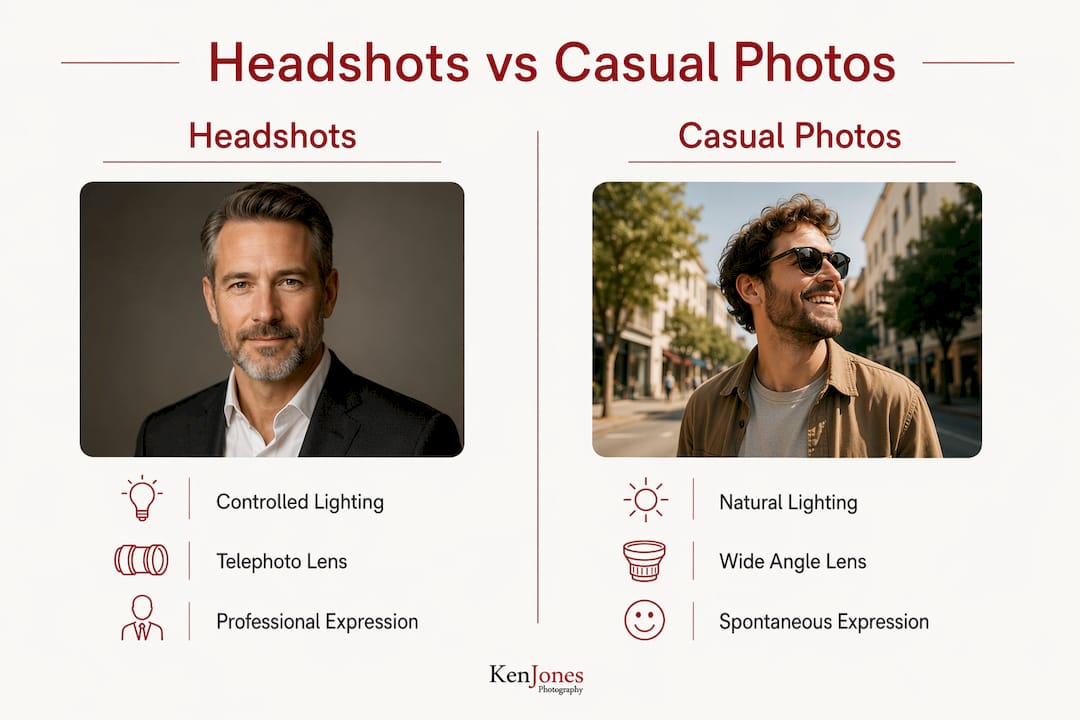
| Dimension | Professional Headshot | Casual Photo |
|---|---|---|
| Purpose | Signal professional credibility | Document a moment or express personality |
| Lighting | Controlled soft light, even and flattering | Ambient or available light, often uncontrolled |
| Background | Clean, neutral, or simple | Environmental, contextual, or varied |
| Framing | Head and shoulders, tight crop | Full body, group, or wide environmental |
| Expression | Coached, calm, confident | Spontaneous, candid |
| Retouching | Subtle, job-focused | Minimal or stylized |
| Best use | LinkedIn, company bio, press kit | Instagram, personal branding, lifestyle content |
Three rules of thumb:
- Use a headshot whenever the photo must answer the question “Does this person look like a capable professional?”
- A casual photo is acceptable when the platform values personality over authority, or when a candid moment better serves the message.
- Never use a cropped group photo, a vacation shot, or a selfie where a headshot is expected. As business portrait research confirms, business portraits prioritize calm, confident expressions and consistent styling — qualities a candid image rarely delivers by accident.
Why the technical production choices actually matter
The gap between a headshot and a casual photo is not just aesthetic. It is the result of specific, deliberate production decisions that change how a face reads on screen.
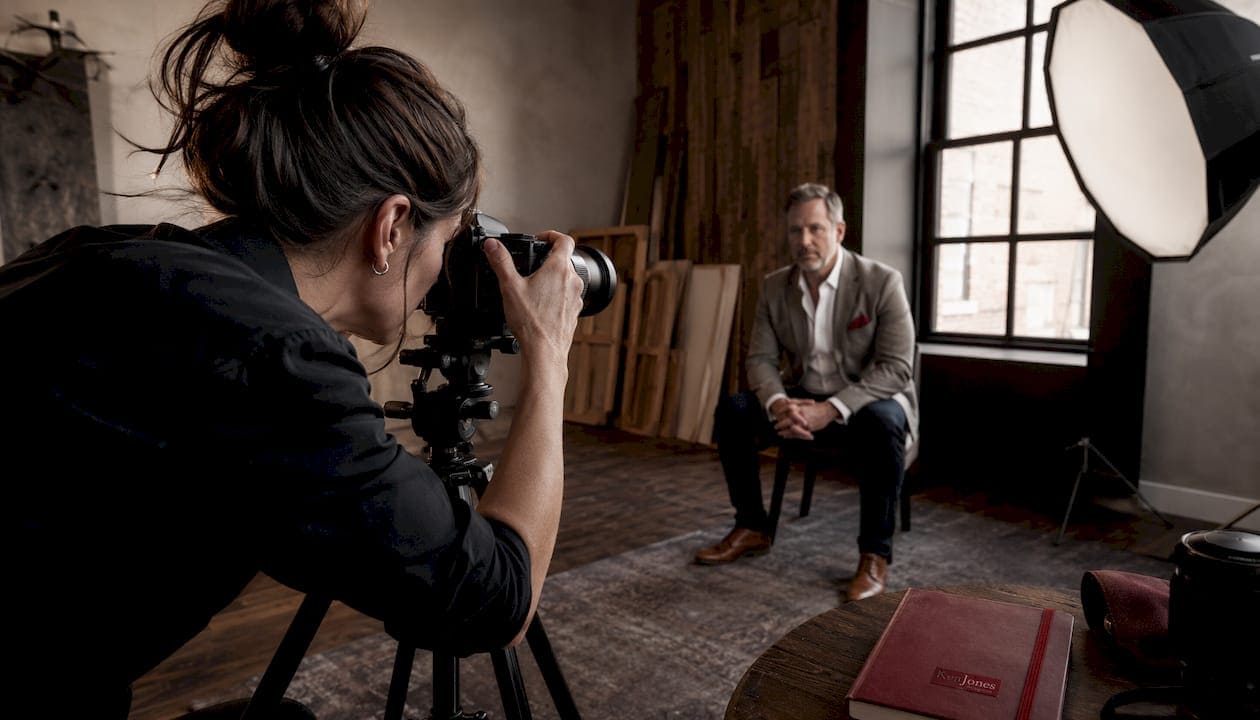
Lighting is the most immediate difference. A professional session uses controlled soft light — typically a large modifier placed close to the subject — to wrap the face evenly and minimize harsh shadows. Uncontrolled ambient light, whether from a window, overhead office fluorescents, or outdoor midday sun, creates unflattering shadows and color casts that read as amateurish even when the subject looks great in person.
Lens choice and camera distance are equally consequential. Selfie distortion is a real physiological effect: shooting at arm’s length with a wide-angle phone lens stretches and exaggerates facial features. Shooting from several feet back with an 85–135mm lens on a full-frame camera compresses those features into natural proportions. The subject looks like themselves, not like a caricature.
Crop and framing serve a practical function. A tight head-and-shoulders crop reads clearly at the small avatar sizes used by LinkedIn, Slack, and company websites. A full-body or wide environmental shot loses legibility at those dimensions.
Depth of field separates the subject from the background without eliminating it entirely. A shallow controlled blur keeps attention on the face while the background provides context or texture.
Retouching in a professional headshot is subtle and purposeful: skin smoothing, minor blemish removal, and color correction. It should not look retouched. Creative edits, heavy filters, or stylized color grading belong in fashion or lifestyle work, not a corporate headshot.
- Controlled soft light vs. uncontrolled ambient light
- 85–135mm lens at distance vs. wide-angle phone at arm’s length
- Head-and-shoulders crop for avatar legibility
- Shallow depth of field to isolate the subject
- Subtle, job-focused retouching only
Pro Tip: Before booking a session, ask the photographer what focal length they shoot headshots at. If the answer is “whatever my phone has,” that is your answer. An 85mm or longer lens shot from a proper distance is non-negotiable for flattering facial proportions.
What to wear, how to present, and what expressions actually work
The single most useful wardrobe principle: wear clothing that keeps attention on your face and communicates your industry without distracting from it. A solid-color top in a mid-tone — navy, charcoal, burgundy, forest green — almost always works. Loud patterns, thin stripes, and busy prints create visual noise that pulls the eye away from your expression.
Layers help. A blazer or structured jacket adds authority and frames the shoulders cleanly. Avoid sleeveless tops unless the session is specifically lifestyle-oriented; bare shoulders can read as casual in a corporate context. Necklines matter too: a V-neck or open collar tends to elongate the neck and draw attention upward toward the face.
Common styling mistakes to avoid:
- Loud patterns or fine stripes that create moiré on screen
- Heavy statement jewelry that competes with the face
- Clothing that fits poorly (too tight, too loose, or visibly wrinkled)
- Overly trendy pieces that will date the image within a year
- Heavy or theatrical makeup that reads as costume rather than professional polish
Expression coaching is where most clients underestimate the session. A natural, confident expression is not the same as a forced smile. The best headshots capture a micro-expression: a slight engagement in the eyes, a relaxed jaw, and a mouth that suggests warmth without the strained look of someone told to “say cheese.” A skilled photographer coaches this in real time, adjusting posture, breathing, and eye focus until the expression lands. Industry research confirms that many clients feel more confident after a coached session than before it — the process itself tends to produce that result.
Pro Tip: Bring three outfit options to your session and test each one on camera before committing. What looks great in a mirror can read completely differently under studio light. A quick test frame takes 30 seconds and saves you from discovering the problem after the shoot is over.
Which type of headshot fits your industry and career stage?
A headshot answers one question: does this person look like a capable professional? The style of that answer varies by industry and purpose.
- Corporate headshot: Clean background (white, gray, or a simple gradient), even lighting, business attire. Standard for finance, law, consulting, and any field where authority and polish are the primary signals. Works across LinkedIn, company team pages, and press kits.
- Executive portrait: Similar production values to a corporate headshot but often with slightly more environmental context — a boardroom, an office window, or a branded backdrop. Conveys seniority and presence. Common for C-suite bios, annual reports, and speaker profiles.
- Creative headshot: More latitude in background, expression, and wardrobe. A graphic designer, art director, or creative agency professional can lean into personality without sacrificing production quality. The lighting still needs to be controlled; the expression can be more relaxed.
- Environmental or lifestyle headshot: Shot on location in a workspace, studio, or relevant setting. Useful for founders, consultants, and professionals whose environment is part of their brand story. Industry norms confirm that even relaxed business portraits require professional lighting and composition — the setting changes, but the production standard does not.
Match the type to the platform: a corporate headshot for a law firm bio, a creative headshot for a design portfolio, an environmental portrait for a founder’s website or press feature.
When a casual photo works professionally — and when it will hurt you
Casual photos are acceptable in professional contexts under specific conditions. Here is a clear decision framework:
- The platform rewards personality over authority. Instagram, personal websites with a lifestyle angle, and creative portfolios often benefit from candid, natural images that show who you are beyond a polished portrait.
- The industry norm supports it. A musician’s press photo, a lifestyle blogger’s about page, or a creative director’s social feed can carry a well-composed casual image without losing credibility. Research on business portrait norms suggests that many professionals combine headshots for credibility and casual portraits for relatability — both serve a purpose in a complete visual strategy.
- The image is well-composed and intentional. A casual photo that happens to have good light, a clean background, and a clear subject can work in a pinch. A blurry group photo cropped to show your face cannot.
Where casual photos will hurt you:
- LinkedIn profile photos, where recruiters and clients form a first impression in under two seconds
- Executive bios and company team pages
- Job applications, especially for senior roles
- Press materials and media kits
- Speaker profiles and conference listings
A LinkedIn headshot that reads as unprofessional can quietly filter you out of conversations before they start. The platform’s own research has consistently shown that profiles with professional photos receive significantly more engagement than those without — the image is the first signal, and it sets the tone for everything that follows.
How to prepare for a headshot session
Preparation is what separates a session that produces three usable hero images from one that produces none. A business portrait session typically runs 60–90 minutes for a standard headshot booking, which is enough time for two to three looks if you arrive ready.
Week before the session:
- Confirm your wardrobe: three solid-color options in different tones, pressed and ready
- Schedule a haircut or grooming appointment at least three days before (not the day before)
- Pull reference images of headshots you respond to and send them to the photographer
- Confirm the session format, deliverables, and retouching scope in writing
Day of the session:
- Arrive 10–15 minutes early to settle and review the plan
- Bring your outfit options on hangers, not folded in a bag
- Avoid heavy meals immediately before; they affect posture and energy
- Bring a small grooming kit: powder, lip balm, a comb
What to expect for deliverables:
A standard headshot session typically produces 1–3 hero images after retouching, delivered as high-resolution files suitable for print and web. Retouching at this level covers skin smoothing, minor blemish removal, and color correction. It does not include heavy compositing or background replacement unless that was agreed in advance.
Pricing for professional headshot sessions in the United States varies by market and photographer. NYC-based sessions with full production support, retouching, and file delivery reflect the city’s production costs. Ask for a clear scope of work before booking: number of looks, number of final retouched images, file formats, and turnaround time.
What a professional session actually feels like
A professional headshot session is slower and more deliberate than most clients expect. That pace is intentional. The goal is not to take hundreds of frames and hope one works; it is to engineer a small number of frames that read consistently well at every size, from a 40-pixel Slack avatar to a full-page press feature.
The session flow at Ken Jones Photography typically starts with a brief conversation about the client’s role, the platforms the images will appear on, and the impression they want to make. That context shapes every production decision that follows: the lighting setup, the background choice, the wardrobe selection, and the expression coaching. Wardrobe prep comes next — a quick on-camera test of each option under the actual lights, which often reveals that the “safe” choice looks flat and the bolder option reads better.
The most common mistake clients make is bringing five patterned shirts and one solid. We had a client come in recently with a bag full of prints — stripes, checks, a floral. The one plain navy shirt at the bottom of the bag was the one we used for every hero frame. The patterns looked chaotic on camera even though they looked fine in the mirror. Bring solids. Bring layers. Let the face do the work.
The shoot itself moves through lighting setups, angle tests, and expression coaching in short loops: take a frame, review it together on the monitor, adjust posture or expression, retake. That review loop keeps clients engaged rather than anxious and produces consistent results quickly.
Pro Tip: The photographer’s job during expression coaching is not to tell you to smile — it is to give you something to think about or react to so the expression happens naturally. If you are staring at a camera waiting to look natural, you will not. The best frames come from a moment of genuine reaction, not a held pose.
Key Takeaways
A headshot is a professional tool engineered to signal credibility; a casual photo documents a moment and serves a different purpose entirely.
| Point | Details |
|---|---|
| Purpose defines the choice | Use a headshot for LinkedIn, company bios, and press; use casual photos for social and lifestyle content. |
| Technical production matters | An 85–135mm lens at distance, controlled soft light, and a tight crop are what separate a headshot from a snapshot. |
| Styling keeps focus on the face | Solid colors, minimal jewelry, and coached expressions produce images that read well at any size. |
| Preparation drives results | Arrive with three outfit options tested on camera, reference images, and a confirmed scope of deliverables. |
| Ken Jones Photography | The studio’s corporate headshot sessions include lighting, expression coaching, retouching, and file delivery from a Manhattan studio. |
The headshot is not the whole story — but it is the first chapter
Most professionals treat the headshot as a box to check. Book a session, get a photo, upload it to LinkedIn, move on. That approach misses what a well-made headshot actually does: it sets the tone for every professional interaction that follows. Before anyone reads your title, your bio, or your work history, they have already formed an impression from that image. The question is whether you made that impression deliberately or left it to chance.
The professionals who get the most out of a headshot session are the ones who treat it as a production, not a portrait. They think about the platforms the image will appear on, the audience who will see it, and the specific impression they need to make in their industry. A founder raising capital needs a different image than a creative director pitching a campaign — same technical standards, different expression and styling choices.
Casual photos have genuine value in a personal branding strategy. They show personality, context, and the human side of a professional. But they cannot replace a headshot in the contexts where credibility is the primary signal. The smartest approach is to use both: a polished headshot as the anchor image across professional platforms, and well-composed casual or lifestyle images to fill in the story around it.
Book a headshot session at Ken Jones Photography
Ken Jones Photography works with corporate clients, executives, founders, and creative professionals from a full-service studio in Manhattan’s Financial District. A headshot session at the studio includes lighting design, expression coaching, on-camera wardrobe review, retouching, and high-resolution file delivery — everything needed to produce images that work across LinkedIn, company websites, press kits, and speaker profiles.
Sessions are project-based, with clear scope and deliverables confirmed before the shoot. For professionals who also need short-form video content, the studio offers combined photo and video production days that cover headshots, executive portraits, and interview-style video in a single booking.
View the studio headshot portfolio or contact the studio at kenjonesnyc.com to discuss your session.
Useful sources and further reading
- Benefits of professional team headshots for your brand — Ken Jones Photography
- What is a business portrait session? A pro’s guide — Ken Jones Photography
- What makes a corporate headshot look professional without feeling stiff? — Ken Jones Photography
- What’s the difference between a professional headshot and a casual photo? — Ben Marcum Photography
- Headshots vs Brand Photography: Which Do You Need? — Gaby Clark Photography
- Professional headshots vs. selfie — Photography Shark
FAQ
What is the difference between casual and professional headshots?
A professional headshot uses controlled lighting, a telephoto lens, and expression coaching to produce a credibility-focused portrait. A casual photo captures a moment without those production controls, making it suitable for social content but not for LinkedIn, company bios, or press materials.
What are the four main types of headshots?
The four common types are corporate headshots (clean background, business attire), executive portraits (slight environmental context, conveys seniority), creative headshots (more relaxed expression and styling), and environmental or lifestyle headshots (shot on location in a relevant setting).
What should you avoid wearing for a headshot?
Avoid loud patterns, thin stripes, heavy statement jewelry, and clothing that fits poorly. Solid colors in mid-tones keep attention on the face and read cleanly under studio light at any screen size.
What makes a photo qualify as a headshot?
A headshot is a tight, head-and-shoulders portrait shot with controlled lighting, a longer focal length (typically 85–135mm), and a clean or simple background. Its defining characteristic is that its entire purpose is to represent the subject clearly and professionally in a single frame.
When is it acceptable to use a casual photo professionally?
A casual photo works in professional contexts when the platform rewards personality over authority, such as creative social media, lifestyle blogs, or founder websites with a personal tone. For LinkedIn, company team pages, and press kits, a professional headshot is the appropriate choice.