

TL;DR:
- Expression in professional headshots quickly influences perceptions of trustworthiness, competence, and approachability. Genuine smiles that engage the eyes and subtle techniques like the squinch enhance authenticity, especially in leadership contexts. Proper expression choices aligned with industry and role build confidence and connection in viewers.
Expression is the primary non-verbal signal in any professional headshot, shaping how colleagues, clients, and recruiters judge your trustworthiness, competence, and approachability before they read a single word of your bio. The role of expression in professional headshot photography goes far beyond whether you smile or not. It determines whether the person looking at your photo feels they can trust you, work with you, or hire you. Research confirms that first impressions form within 100 milliseconds, with facial expression acting as the primary visual filter. That is less time than it takes to blink. Getting your expression right is not a cosmetic concern. It is a career decision.
What does expression communicate in a professional headshot?
Expression in professional headshot photography functions as a rapid communication system. Before a viewer processes your background, your attire, or your framing, they have already formed a judgment based on your face. Psychologists call this “thin-slicing,” and it happens automatically, without conscious effort. The implications for anyone with a LinkedIn profile, a company website bio, or a press kit are significant.
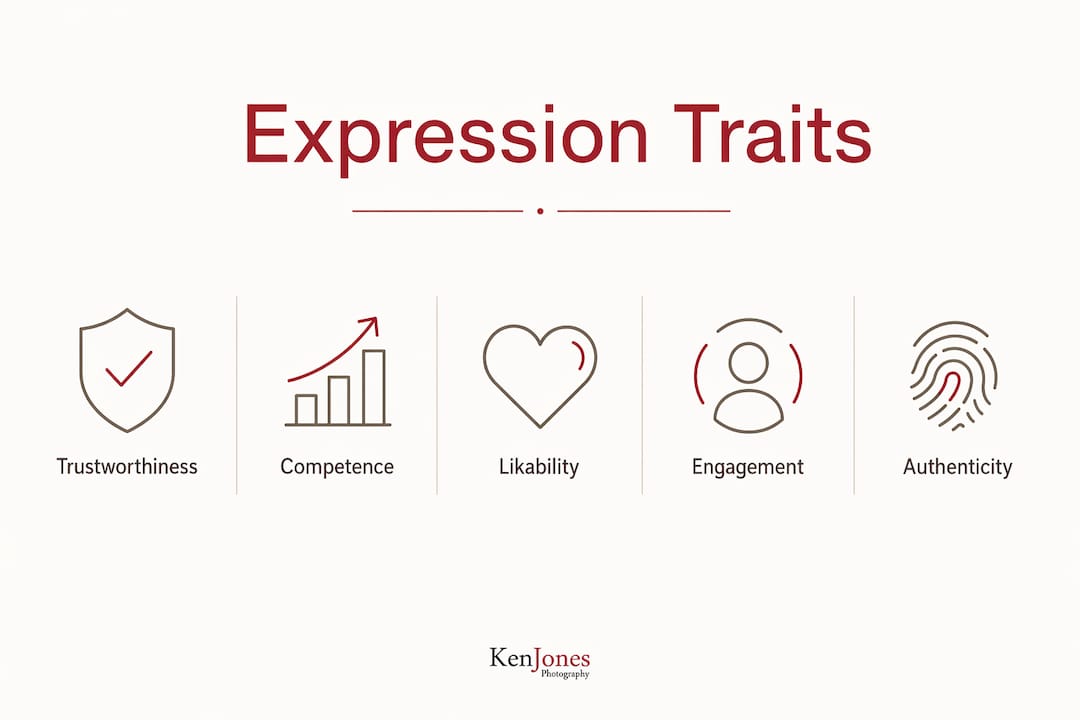
The three traits viewers assess first are trustworthiness, competence, and likability. Expression drives all three. A warm, open expression signals approachability and likability. A composed, steady expression signals competence and authority. The challenge is that most professionals need to project more than one of these traits simultaneously, which is why expression choices in headshots require real thought, not just a quick smile for the camera.
Facial expressions on professional platforms directly influence whether people choose to engage with someone offline. Academic research published in PLOS One found this effect across medical and professional contexts. That finding extends well beyond medicine. Any professional whose headshot appears on a website, a proposal, or a conference program is subject to the same dynamic.
The Duchenne smile and why it matters
The Duchenne smile is the gold standard of genuine expression in portrait photography. It engages the muscles around the eyes, not just the mouth. A Duchenne smile increases perceived trustworthiness dramatically compared to a smile that only moves the lower face. The difference is visible and immediate to any viewer, even one who cannot name what they are seeing.
Most forced smiles in headshots fail because they only activate the zygomatic major muscle, the one that pulls the corners of the mouth up. A genuine smile also contracts the orbicularis oculi, the muscle that creates crow’s feet and lifts the cheeks. Viewers read the absence of that eye engagement as insincerity, even if they cannot articulate why. The result is a headshot that feels slightly off, which is worse than a neutral expression.
The squinch: a subtle technique with real impact
The “squinch” is a slight narrowing of the lower eyelids, without fully squinting. It signals confidence and authority by reinforcing genuine eye engagement in a way that reads as focused rather than wide-eyed or uncertain. Wide-open eyes in a headshot often read as anxious or startled. A controlled, slight narrowing reads as composed and present. This is a recognized technique among professional headshot photographers and one of the clearest markers separating polished portraits from amateur ones.

Pro Tip: Practice the squinch in a mirror before your shoot. Slightly lower your bottom eyelid while keeping your upper lid relaxed. Hold it for three seconds. That is the expression you want to carry into the camera.
How does expression vary by industry and role?
Expression choices in business portraits are not one-size-fits-all. The right facial cue for a startup founder differs from the right one for a senior partner at a law firm. Understanding those differences prevents the most common headshot mistake: choosing an expression that conflicts with your professional context.
Finance, law, and executive roles
Professionals in finance, law, consulting, and senior executive positions generally benefit from composed, neutral-to-slight-smile expressions. These fields carry strong competence expectations. A broad, teeth-showing smile can undercut perceived authority in high-stakes contexts. Neutral or slight smiles work better in high-authority and senior finance roles to maintain perceptions of competence and brand credibility. The goal is to look like someone who has seen a lot and handled it well, not someone eager to please.
That said, “neutral” does not mean cold. The eyes still need engagement. A flat, disengaged expression reads as indifferent or unapproachable, which is equally damaging. The target is composed warmth: steady eyes, relaxed jaw, a slight lift at the corners of the mouth.
Tech, creative, and startup sectors
Creative professionals, tech founders, and startup team members operate in environments where approachability and personality carry real weight. Warm, natural smiles and open expressions signal that you are collaborative, accessible, and human. A stiff, formal expression in a creative context can make you look out of place or difficult to work with. The importance of facial expression in executive branding applies here too, but the balance tips toward warmth over authority.
Executives: balancing authority and warmth
Executive headshots carry the most complex expression demands. A C-suite leader needs to project both authority and human warmth. Balanced headshots combining competence cues with warmth signals create an authoritative yet human image. Formal attire and strong framing handle the competence side. Expression handles the warmth side. The two must work together. An executive in a sharp suit with a cold, guarded expression looks intimidating. The same executive with a genuine, composed smile looks like a leader people want to follow.
| Professional context | Expression target | Key risk to avoid |
|---|---|---|
| Finance and law | Composed, slight smile | Broad smile that undercuts authority |
| Executive leadership | Balanced warmth and authority | Cold or guarded look |
| Tech and creative | Natural, open smile | Stiff or overly formal expression |
| Job seekers | Approachable, engaged | Forced or anxious expression |
Pro Tip: Before your shoot, look at the headshots of three people you admire in your field. Note the expression pattern. That is your reference point, not a generic “smile for the camera” instruction.
What are the most common expression mistakes in headshots?
Most expression problems in professional headshots come from the same root cause: the subject is performing for the camera instead of being present in front of it. Performing for the camera creates tension and artificial expressions. Engaged, present subjects yield authentic, trustworthy portraits. That distinction sounds simple, but it is the hardest thing to achieve in a studio.
Here are the most common mistakes professionals make with expression in headshots:
-
The forced smile. The subject holds a smile for too long, the muscles fatigue, and the eyes go flat. The result is a mouth that is smiling and eyes that are not. Viewers register this as insincerity immediately.
-
The mismatch with real-life persona. A naturally reserved professional forces a broad, exuberant smile because they think that is what a headshot requires. When colleagues or clients meet them in person, the disconnect creates confusion. Your headshot should look like you on a good day, not like a different person.
-
Tension in the body bleeding into the face. Stiff shoulders, a raised chest, and a locked jaw all produce a guarded, closed expression even when the subject is trying to look open. Expression does not live only in the face. It lives in the whole body.
-
Inconsistent expression across a session. A subject who cycles between forced smiles, blank stares, and anxious looks gives the photographer nothing consistent to work with. The best headshots come from subjects who find one genuine, settled expression and hold it with small natural variations.
-
Ignoring the eyes entirely. Professionals focus on their smile and forget that direct eye contact combined with a natural smile projects warmth and authority simultaneously. Eyes that drift, look down, or appear unfocused undermine every other element of the image.
The concept of “visual friction” is useful here. When expression, posture, and personal brand are misaligned, viewers sense something is wrong without being able to name it. That friction reduces trust and engagement. Congruence between expression and brand eliminates that friction and increases viewer confidence.
How do you get a natural, authentic expression on camera?
Authentic expression in a professional headshot is not accidental. It results from preparation, the right environment, and a photographer who knows how to create presence rather than just capture a pose. The techniques below apply whether you are shooting at a studio in Manhattan or on location.
-
Arrive prepared, not rushed. Give yourself 20 minutes before the shoot to decompress. Rushing into a studio from a stressful commute carries tension directly into your face. A short walk, a few deep breaths, and a moment of stillness before you step in front of the camera make a measurable difference.
-
Talk during the shoot. The best expressions emerge mid-conversation, not mid-pose. A good photographer will ask you questions, make observations, or share something that gets a genuine reaction. That moment of natural response is when the shutter fires. Reading about how to prepare for headshots before your session helps you understand what to expect and reduces anxiety.
-
Anchor your expression to a real thought. Think of a specific person you genuinely like, a recent professional win, or a moment you felt confident and capable. That mental anchor produces a real expression rather than a performed one. The camera reads the difference.
-
Check your posture before you check your smile. Relax your shoulders, lengthen your neck, and soften your jaw. When the body is relaxed, the face follows. Tension in the shoulders almost always shows up as tension around the eyes and mouth.
-
Trust the photographer’s direction. A skilled headshot photographer is watching your face in real time and knows when you have hit the right expression. If they say “hold that,” hold it. If they say “reset,” reset without judgment.
Pro Tip: The moment just after a genuine laugh is one of the best expressions you can capture in a headshot. Ask your photographer to shoot through a laugh, not just before or after it. The residual warmth in your face is real and the camera sees it.
Visual branding depends on alignment between your headshot expression and your real-world professional persona. A well-designed professional portfolio reinforces that alignment across every touchpoint, from your website bio to your conference speaker page. Expression is the foundation, but it works best when the entire visual presentation is consistent.
Key takeaways
Expression is the single most powerful variable in a professional headshot, shaping trustworthiness, competence, and approachability within 100 milliseconds of first view.
| Point | Details |
|---|---|
| First impressions are instant | Expression acts as the primary visual filter within 100 milliseconds, before any other detail registers. |
| Duchenne smiles build trust | Genuine smiles that engage the eyes increase perceived trustworthiness far more than mouth-only smiles. |
| Industry context shapes expression | Finance and law favor composed neutrality; creative and tech sectors favor warmth and natural smiles. |
| Authenticity beats performance | Subjects who are mentally present produce more trustworthy portraits than those who pose or perform. |
| Congruence reduces visual friction | Aligning expression, posture, and personal brand eliminates the disconnect that undermines viewer trust. |
What I have learned from 30 years of headshot sessions in New York
The most common thing I hear from clients before a headshot session is some version of “I am terrible in front of a camera.” What they usually mean is that they have seen photos of themselves where they look stiff, fake, or unlike themselves. That is not a personal failing. That is what happens when someone performs for a camera instead of being present in front of it.
I have shot professionals across every sector in this city, from Wall Street partners to creative directors in Tribeca, and the pattern is consistent. The people who get the best headshots are not the most photogenic. They are the most relaxed. The moment a subject stops thinking about what their face is doing and starts thinking about something real, the image changes completely. The eyes engage, the jaw softens, and the expression becomes something a viewer can trust.
One client I worked with, a senior attorney, came in determined to look “serious and authoritative.” She held a tight, closed expression for the first 20 minutes of the session. The images were technically fine and emotionally dead. We stopped, talked for a few minutes about a case she was proud of, and I picked up the camera mid-conversation. The image we ended up using showed a composed, confident woman with genuine warmth in her eyes. She looked authoritative and human. That is the combination that actually works.
The other mistake I see constantly is the mismatch between a client’s headshot and their real personality. A naturally warm, expressive person who forces a neutral “executive” expression ends up looking guarded. A reserved professional who forces a broad smile looks uncomfortable. Your headshot should look like the best version of you, not a costume. When expression aligns with who you actually are, the image builds trust. When it does not, viewers sense the disconnect even if they cannot name it.
The benefits of professional team headshots extend beyond individual branding. When an entire team’s headshots carry consistent, authentic expressions, the company’s visual identity becomes coherent and credible. That is a business asset, not just a cosmetic one.
— Ken
Professional headshots that capture who you actually are
Ken Jones Photography works with professionals across New York City who need headshots that do more than look polished. The studio’s approach to corporate and executive portraits is built around creating the conditions for genuine expression, not just technically correct images.
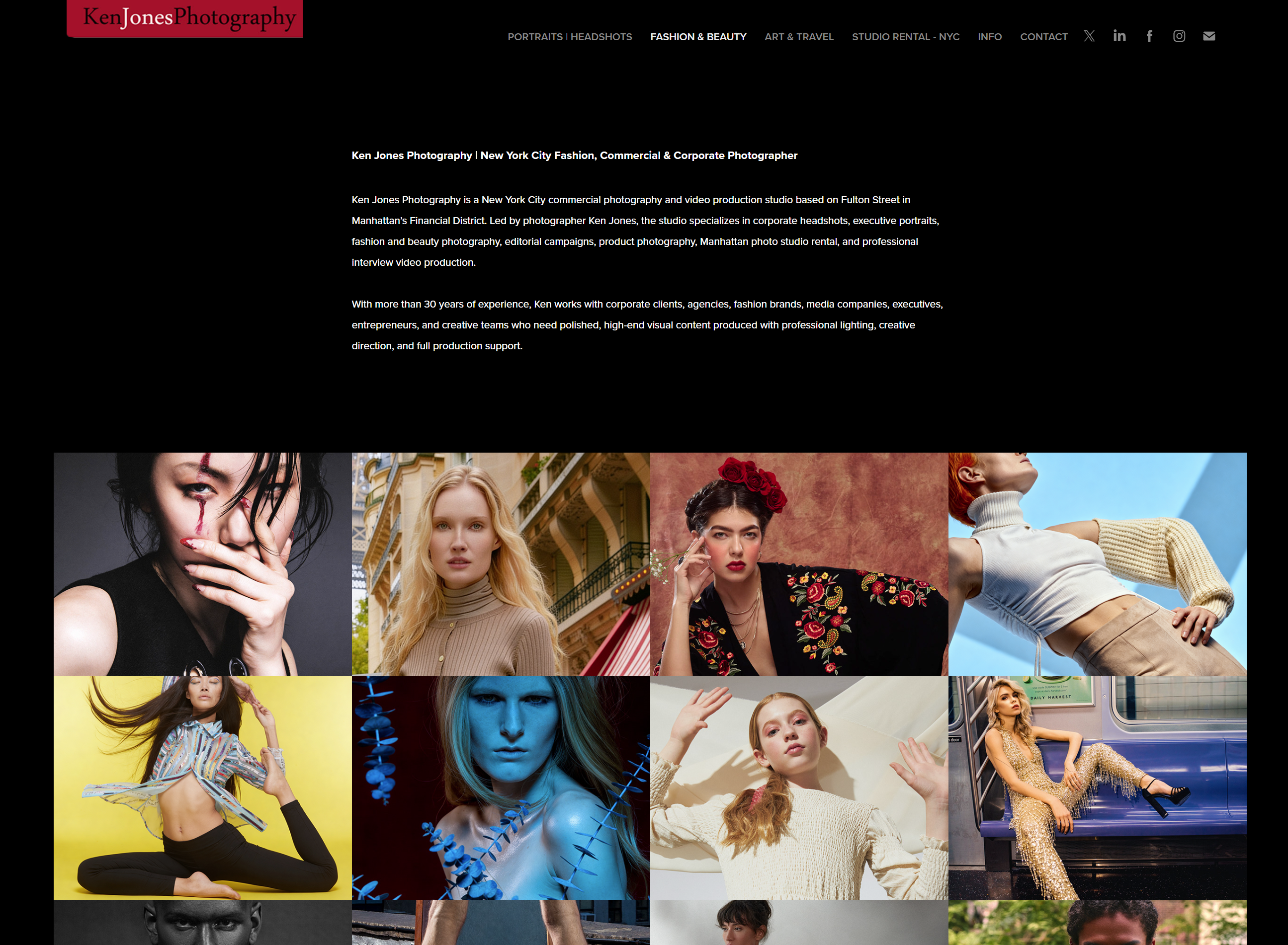
Every session at KenJonesNYC includes active creative direction throughout the shoot. Ken Jones guides clients through expression, posture, and presence in real time, so the final images reflect who you are professionally, not who you think you are supposed to look like. The studio is based in Manhattan’s Financial District and serves professionals across every sector. If your current headshot does not look like you on your best day, it is time to change that. Visit kenjonesnyc.com to review the portfolio and book a session.
FAQ
What expression works best for a LinkedIn headshot?
A natural, engaged smile with direct eye contact works best for most LinkedIn profiles. Finance and legal professionals may prefer a composed, slight smile to maintain perceived authority.
How do I avoid a forced smile in my headshot?
Think of a specific person or moment that genuinely makes you feel confident or happy. That mental anchor produces a real expression. A skilled photographer will also shoot through conversation rather than asking you to hold a pose.
What is a Duchenne smile and why does it matter?
A Duchenne smile engages the muscles around the eyes, not just the mouth. It signals genuine warmth and increases perceived trustworthiness compared to a smile that only moves the lower face.
Does expression really affect how recruiters perceive me?
Yes. First impressions form within 100 milliseconds, with expression as the primary factor influencing judgments of trustworthiness, competence, and likability.
Should executives smile in their headshots?
Executives benefit from a balanced expression that combines authority with warmth. A composed, genuine smile with engaged eyes projects leadership and approachability without sacrificing credibility.