
TL;DR:
- Product photography rates depend on the pricing model, scope of work, and production costs, often leading to surprises if not clearly understood. Common models include per-image, day rate, per-SKU, and project-based pricing, each suitable for different project types. Additional costs like studio rental, shipping, licensing, and revision fees often raise total expenses by 40 to 60 percent.
Product photography rates are defined by the pricing model a photographer uses, the scope of work involved, and the production costs built into the project. Most businesses discover this only after receiving a quote that looks nothing like the round number they had in mind. Per-image pricing can range from $25 to $350 depending on complexity, while day rates for experienced commercial photographers run $500 to $3,500 or more. Understanding how these structures work before you brief a photographer is the difference between a realistic budget and an expensive surprise. Sources like Shopify, Nightjar, and Tov Studio Photo have mapped out the full cost picture for 2026, and the numbers are worth knowing in detail.
What are the common pricing models for product photography?
Product photo shoot pricing falls into four main structures, and each one suits a different type of project. Knowing which model applies to your work determines how you plan, how you compare quotes, and how you avoid being caught off guard when the invoice arrives.

Per-image pricing
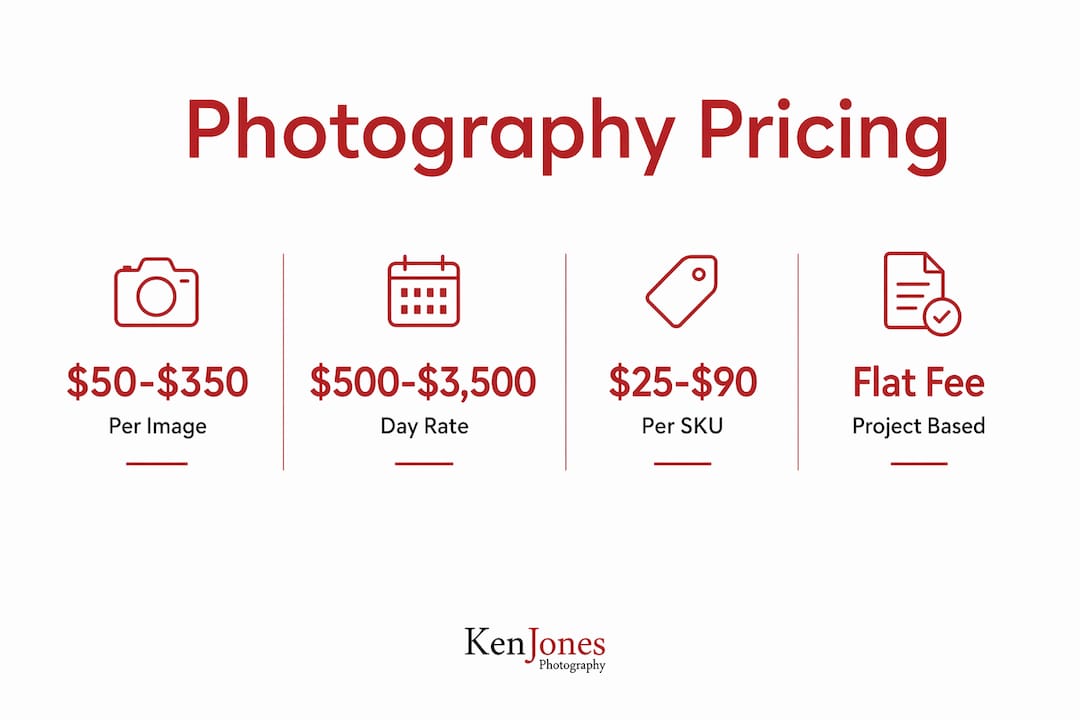
Per-image pricing is the most straightforward model. You pay a fixed fee for each final, retouched image delivered. Shopify’s 2026 overview places this range between $50 and $350 per image, with some outliers on both ends. That spread reflects real differences in complexity: a simple flat-lay on white costs far less than a styled, multi-angle shot with props and advanced compositing. Per-image pricing works well when you have a defined product list and need predictable costs per deliverable.
Day rate and hourly pricing
Day rate pricing covers the photographer’s time on set, typically including their equipment and creative direction. Day rates in US markets run from $500 to $3,500 depending on experience, location, and what the rate includes. A solo photographer shooting in their own studio sits at the lower end. A seasoned commercial photographer working in a rented Manhattan studio with an assistant sits at the higher end. Day rates make sense for complex shoots with many products or varied setups, where a per-image model would be difficult to estimate in advance.
Per-SKU pricing
Per-SKU pricing is the standard model for high-volume e-commerce catalog work. Tov Studio Photo’s 2026 guide cites $25 to $90 per product as the typical range for standard white-background shots with basic retouching. This model rewards volume: the more SKUs you bring, the lower the per-unit cost tends to be. It is the pricing structure most commonly used by Amazon sellers, Shopify merchants, and brands building out large product catalogs.
Project-based and retainer pricing
Some studios offer project-based flat fees for defined scopes, or retainer arrangements for brands that shoot regularly. These structures reduce per-shoot negotiation and give both sides predictability. The table below summarizes how these models compare across key dimensions.
| Pricing model | Typical range | Best suited for |
|---|---|---|
| Per image | $50–$350 per image | Small product lists, defined deliverables |
| Day rate | $500–$3,500 per day | Complex shoots, varied setups, campaigns |
| Per SKU | $25–$90 per product | High-volume e-commerce catalog work |
| Project-based | Custom quote | Campaigns, lookbooks, multi-day productions |
| Retainer | Monthly fee | Brands with ongoing, recurring shoot needs |
What factors influence product photography rates beyond base pricing?
The base rate a photographer quotes is rarely the full picture. Several variables shape the final cost of product photography pricing, and each one deserves attention before you sign off on a brief.
Photographer experience and reputation carry significant weight. Experienced photographers command higher rates because their technical skill, equipment, and creative judgment reduce the risk of costly reshoots. A less experienced photographer may quote half the rate but deliver images that require more retouching, more rounds of revision, or a full reshoot. That apparent saving often disappears quickly.
Equipment and studio setup affect costs in ways that are not always visible in a quote. Specialized gear such as turntable rigs for 360-degree product shots, macro lenses for jewelry, or tethered shooting systems for real-time client review all add to overhead. Lighting plays a particularly direct role in image quality, and proper lighting setup for product work requires both the right equipment and the knowledge to use it precisely.
Styling, props, and additional crew increase complexity and cost. A shoot requiring a food stylist, prop sourcing, or a hand model adds line items that are separate from the photographer’s fee. Assistants, digital technicians, and creative directors each carry their own day rates. These costs are standard on commercial shoots but often catch smaller brands off guard when they appear in a detailed quote.
Post-production and retouching represent a cost that is frequently underestimated. Retouching can account for 20 to 50 percent of total shoot costs, with basic edits running a few dollars per image and advanced retouching or compositing starting at $25 per image and climbing from there. A headline photographer rate that excludes editing is not a complete price. Always confirm what post-production is included.
- Turnaround time: standard delivery is typically five to ten business days; faster timelines trigger rush fees
- Revision rounds: most studios include one or two rounds; additional rounds are billed separately
- Usage rights: licensing for commercial use, advertising, or national campaigns is often charged on top of shoot fees
- Travel and location: on-location shoots outside a studio add transportation, permits, and setup time to the total
Pro Tip: Ask every photographer you quote to break out their fee into shooting, editing, and usage rights as separate line items. This makes comparison between quotes accurate and prevents hidden costs from appearing after delivery.
What hidden and additional costs should businesses anticipate?
The cost of product photography extends well beyond the photographer’s day rate or per-image fee. Total costs often exceed headline photographer fees once studio rental, shipping, licensing, and internal time are factored in. Businesses that plan only for the photographer’s quote regularly find their actual spend running 40 to 60 percent higher.
Here are the most common additional costs to build into your budget:
-
Studio rental. If the photographer does not own their studio, rental fees apply. Studio rental and hidden fees typically run $500 to $2,000 per day in major US markets. In Manhattan, premium studio space with full lighting infrastructure sits at the higher end of that range. Some photographers include studio costs in their day rate; many do not.
-
Product shipping and handling. Getting products to and from the shoot location costs money, particularly for fragile, oversized, or high-value items. Round-trip shipping commonly runs $50 to $200 per shipment, and breakage or loss during transit is a real risk that requires insurance coverage.
-
Usage rights and licensing. Licensing often drives commercial photography fees and is frequently charged separately from shooting and editing. An image licensed for a single brand website costs far less than the same image licensed for national advertising or retail packaging. Clarify the intended use before the shoot, not after.
-
Reshoots and revisions. When deliverables are not defined precisely upfront, reshoots happen. Reshoots can add 25 to 50 percent to the original project cost. A brief that says “a few angles per product” without specifying exact shot counts is an open invitation to scope disputes.
-
Rush fees. When timelines compress, costs rise sharply. Rush fees range from 25 to 200 percent above base pricing, depending on how quickly the work is needed. A two-day turnaround on a large catalog shoot can effectively double the cost of the project.
-
Internal coordination time. This is the cost most businesses never track. Coordination and internal review time for briefing, approvals, and file handling can add hundreds to thousands of dollars in labor cost per shoot. When three people spend four hours each reviewing selects and writing revision notes, that time has a real dollar value even if it never appears on an invoice.
How can businesses effectively budget and negotiate product photography rates?
Budgeting for product photography pricing starts with defining exactly what you need before you contact a single photographer. Vague briefs produce vague quotes, and vague quotes produce billing disputes. The businesses that manage photography costs well treat the brief as a contract in draft form.
Define deliverables precisely. Specify the number of products, the number of angles per product, the background style, the file format, and the intended use. Precise deliverable definitions prevent the most common source of unexpected charges: scope creep driven by unclear variant counts and revision terms. If you need twelve images of ten products in three colorways, say that explicitly.
Understand the implications of your pricing model. Per-image pricing gives you cost certainty per deliverable but can run high if your shot count grows. Day rate pricing gives the photographer flexibility to work through a complex shoot but exposes you to cost overruns if the shoot runs long. Per-SKU pricing rewards volume but may not include the creative direction your brand needs. Match the model to the project type, not just the budget.
Get multiple quotes and compare them on the same basis. Three quotes that each include different combinations of shooting, editing, studio rental, and usage rights are not comparable without a breakdown. Ask each photographer to itemize their quote using the same categories. This reveals where the real differences lie and gives you a basis for negotiation.
Watch for scope creep and unclear revision policies. One of the most common budgeting mistakes in NYC brand shoots is approving a brief that says “minor revisions included” without defining what minor means. Two rounds of full-image retouching changes are not minor. Agree on revision rounds, what constitutes a new request, and who has final sign-off authority before the shoot begins.
Pro Tip: When comparing photography rates for e-commerce, factor in the impact on product page performance. High-quality images directly affect conversion rates and search visibility, which means the cost of professional photography is often recovered through improved sales performance.
Consider the trade-off between cost, quality, and turnaround carefully. A brand that chooses the lowest quote and receives images requiring significant rework has not saved money. The reshoot, the additional retouching, and the delayed launch all carry costs. The right photographer for your budget is the one whose work consistently meets your quality standard, not the one with the lowest headline number.
Key takeaways
Product photography rates are determined by pricing model, project scope, post-production requirements, and a range of additional costs that most budgets underestimate.
| Point | Details |
|---|---|
| Pricing models vary by project type | Per-image, day rate, per-SKU, and project-based pricing each suit different shoot scales and needs. |
| Hidden costs add 40 to 60 percent | Studio rental, shipping, licensing, and rush fees routinely push total spend well above the photographer’s base quote. |
| Post-production is a major cost driver | Retouching can represent 20 to 50 percent of total shoot costs and is often excluded from headline pricing. |
| Precise briefs prevent budget overruns | Defining deliverables, revision rounds, and usage rights upfront eliminates the most common sources of unexpected charges. |
| Experience affects total value, not just price | A higher day rate from an experienced photographer often reduces reshoot risk and overall project cost. |
What 30 years of NYC shoots taught me about product photography rates
After three decades of commercial work in New York City, the pattern I see most often is this: clients focus on the photographer’s day rate and ignore everything else. They negotiate hard on the shooting fee, then get surprised by studio rental, retouching, and a rush fee because the timeline slipped. The total bill ends up higher than if they had simply hired the right person at the right rate from the start.
The NYC market is not cheap, and it should not be. The infrastructure here, the studio options, the experienced crew, the level of production knowledge available on any given shoot day, all of that has real value. When a brand comes to me with a tight budget, my first conversation is about priorities. What absolutely must be in the final images? What can be simplified without hurting the result? That conversation is more useful than any amount of rate negotiation.
The other thing I have learned is that usage rights are consistently the most misunderstood part of product photography pricing. A client once came back to me six months after a shoot wanting to use images in a national retail campaign. The images were shot under a web-only license. The conversation about re-licensing was uncomfortable and expensive. Had we discussed intended use at the brief stage, the original fee would have been higher but the total cost would have been lower. Licensing is not a fine-print detail. It is a core part of the budget.
My honest advice: treat photography as a production investment, not a line item to minimize. The brands that consistently get strong visual content are the ones that budget realistically, brief clearly, and build relationships with photographers who understand their product and their market.
— Ken
Work with Kenjonesnyc for professional product photography in NYC
Kenjonesnyc brings over 30 years of commercial production experience to every product shoot, from single-product e-commerce images to full campaign work for luxury brands. The studio’s Manhattan Financial District location provides direct access to premium production infrastructure, with full-service capabilities including creative direction, styling, retouching, and NYC studio rental for clients who need a complete production environment.
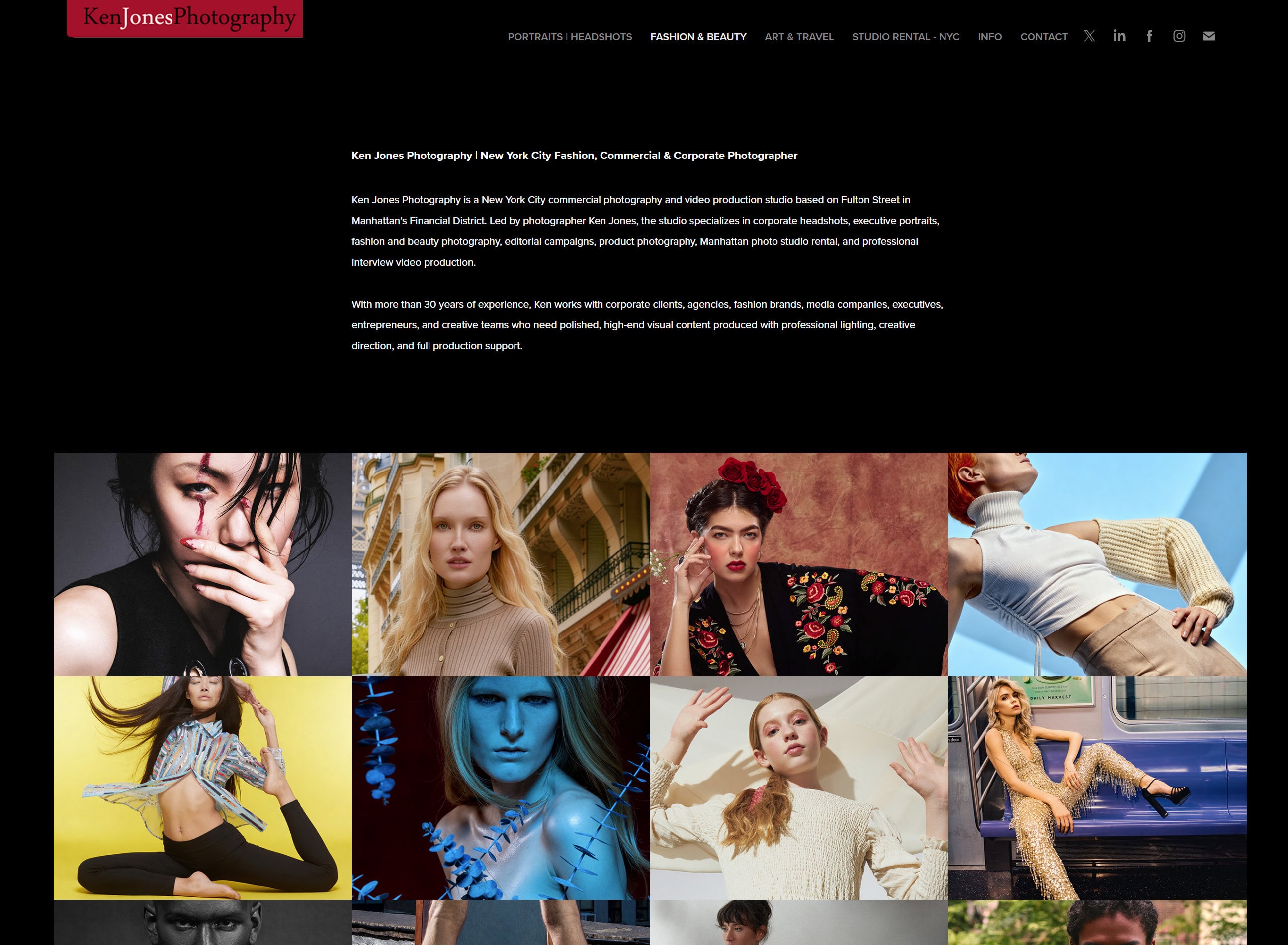
Pricing is structured transparently, with clear breakdowns across shooting, post-production, and usage rights so clients can budget with confidence. Whether you need catalog-scale e-commerce product photography or a styled campaign shoot, Kenjonesnyc delivers polished, publication-ready imagery aligned with your brand. Reach out through kenjonesnyc.com to discuss your project and get a detailed quote.
FAQ
What is the average cost of product photography per image?
Per-image pricing typically ranges from $50 to $350 in 2026, depending on complexity, styling, and the level of retouching included. Simple white-background shots sit at the lower end, while styled or composited images command higher fees.
How much does a product photography day rate cost?
Day rates for professional product photographers run from $500 to $3,500 in US markets, with rates in major cities like New York City sitting toward the higher end. The rate usually covers shooting time and creative direction, but studio rental and post-production are often billed separately.
What is per-SKU pricing in product photography?
Per-SKU pricing charges a flat fee per product photographed, commonly $25 to $90 for standard e-commerce shots with basic retouching. This model is widely used for high-volume catalog work on platforms like Amazon and Shopify.
What hidden costs should I budget for in a product photo shoot?
Studio rental, shipping, rush fees, and reshoots are the most common additional costs, and they can add 40 to 60 percent to the photographer’s base quote. Usage rights and internal coordination time are two further costs that most budgets overlook entirely.
How do usage rights affect product photography pricing?
Licensing fees vary based on where and how images will be used, with national advertising or retail packaging licenses costing significantly more than web-only use. Always clarify intended use before the shoot to avoid re-licensing costs after delivery.