
How advertising agencies select photographers is guided by a strategic blend of creative fit, deliverable clarity, licensing transparency, and vendor reliability. The process, formally known as photographer procurement or vendor evaluation, goes well beyond reviewing a portfolio. Agencies assess whether a photographer can meet campaign-specific technical requirements, complete formal onboarding documentation, and deliver consistent results under tight production schedules. Tools like online photo selection platforms, structured RFP documents, and vendor compliance checklists have become standard parts of the photographer selection process. This guide breaks down every layer of that process for advertising professionals and marketing teams who need to make confident, defensible hiring decisions.
How advertising agencies select photographers: core criteria
The photographer selection process in advertising is defined by two parallel tracks: creative evaluation and operational qualification. Both must be satisfied before a photographer is approved for a campaign.
On the creative side, agencies assess portfolio relevance first. A photographer’s past work must demonstrate experience with the specific category, whether that is fashion, beauty, food, or corporate imagery. Portfolio consistency matters as much as individual standout shots. A portfolio that shows strong work across multiple subjects, lighting conditions, and formats signals that the photographer can maintain brand integrity across a full campaign shoot rather than producing one exceptional frame and struggling with the rest.

Licensing clarity is a non-negotiable criterion. Agencies need to know exactly what usage rights are included in the quoted fee, covering digital, print, out-of-home, and social media placements. Ambiguous licensing terms create legal exposure and budget overruns when campaigns expand to new channels. Photographers who present clear, tiered licensing structures from the first conversation signal professional maturity and reduce friction during contract negotiations.
Turnaround time commitments and reliability are evaluated with equal weight to creative quality. On-time delivery and calm direction build trust and are consistently cited as key differentiators in vendor selection. An agency running a campaign with a two-week post-production window cannot afford a photographer who misses delivery deadlines or requires multiple rounds of reshoots.
The core criteria agencies apply during evaluation include:
- Portfolio relevance: Prior work in the same product category or visual style as the campaign
- Consistency: Demonstrated ability to maintain quality across a full shoot, not just select hero images
- Licensing structure: Clear, written usage rights covering all planned distribution channels
- Turnaround guarantees: Specific delivery timelines confirmed in writing before the project begins
- Insurance and compliance documentation: General liability coverage, signed contracts, and tax forms completed before shoot day
Pro Tip: Ask photographers to share a complete deliverables list from a recent comparable campaign, not just their portfolio. This reveals how they handle format requirements, file naming, and client communication in practice.
How do formal procurement processes shape photographer selection?
Formal procurement processes exist to minimize risk and produce predictable outcomes. Procurement standards constrain the photographer pool to those who meet corporate process requirements, but they leave room for creative judgment within that qualified group. Understanding this distinction helps marketing teams avoid the common mistake of treating procurement as a creative obstacle rather than a risk management tool.
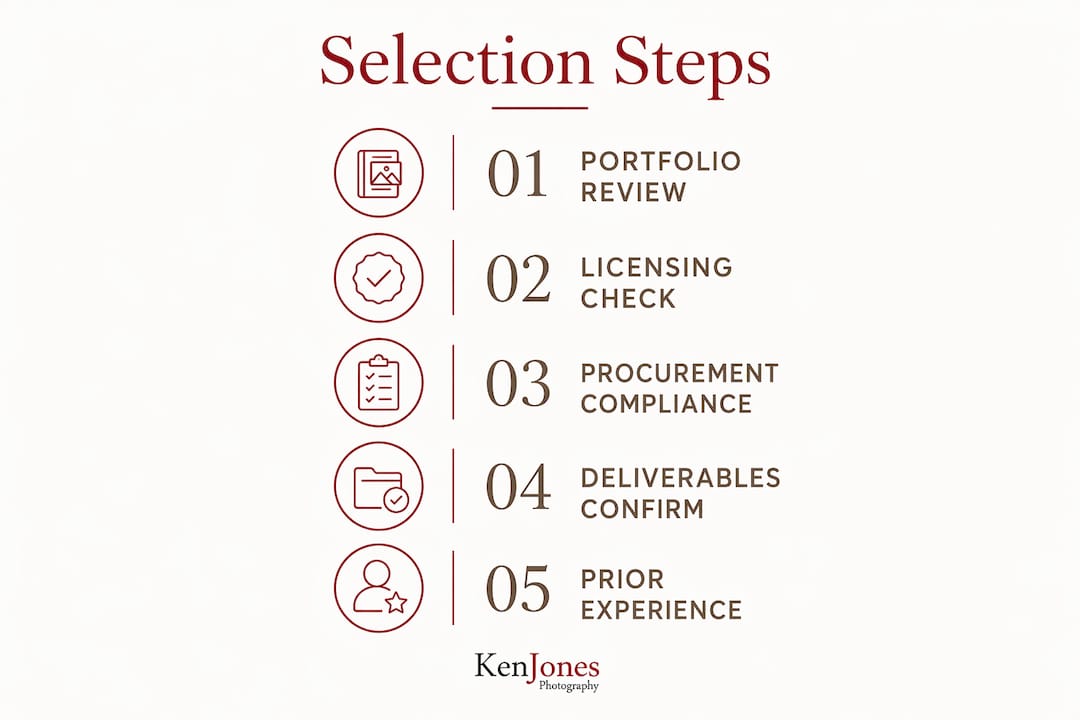
Larger organizations typically issue a Request for Proposal, or RFP, when selecting photographers for significant campaigns. A typical photography RFP includes portfolio examples, pricing structures, contract terms, licensing scope, turnaround time commitments, and proof of reliability through references or prior client work. The evaluation focuses on consistent results and contract compliance rather than artistic experimentation. This is a deliberate design choice. Agencies need photographers who can replicate quality reliably, not photographers who produce brilliant work unpredictably.
The formal procurement sequence generally follows this order:
- Issue the RFP or selection brief with specific campaign requirements, usage rights needed, and timeline expectations
- Review submitted portfolios against campaign-specific criteria, filtering for relevant category experience
- Evaluate pricing and licensing terms to confirm alignment with campaign budget and distribution plans
- Request compliance documentation including certificates of insurance, W-9 or equivalent tax forms, and signed vendor agreements
- Conduct reference checks or review prior campaign performance data if the photographer has worked with the agency before
- Award the project and complete vendor onboarding before the shoot date
Smaller organizations often skip the full RFP and use a simplified checklist approach instead, verifying portfolio fit, pricing, availability, and basic compliance documentation. The underlying logic is identical. Both approaches prioritize reliability and process adherence alongside creative quality.
“Formal procurement prevents surprises. It prioritizes reliability over purely artistic merit, which is exactly what agencies need when campaign budgets and brand reputations are on the line.”
The compliance requirements in this process, including insurance certificates, payment terms, and signed contracts, serve a specific purpose. They confirm that the photographer operates as a professional business, not just a creative freelancer. Agencies that skip these steps expose themselves to liability gaps, payment disputes, and production delays. Photographers who complete onboarding documentation promptly and accurately signal that they understand the professional standards of commercial work. For guidance on how branding photography fits corporate onboarding requirements, the distinction between personal branding and commercial vendor work is worth reviewing before submitting an RFP response.
What role do deliverables and production workflows play in selection?
Deliverable clarity is a prerequisite for photographer approval in most agency workflows, not an afterthought. Agencies require photographers to confirm they can produce specific file formats, aspect ratios, and channel-ready assets before a project is awarded. A campaign running across Instagram, a brand website, and out-of-home placements requires at minimum three distinct crop orientations per image, often more when accounting for story formats, banner ads, and print specifications.
The table below compares what agencies typically require from photographers across different campaign types:
| Campaign type | Deliverable requirements | Typical turnaround |
|---|---|---|
| Social media campaign | 1:1, 4:5, 9:16 crops; web-optimized JPEGs; color-corrected finals | 5 to 7 business days |
| Print and OOH advertising | High-resolution TIFFs; CMYK color profiles; bleed-ready files | 10 to 14 business days |
| E-commerce product shoot | White background JPEGs; multiple angles per SKU; retouched finals | 3 to 5 business days |
| Integrated brand campaign | All of the above plus raw file delivery and usage rights documentation | 14 to 21 business days |
Buyers should confirm planning support, gallery range, and especially clarity on deliverables and turnaround times before signing any agreement. This is the single most common point of failure in agency-photographer relationships. A photographer who produces beautiful images but delivers them in the wrong format or misses a channel-specific requirement creates expensive post-production corrections and delays campaign launches.
Photo selection software platforms have become a standard part of the agency workflow. Clients can approve, favorite, and hide photos and provide voice or text comments in centralized platforms, which speeds approvals significantly. This matters because compressed campaign schedules leave little room for email chains and scattered feedback. Platforms that support structured approve-and-hide feedback mark an operational advantage for agencies managing multiple stakeholders across creative, legal, and marketing teams.
Pro Tip: Require photographers to demonstrate their delivery workflow before the shoot. Ask them to walk you through how they organize galleries, communicate revision requests, and confirm final file delivery. A photographer who cannot describe this process clearly will create friction at the most time-sensitive point in your campaign.
How does prior experience influence the photographer selection process?
Prior experience with a brand or comparable campaign category is one of the strongest predictors of a smooth production. Photographers with past work on similar campaigns are preferred because they reduce onboarding risk and speed production timelines. This preference is not simply about familiarity. It reflects a practical reality: a photographer who has already navigated a brand’s approval process, worked with its creative directors, and delivered to its technical specifications requires significantly less hand-holding on the next project.
Agencies that develop a roster of preferred photographers gain a measurable production advantage. Repeat collaborations eliminate the time spent briefing a photographer on brand standards, preferred retouching styles, and file delivery protocols. When a campaign timeline compresses, as they frequently do, having a trusted photographer who already understands the brand’s visual language reduces the risk of costly reshoots or missed deadlines.
The key factors agencies use to assess relevant prior experience include:
- Category alignment: Has the photographer shot in the same product or service category? A fashion photographer with no food photography experience is a higher-risk choice for a restaurant campaign regardless of technical skill.
- Scale of prior projects: Experience managing large-scale shoots with multiple talent, locations, and deliverables signals the operational capacity to handle complex campaigns.
- Client references from comparable brands: References from brands of similar size and category carry more weight than general testimonials.
- Portfolio documentation of similar campaigns: Agencies look for case study-style portfolio entries that show the brief, the execution, and the final deliverables, not just the finished images.
- Pricing track record: Photographers with a history of delivering within budget on comparable projects reduce financial risk and simplify the approval process with procurement teams.
NYC-based photographers with commercial client experience often carry an additional advantage in agency selection. Proximity to major brand headquarters, modeling agencies, and production resources in markets like Manhattan means faster logistics, access to established talent networks, and familiarity with the pace and standards of high-volume commercial work. For agencies managing campaigns with tight New York production schedules, this geographic and professional context is a genuine operational benefit.
The concept of “preferred photographer” status is worth understanding explicitly. It is not an informal arrangement. Many agencies maintain an approved vendor list, and photographers who have completed full onboarding and delivered successfully on at least one project are added to that list. Future projects are often awarded to approved vendors first, before any open solicitation. Getting on that list requires meeting both the creative and compliance standards described throughout this guide.
Key takeaways
Advertising agencies select photographers based on a combination of portfolio relevance, licensing clarity, procurement compliance, deliverable precision, and proven prior experience, with reliability weighted as heavily as creative quality.
| Point | Details |
|---|---|
| Creative and compliance criteria are equal | Agencies evaluate portfolio fit and vendor documentation with the same rigor. |
| RFPs define the qualified pool | Formal procurement filters photographers to those who meet process standards before creative judgment applies. |
| Deliverable clarity prevents campaign delays | Photographers must confirm file formats, crop ratios, and turnaround times in writing before project award. |
| Photo selection platforms speed approvals | Centralized gallery tools with approve-and-hide functions reduce feedback friction on compressed schedules. |
| Prior experience reduces production risk | Photographers with comparable campaign history require less onboarding and deliver faster results. |
What agencies get wrong about photographer selection
After more than 30 years shooting commercial campaigns in New York, I have watched agencies make the same mistake repeatedly: they treat photographer selection as a purely creative decision and then scramble to manage the operational fallout.
The most common version of this looks like a creative director falling in love with a photographer’s editorial work, pushing them through to production, and then discovering mid-campaign that the photographer has never delivered multi-format digital assets, has no general liability insurance, and considers a two-week turnaround “fast.” The creative vision was right. The operational vetting was skipped entirely.
The fix is not to prioritize process over creativity. It is to run both tracks simultaneously from the first conversation. When I work with agency teams, I bring a complete deliverables list, licensing structure, and insurance documentation to the first meeting. Not because agencies always ask for it, but because it signals that the production side of the work is as considered as the creative side. That combination is what actually builds long-term agency relationships.
I also think agencies underestimate how much the photographer’s communication style affects campaign outcomes. A photographer who responds to briefs with specific questions about usage rights, talent direction, and post-production workflow is demonstrating exactly the kind of professional discipline that keeps campaigns on schedule. A photographer who responds with enthusiasm and vague reassurances is a risk, regardless of how strong the portfolio looks.
The other shift I have seen in recent years is agencies placing greater weight on brand storytelling alignment. It is no longer enough to shoot technically well in the right category. Agencies want photographers who understand the brand’s narrative, can contribute to concept development, and can maintain visual consistency across a campaign that may span multiple shoots over several months. That requires a different kind of creative conversation during the selection process, one that goes well beyond reviewing a portfolio PDF.
— Ken
Work with a photographer who meets every agency standard
Kenjonesnyc brings over 30 years of commercial photography experience to advertising campaigns across fashion, beauty, corporate, and editorial categories. The studio’s advertising campaign portfolio demonstrates consistent delivery across major brand projects, with clear licensing structures, full onboarding documentation, and multi-format deliverable packages built into every project proposal.
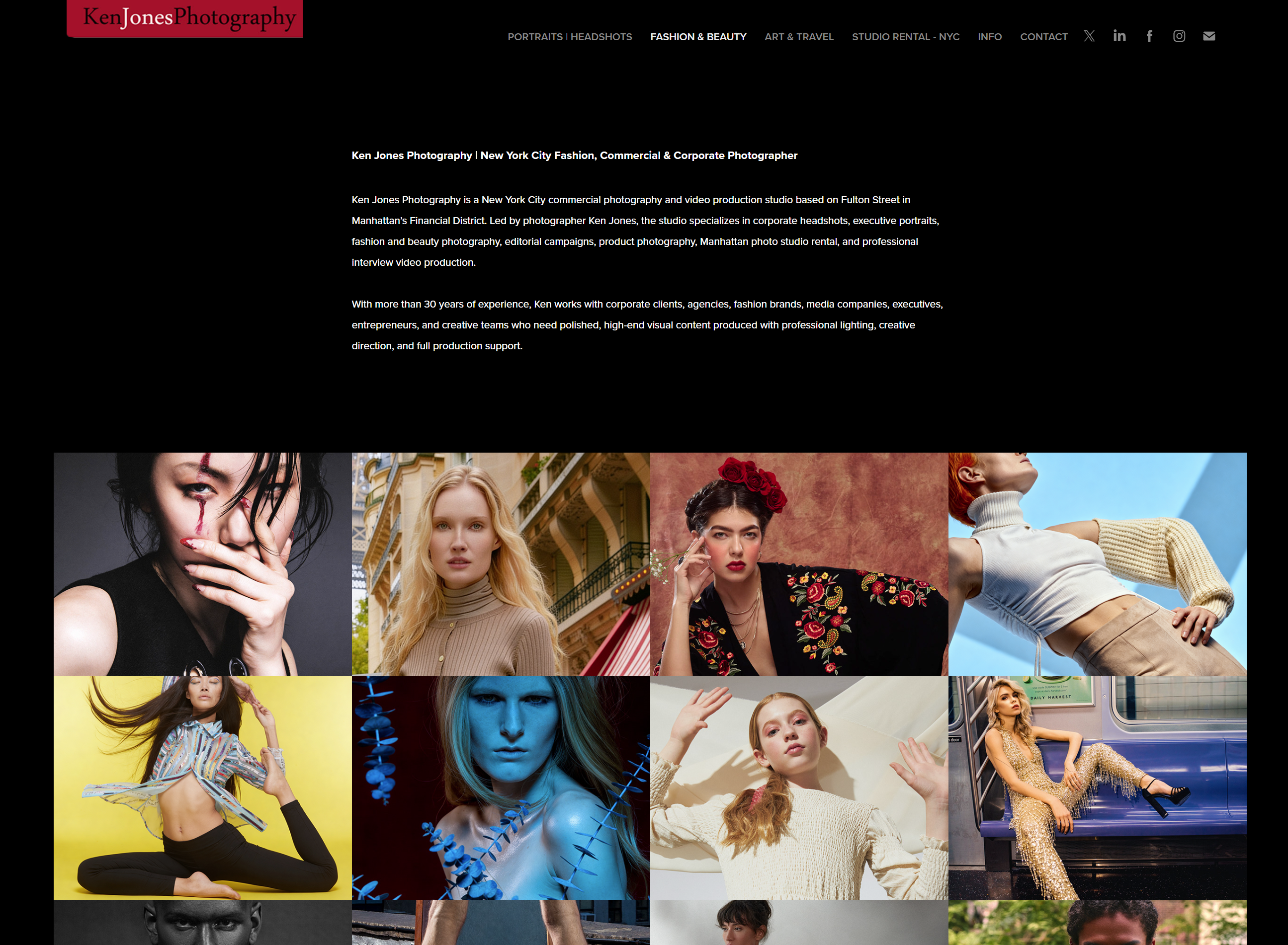
For agency teams and marketing professionals who need a photographer that clears both the creative and compliance bars, Kenjonesnyc offers transparent pricing, usage rights documentation, and a structured digital gallery workflow that supports fast client approvals. Explore the full range of commercial services and portfolio examples to assess fit for your next campaign. Contact the studio directly to discuss project requirements, timelines, and onboarding documentation.
FAQ
What criteria do advertising agencies use to select photographers?
Agencies evaluate photographers on portfolio relevance, licensing clarity, turnaround time commitments, insurance documentation, and prior experience with comparable campaigns. Consistent results and contract compliance carry as much weight as creative quality in formal selection processes.
What is included in a photography RFP for advertising campaigns?
A photography RFP typically includes portfolio requirements, pricing structure, contract terms, licensing scope, turnaround time expectations, and references or proof of reliability. Larger organizations use full RFPs while smaller teams often apply a simplified compliance checklist instead.
How important are deliverables and file formats in photographer selection?
Deliverable specifications are a prerequisite for project award in most agency workflows. Photographers must confirm they can deliver specific file formats and aspect ratios for each distribution channel before a campaign begins.
Why do agencies prefer photographers with prior campaign experience?
Photographers with prior similar work reduce onboarding risk and accelerate production timelines because they already understand the brand’s approval process, technical standards, and delivery expectations. This preference is a risk management decision as much as a creative one.
How do photo selection platforms affect the photographer selection process?
Agencies favor photographers who use structured digital gallery platforms because centralized approval workflows with approve, hide, and comment functions reduce back-and-forth and speed client sign-off on compressed campaign schedules.
Recommended
- Ken Jones Photography | NYC Fashion, Beauty & Commercial Photographer | Manhattan Studio Rental – Advertising Campaign Photography
- Why NYC-Based Photography Elevates PR Clients
- Top 6 Commercial Photo Services Agencies 2026
- Ken Jones Photography | NYC Fashion, Beauty & Commercial Photographer | Manhattan Studio Rental – Celebrity Portrait Photography NYC – Editorial & PR